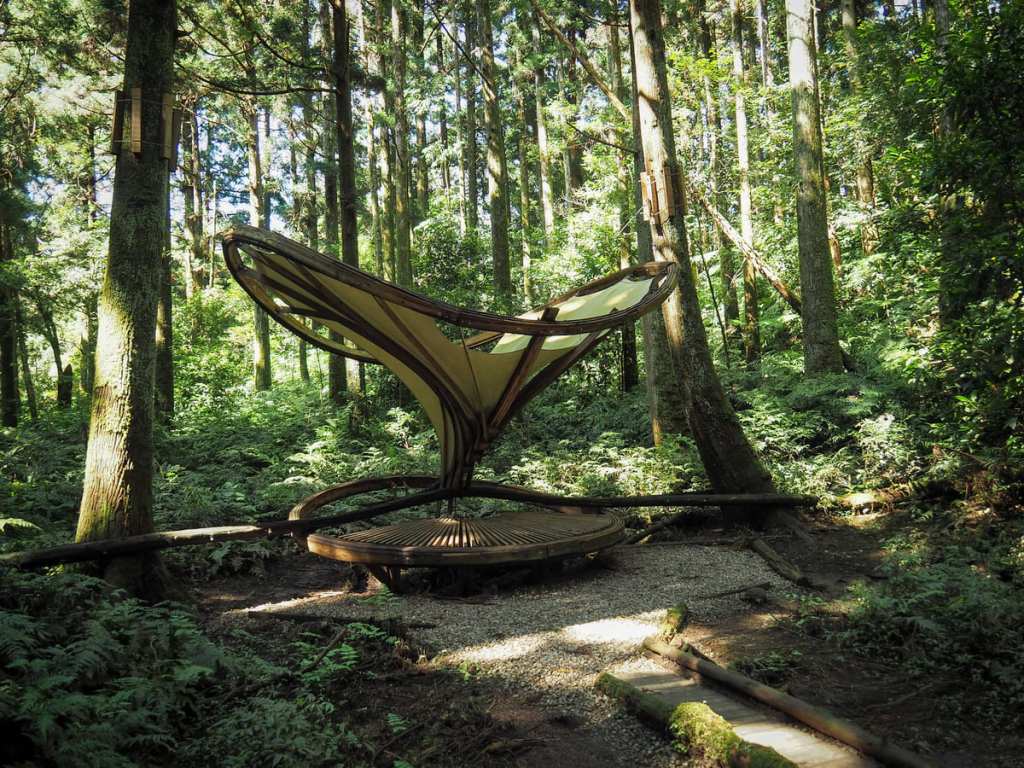
A gentle walk in Dongyanshan National Forest Recreation Area
Aside from the interlinking paths criss-crossing the little patch of forest between the visitor centre and the restaurant, this is the easiest walk that you can do in Dongyanshan Park. And if you time your journey right, you can even return back to the restaurant just in time for lunch.
Distance: About 2.5km but with plenty of options to cut it short or extend it as you see fit.
Time: 1-2 hours. It took me about 80 minutes with lots of stopping to take photos.
Difficulty (regular Taiwan hiker): 0.5/10 – A very easy walk.
Difficulty (new Taiwan hiker): 2/10 – A tiny amount of elevation gain and some potentially slippery surfaces.
Total ascent: Around 100 metres.
Water: A single small bottle should suffice if you’re only doing this loop.
Shade: The forest section of the trail was pretty shady, but there was less cover walking back along the track.
Mobile network: Clear throughout.
Enjoyment: This pretty little trail would be ideal for families who want some adventure but don’t want to go anywhere too wild.
Other: It’s worth noting that due to its elevation, the weather in the park is generally quite a bit cooler than the weather in the cities. Check the local forecast before you go and plan accordingly. Also, if you’re aiming to eat at the cafe, it’s worth knowing that lunch is served between 11am and 1:30pm, and after two you can stop by for drinks and a limited number of snack options.
Route type: Loop (or out and back).
Permit: None needed, but you need to pay to enter the park.
Jump to the bottom of this post for a trail map, GPX file and ticket information.
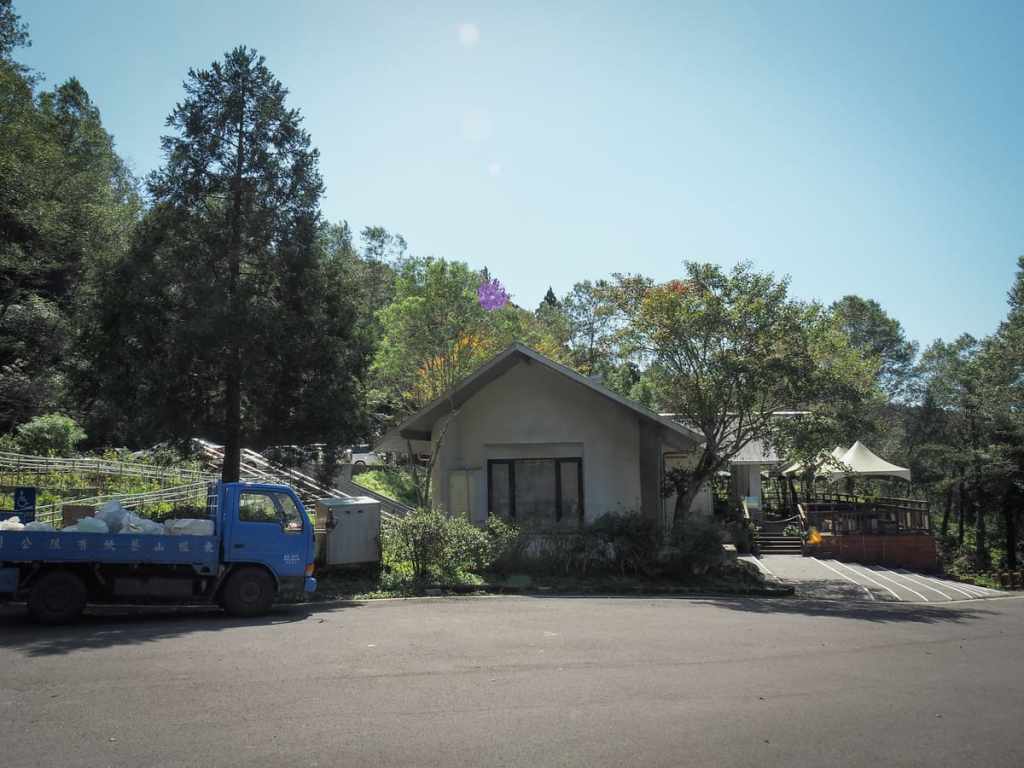
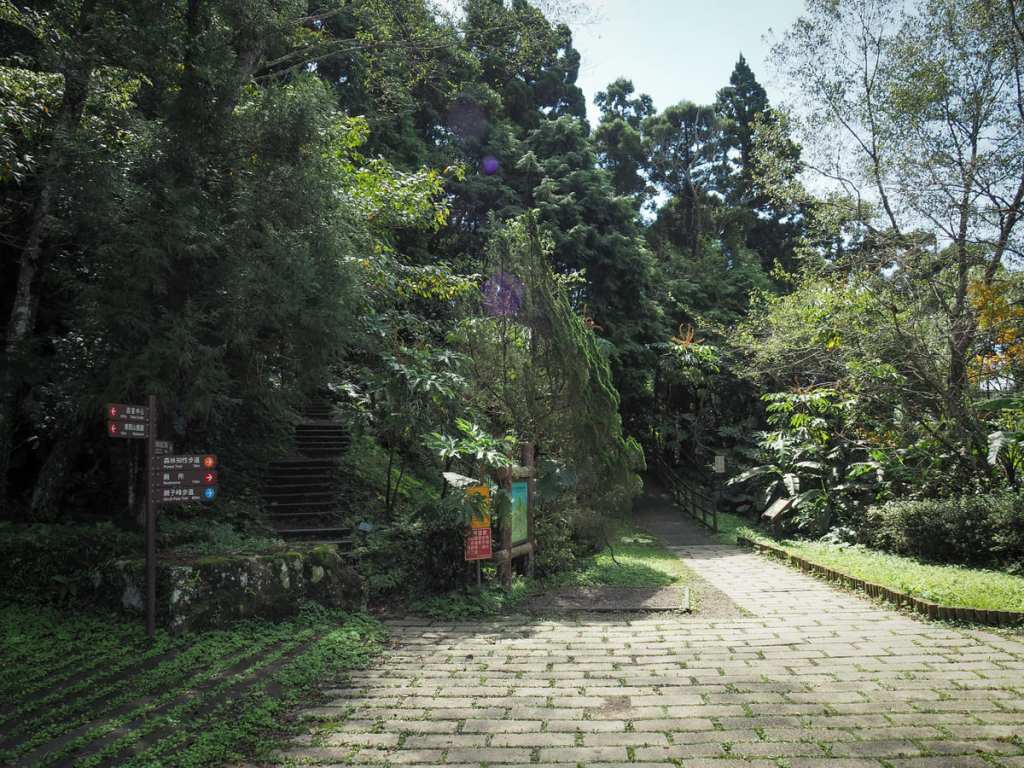
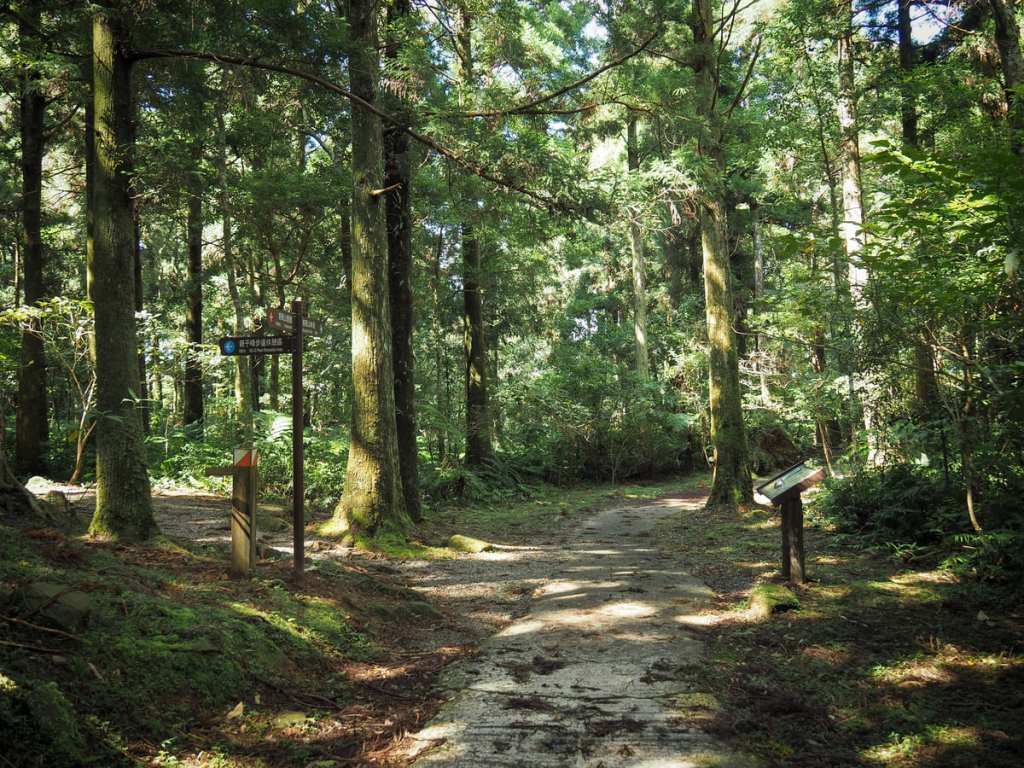
The trail starts from the carpark just behind the recreation area’s only restaurant. Head to the rear of the carpark and find the map next to two trailheads. The one on the left runs up to join the Mount Dongyan Trail, so take the easier-looking one on the right.
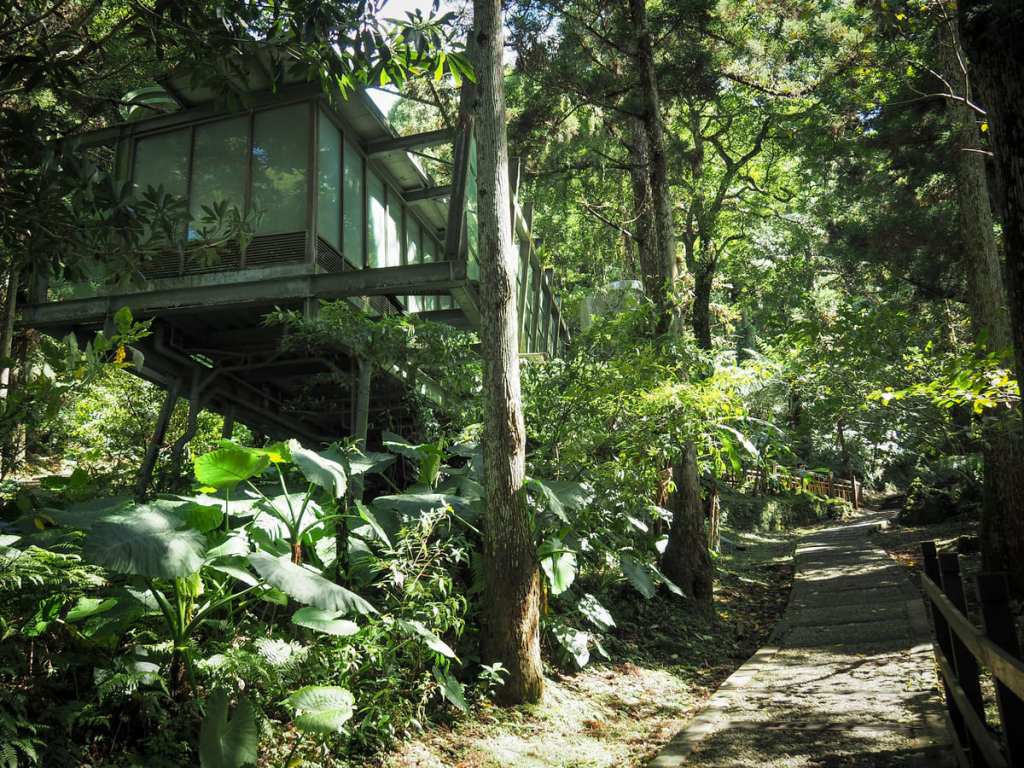
The trail kicks off with a gentle climb through mixed forest. That raised structure on the left there, that’s a floating toilet block–perhaps not the prettiest feature that the park has to show, but not bad for some loos.
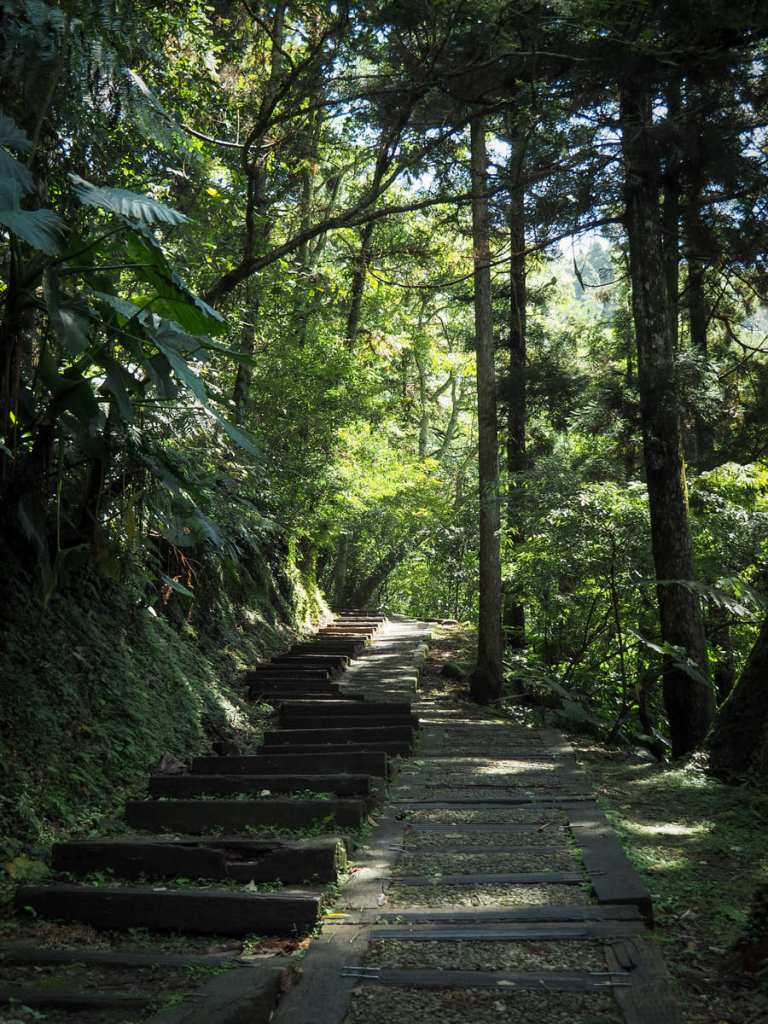
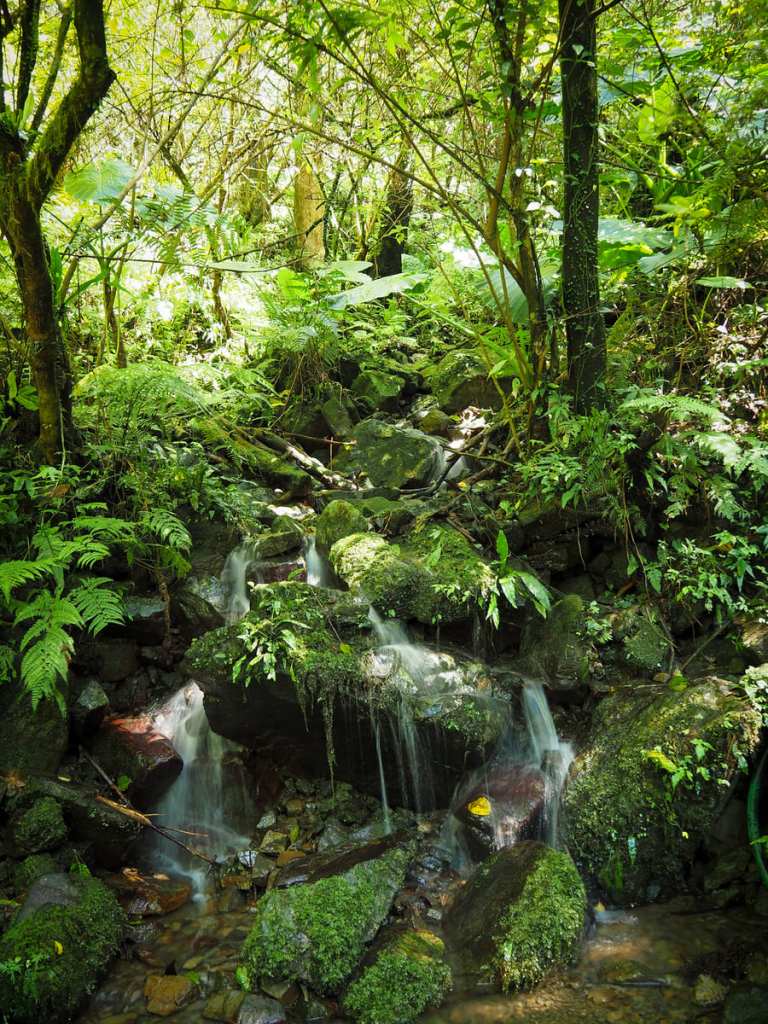
Pick your poison: endless steps or a constant slope (actually, they end after not too long). The trail climbs to a point where it crosses a couple of small streams.
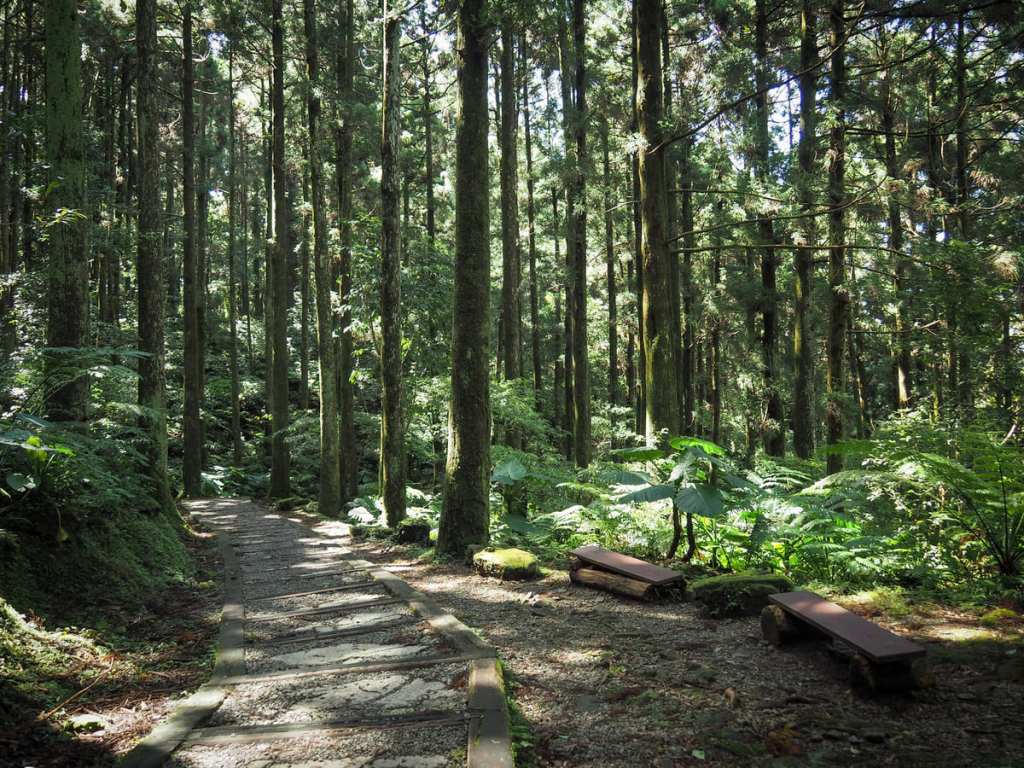
Then after that initial climb, the walk settles into a very gentle rolling pace. Small climbs, short descents, and plenty of places to sit and listen to the birds.
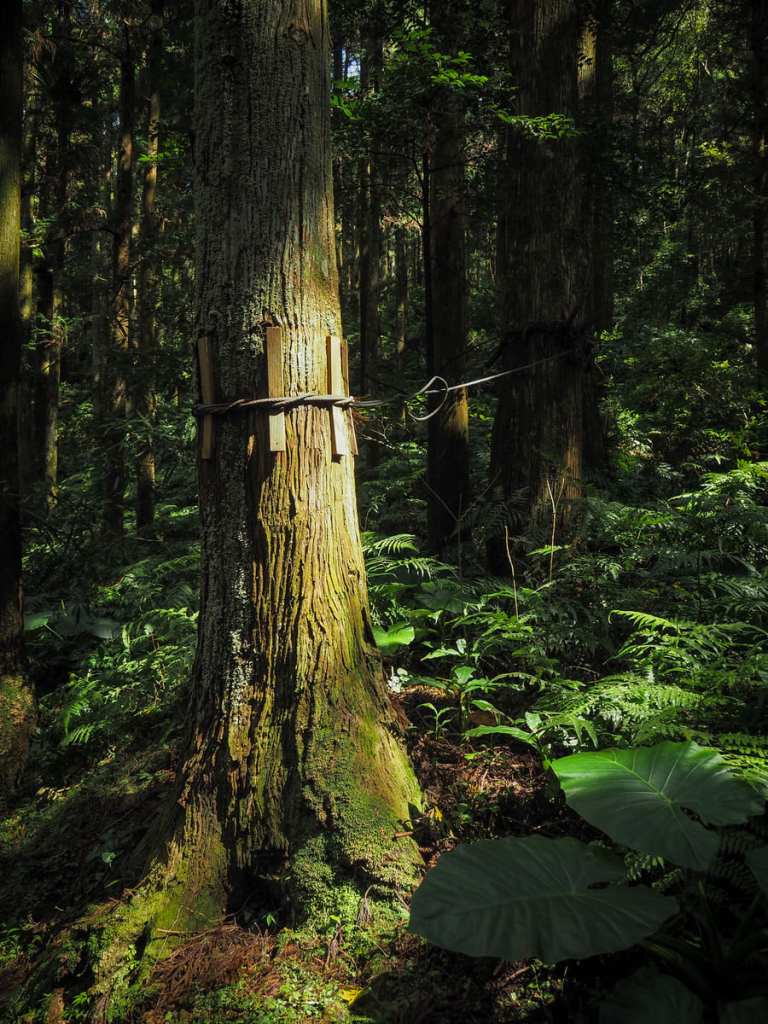
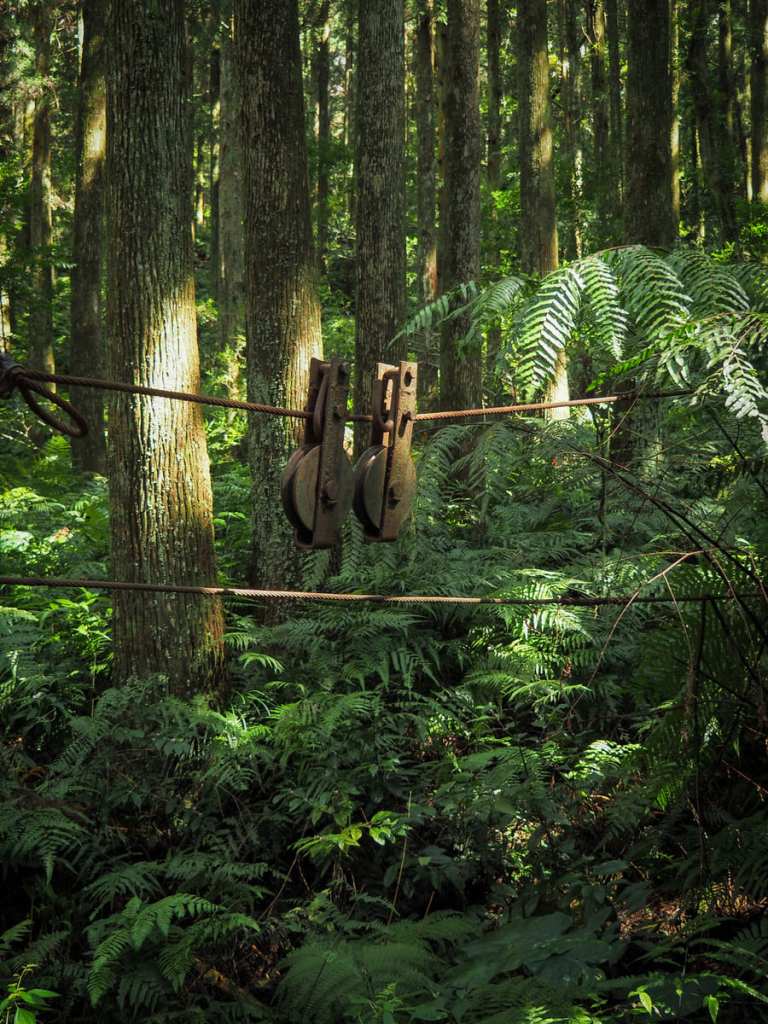
One unique feature of this particular walk is that it introduces visitors to a range of logging techniques that would have been employed in the park in years gone by. This is the first of several such installations that you’ll come across. On the left is a single-cabled, gravity-operated system that was nicknamed “Wild Monkey-Style Skidding” on account of the way that the transported logs would appear to swing through the trees like a monkey. Then on the right is a double-cabled cableway which would have afforded the operators more control over the speed of the logs’ descent.
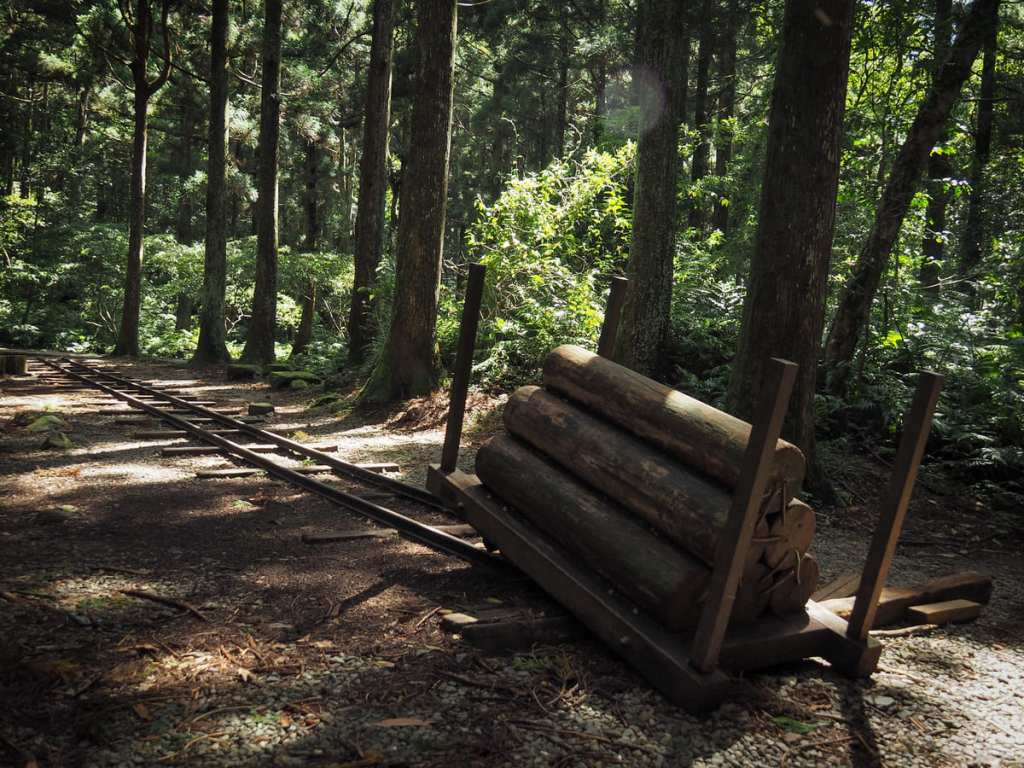
A little further along, you can see an example of a “roll pallet” (that’s the term used on the signage here, but my dad tells me they’re known as a bogie bolster wagon in British rail-culture jargon). The earlier versions of these would have been pushed or pulled by man or beast, but later utilised locomotive engines to do the heavy lifting.
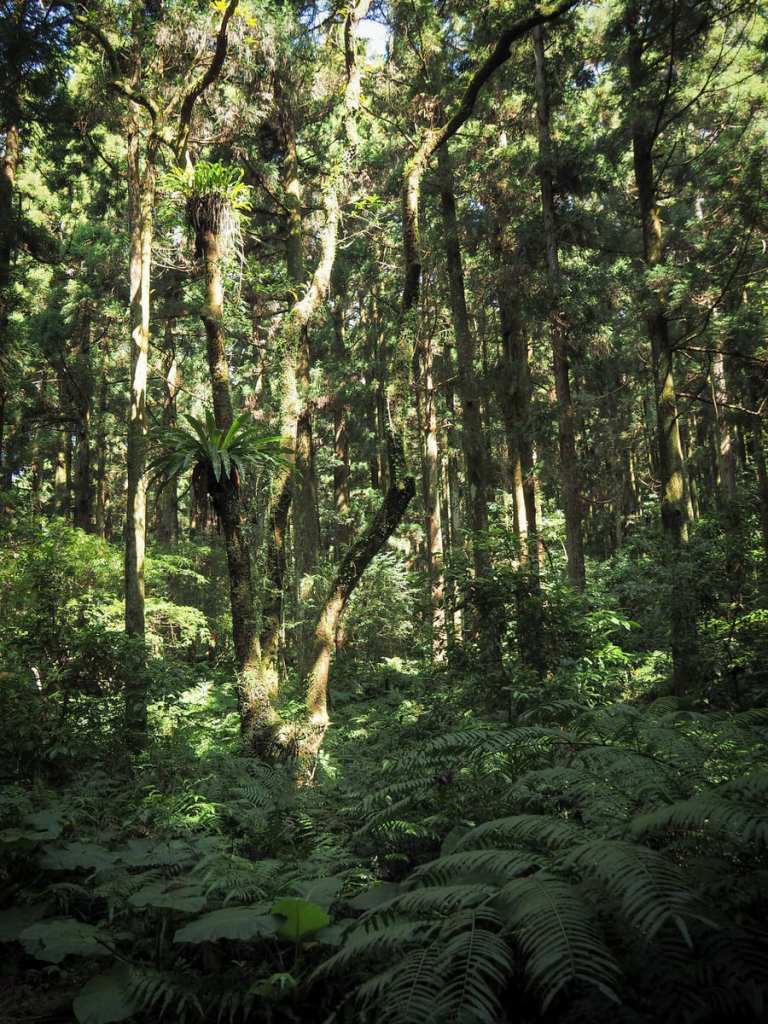
In addition to the informative displays, the first itself is worthy of attention. The afforestation efforts may have left the area with an unnatural monoculture, but the passing of time is gradually softening the impact and a more diverse forest landscape is starting to reemerge.
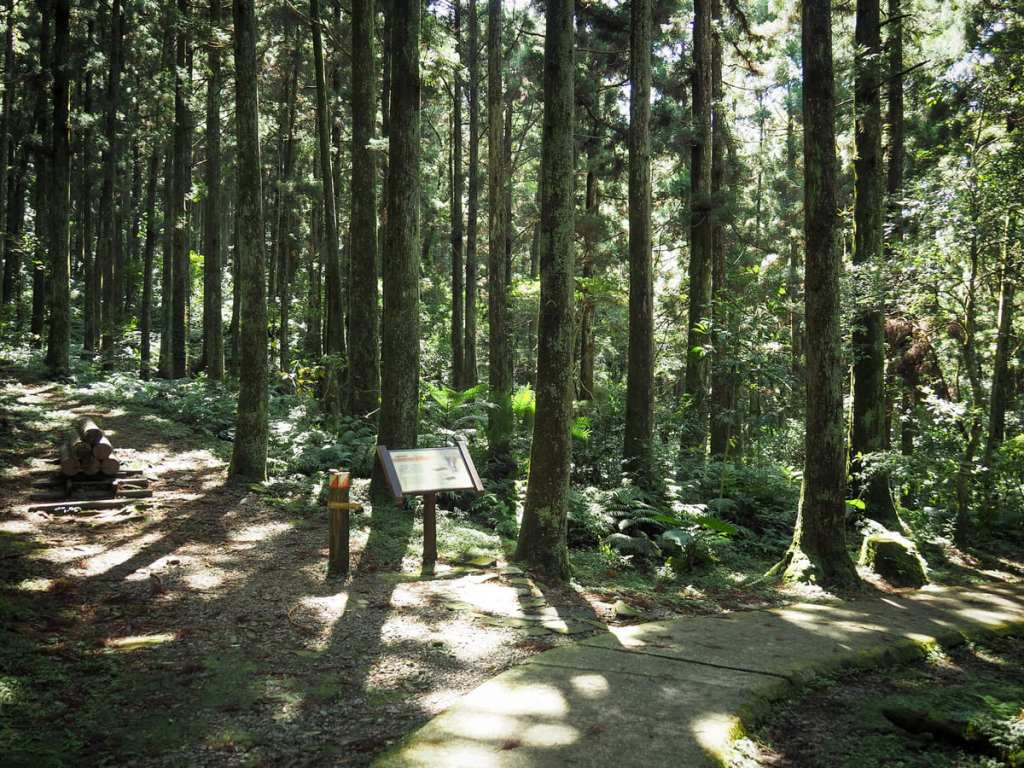
The third log transportation method on display is this “hobbyhorse”. This one worked similarly to the rail-cart, but without rails. Instead, workers had to lay logs on the trail and drag the loaded sled over the logs. Since the workers pulling the sleds would have been attached to them by ropes, and the sleds lacked any form of brakes, this would have been exceedingly dangerous (not to mention exhausting).
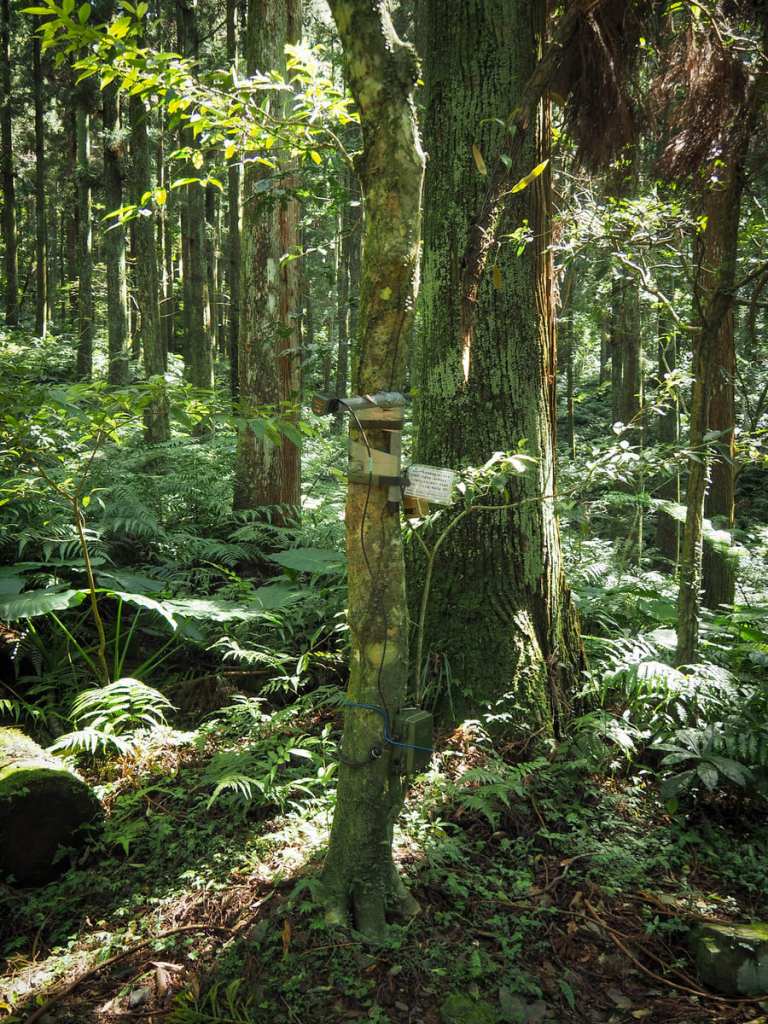
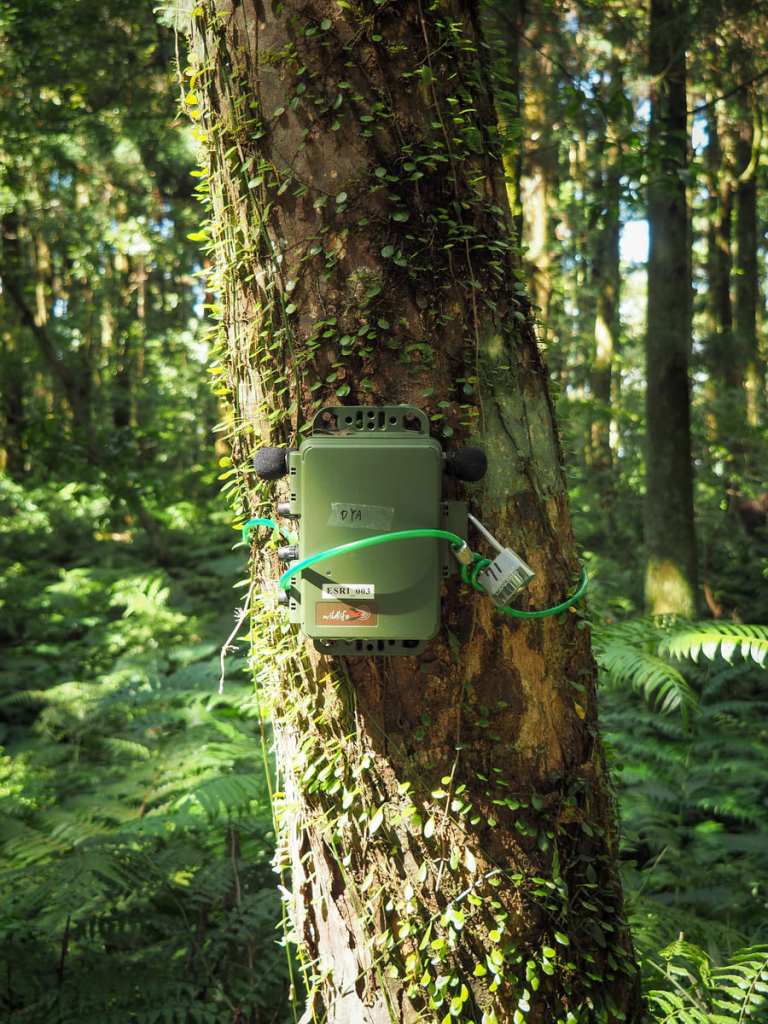
These trees stood opposite each other on either side of the path caught my attention. They’re not part of the logging history installation, and initially, I guessed they’d probably been placed here to monitor noise levels in the park. (In the time I’ve been in Taiwan, there seems to have been an upswell of interest in things like the Quiet Parks movement and Dark Sky Parks. In recent years, Yangmingshan National Park received recognition as the world’s first Urban Quiet Park, and Taipingshan’s Cueifeng Lake Circular Trail won international attention for becoming the world’s first certified Quiet Trail.) However, the label attached to one of them indicates that in fact, they were placed here by Academia Sinica’s Biodiversity Research Centre to record the impacts of extreme weather on biodiversity.
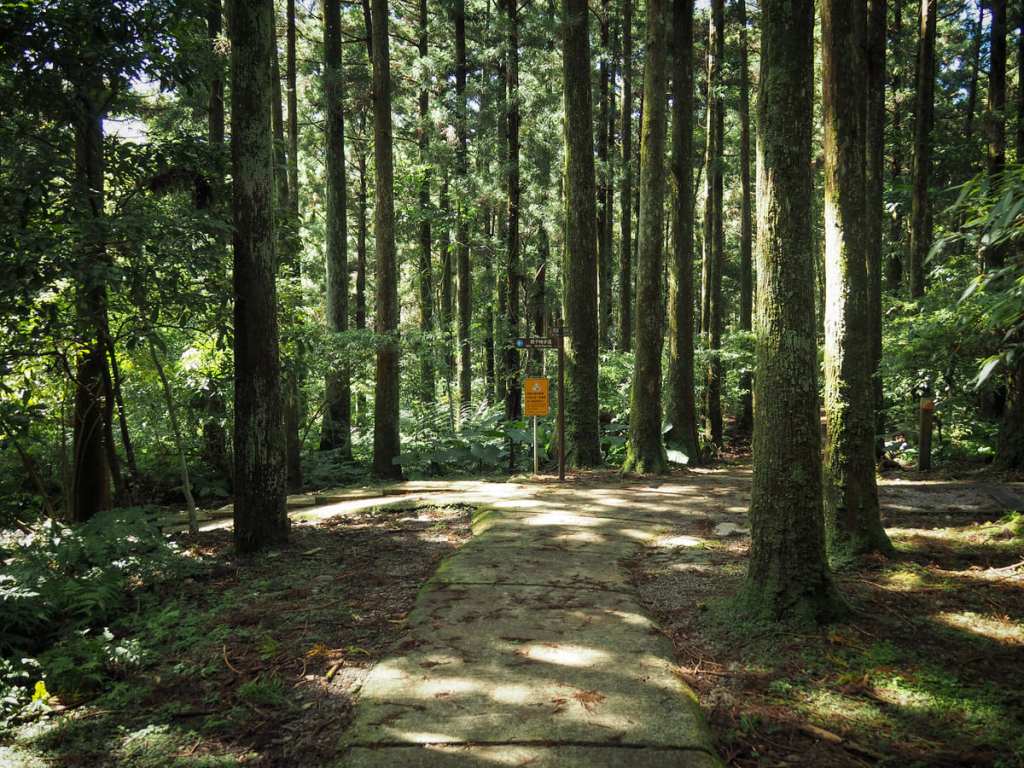
Take a left at the next junction. (Heading right will take you directly back to the forestry track.)
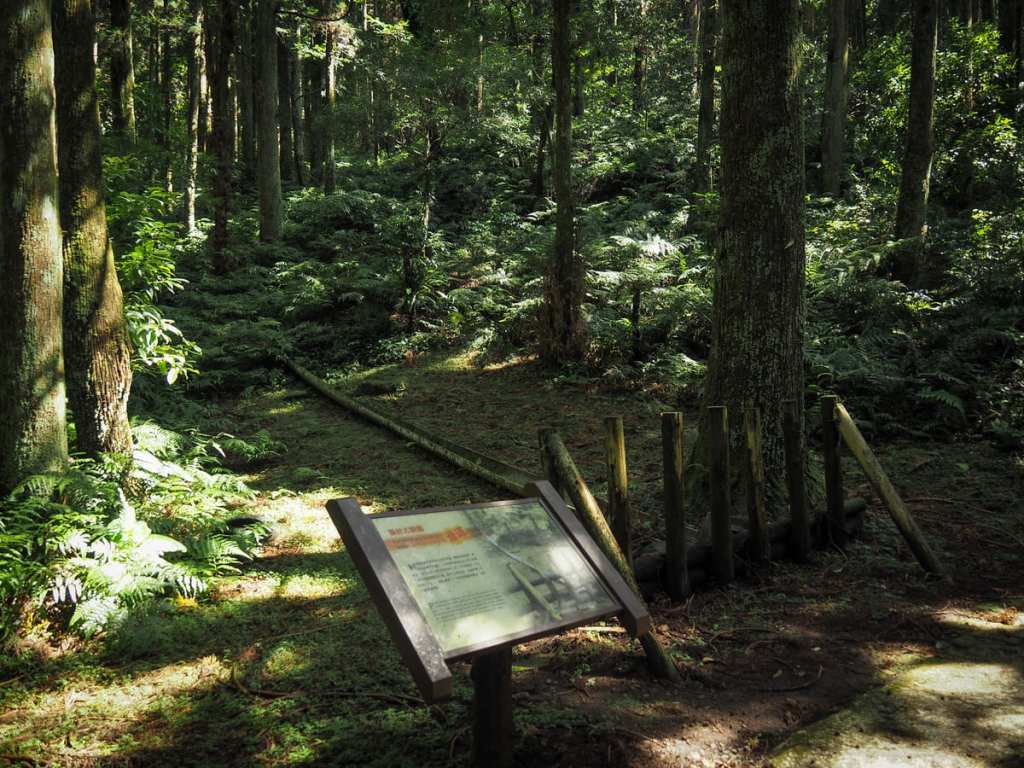
The next logging technique looks a little dubious to me. A chute fashioned from half of a grey plastic pipe sits looking like a budget kids’ playground attraction. The information board suggests that logs would have been slid down the chute, using a steeper angle at the top to gain momentum, and a shallower slope at the bottom to help slow the logs down.
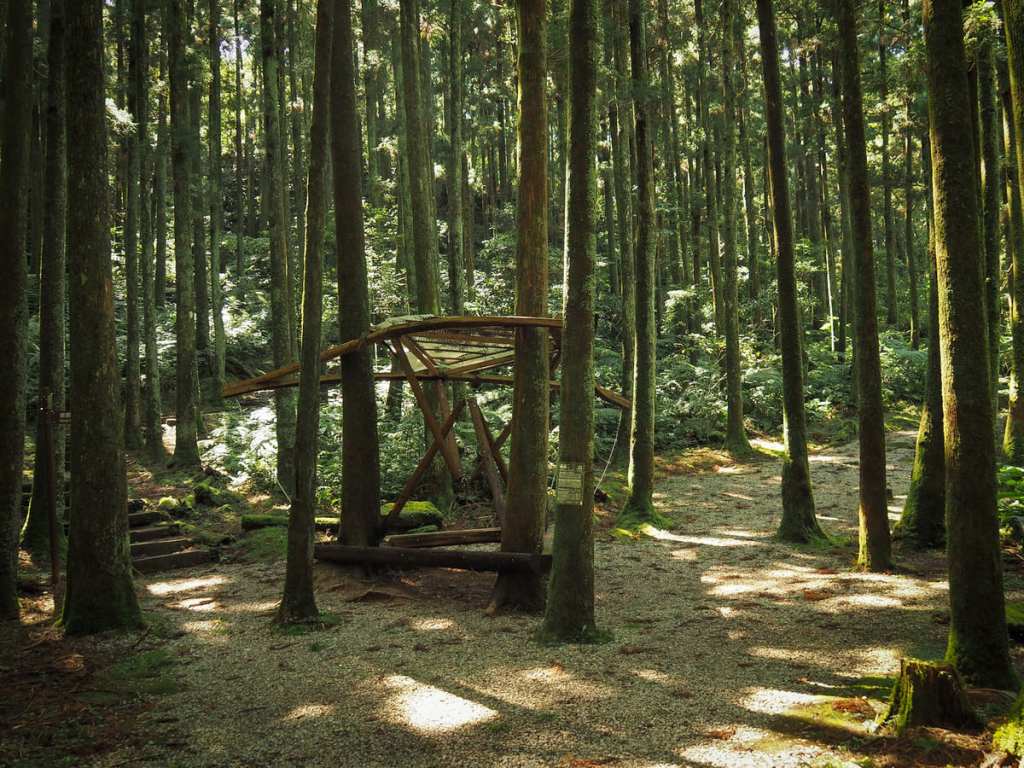
Once again, take a left at the next junction, then after steps take you down to a clearing with a couple of interesting shelters, take the right trail and head towards the forestry track. (If you’re planning to walk the Qinzi Peak Trail, you’ll have to take the lefthand trail here and start climbing again.)
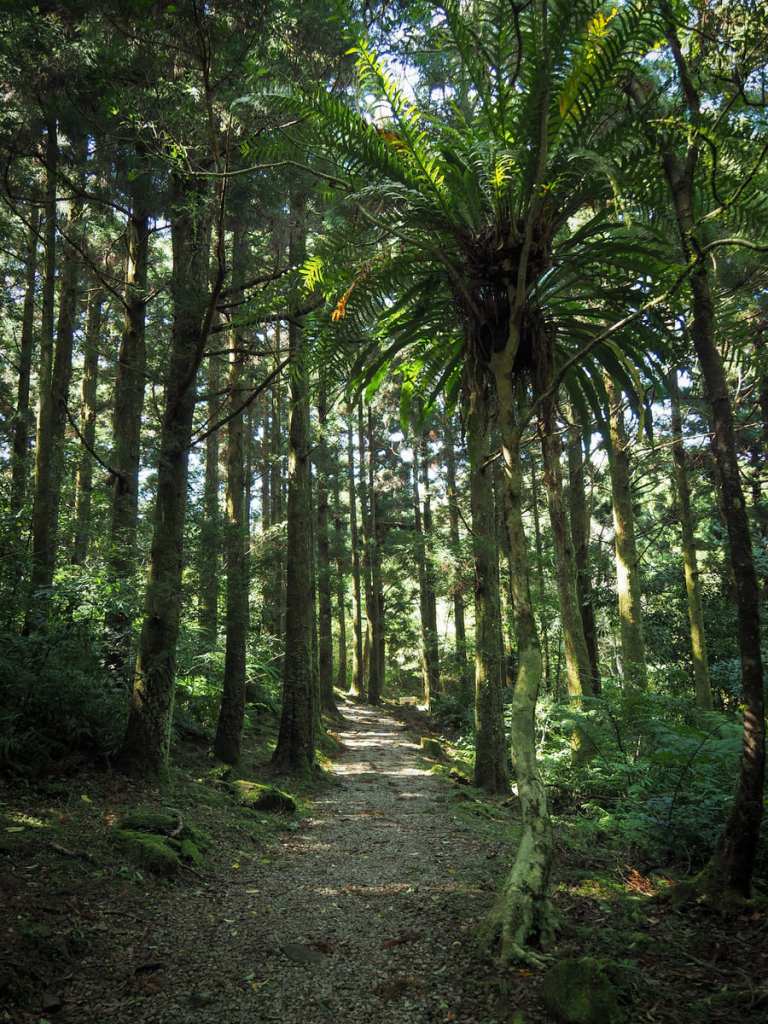
An epiphytic crown-like fern that has taken up residence in the crook of a tree.
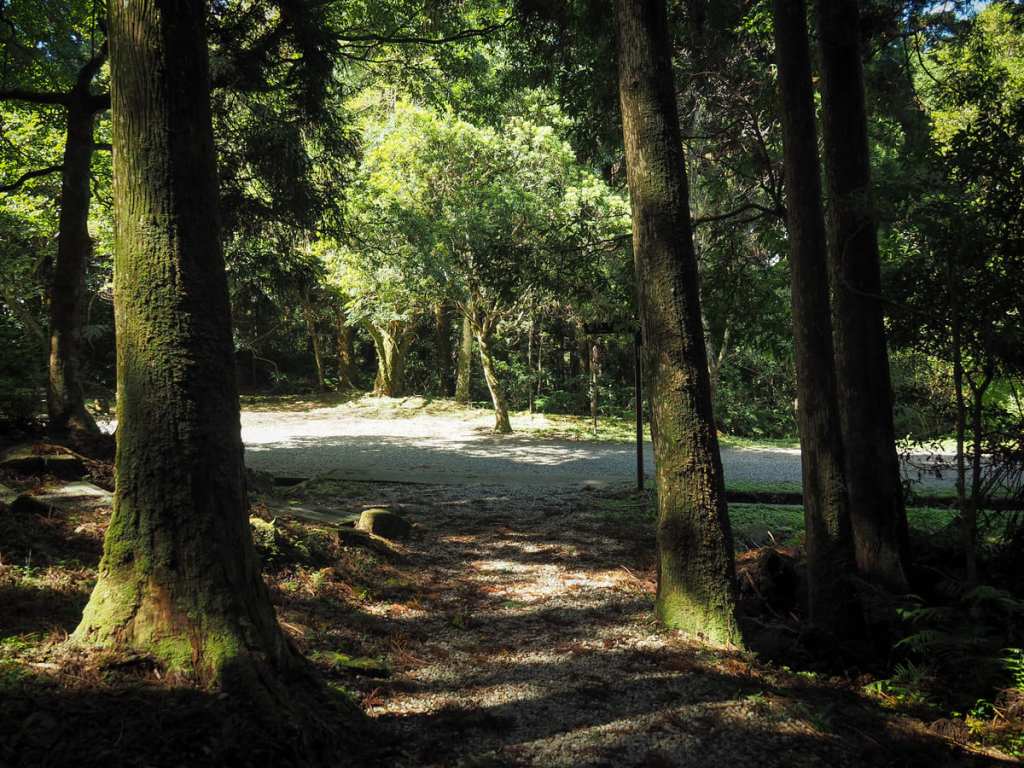
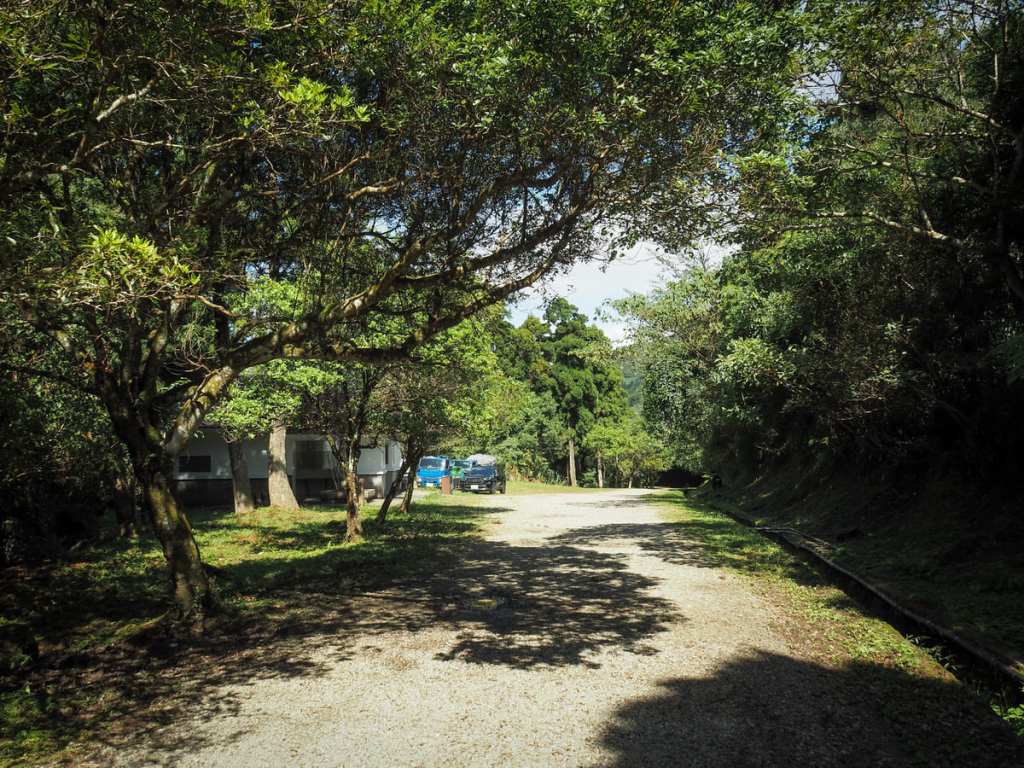
Soon, the path spits you out onto the forestry track. Turn right here and head past a toilet block. Then it’s a simple case of following the track all the way back to where you started.
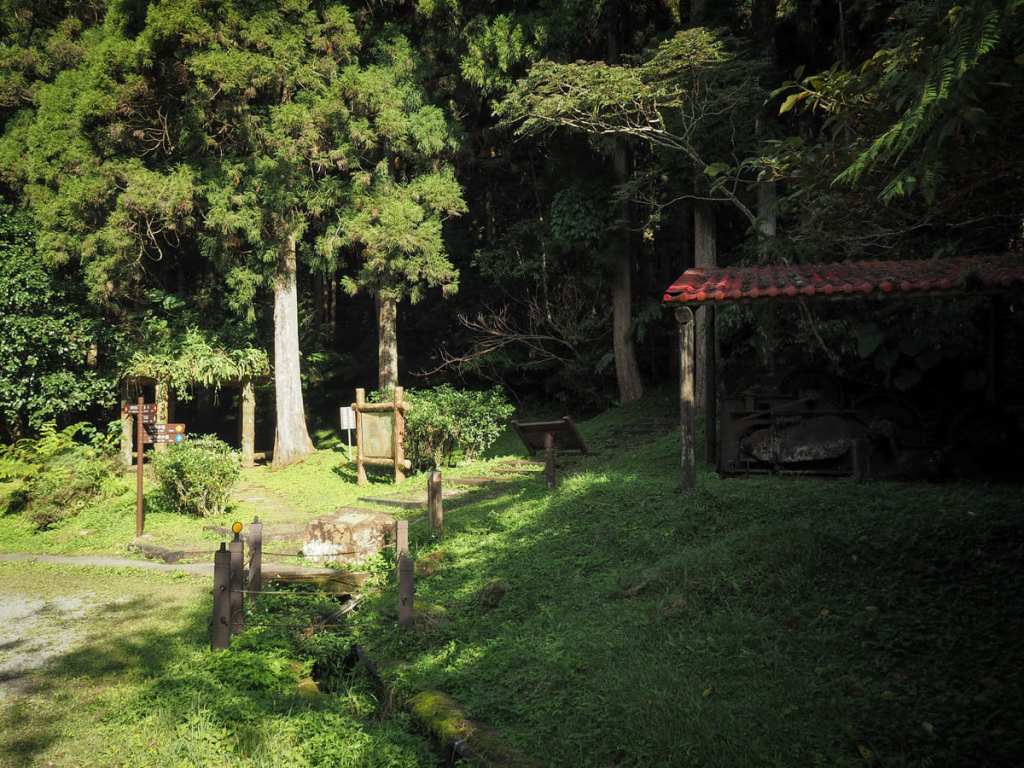
Alongside the track, you’ll find more information boards introducing the area’s geology, as well as one more relic from the region’s logging days. Under the red roof, you can see the rusting remains of a skidding machine. This would have been used to power one of the cabelways seen earlier, taking some of the hard effort out of the operations.
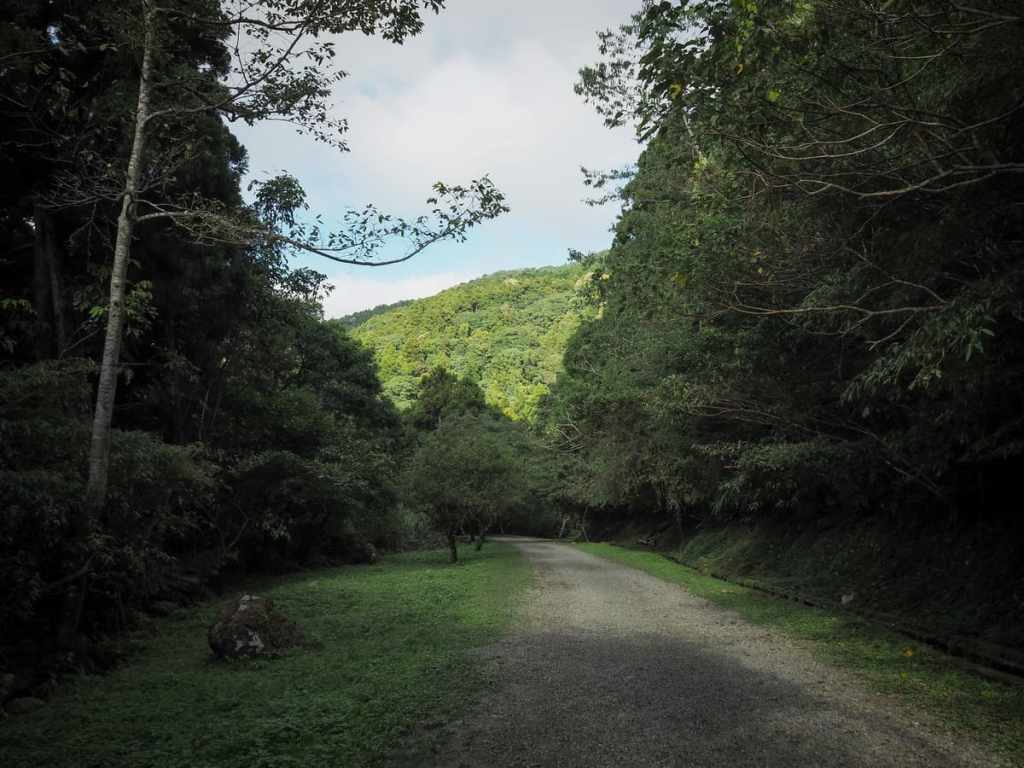
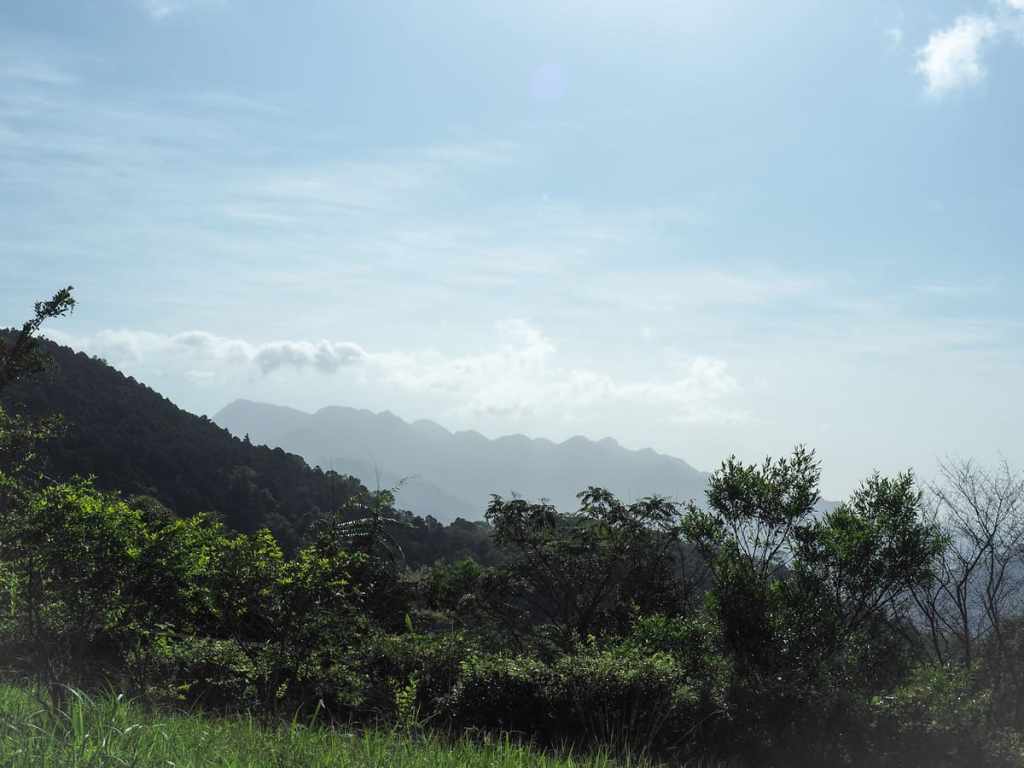
The forestry track is not the most beautiful section of the park, and you might find yourself wanting to walk back the same way you’d come, but it’s easier, and in a couple of places you have some pleasing views to enjoy. I’m not sure what that saw-toothed ridge is over there, but it looks both thrilling and exhausting to walk.
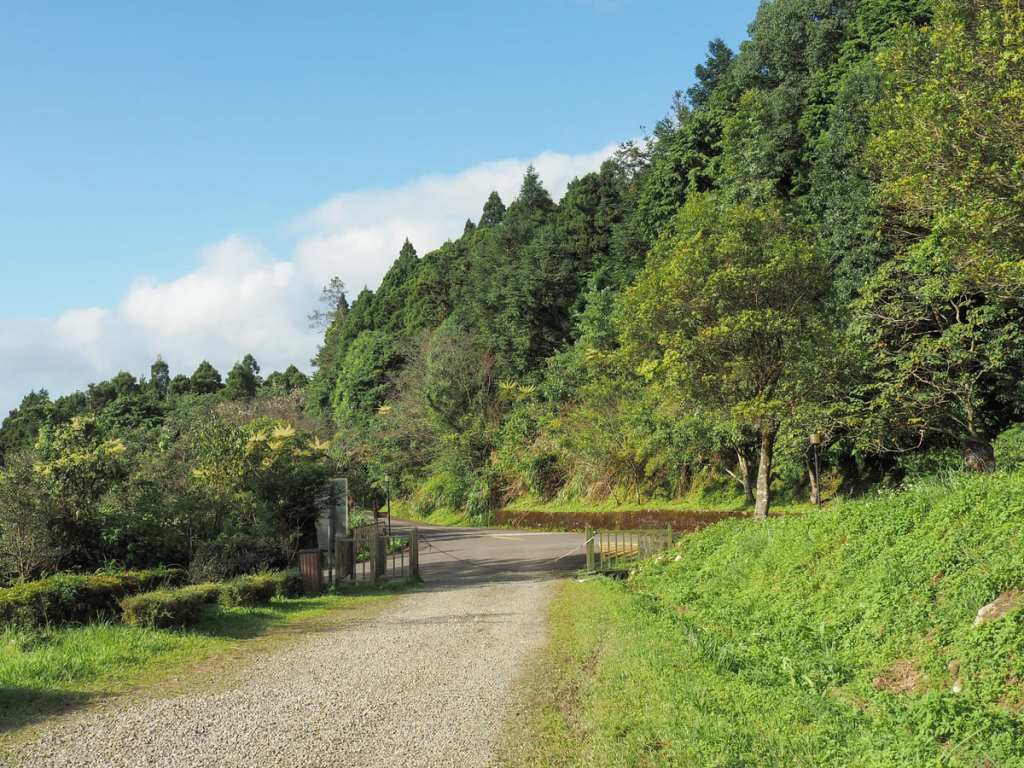
The track terminates where it rejoins the road. Head up the hill here to arrive back at the restaurant, or else you can follow the road going straight ahead until it arrives at the park’s main entrance.
Getting to Donyanshan National Forest Recreation Area
Google maps address: If you’re driving, you can navigate to Dongyanshan National Forest Recreation Area. There are a few parking spaces outside the park entrance, but if you choose to drive into the park, you’ll want to head to the carpark beside the restaurant for this trail.
GPS location: N24 49.700 E121 24.590
Public transport: It is possible to visit Dongyanshan using public transport with just a little foreplanning (and a couple of transfers and a lot of time).
The 506 Taiwan Tourist Shuttle service departs Taoyuan Daxi Bus Terminal three times a day on weekdays (8:00, 11:00 and 15:00), and five times a day on weekends (8:00, 9:00, 11:00, 14:30, and 15:00). Similarly, there are three return services on weekdays and five on weekends with the last bus departing the part at 17:00. I wouldn’t advise catching any of the services after 11:00, because they won’t give you enough time to explore.
If you’re coming from Taipei, it is possible to arrive at Daxi in time to get the earliest bus by using a combination of buses or a train and a bus journey depending on where you’re starting from. The easiest way would probably be to catch a local train from any of the Taipei stations to Yingge. Then alight at Yingge and catch the 5101 bus from the stop in front of the station and ride it to its final stop at Taoyuan Daxi Bus Terminal.
Dongyanshan Tickets
Tickets can be bought from the front gate and as of 2023, the highest full-price ticket is NT$100. (Several groups including kids and full-time students are eligible for a discount.) If you plan to drive to the park, you can expect to pay an extra $100 for a car or $30 for a scooter.
Nearby trails:
Dongyanshan Forest Trail Map
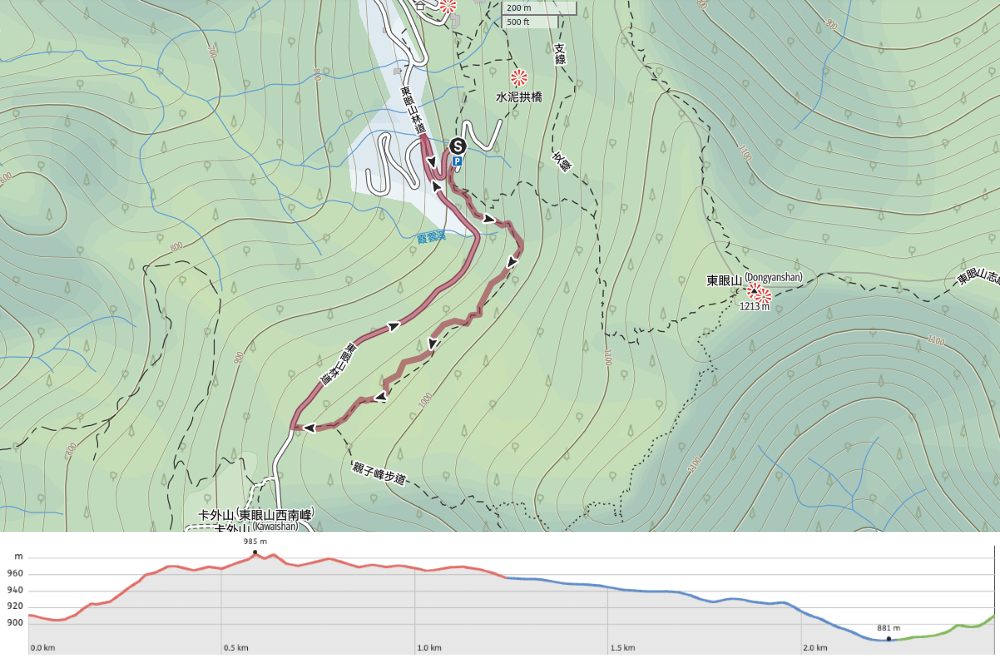
GPX file available here on Outdoor Active. (Account needed, but the free one works just fine.)
 Taiwan Trails and Tales