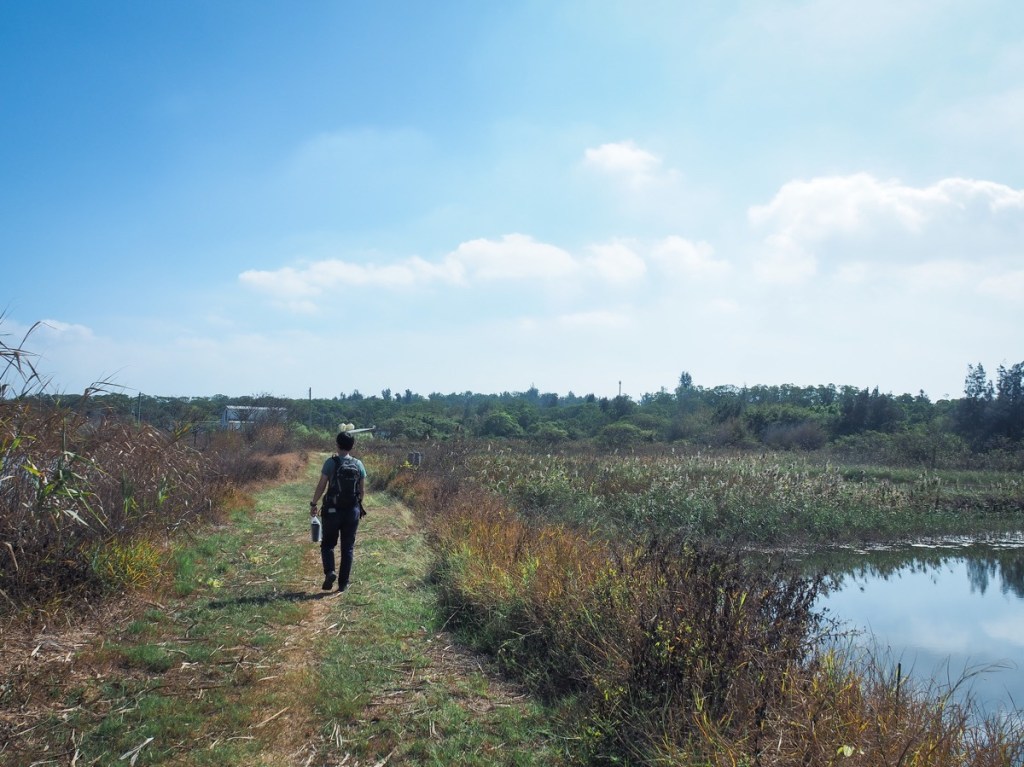
Ci Lake can be found on Kinmen’s northwestern tip, very close to the famous Broadcasting Wall. It was formerly a marine estuary, but after Ci Causeway was built, it became an inland salt lake, and it is now known for being a superb spot for birding, and after our visit, I can say that reputation is thoroughly deserved. We saw so many different species of birds, including several that I had never seen before.
Distance: About 5.6 kilometres.
Time: It took us about 1½ hours to complete a loop.
Difficulty: 1/10 — This is an easy, mostly flat stroll around a lake.
Total ascent: There is so little ascent that it’s not even worth mentioning.
Water: We took about 0.5L each and that was ample. If you find yourself in need of supplies, you can head to Shuangwei Wetlands Nature Centre, which is free to enter and has a small café/store.
Shade: There’s next to no shade on this route, so go prepared.
Mobile network: Clear phone reception throughout.
Enjoyment: If you’re a bird spotter, this is a great location.
Route type: Loop or there and back.
Permit: None needed
Jump to the bottom of this post for a trail map and GPX file.
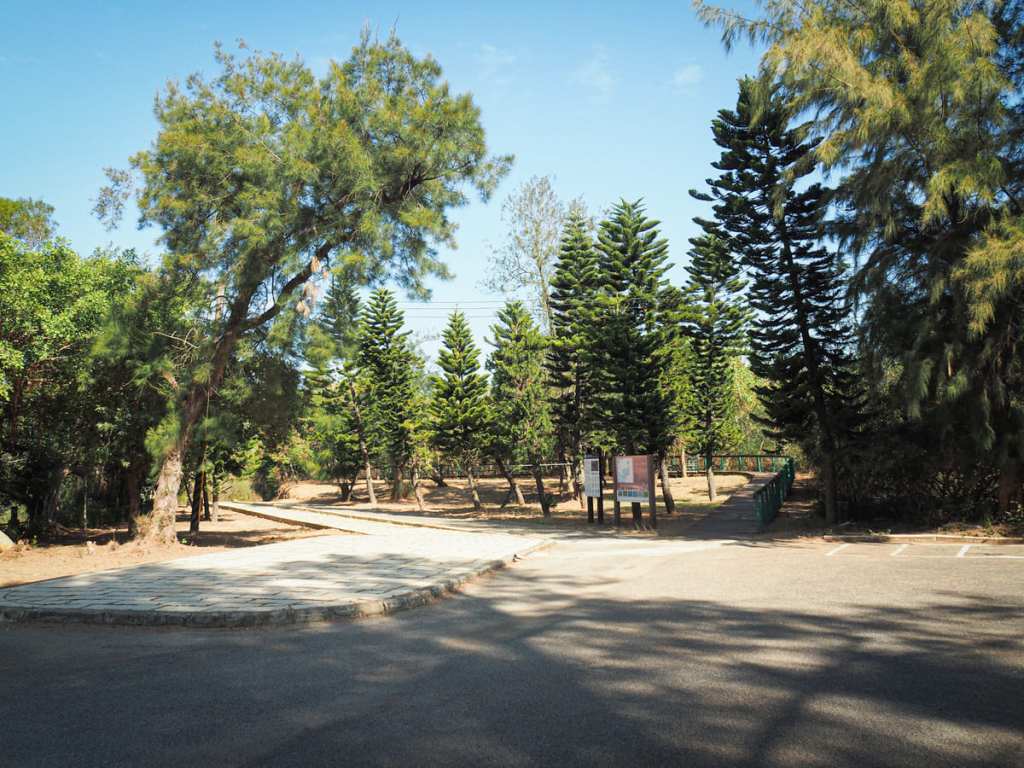
We parked at the southern end of Ci Causeway and made our way to the far side of the carpark to where the trail begins.
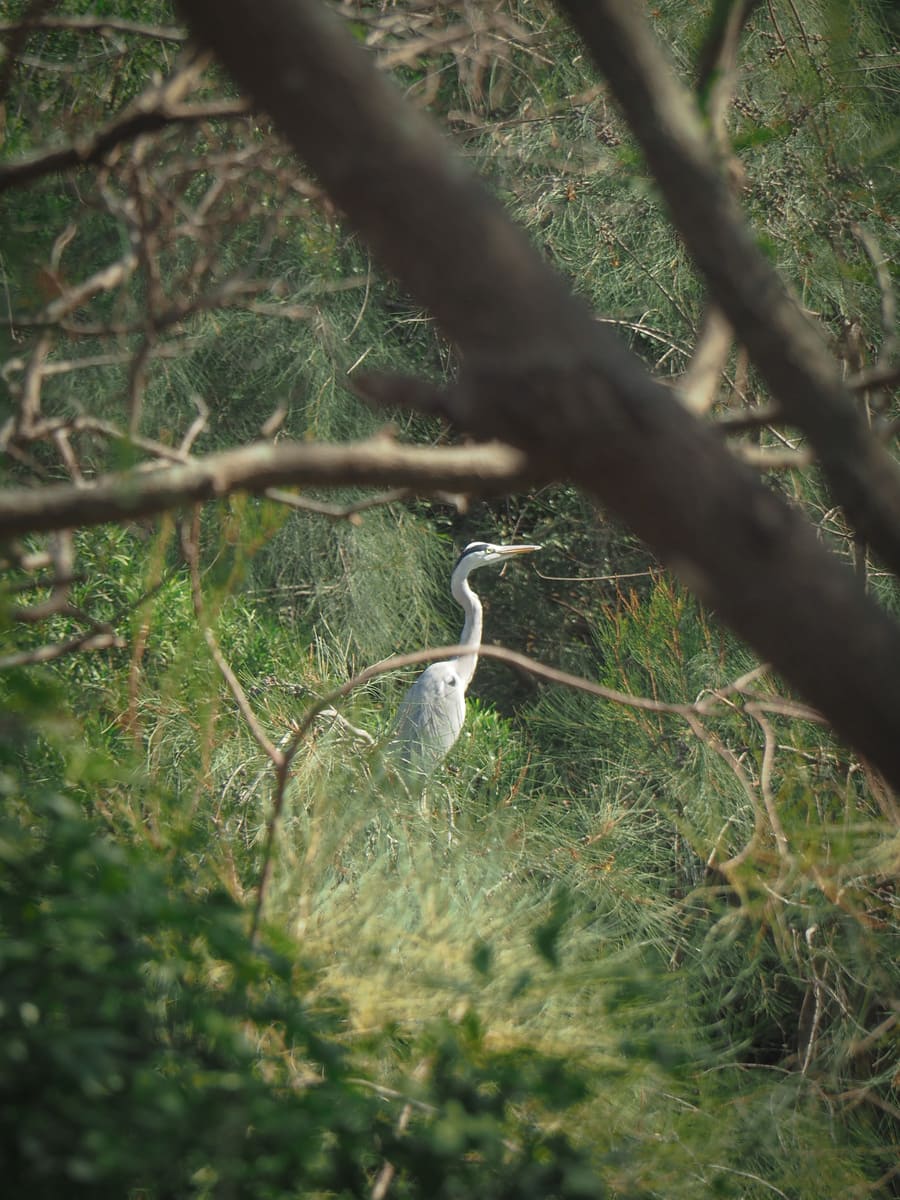
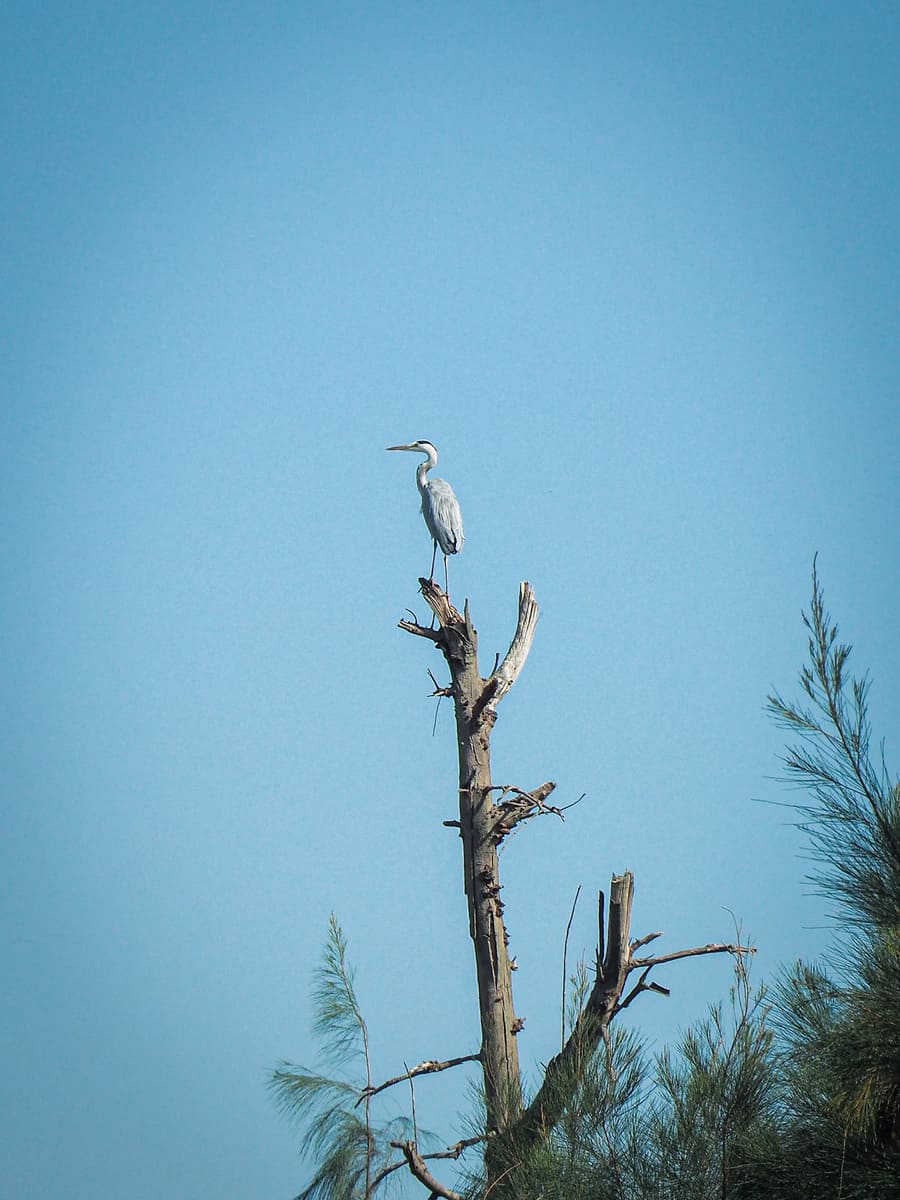
Within seconds of setting off, we had our first avian sighting of the day. This grey heron, which decided that it was too close to us, lumbered off squawking its dinosaur squarks until it found a safer, higher perch from which it could observe us.

There are very few junctions along the way, but in general, you just need to keep following the signs to Shuangli Lake.
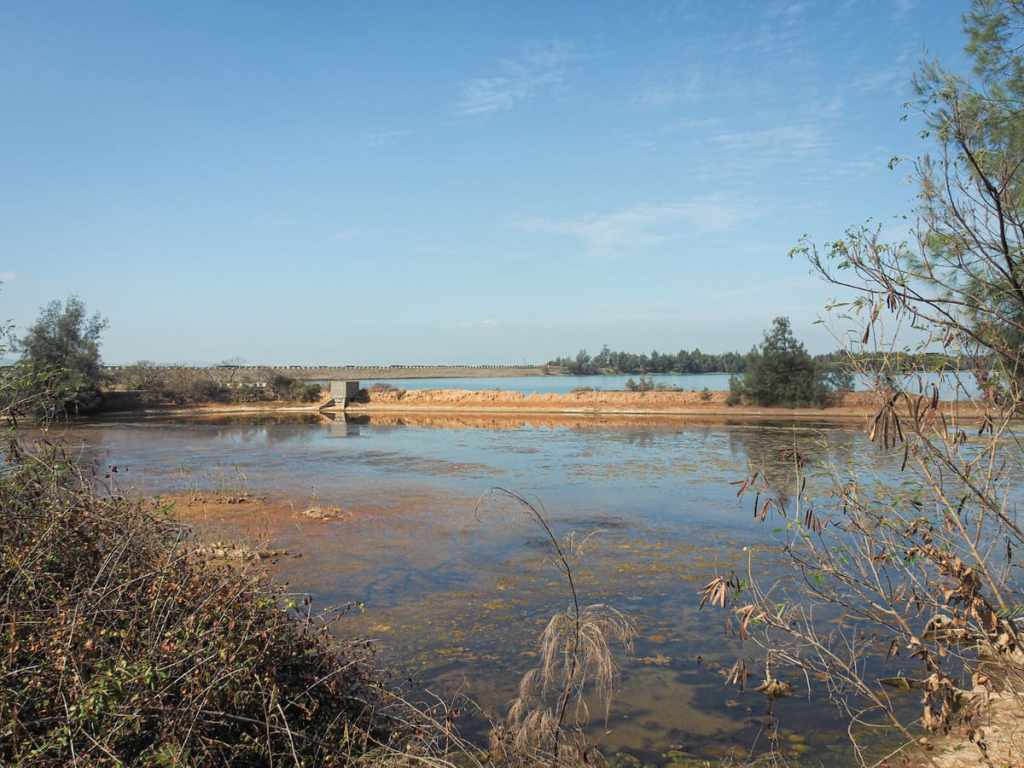
Looking back towards the causeway, a lot of the pools are full of algae. In fact, the algae itself has become something of a draw for Instagrammers. After long dry spells, the disused fishponds beside Ci Lake turn a bright shade of pink thanks to the high beta-carotene content in the water (produced by algae). This bizarre-looking natural phenomenon has attracted plenty of photographers and internet beauties, all hoping to photograph the Pink Pool. Shots of the pink water can be seen here (link in Chinese).
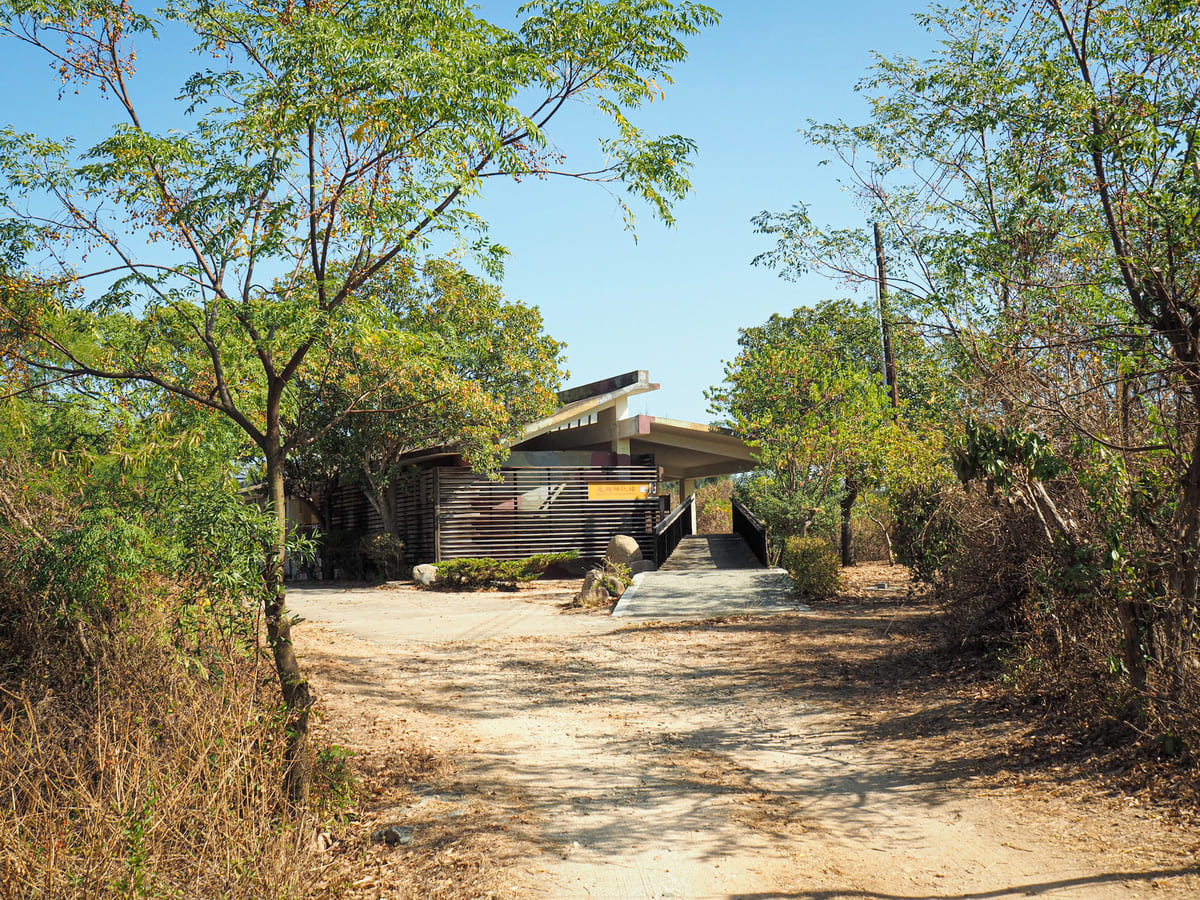
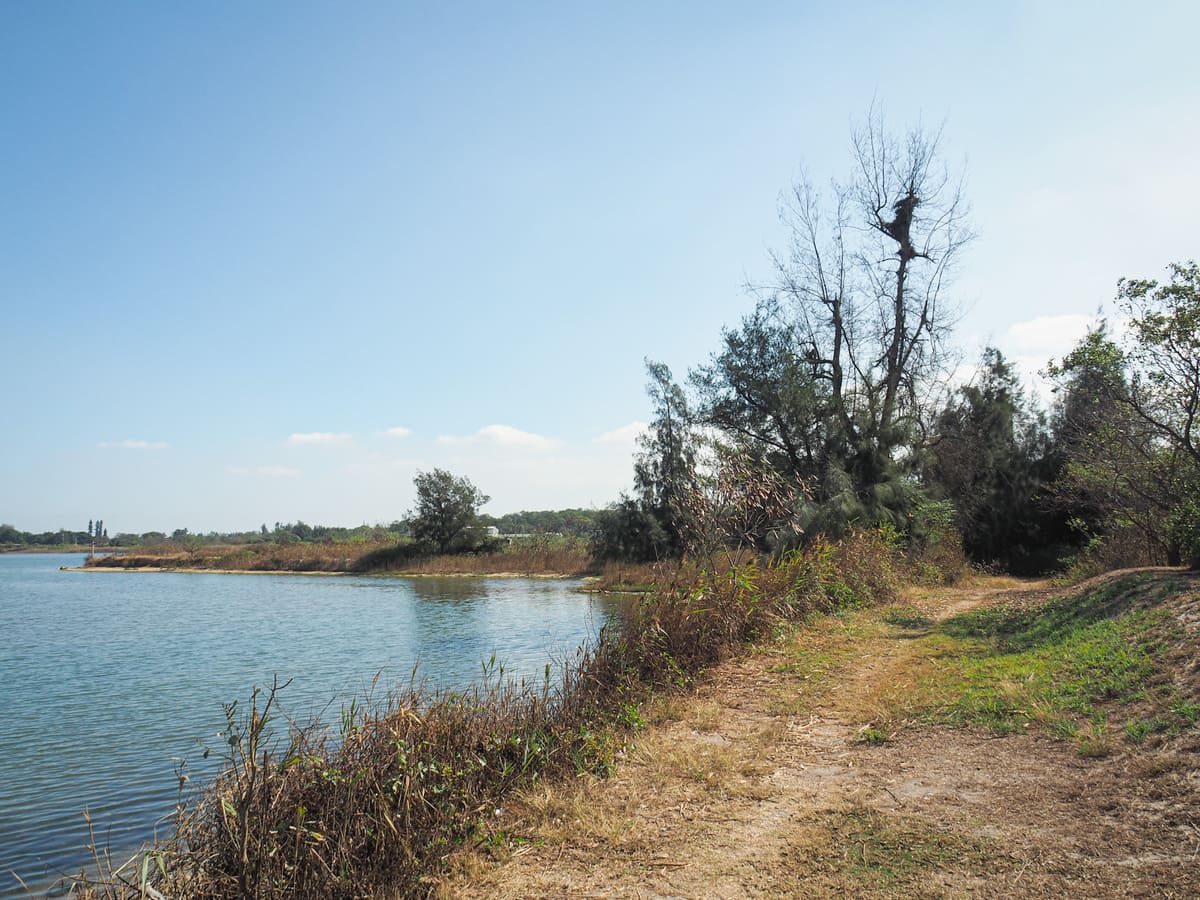
After about ten minutes of walking, we arrived at a kind of education centre. There are dusty boards introducing some of the area’s birdlife and animals (apparently Kinmen has a Eurasian otter population), but it looks like it is rarely visited. Beyond the building, the track narrows and becomes more of a walking trail.
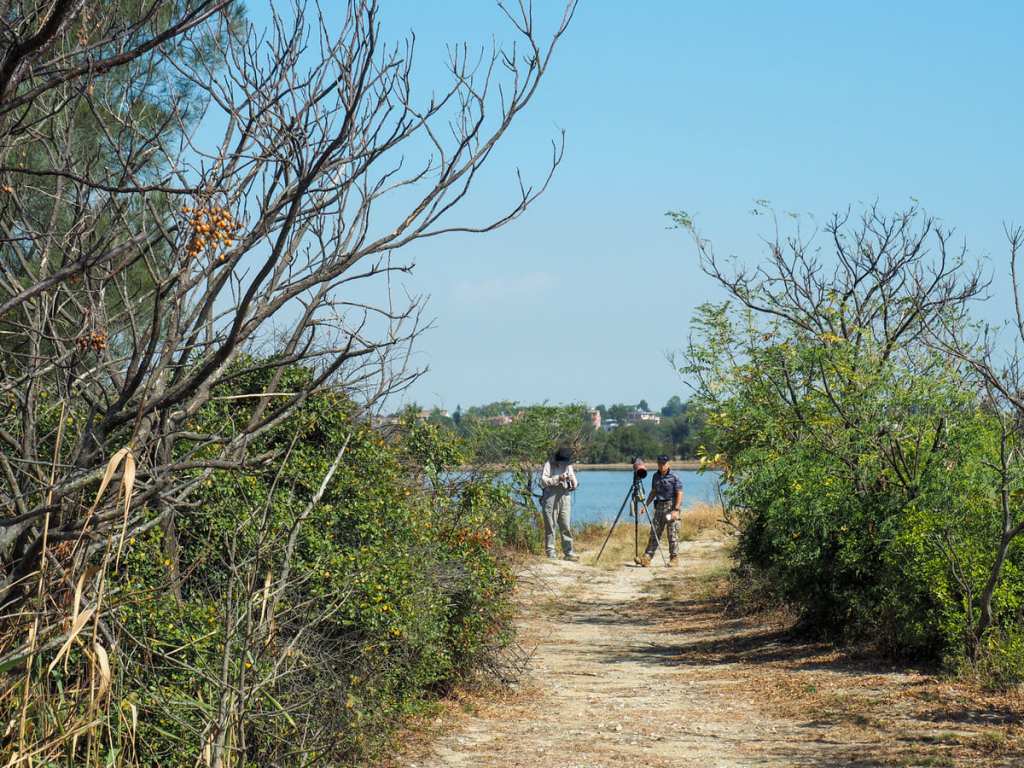
When a rare bird is spotted in the area, I am sure there would be flocks of camera-toting bird watchers, but we only saw two people with big lenses, one of which was more concerned with tracking the progress of a visiting group of school children than photographing any birdlife.
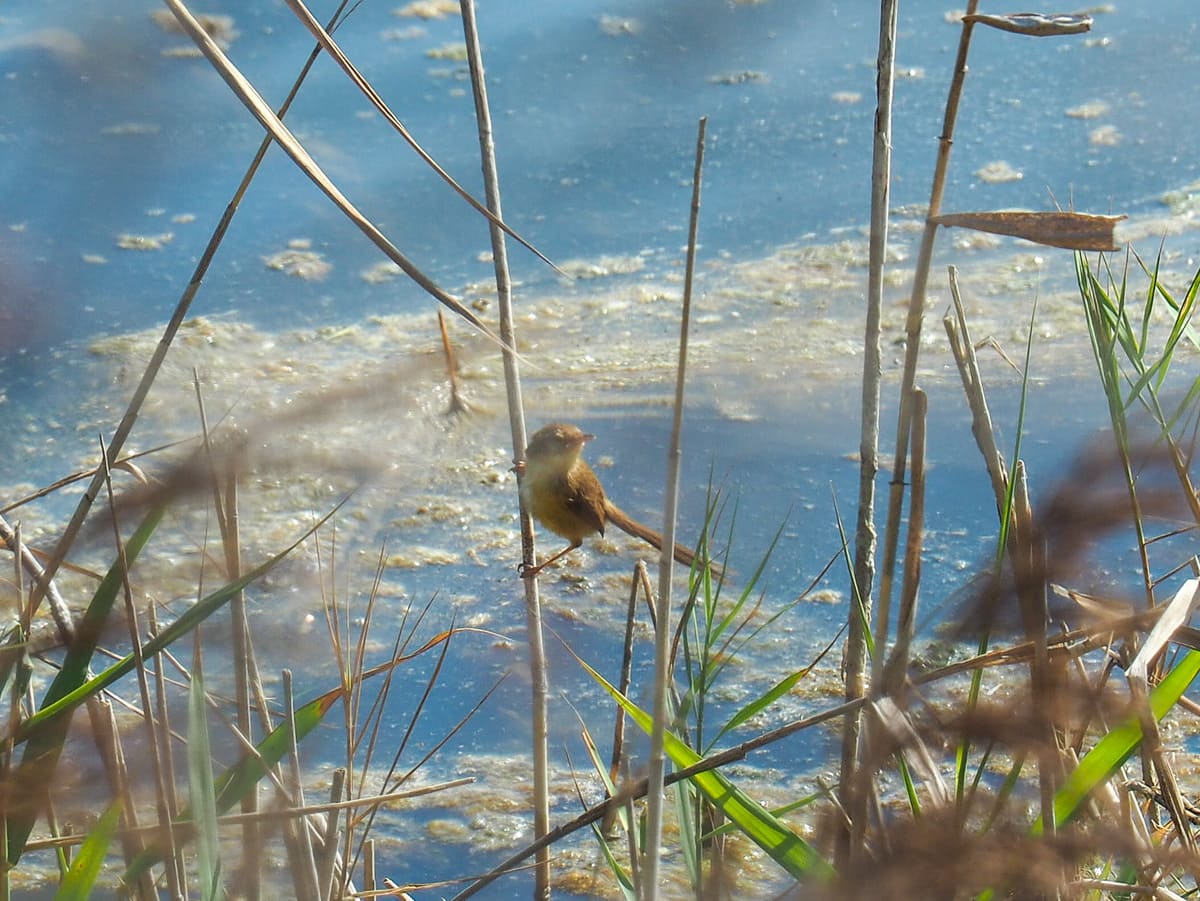
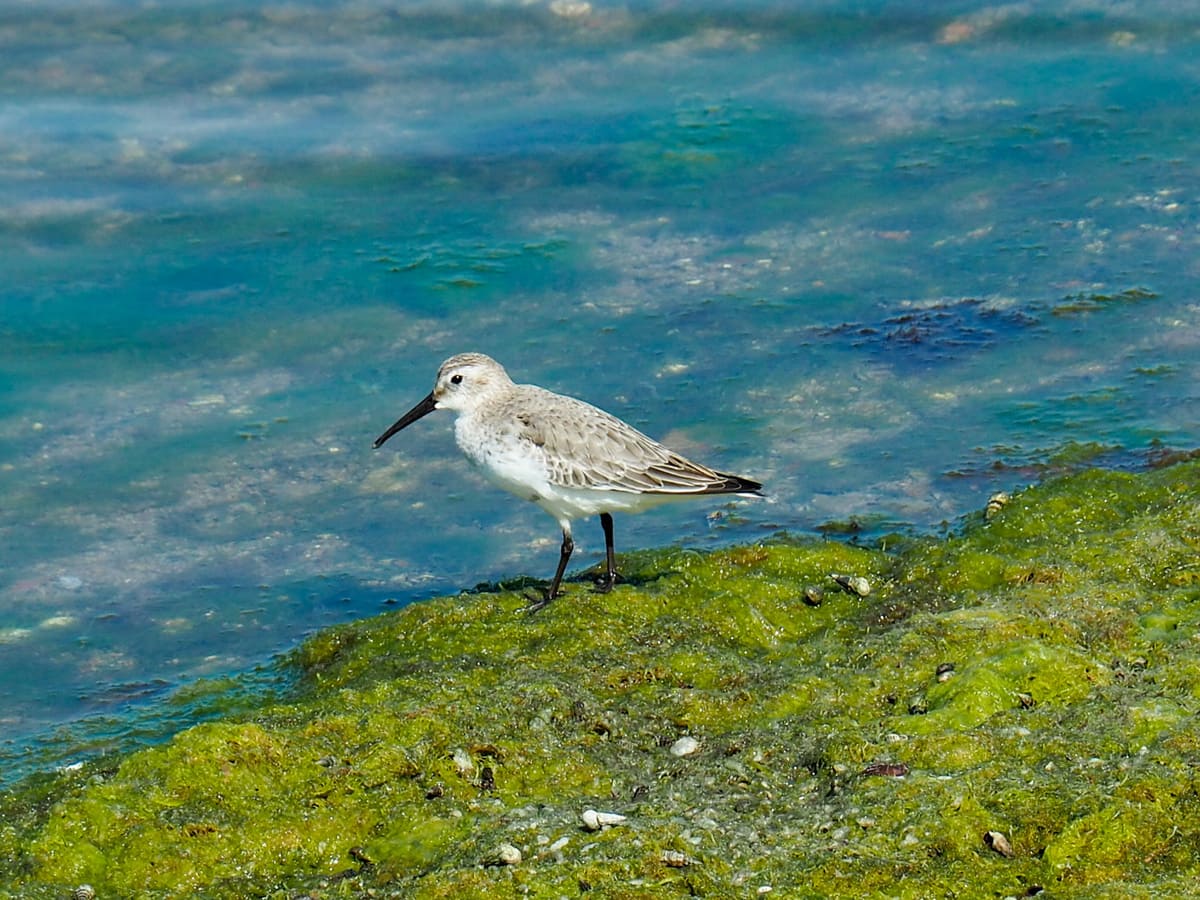
A little further along and we came across some more birds. The one on the left is a plain prinia–I’ve seen them before around Taipei, but they’re tiny and skittish, so I’ve never photographed one. On the right, is a dunlin. Originally, I identified it as a sanderling and thought that was the cutest-sounding name for a very cute-looking bird, but I’ve since been gently corrected.)

For much of the walk, there’s water on both sides of you. Ci Lake is always to your left, and on the right, there are lots of smaller pools, at least some of which are old fish ponds.
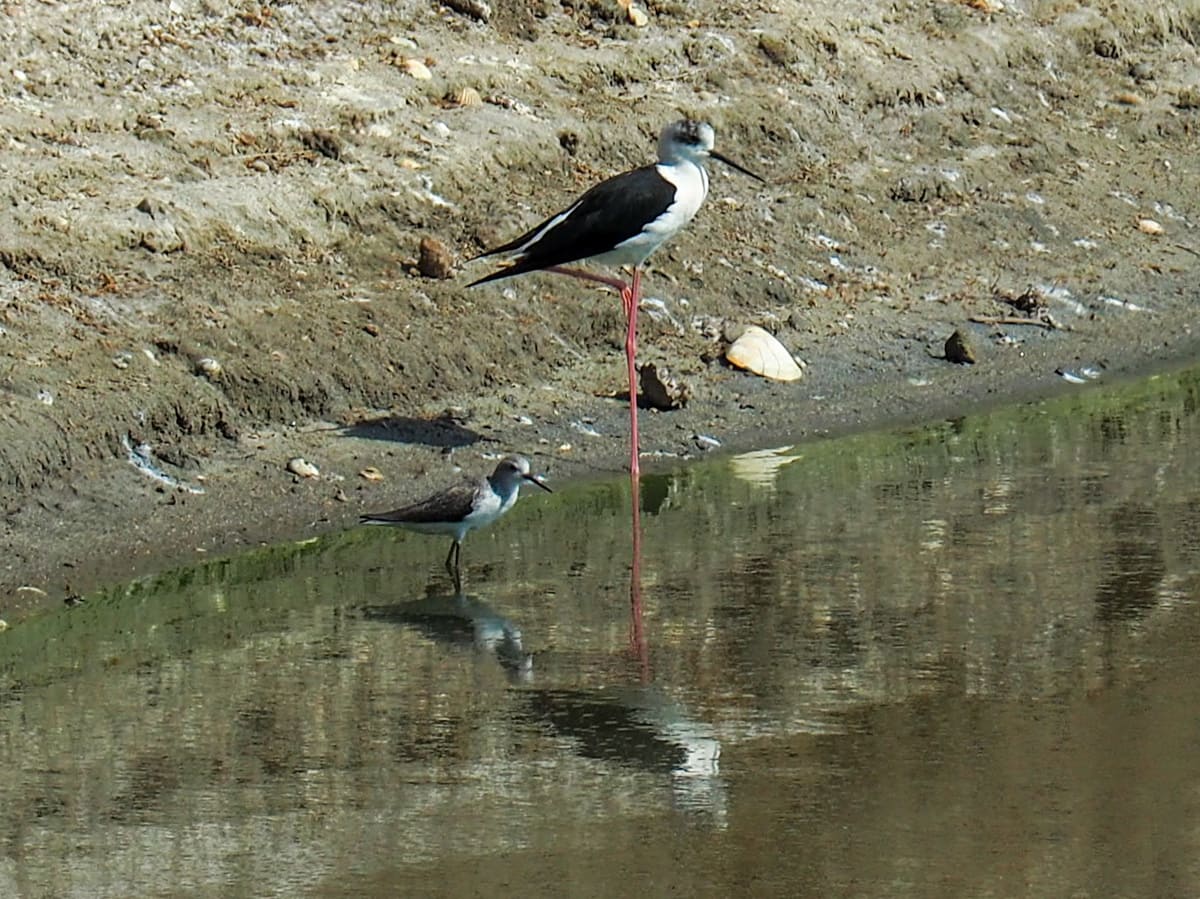
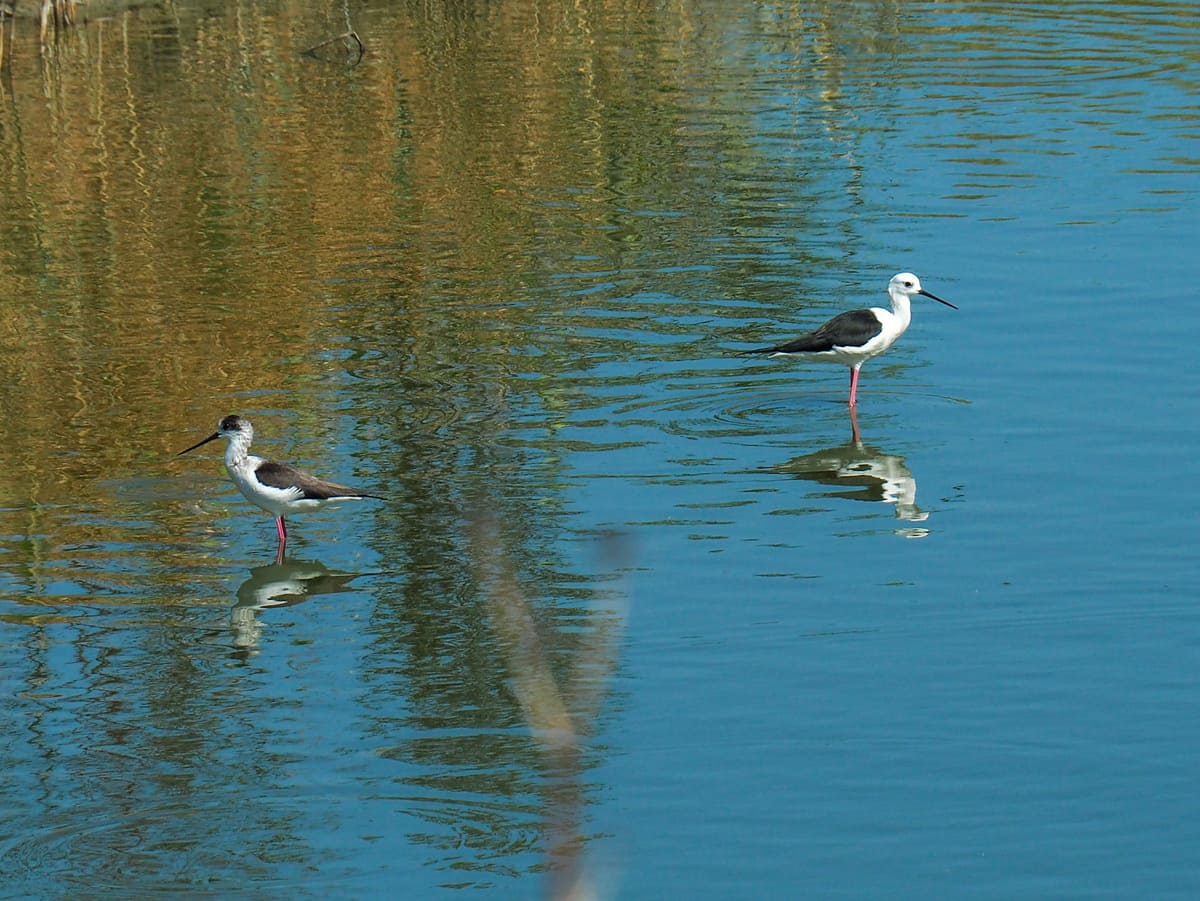
One bird we saw quite a lot of were these black-winged stilts. They are exceedingly elegant and don’t startle easy, making them really fun for an amateur like me to photograph. They also have a stunningly accurate name. Black wings, check. Stilt-like legs, check. It’s perfect.
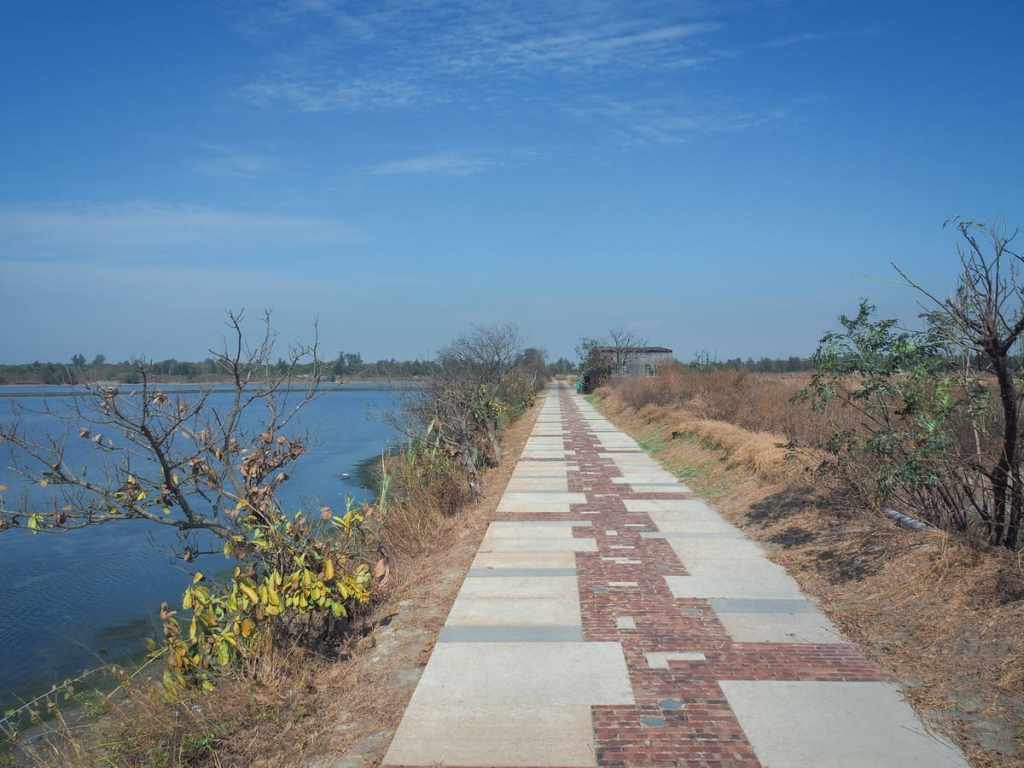
We passed the group of local elementary school kids being taught about the different bird populations that can be found here and in mainland Taiwan, then crossed a small bridge to reach this long, straight section.
Two of the most exciting bird sightings of the day were kingfisher-related. The first was this pied kingfisher, which announced its presence by streaking across the sky like a flying squeaky toy. Compared to the regular kingfishers that you see back home in the UK or in Taipei, these guys are huge! They’re 25cm long, (common kingfishers are almost 10cm shorter).
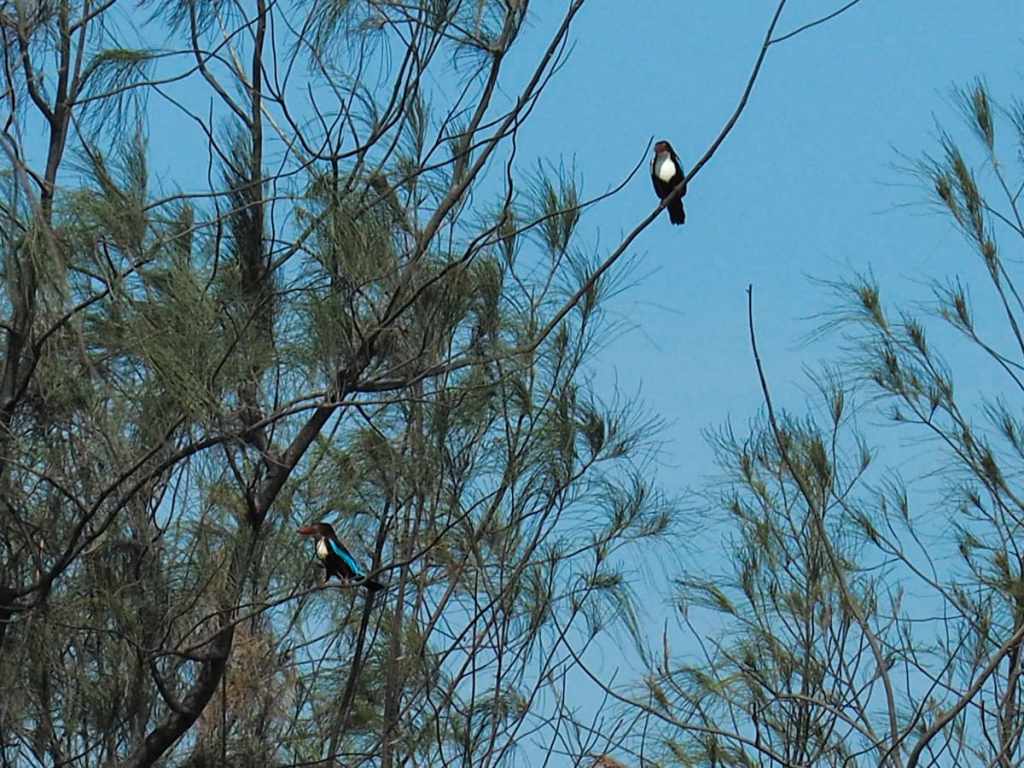
I also saw a pair of white-throated kingfishers, which at 27cm long, are even bigger than their pied cousins. They flew off as soon as we got a little closer, and the flash of electric blue as they spread their wings was amazing to see.

The train veers to the left as you draw close to the road. We saw several more black-winged stilts here, as well as lots of exceedingly flighty ducks.
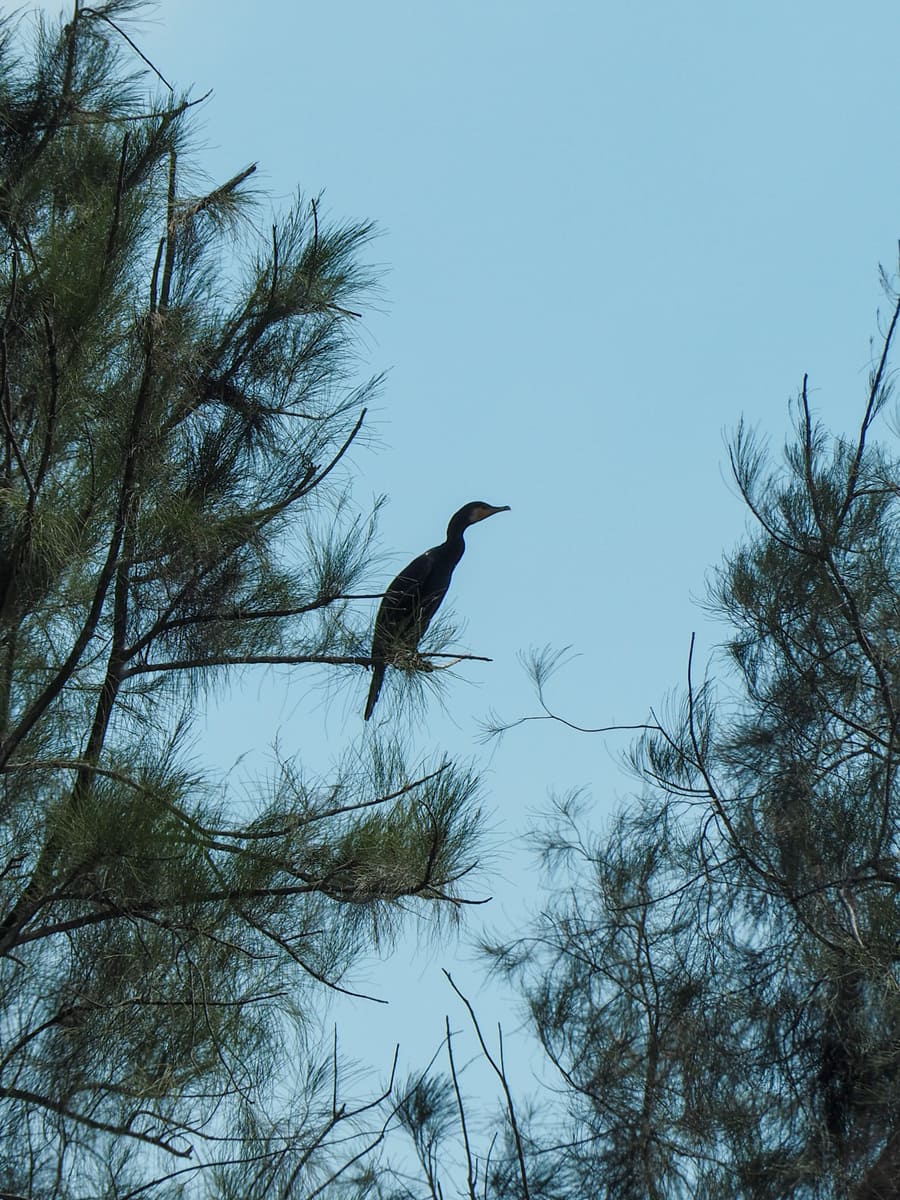

One of the birds that flock to the area in the winter is the great cormorant. I saw a lot of cormorants on Scottish family holidays as a kid, but I rarely encounter them in Taiwan. It’s always funny to see them perched in trees–they look all top-heavy and entirely unsuited to resting in this way.
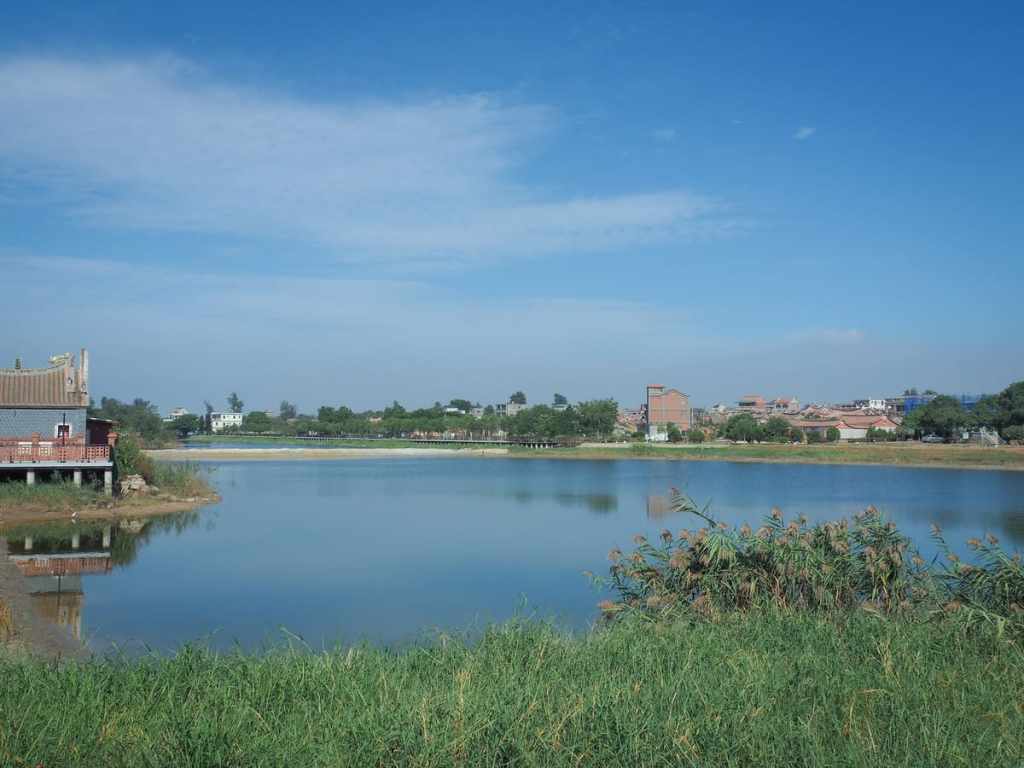
The trail ends at Shuangli Lake. There’s a nature education center here for those who are interested in learning more about the local flora and fauna, but we didn’t drop in. If you have left your transport at the start of the walk, you can either walk back the same way, or loop round the rest of the lake. We did a loop, and honestly, I would suggest you return the same way you came. The rest of the loop is just road walking, and there are far fewer birds to be seen.
That said, if you go at the right time of year (April-August), it might be worth extending your walk as far as the Triangular Fortress because each year, a colony of blue-tailed bee-eaters make their nests in the sandy near the old fort.
How to get to Ci Lake
Google Maps address: We started our walk from the carpark here. There is plenty of space for both cars and scooters.
GPS location: N24 27.705 E118 18.215
Public transport: There are a couple of buses (the No.10 and the 15A or B) will get you from the town of Jincheng to the trailhead (or near enough), but they’re not so frequent, so you’d be better off searching Google Maps for whichever is best when you need to travel.
Nearby trails:
Ci Lake Trail Map

GPX file available here on Outdoor Active. (Account needed, but the free one works just fine.)

