RSB06
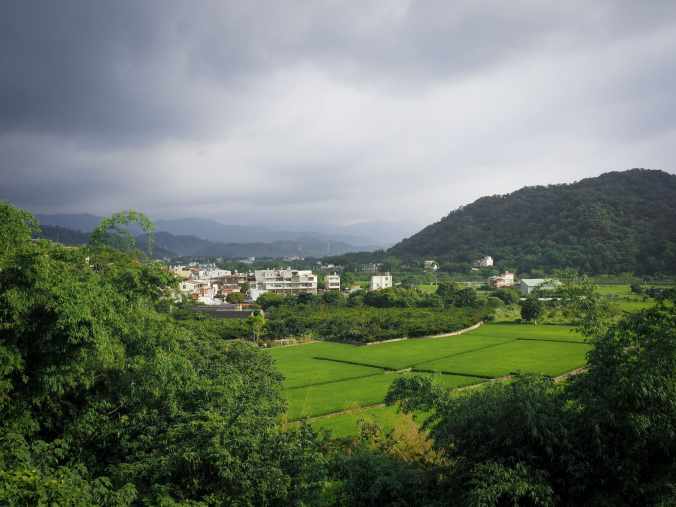
This section of the Raknus Selu Trail forms part of the secondary B route. For the most part, it follows first Yimin Road and then County Highway 118 through small towns and rural scenery as it takes you from the outskirts of Zhubei to Guanxi. Since the entire route sticks to roads, you might prefer to cycle, but walking allows for all the countless detours and distractions that I like to take.
DISTANCE: 18km
TOTAL ASCENT: Less than 20 metres. This route has more descent than ascent, but either way, it’s all very gradual.
TIME: It took me about 6 hours with many diversions and several stops to refuel and cool down.
DIFFICULTY: 1/10 – Since this is all road walking (and pretty flat road walking at that), it’s very easy. Additionally, the RST follows the same road for the majority of the journey, so there’s minimal navigation required.
FOOD, DRINKS & PIT STOPS: There are plenty of places to refuel about midway in Xinpu and plenty more once you arrive in Guanxi.
TRAIL SURFACES: Roads and pavements.
SHADE: Almost no shade at all. I made full use of my umbrella.
MOBILE NETWORK: Clear throughout.
SOLO HIKE-ABILITY: There’s nothing that might make this hazardous for a solo hiker.
OTHER: This section would work well on a bike. Unfortunately, there aren’t yet any YouBikes in Guanxi, though.
SECTIONS COVERED:
- RSB06: County Highway 118 (縣道118)
Jump to the bottom of this post for a trail map, GPX file and all the other practicalities.
DETAILS & DIRECTIONS:

10:39 – I picked the junction of County Highways 117 and 118 to start this section of my RST journey. Although a lot of the day’s route follows the 118, first take a left turn and follow the 117 over Fengshan River. This spot is right beside Lianhua Temple, but since I’d already popped in on a previous stretch of the Raknus Selu B routes, I got straight on with the walking.
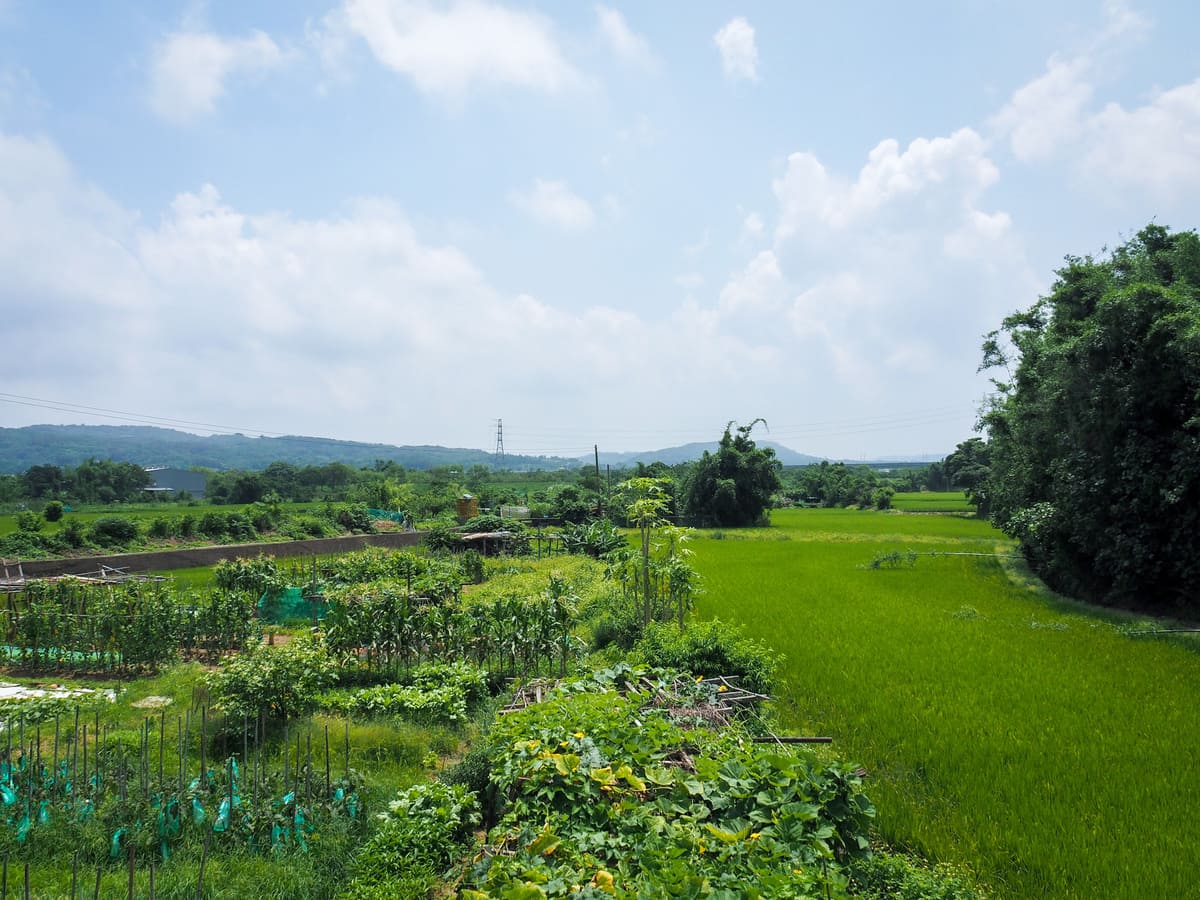
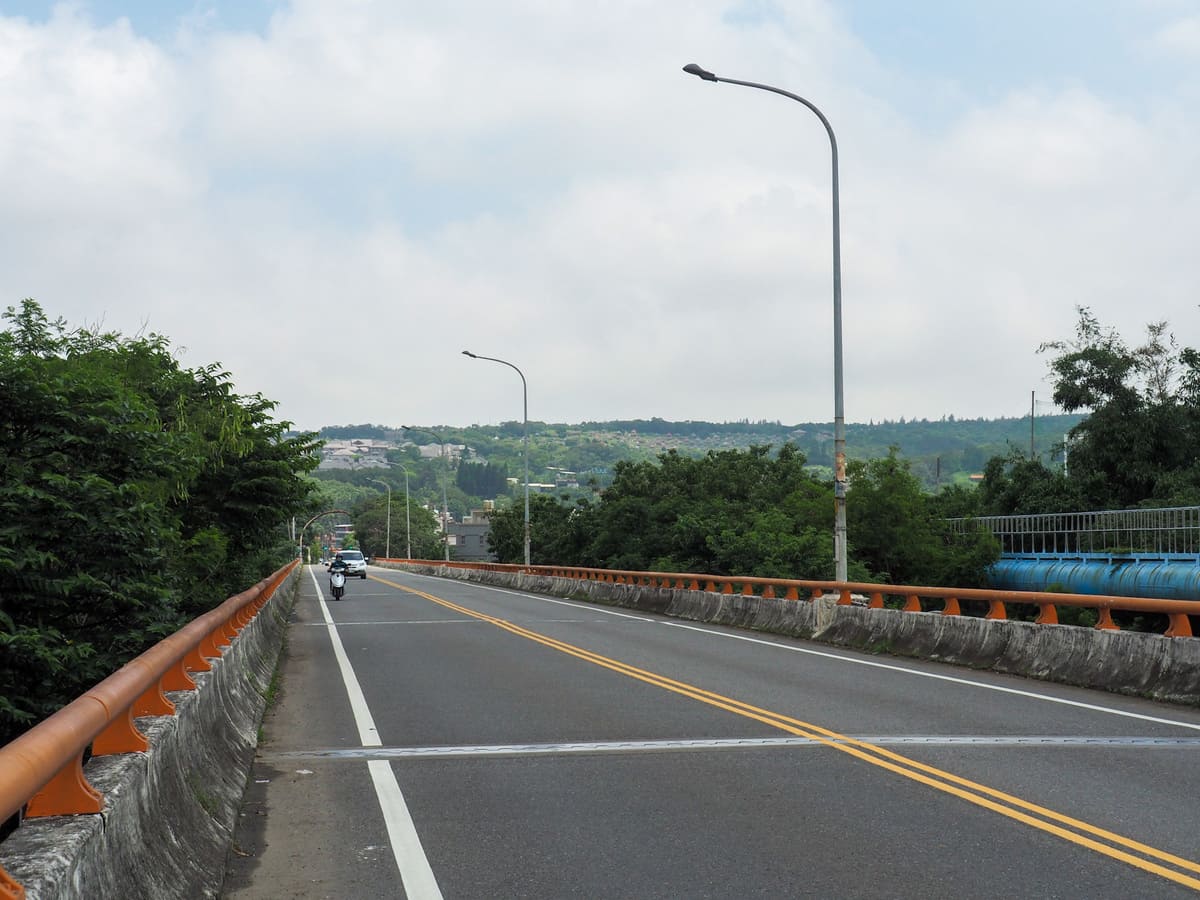
Right from the start, you’ll see the rural scenery that accompanies the whole of the journey, but since this is also the stretch with the fastest road and the narrowest “path”, you’ll need to focus on where you’re walking.

At the far end of the bridge, the road enters a built-up area with a few stores and residential buildings.
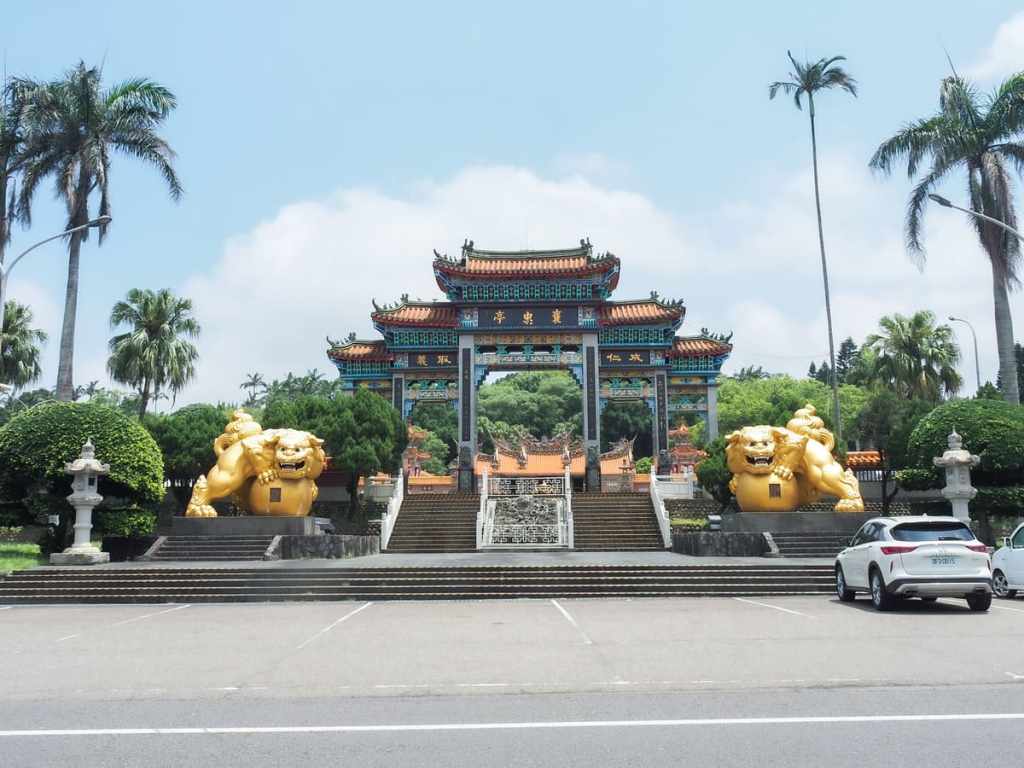
The community is also home to Baozhong Yimin Temple (褒忠亭義民廟), an important religious site for the Hakka citizens of Hsinchu and Taoyuan.
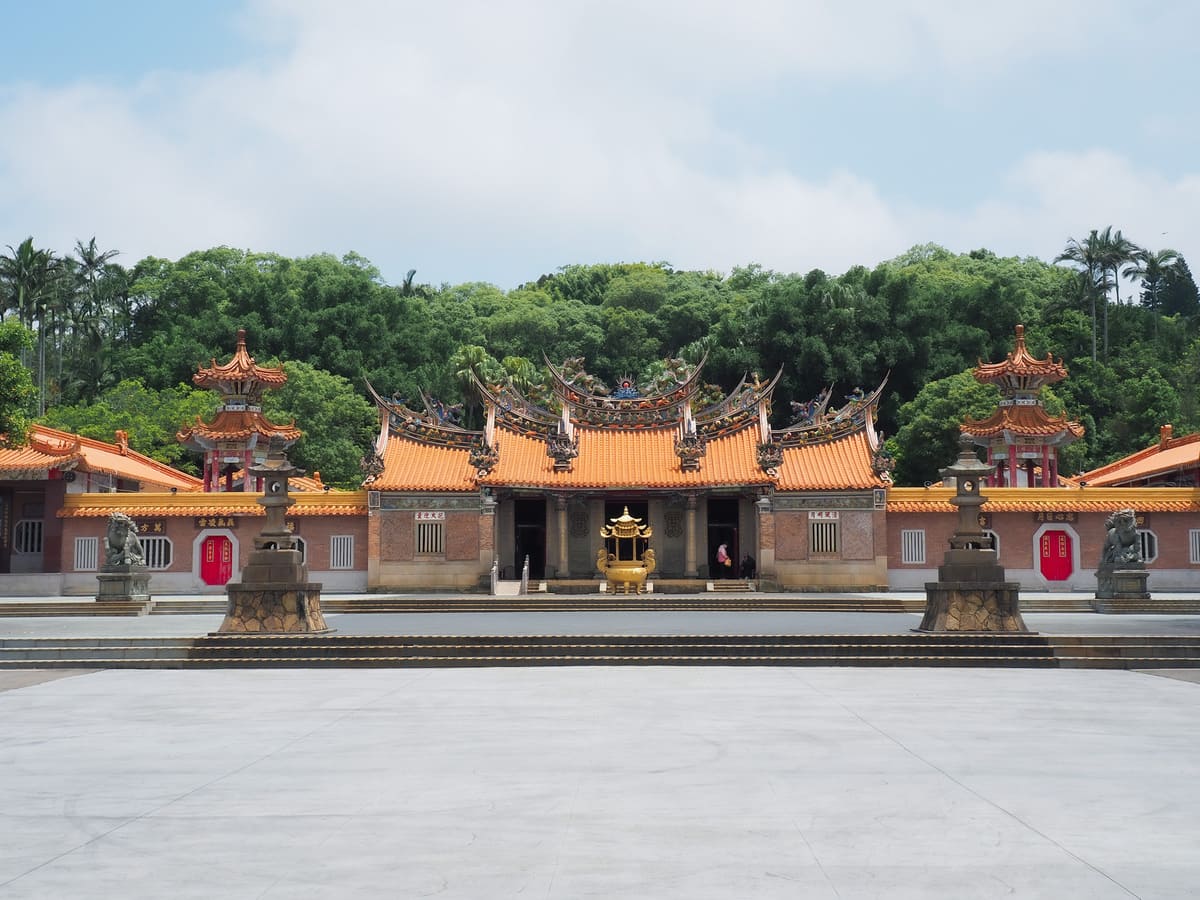
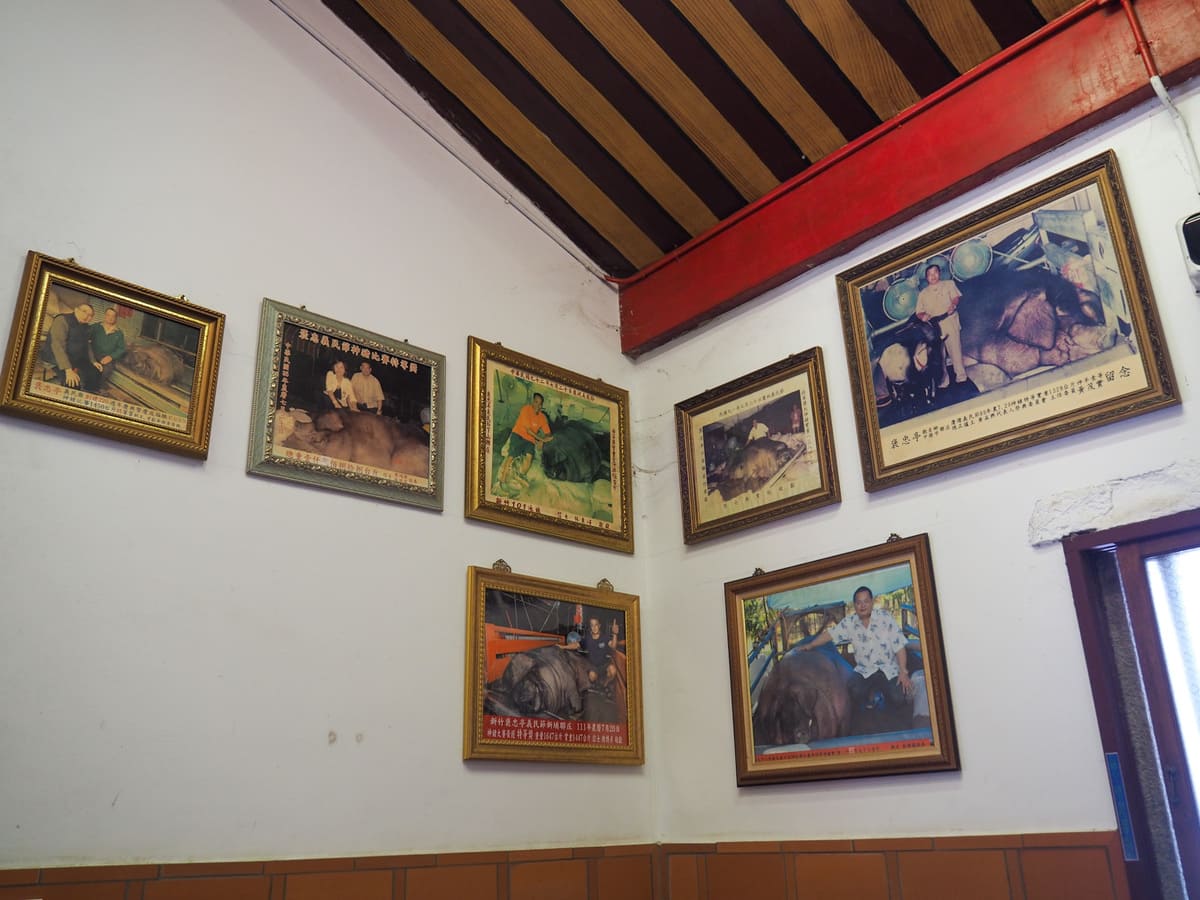
Outside of the confines of a city, the temple has been able to sprawl comfortably across a wide plaza surrounded by gardens. The temple was built over two centuries ago to celebrate the brave spirit of Taiwan’s Hakka people. The story of why it came to be built here is long and intricate and I suggest you read this blog for a more thorough telling. However, to grossly simplify events, the temple was built around the mass grave of more than 200 fallen Hakka soldiers who died while attempting to protect their community from Qing forces.
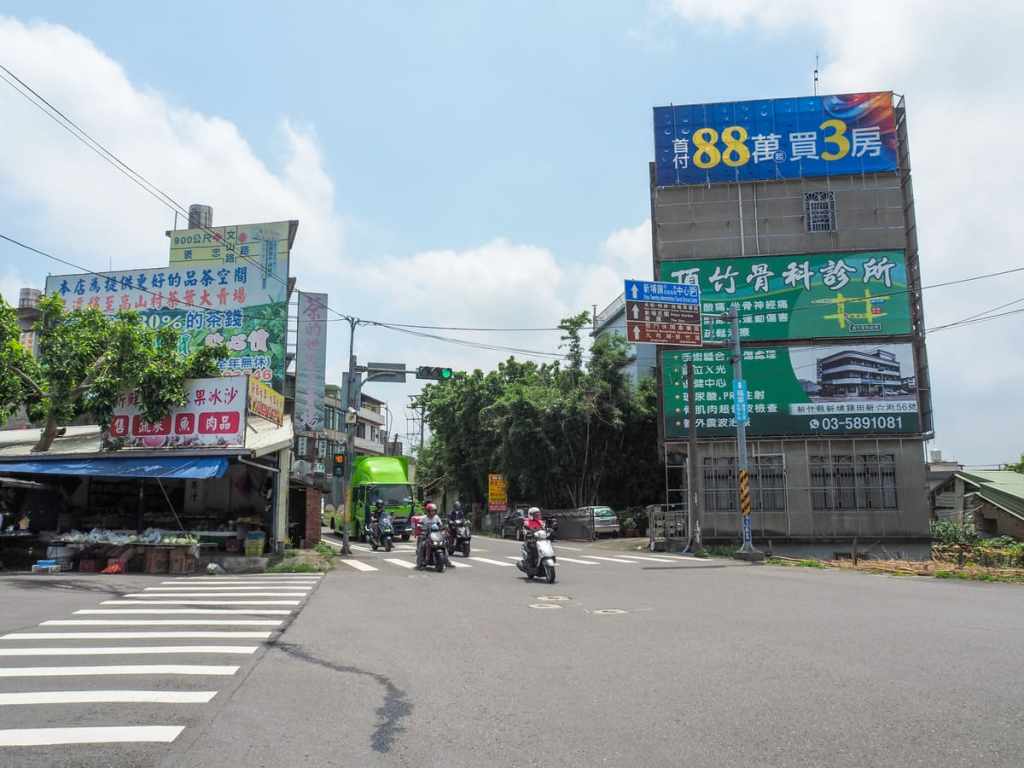
From Baozhong Temple, walk east along Yimin Road.
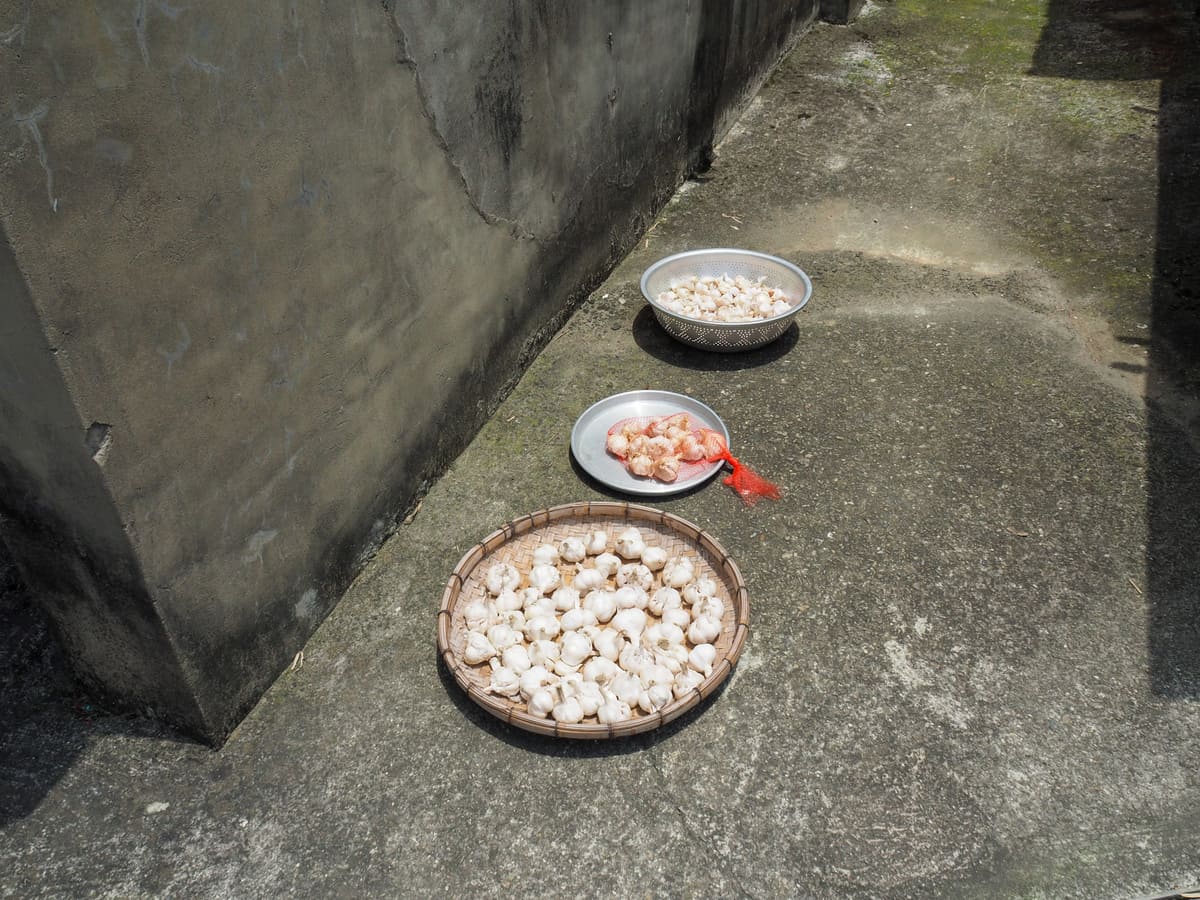
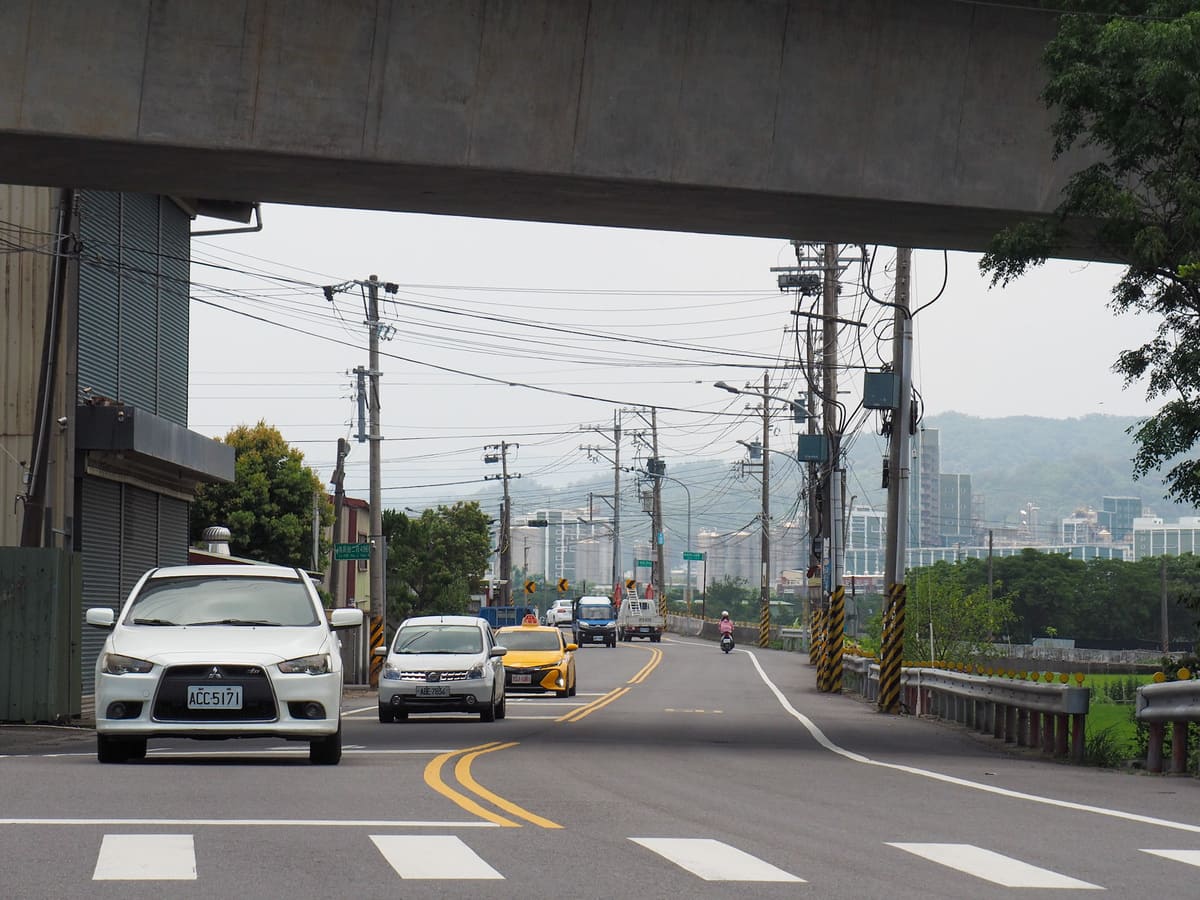
In what would become a motif for the day’s walk, I passed circular trays of garlic drying in the sun beside the road. When I walked, a typhoon was building far out in the Pacific Ocean pushing up the temperatures in anticipation of the deluge it will soon unleash. In other words, it was the perfect time to get a spot of sun-drying done. In the right photo is the solid grey structure of the HSR cutting its way over the fields.

11:28 – If you like historical buildings, you’ll have plenty to keep you interested on this walk. There are many. Some are abandoned, or lived in but dilapidated, but the Liu Family Ancestral Hall is beautifully maintained. The two flanking wings and extensive housing compounds they hold are closed to the public, but you can take a peek into the central courtyard and hall.


A sign out front claims that the building boasts a grand total of 99 rooms, which seems like a tiny exaggeration. But it’s undoubtedly a grand family house. But even more interesting than the architecture was the discovery of this blue bee (likely Amegilla calceifera) that was scouting the structure for nest-building materials. I spent a good fifteen minutes following it and trying to get a clear picture, but to no avail. (Update: I have since seen these cuties a further two times, making a total of three sightings in ten years.)
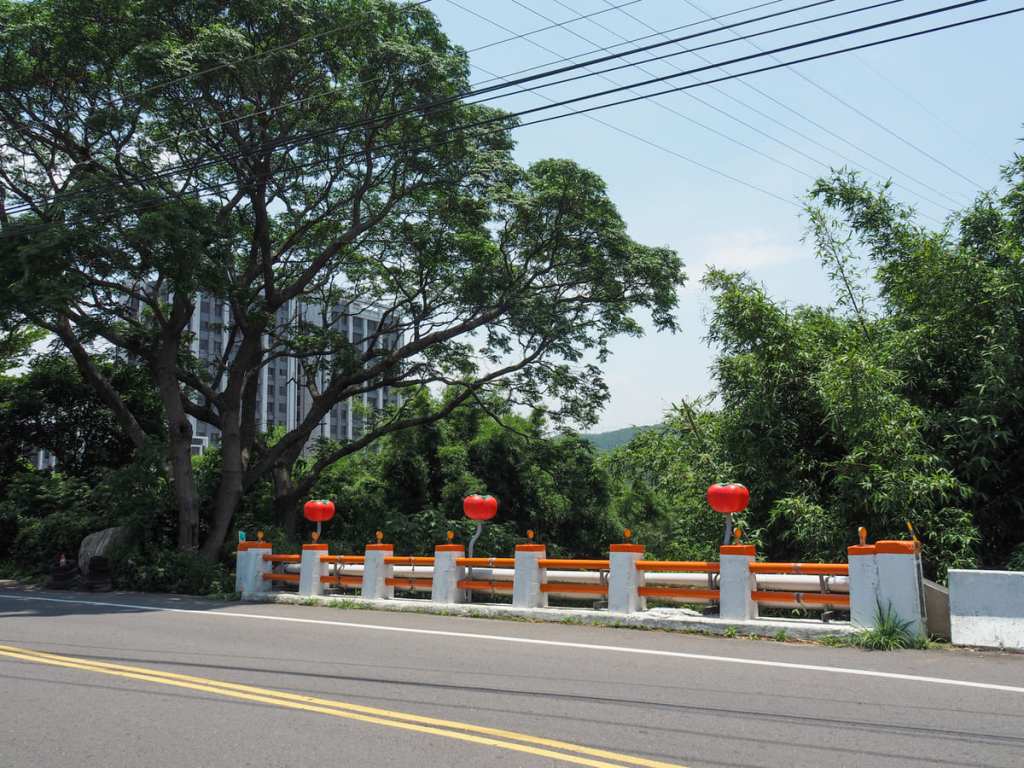
Persimmons decorate a bridge on the outskirts of Xinpu.
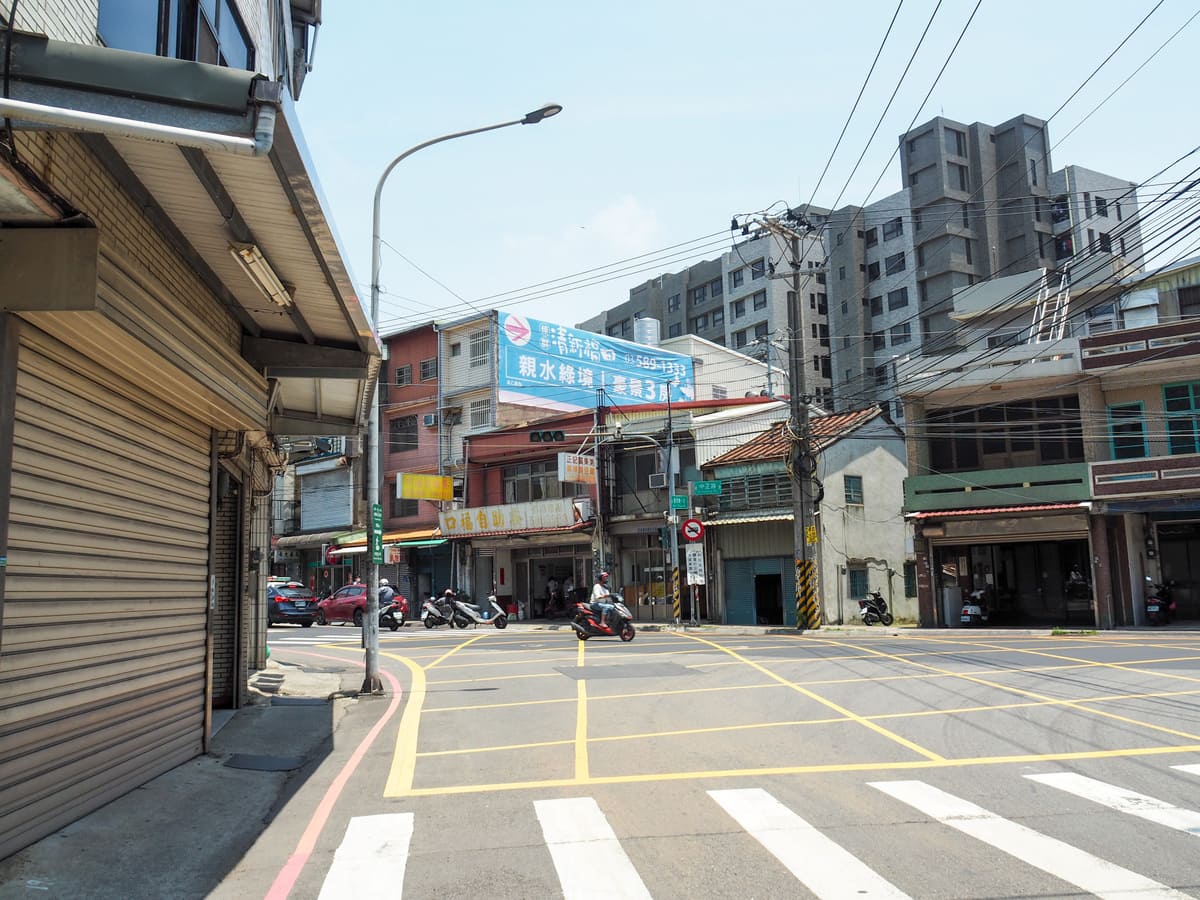
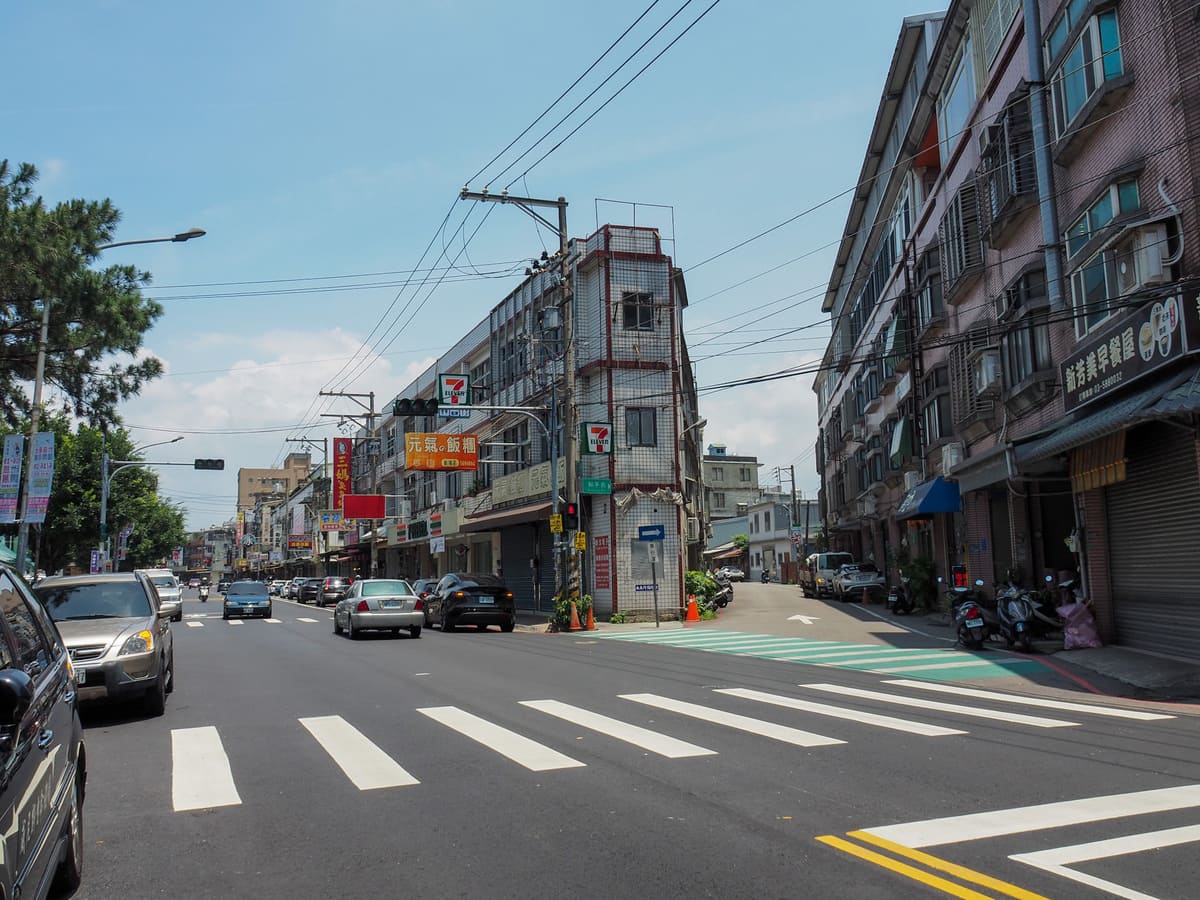
12:21 – When you hit the first big junction, merge left onto County Highway 118. Then at the second junction, you’ll want to decide whether to follow the main road through the town, or take a wander down the narrower back streets. I was on the look out for lunch and a cold coffee, so I took the main road, but both have plenty to make them worthwhile. In fact, if you’ve got the time, I thoroughly advise you to take half a day to explore this sleepy Hakka town. You’ll find lots of traditional food vendors and temples aplenty.
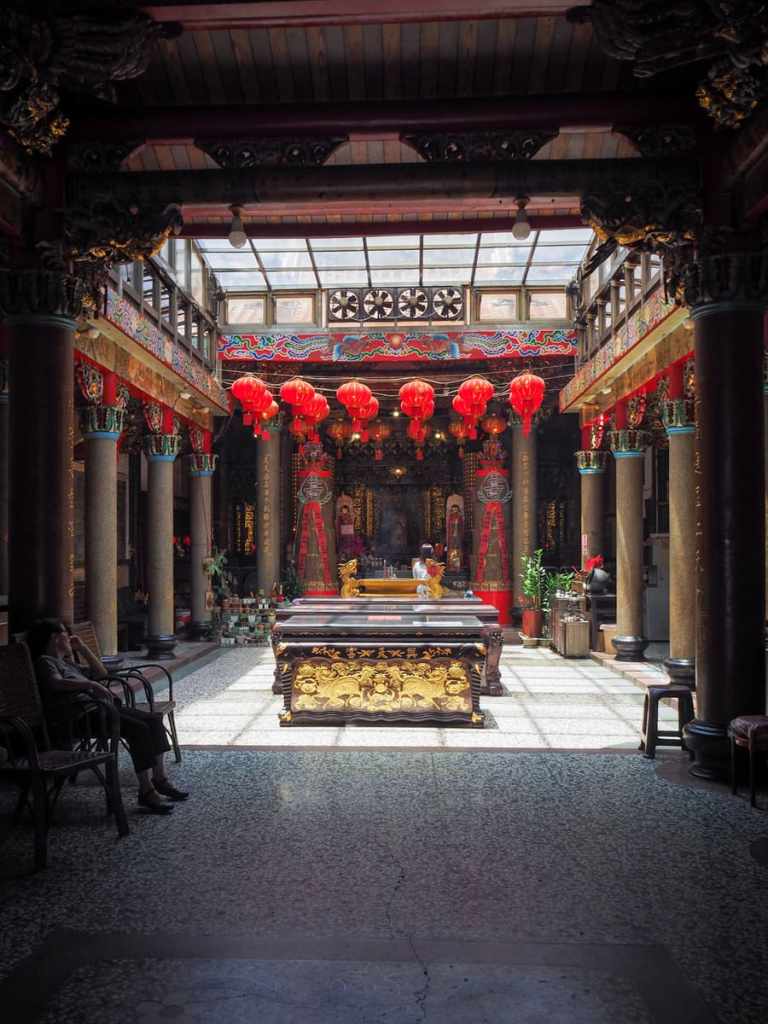
Speaking of which, I passed a couple of interesting temples right on the main street. This first one—Yutian Temple (與天宮)—had a beautifully-lit interior thanks to the way the light filtered in through the age-grimed window panels.
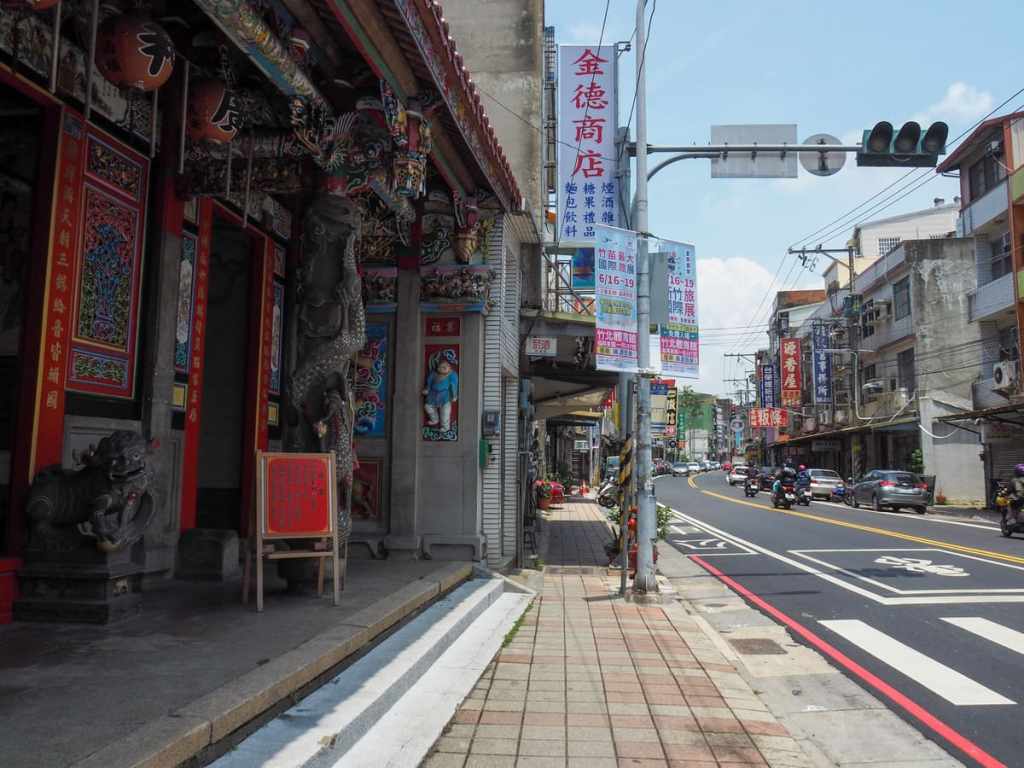
A little further along, I encountered Guanghe Temple (廣和宮). To look at it from its street-facing frontage, you would never imagine it’s so large, but in fact, the complex is at least three times as long as it is wide.
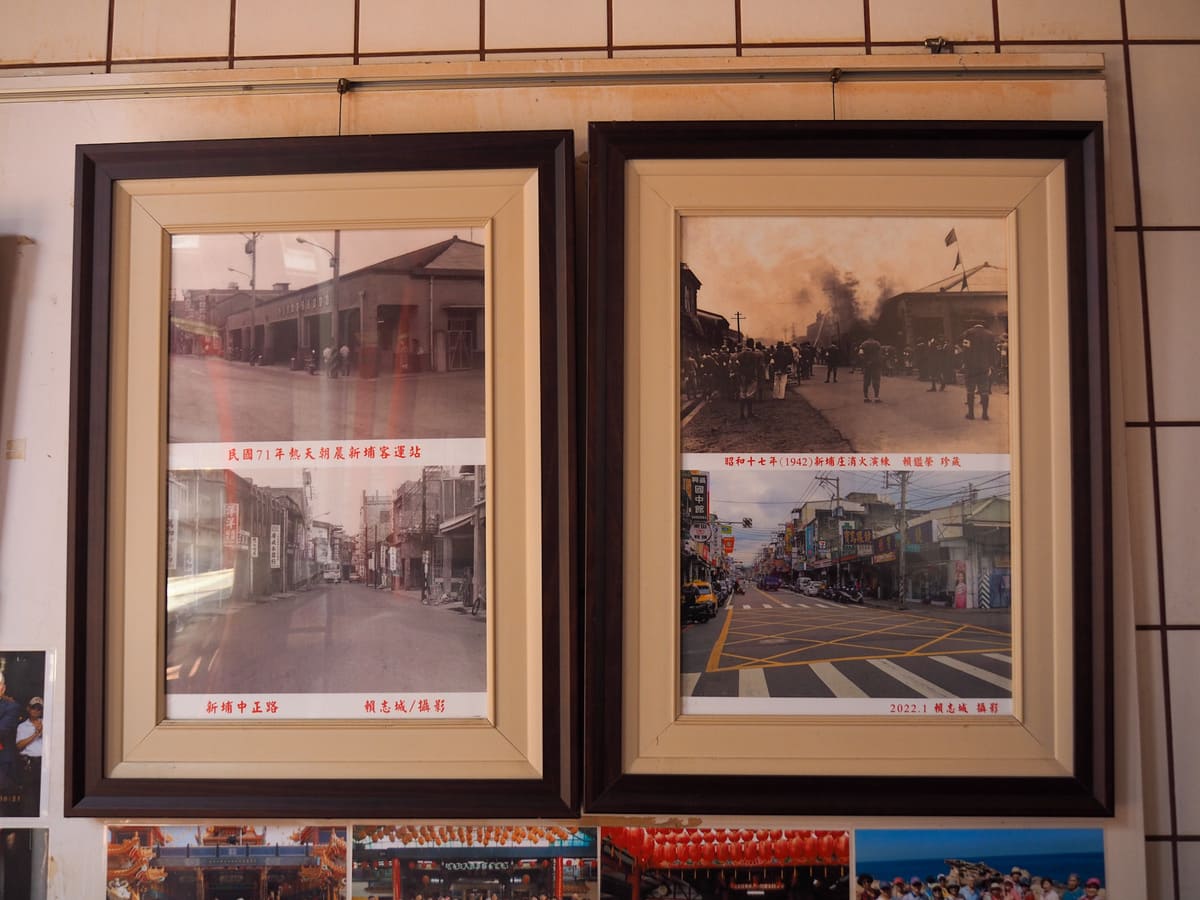
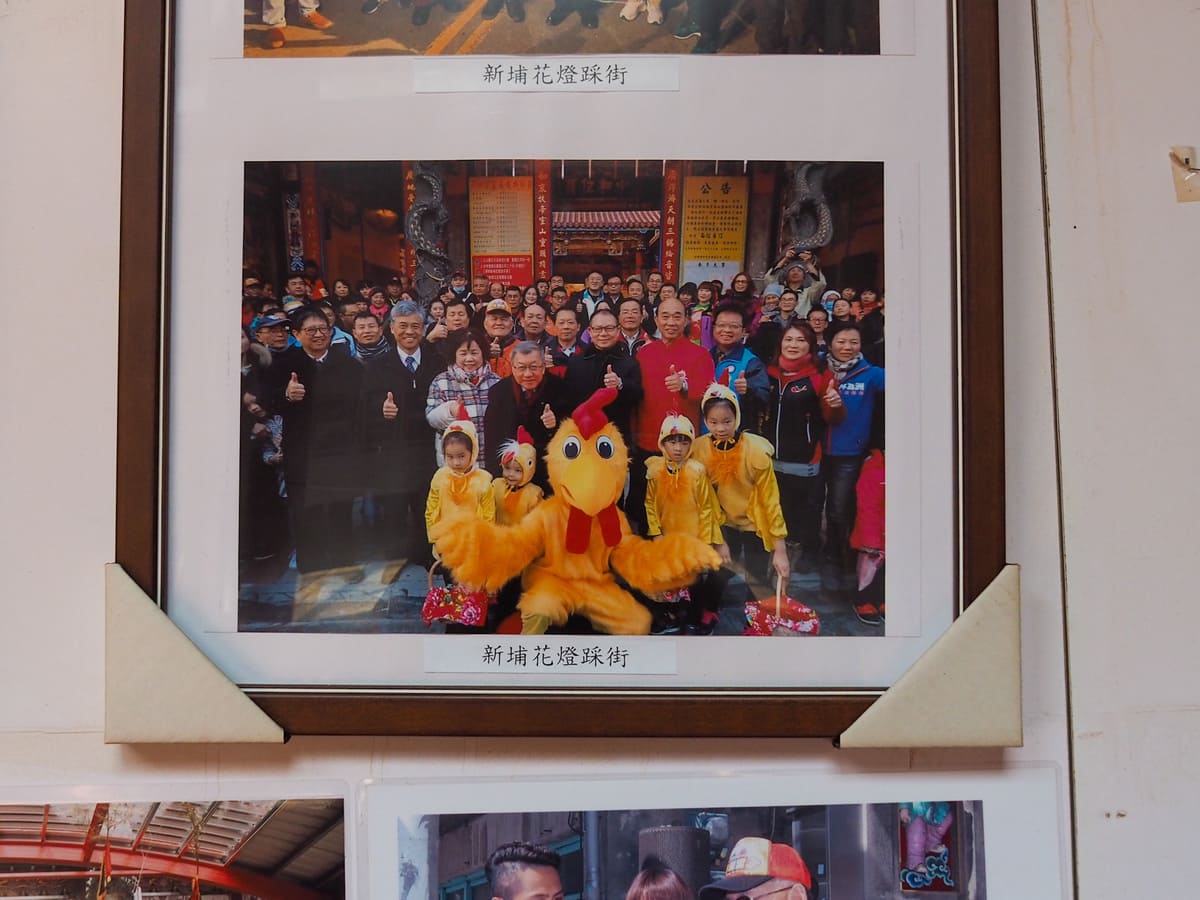
The temple’s primary deity is Mazu, and after you pass through the doors (guarded by larger-than-life god costumes), you will find her enshrined upon the main altar. Head further back, and you’ll find other deities and towers of blessing lamps. My attention was caught by old photos on the walls. Some showed pictures of Xinpu in past decades, and other depicted scenes of celebration, often with crowds posing in the street outside the temple’s main door. Quite how the chicken is related to lantern festival is a mystery.
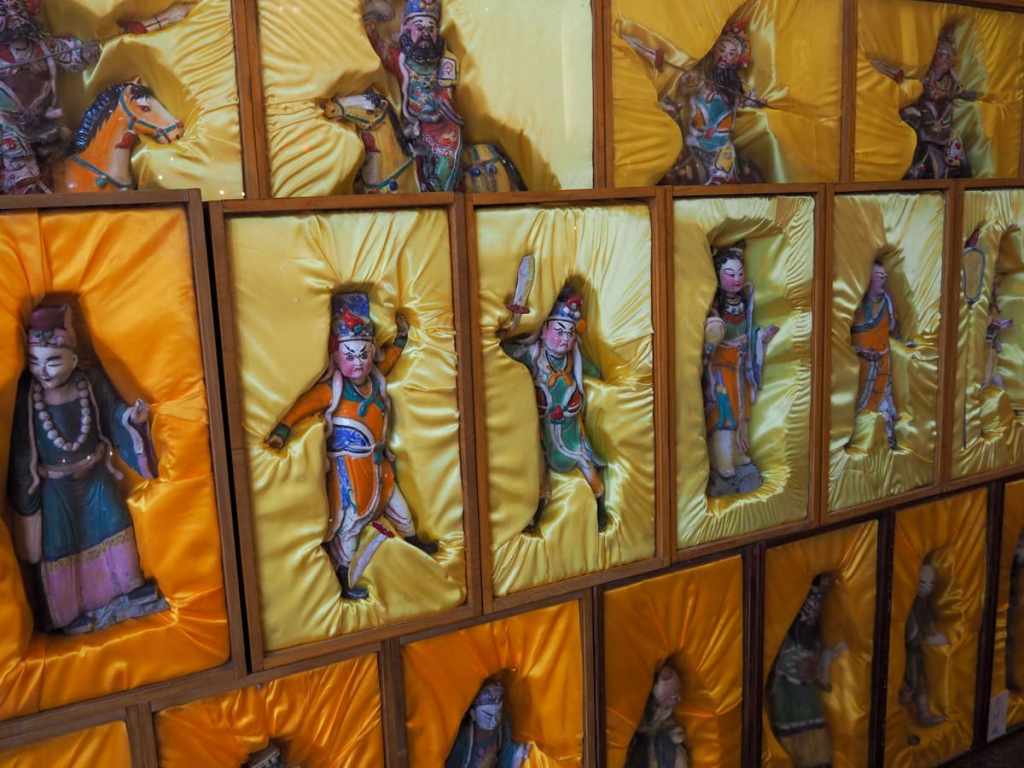
Stored in satin-lined boxes towards the back of the rear hall, there are scores of these figurines, which I imagine were probably removed from the eaves whenever the temple was last renovated.
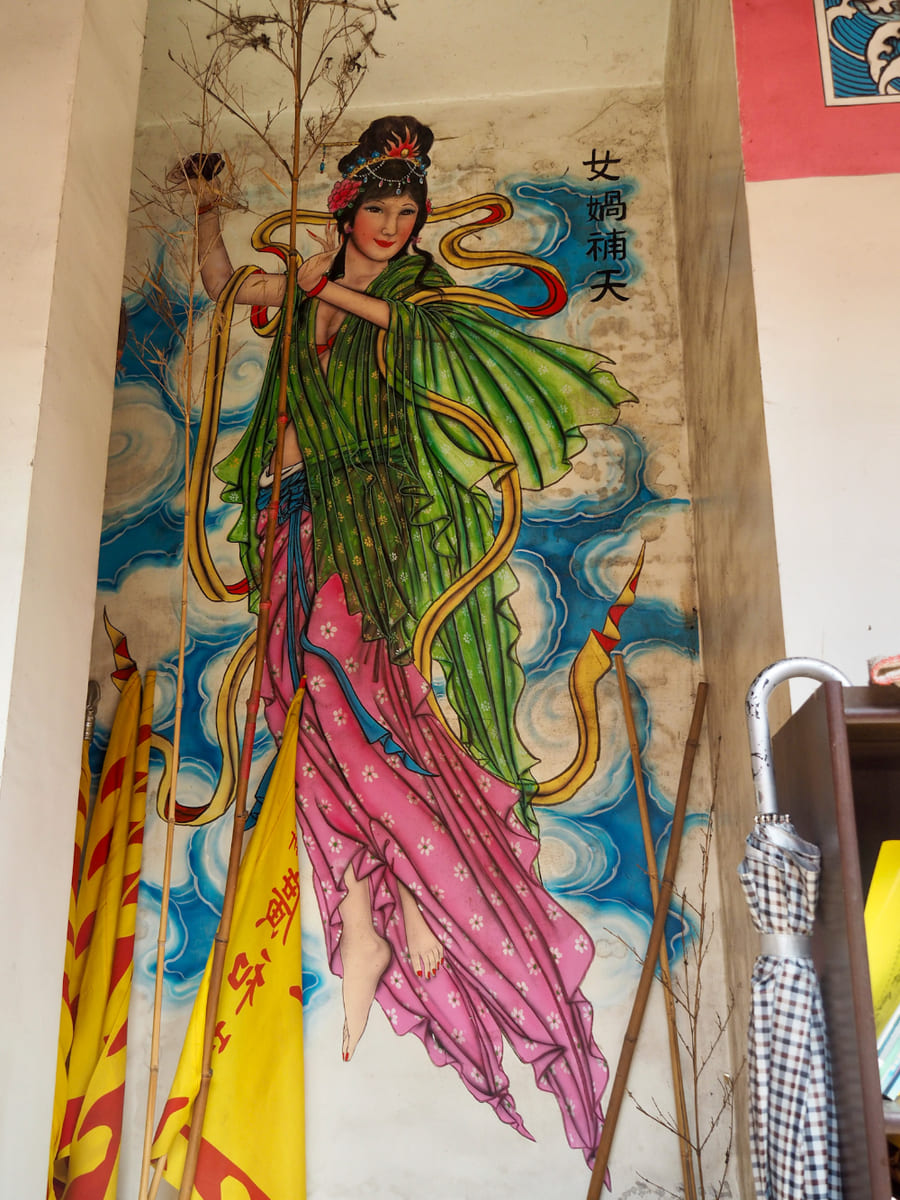
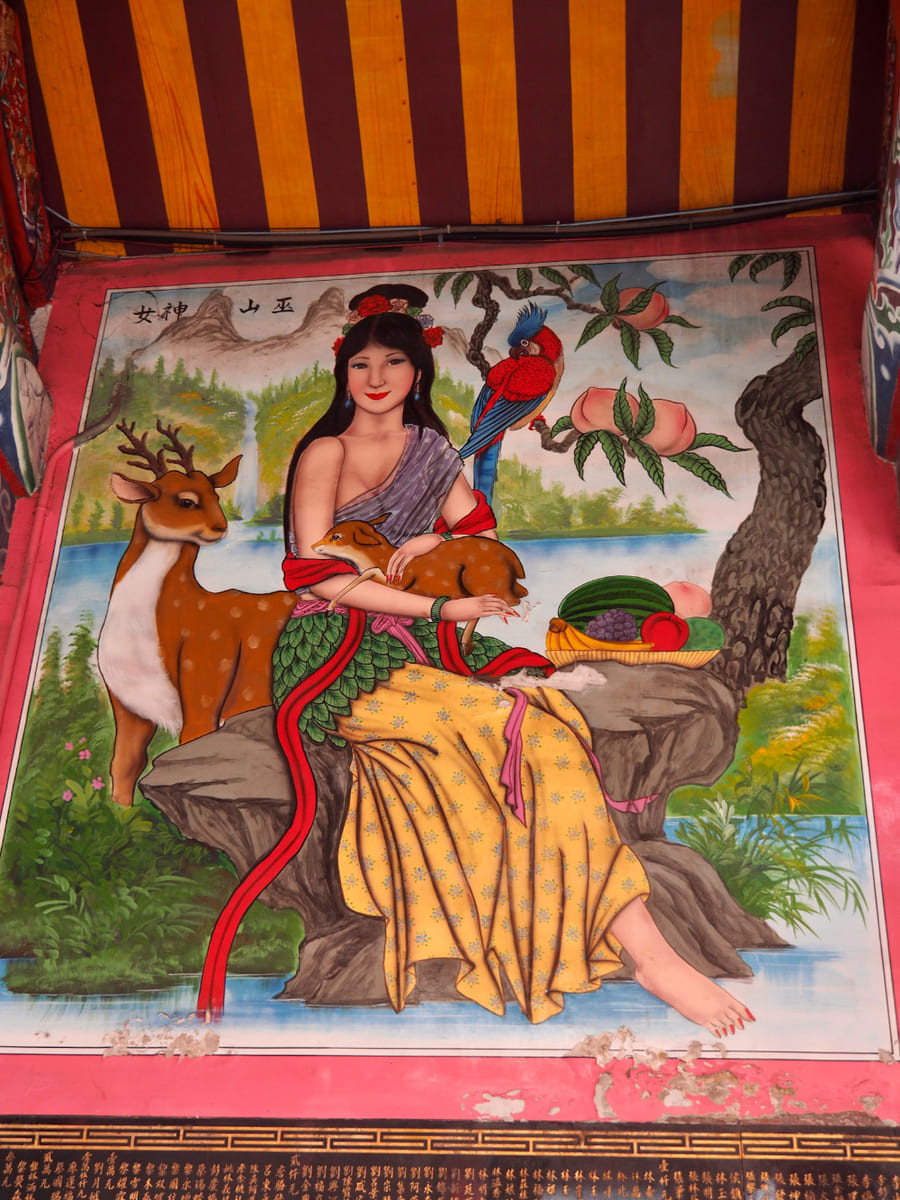
But my favourite thing about Guanghe Temple is the artwork of Liao Feng-qin (廖鳳琴). Mr Liao is a professional temple painter who has garnered a reputation for decorating sacred spaces with artwork that teeters on the edge of unholy. His female figures are—almost without exception—rosy-cheeked, large-breasted, barefoot and nubile. It is safe to say he has a type. He has worked in temples throughout the region, so if you’re in Taoyuan, Hsinchu or Miaoli, keep a lookout for these buxom beauties.
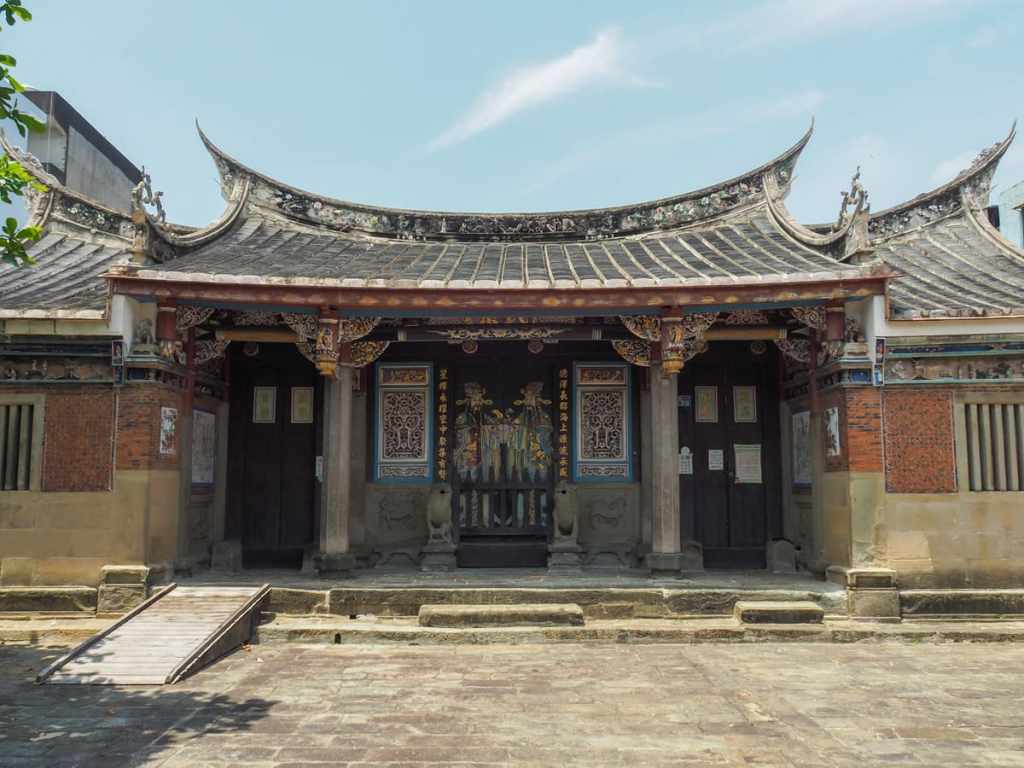
A little further down the street is the Chen Ancestral Shrine (陳民宗祠). Built in 1868, it suffered fire damage in the fighting that followed Taiwan falling under Japanese control (apparently the black staining on the stone window frames is a result of this), then rebuilt just at the turn of the twentieth century. Unlike the vast majority of ancestral shrines, this particular one did not just serve the wider Chen family. People, it would seem, have been seeking ways to avoid tax for as long as the concept of tax has existed, and this building is evidence of historic tax fraud financial creativity. One son of the local Chens (Chen Chao-gang) was a nominated “tribute student” (a kind of honour bestowed on some sons of elite families), and this granted him certain privileges—a lower tax rate, for example. Consequently, villagers struck up deals with Chao-rong, in which they registered land under his name in order to avoid paying quite as much tax. As part of the deal, Chao-rong was entitled to the land of any who died without relatives to inherit it, and the descendant-less deceased were worshipped within the Chen Ancestral Shrine.
Pre-pandemic, the building had been a museum dedicated to introducing all of the ancestral shrines that can be seen around Xinpu, but it’s been closed both times I’ve visited.
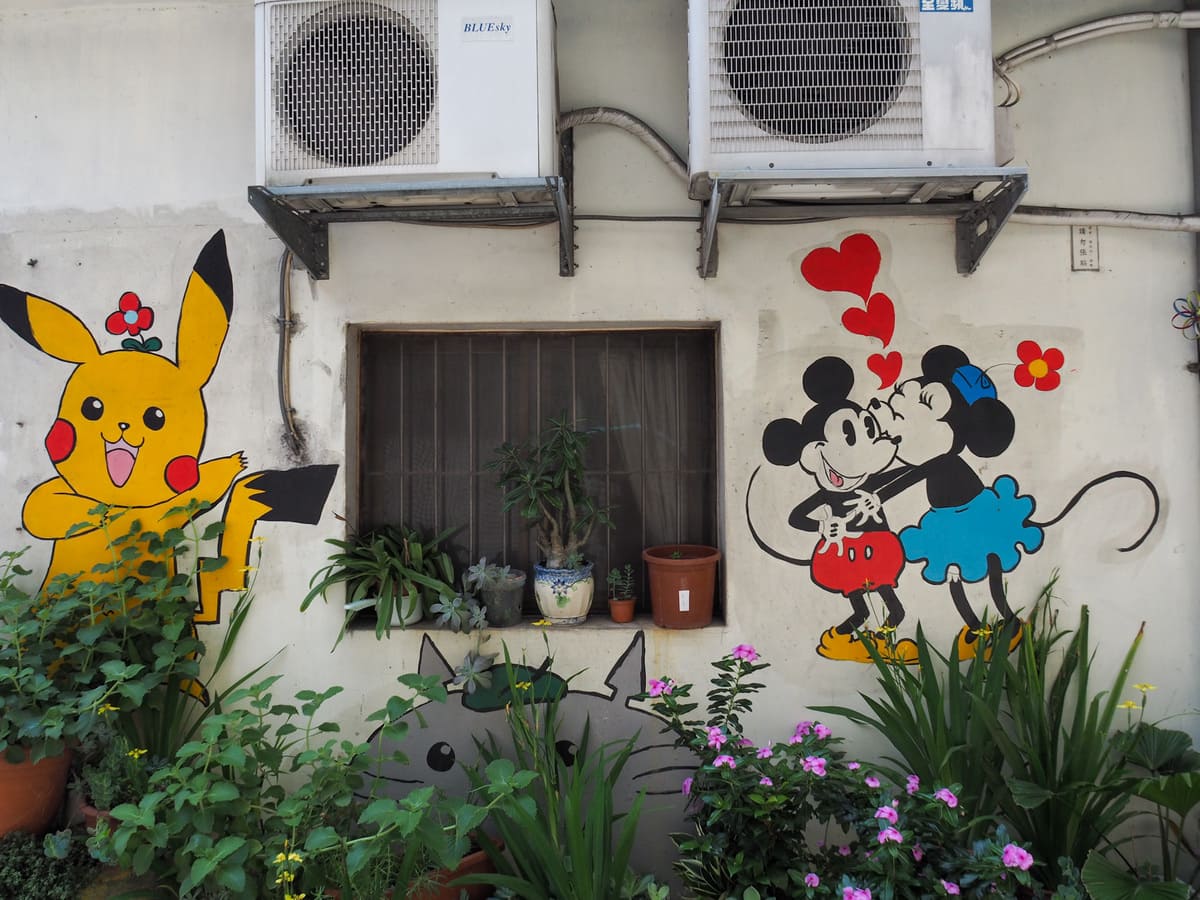
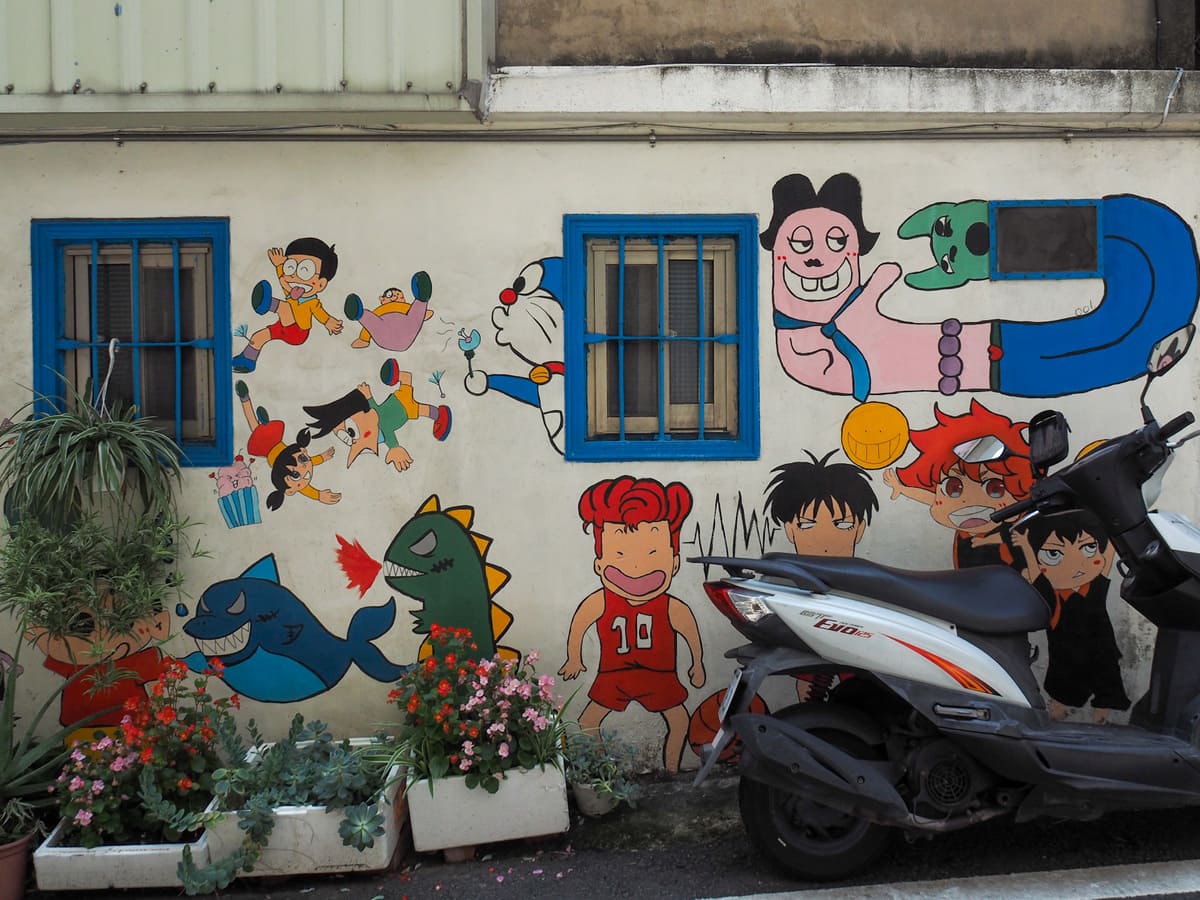
Wall decorations spotted in a lane. There’s a lot of interesting artwork around Xinpu if you have the time.
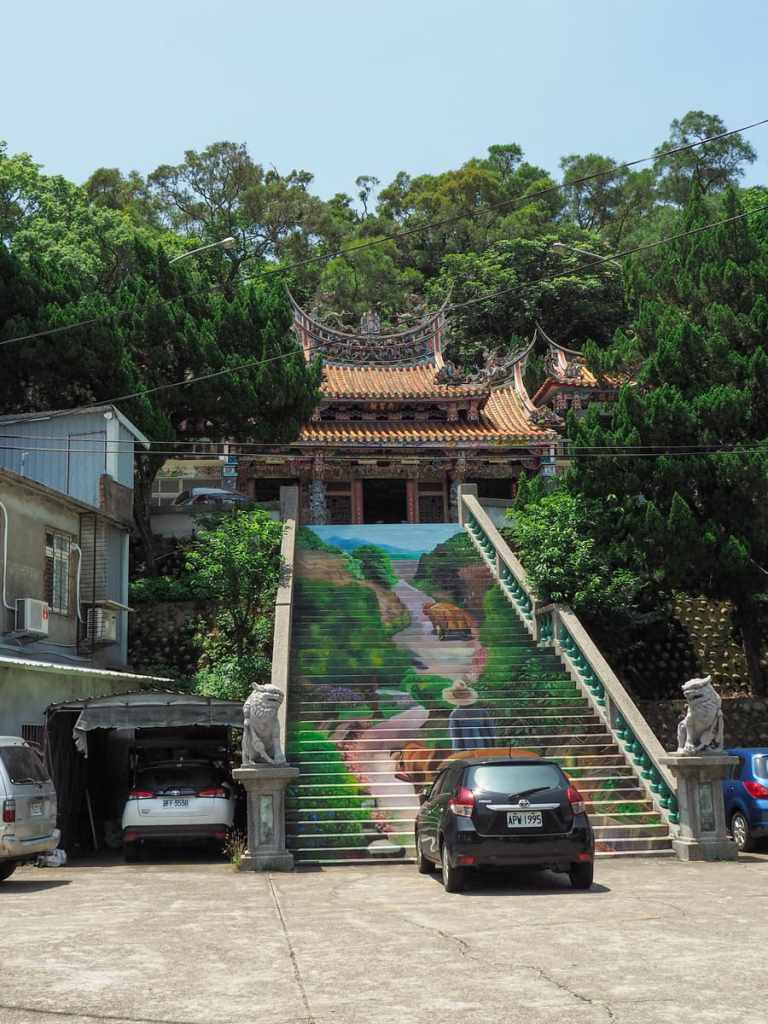
Like this pastoral scene depicted on the steps leading up to Yiyong Temple (義勇廟), which is tucked away behind the restored former school principal’s dormitory. The design had changed since I’d last visited. Back then, it showed a cockerel standing proudly on a mountaintop in front of a full moon. If you have time, pop up to take a look inside the temple, do so. Like Guanghe Temple, you’ll find the walls decorated with works by Liao Feng-qin.
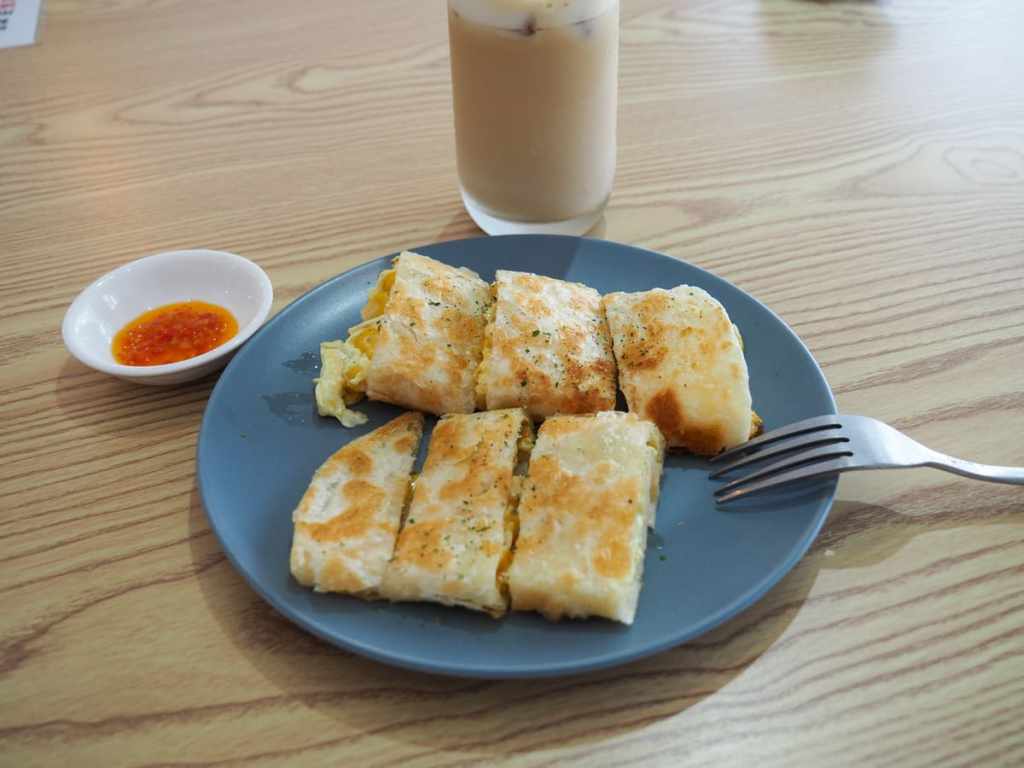
Somewhere on my way through the town, I stopped for an iced coffee and a second breakfast… and a break from the midday heat.
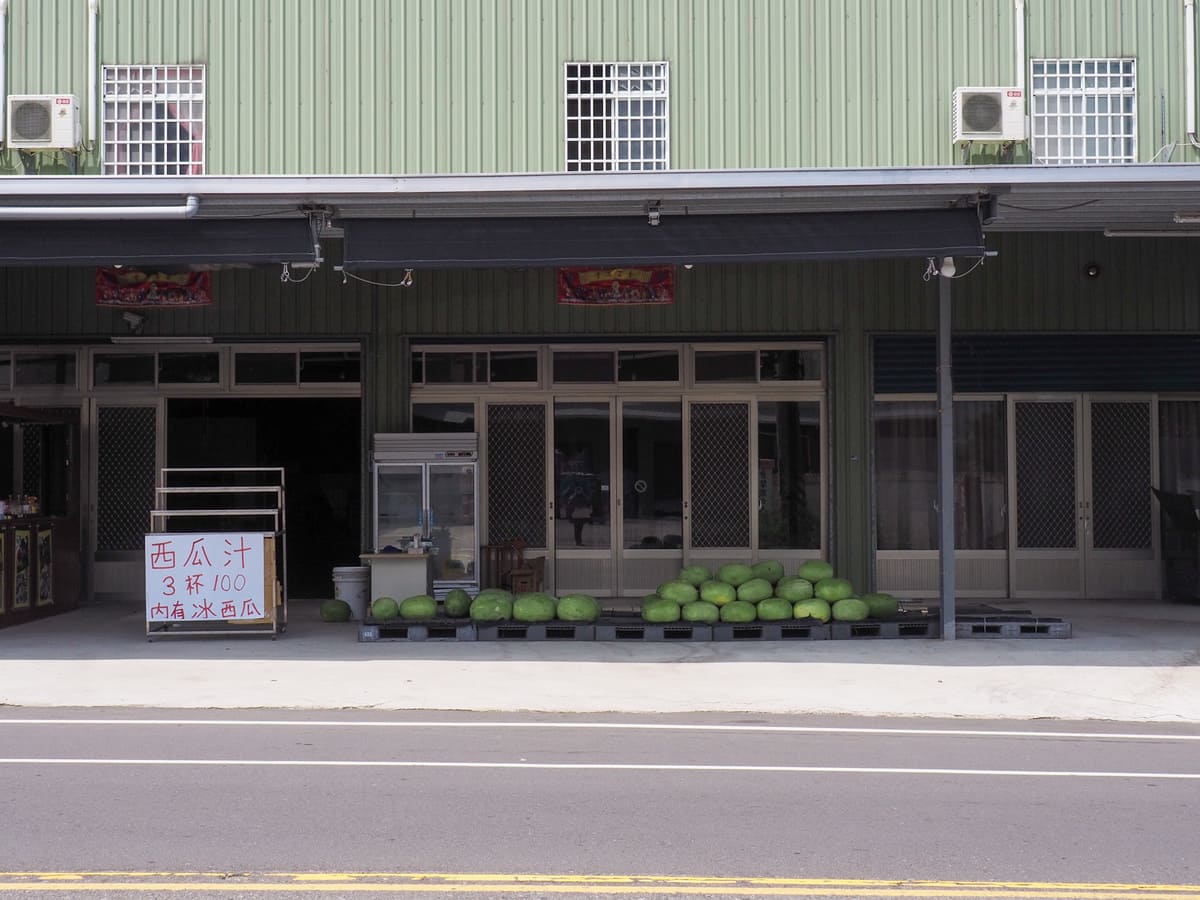
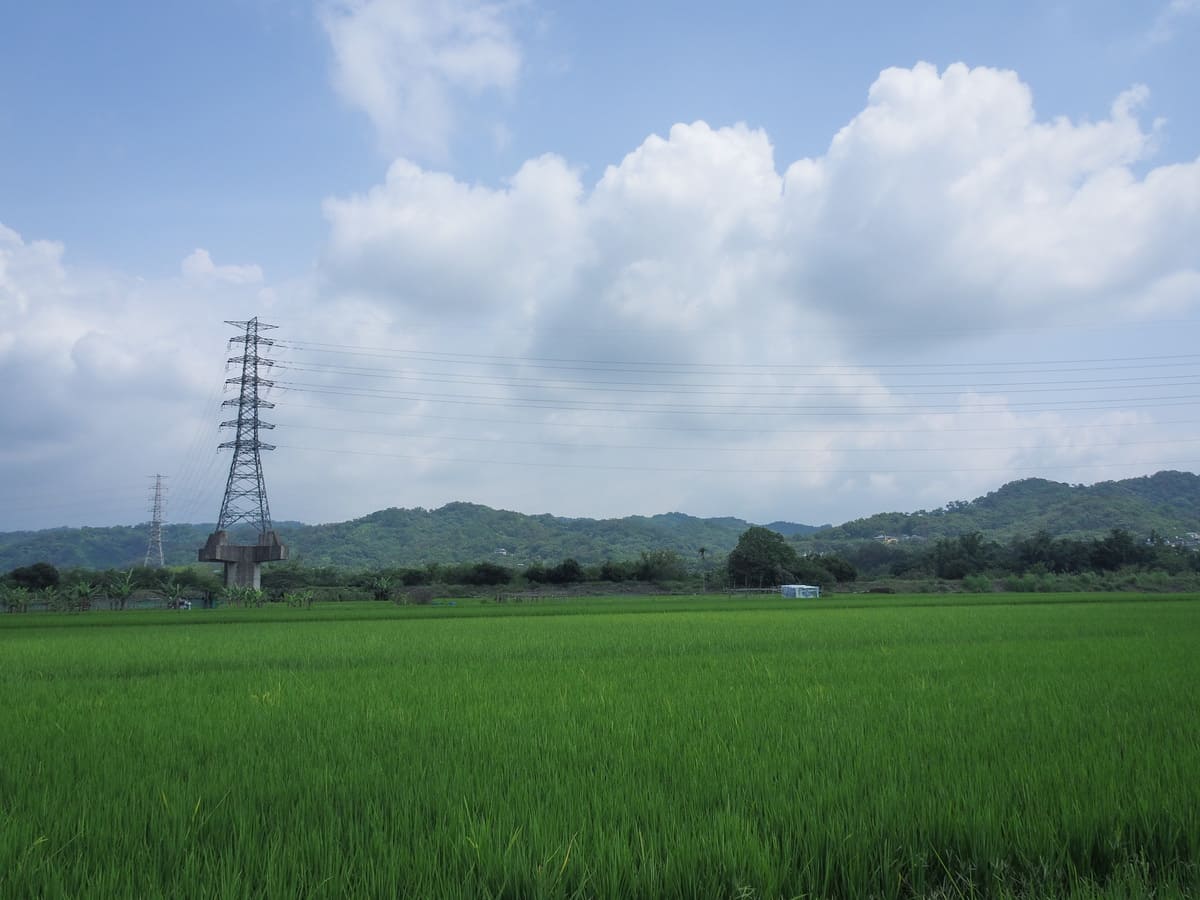
The buildings whittle down to a single layer of dwellings each side of the road, interspersed with a whole lot of rural life—piles of ginormous watermelons tempted me and lush fields of bright green rice broke up the buildings.

These are the colours I’d think of if you asked me to pick representative colours for Taiwan—rice green, cloud white, summer sky blue, and roof tile red. (Unless you ask for the city version, in which case it would be a lot greyer.)

Rows and rows of different crops.
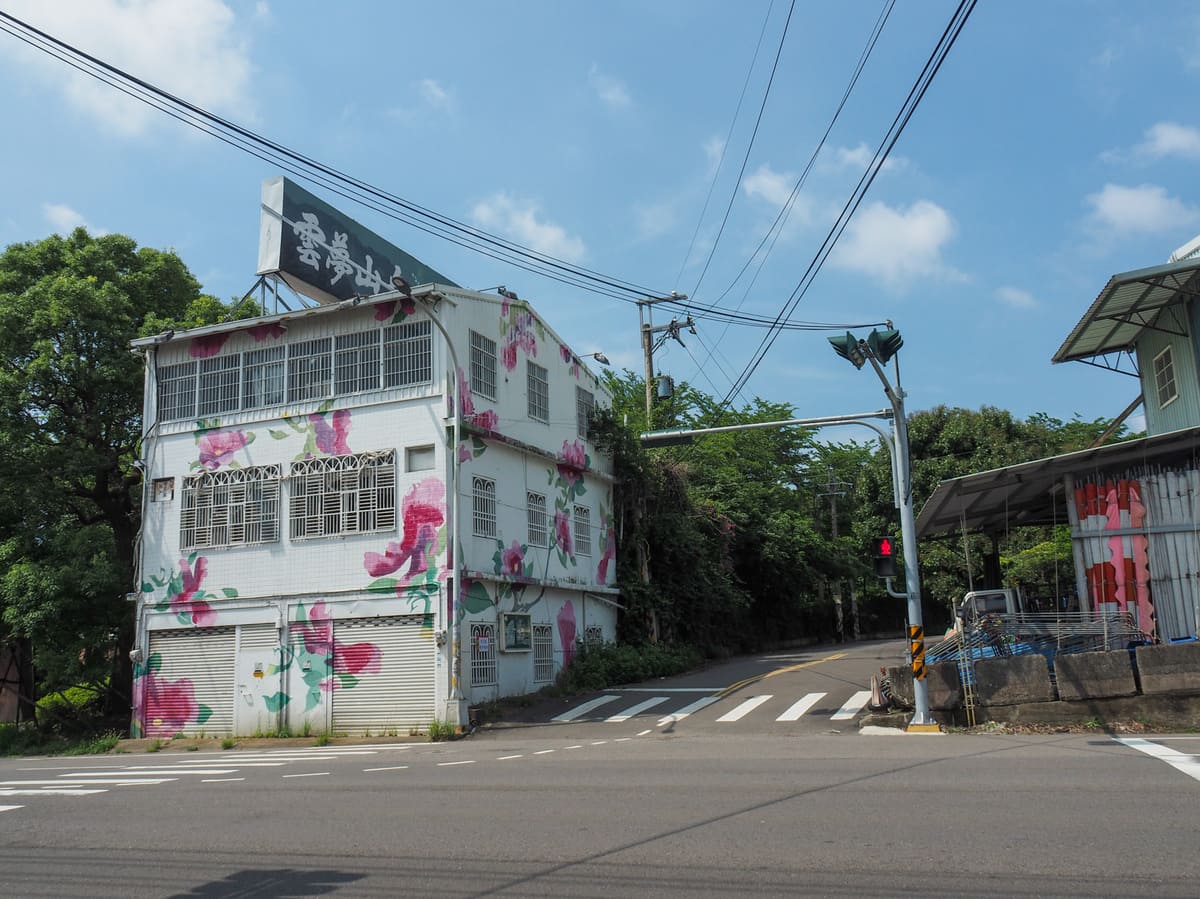
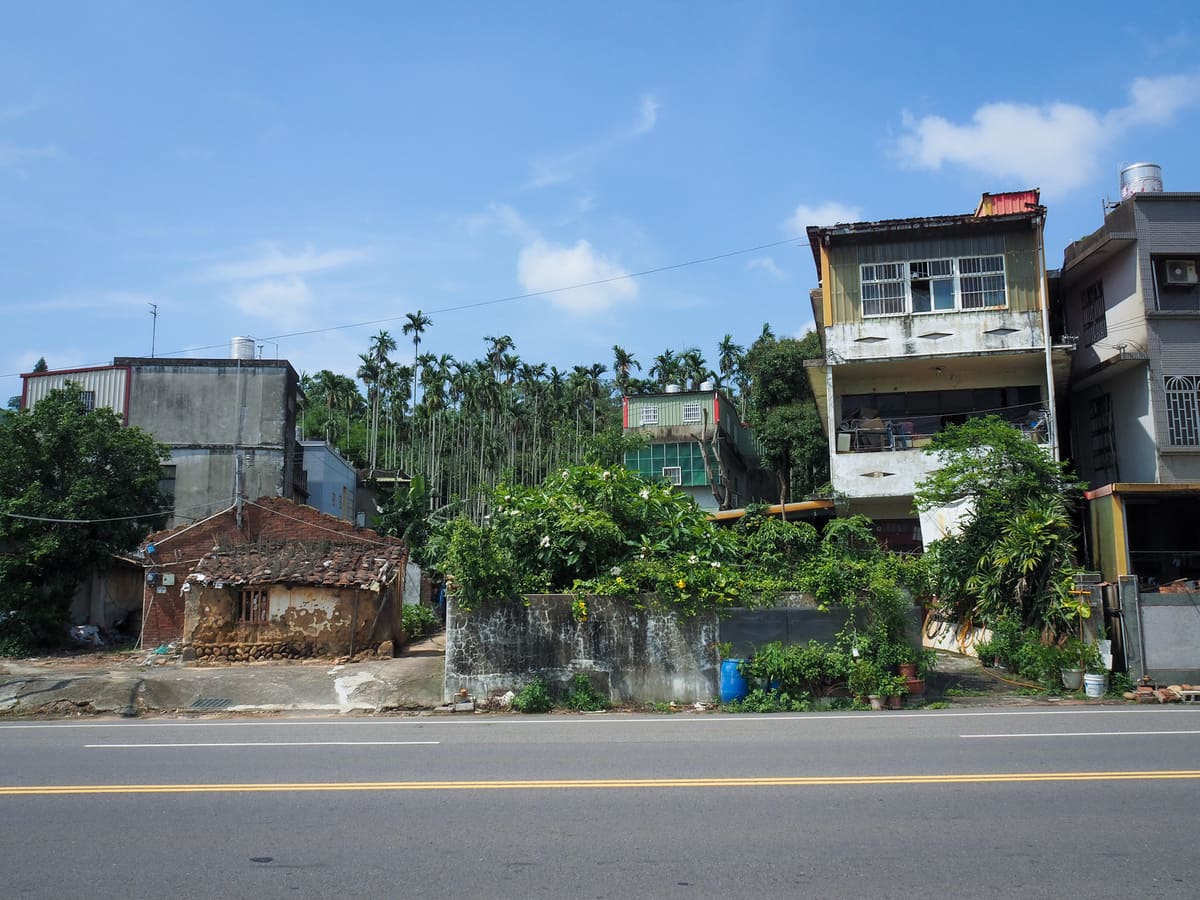
A painted house and a ramshackle mud brick barn. Somewhere along here, I also passed the turn-off for Yunmeng Hill (雲夢山丘), which seems to be one of those “build it and they’ll come” tourist traps.
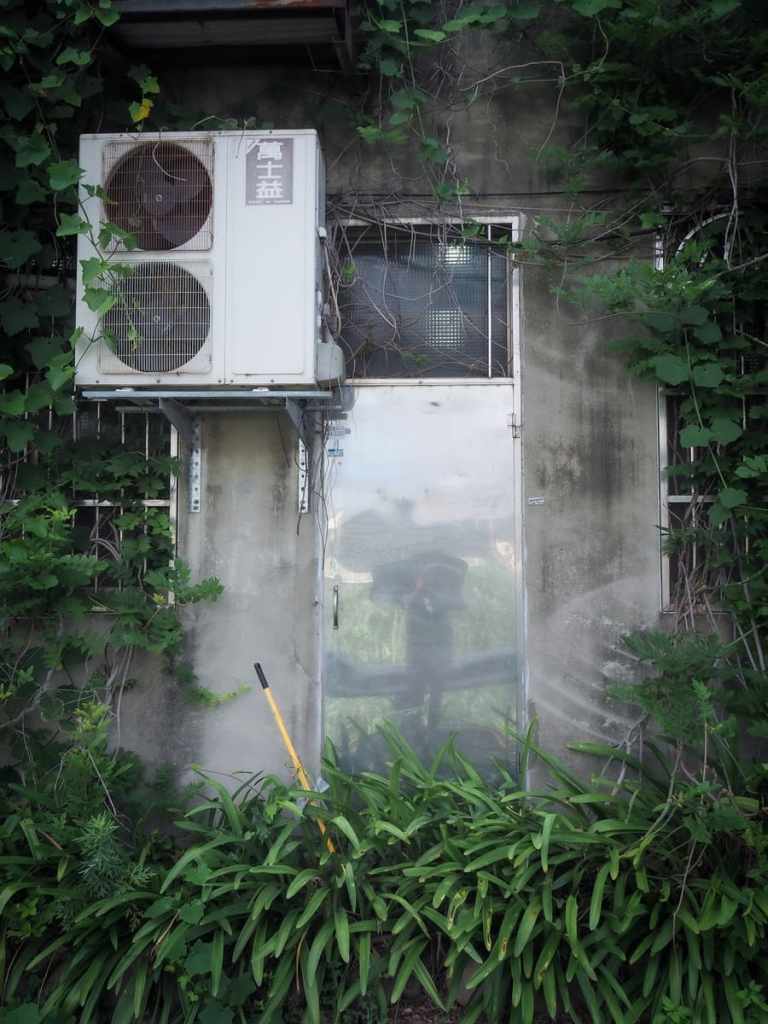
Still hot, I made the mistake of buying a FamilyMart ice cream. Well, the ice cream was not a mistake, but taking it outside was. By the time I finished, the cone had become a sticky, grapey mess.
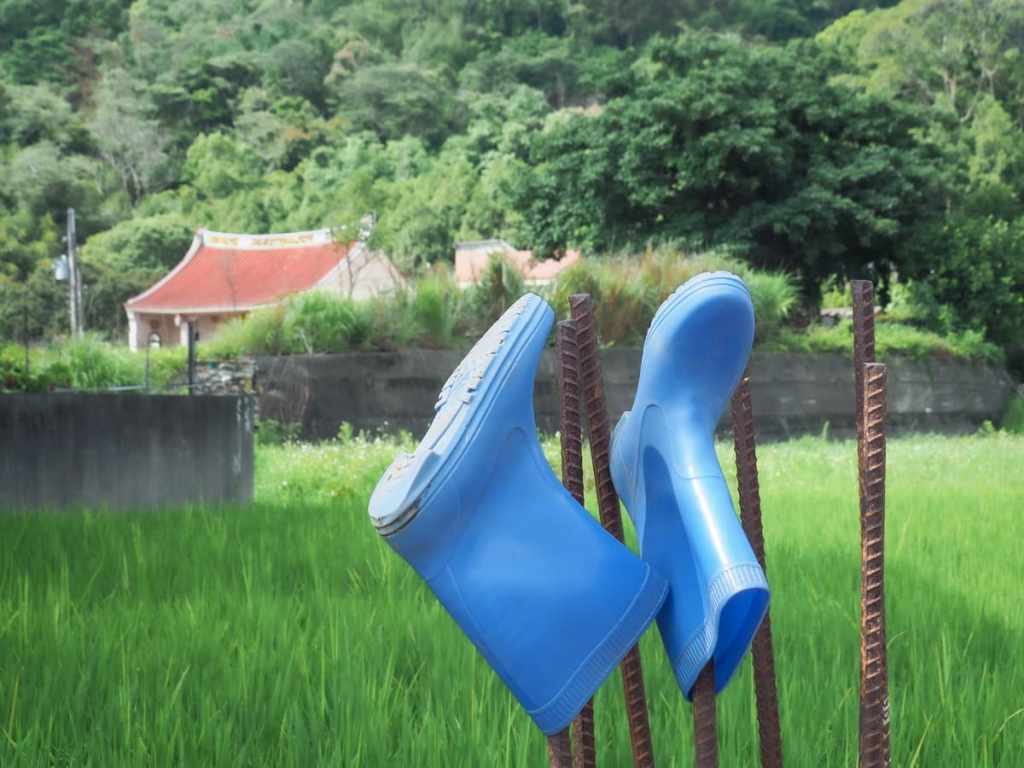
Wellie boots hanging on poles to keep the rain and spiders out.

14:40 – Heading into the village of Shiguang, I passed under a raised irrigation channel and ducked into another convenience store for a little more air conditioning and a liquid top-up. This is where you’ll find the starting point of Shiguang Historic Trail (石光古道), AKA RSB06-1.
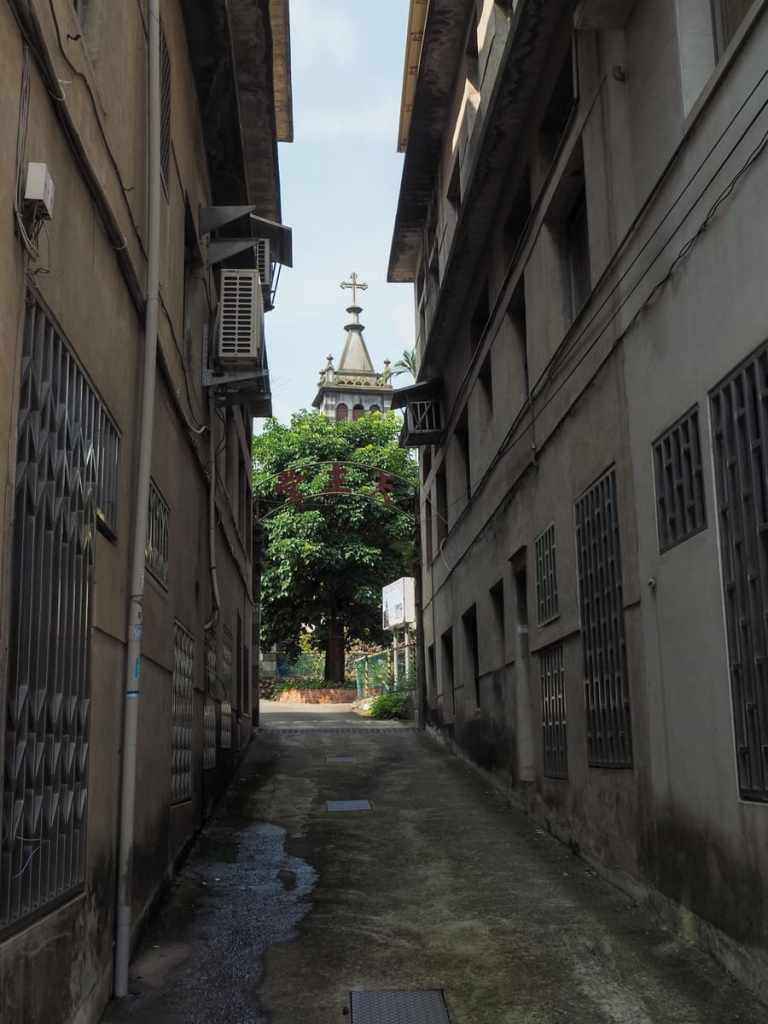
A Catholic Church seen through a gap in the buildings. This area seems to have a large number of churches, most notable amongst them, the Lourdes replica located at the far end of Shiguang Historic Trail.
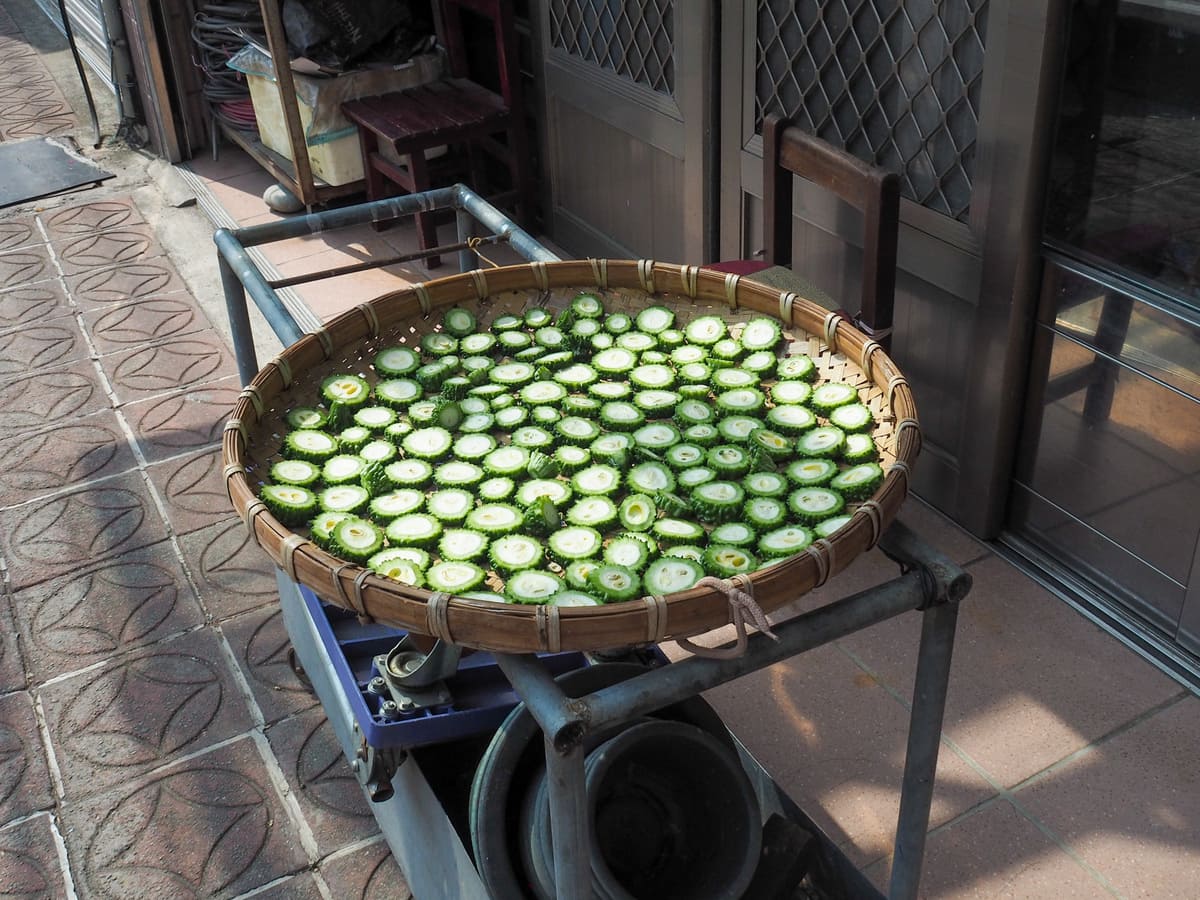
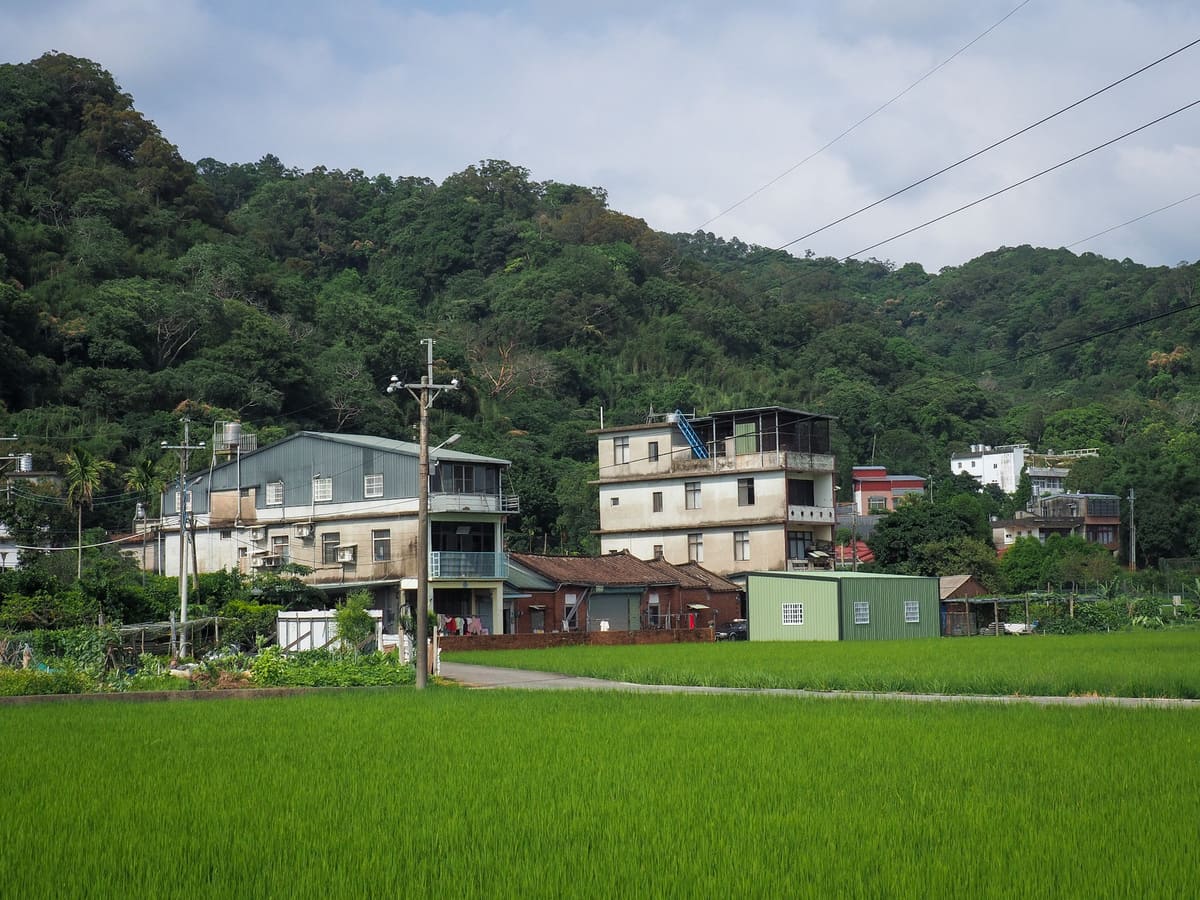
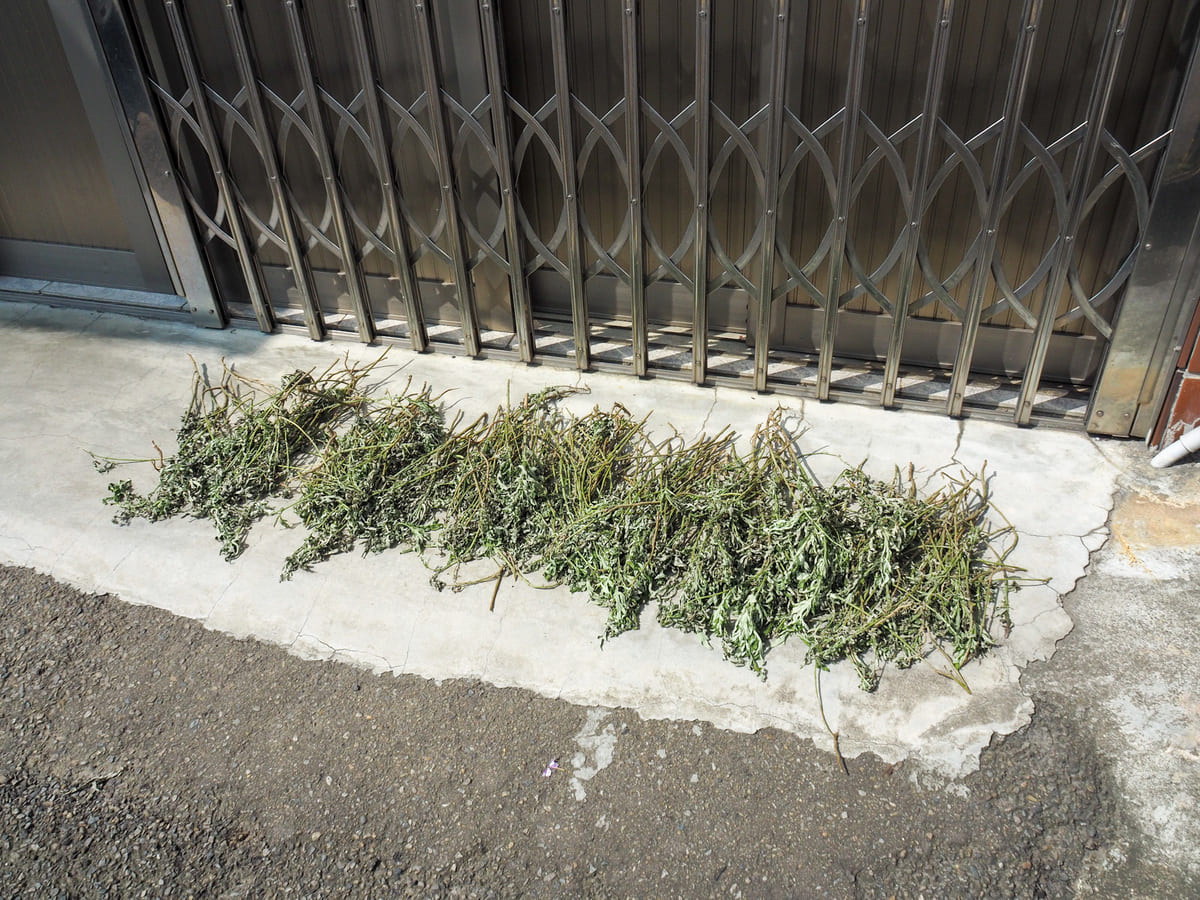
A hitherto unobserved type of drying vegetables: bitter melon. And on the right, a traditional brick house with a very non-traditional metal rolling door.

June 2
7-9
15:16 – Shortly past the point at which RSB06-1 rejoins the road, I passed under National Freeway No. 3. By this point in the day, the sky to the east had started to darken, with clouds threatening some of the afternoon showers that are common in the summer months.

This region (along with Dahu in Miaoli and Neihu in Taipei) is known as a strawberry-picking hotspot. In May, the farms were all quiet, with just the odd berry here and there, but in winter, you’ll find the rows of plants full of juicy berries.
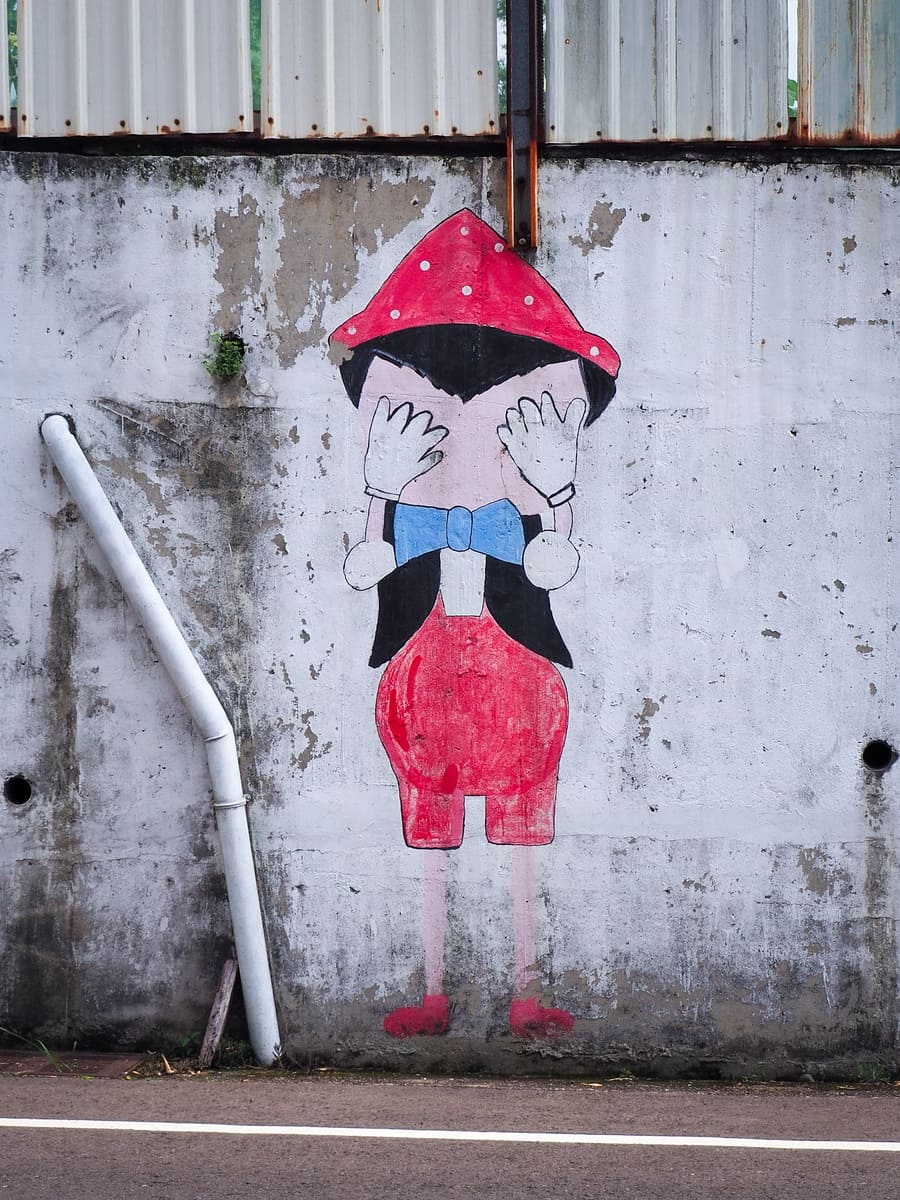
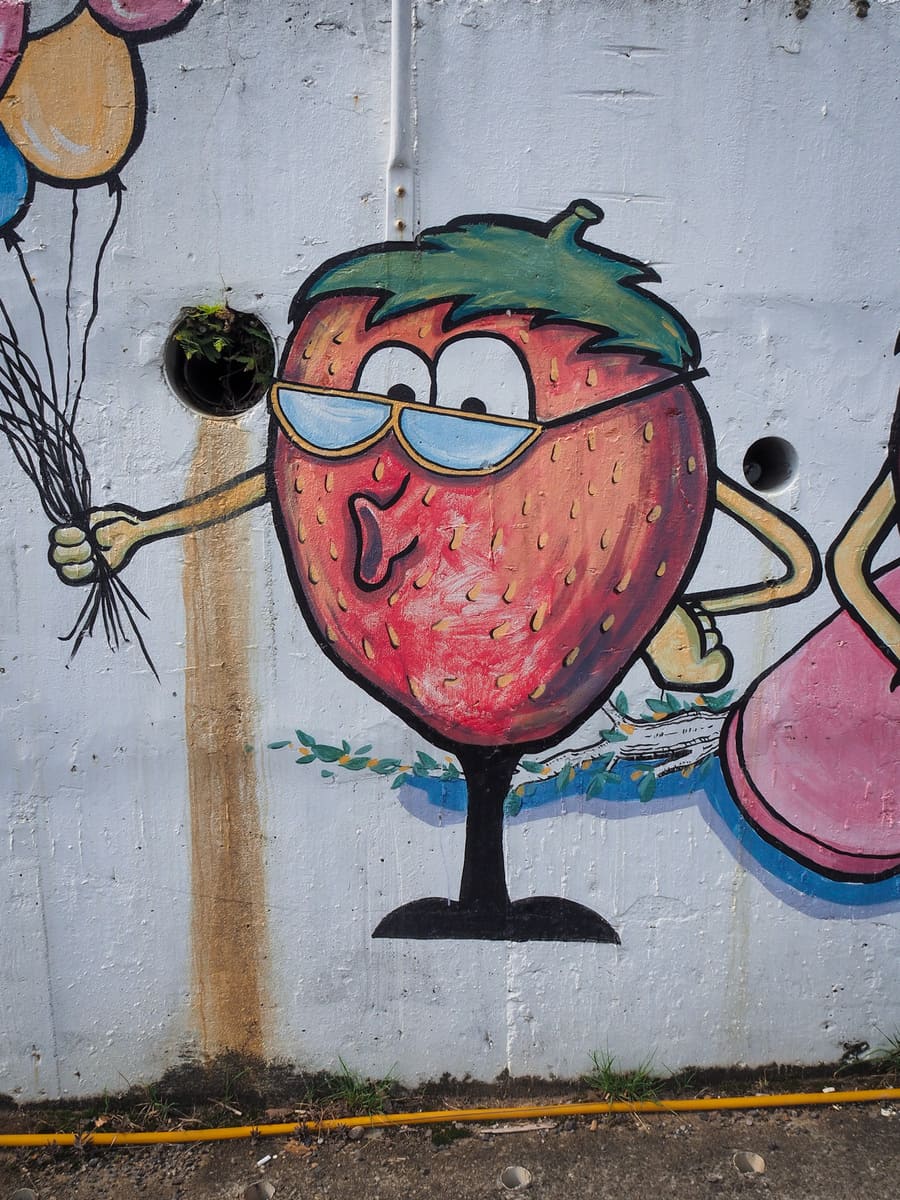
And as is customary in Taiwan, the locals advertise their region’s specialty with lots of themed artwork. Painted cartoon strawberries adorn many a wall and numerous wayside stalls stand vacant in anticipation of the next harvest.
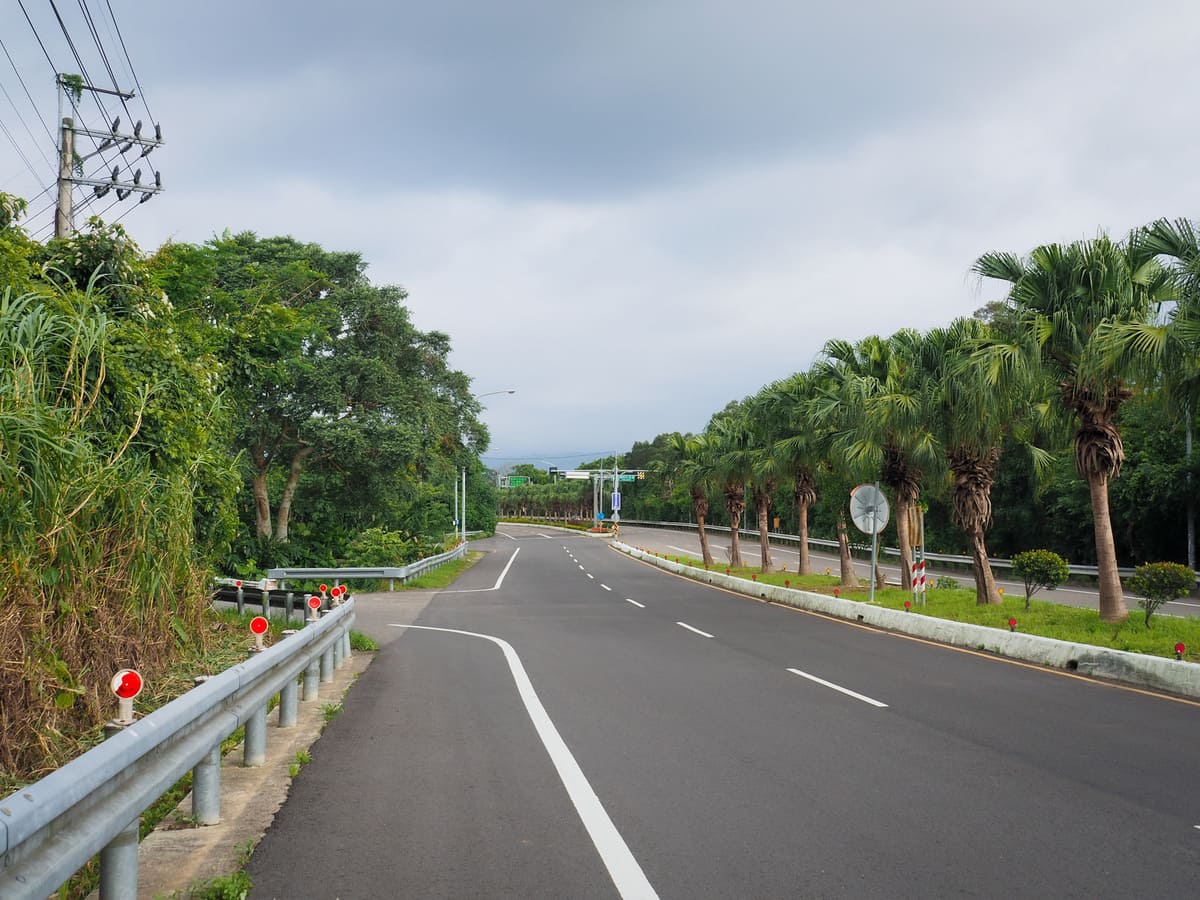
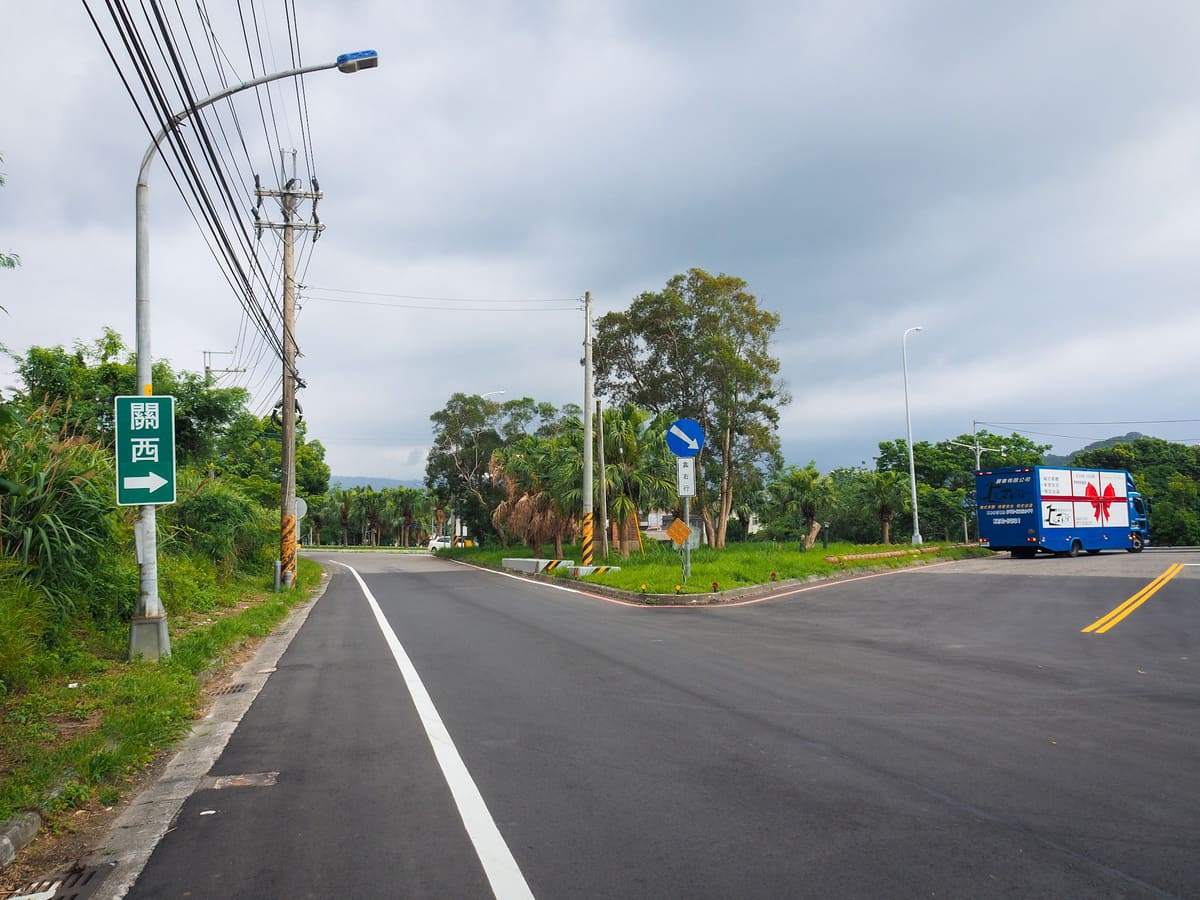
15:47 – The route briefly veers away from County Highway 118 in order to sidestep the busy junction with Provincial Highway 3. Turn left here, follow the lane past some government buildings, under Provincial Highway, then left again back onto the 118. (I ended up retracing my steps back to here to get a bus, but if you’re willing to wait, you can get one directly from Guanxi.)
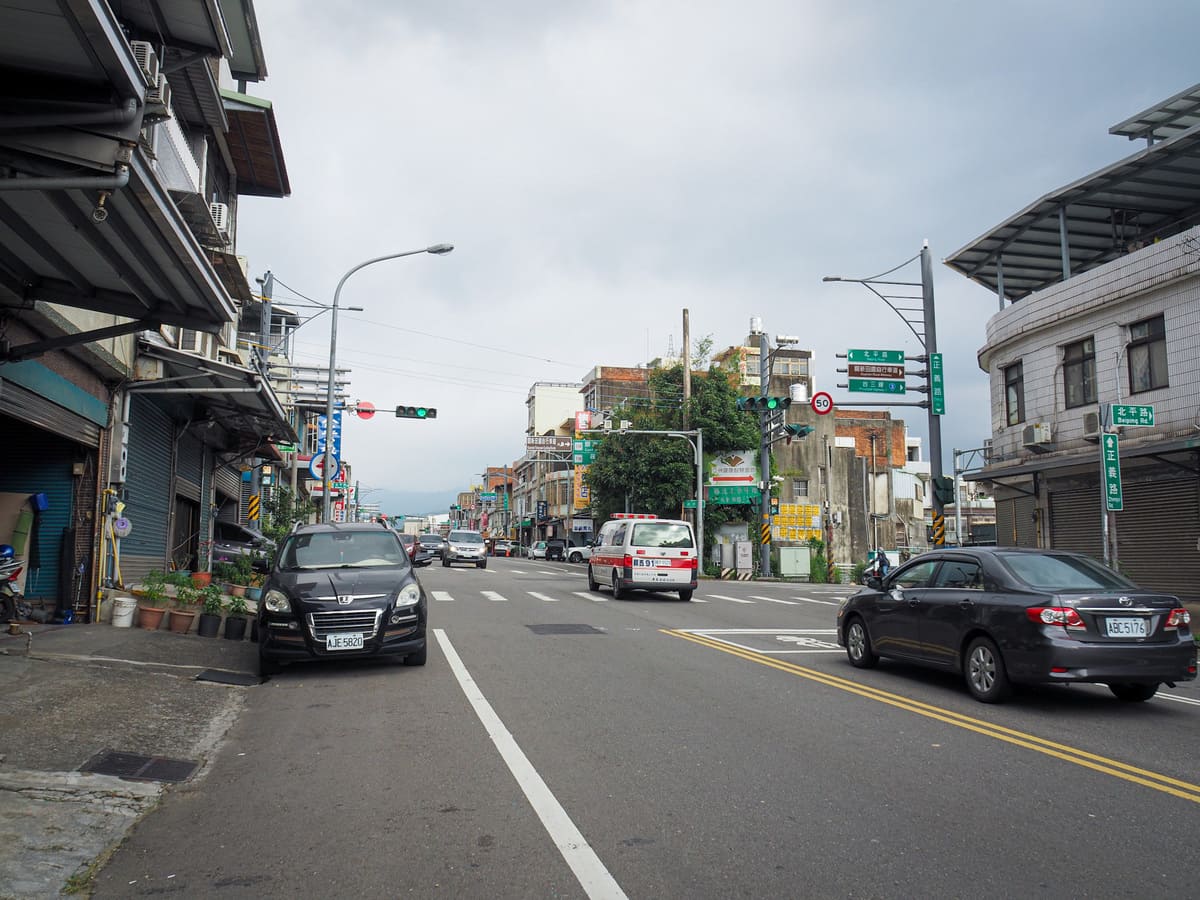
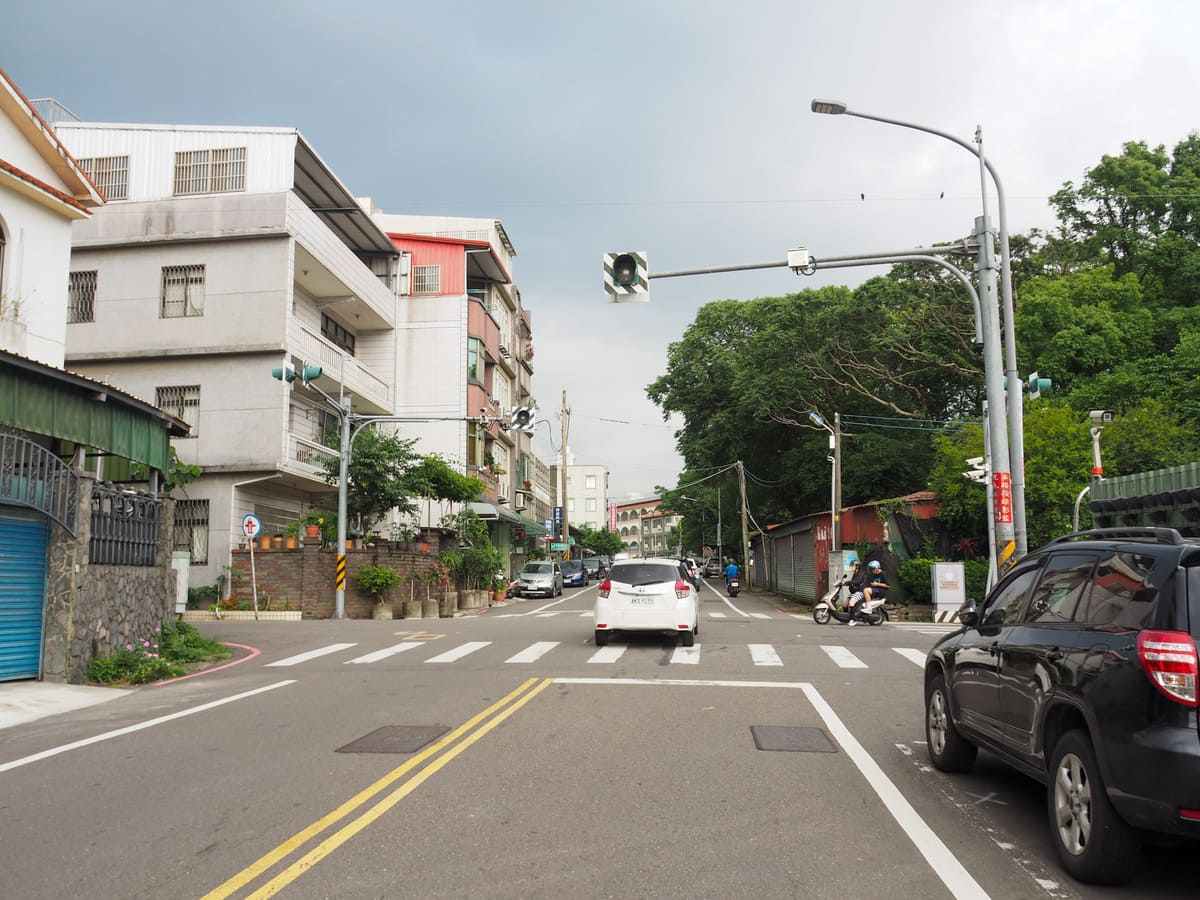
15:58 – The 118 will take you directly into the centre of town if you stick with it, but I had a spot I wanted to visit first, so I turned right on Beiping Road, then right again onto Zhongyang Street.
At the end of Zhongyang Street, I took the left past a school and was rewarded with this lovely view of Guanxi beneath a leaden sky. The primary route of the RST runs south over those mountains beyond the paddy fields.
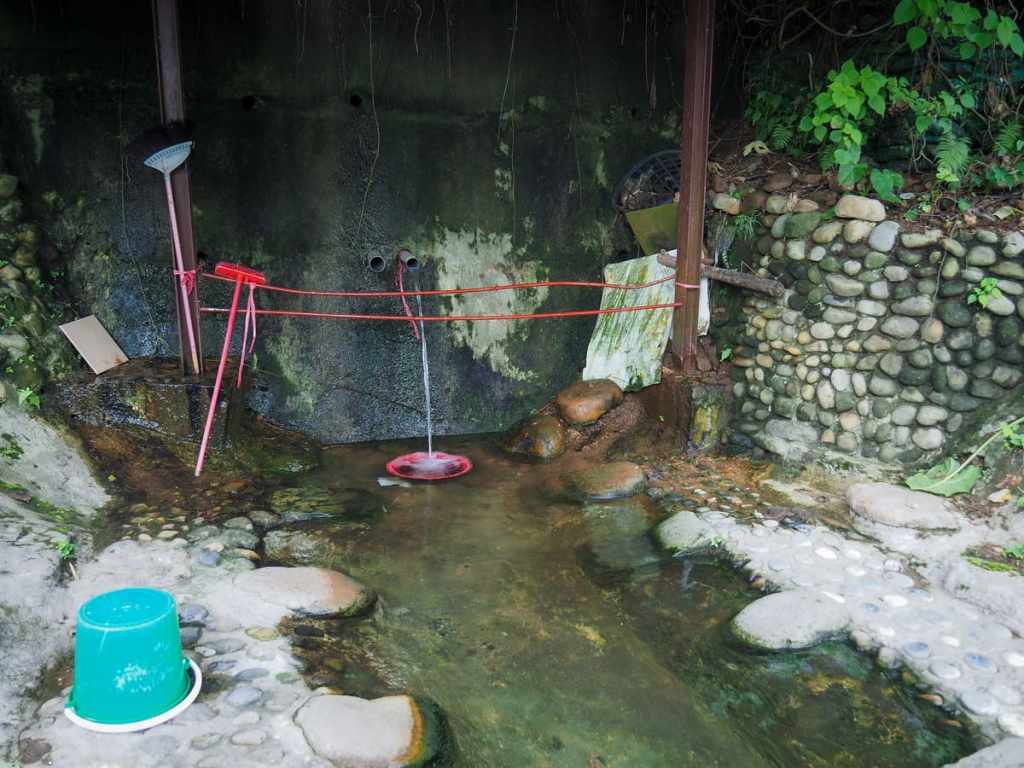
And this is why I diverted off the 118. I had seen there should be another washing pool hidden down some steps up here and I wanted to pay it a visit. Sure enough, the pool exists and is obviously still in use.

16:31 – Curiosity sated, I followed Zhongshan Road right into the centre of Guanxi and got some refreshments before heading for home.
GETTING THERE
Google Maps address: I started this walk from the Lianhua Temple bus stop. There is a limited number of parking spaces in front of Lianhua Temple, but since this is a point-to-point walk, you’d be better off taking public transport.
GPS location:
- Lianhua Temple bus stop – N24 49.845 E121 02.185
- Guanxi town centre – N24 47.480 E121 10.570
Public transport:
- Getting to Lianhua Temple bus stop – To get to the start, you’ll need to catch a train to Zhubei Station (both local Fuxing/Shuttle trains and Tze-Chiang Limited Express Trains stop here). From there, you could catch a bus, but it would probably be easier to just hop on a YouBike. Alternatively, you can do something similar, but start by taking the HSR to Hsinchu Station.
- Returning from Guanxi – You can either walk (about 20 minutes) to Guanxi Bus Station and get the 1820 or 1820A all the way back to Taipei bus station. Or if you’ve done enough walking, then you can catch the 5617 from the other Guanxi bus station (on Zhongxing Road), ride it back to Zhongli, then transfer over to the train back to wherever you need to be. I think there are also a couple of options that’ll take you to Xinpu station if that’s the way you’re heading.
Accommodation:
Staying in Guanxi – During a previous Raknus Selu walk, we spent the night at a hostel on Guanxi’s Old Street, right on the course of the RST.
- Name in Chinese: 67老街客棧
- Address: 新竹縣關西鎮中正路67號
- Contact: 0963-321329
- Cost: $1200 for two (I think, although AirBnB lists it as being less)
Further reading: Head over to Taiwan Everything for a little background reading on some of the sights in Guanxi, and Josh Ellis has a page about Dong’an Bridge.
RAKNUS SELU B ROUTE TRAIL MAP
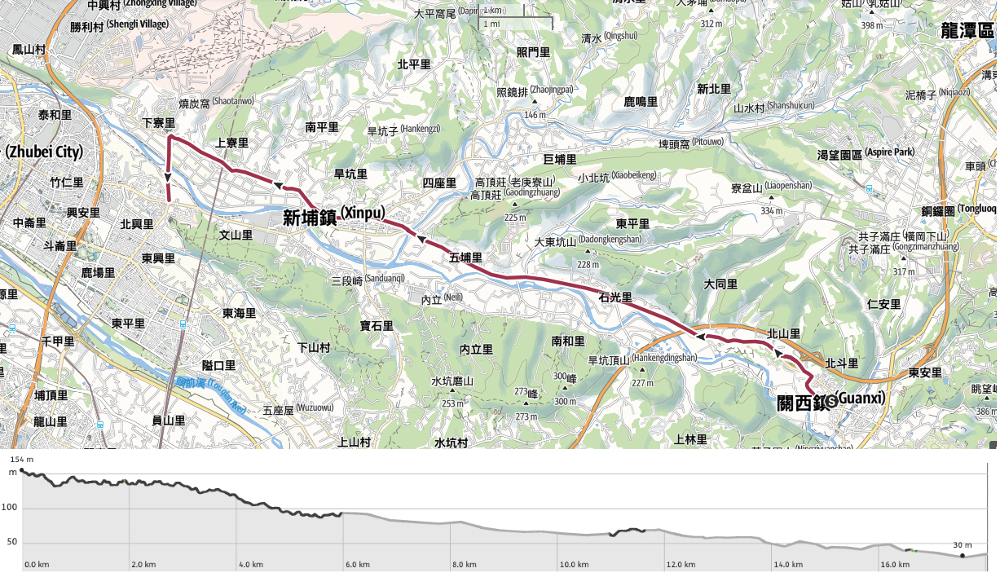
GPX file available here on Outdoor Active. (Account needed, but the free one works just fine.)
 Taiwan Trails and Tales
This was an interesting read. Looks like a great walk. I was just talking to a friend about the walks in Japan and how you can stop at inns and cafes along the way. I was telling him that Taiwan doesn’t really have that–that you need to carry everything and be self- supported on long hikes. but I guess I was wrong. The Raknus Selu trail seems to offer that.
LikeLiked by 1 person
Thanks! Glad you liked it. Japan definitely has a much more established network than Taiwan, but we’ve got three trails that more or less fit the bill here. The Raknus Selu, the Tamsui Kavalan Trails and the Mountains to Sea Greenway. This latter is the only one I’ve actually done as a one-hit through hike. I spent 12 days walking it (one day was a rest day). I did the Tamsui Kavalan Trails as standalone day hikes but dream of redoing each section as a mini through-hike (there are three sections, each of which take about three days).
LikeLike