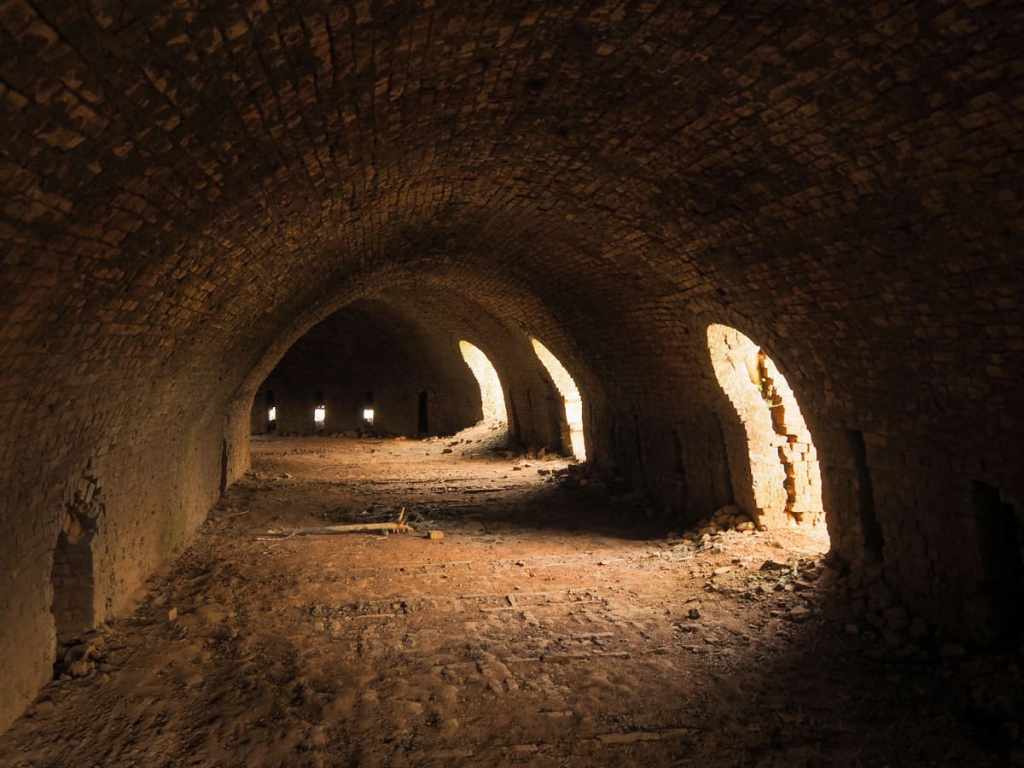
This short loop trail is located on the outskirts of Guanxi, a small Hakka town just on the Hsinchu side of the Hsinchu-Taoyuan border. Along the way, you can hope to spot tea fields, abandoned kilns and a temple with a built-in spring.
Distance: About 3.5 kilometres.
Time: A little over an hour.
Total ascent: About 120 metres.
Difficulty 1-2/10 — This should be an easy walk for anyone, regardless of whether or not you’re familiar with Taiwan’s hiking trails.
Risks and dangers: This is a pretty safe trail, just pay attention to traffic and dogs.
Water: We didn’t drink anything on a cool December day and as long as you don’t go in the height of summer, you should be fine to travel light.
Shade: Most of the walk is pretty exposed, so if it’s sunny, you’ll want to cover yourself.
Mobile network: Signal is pretty clear throughout.
Enjoyment: This isn’t an amazingly pretty trail, but there are some interesting sights and you can enjoy a visit to Guanxi while you’re at it.
Bathoom facilities: There is a toilet by Ren’an Community Development Association, but it feels a little… dank.
Route type: Loop
Permit: None needed
Jump to the bottom of this post for a trail map and GPX file.
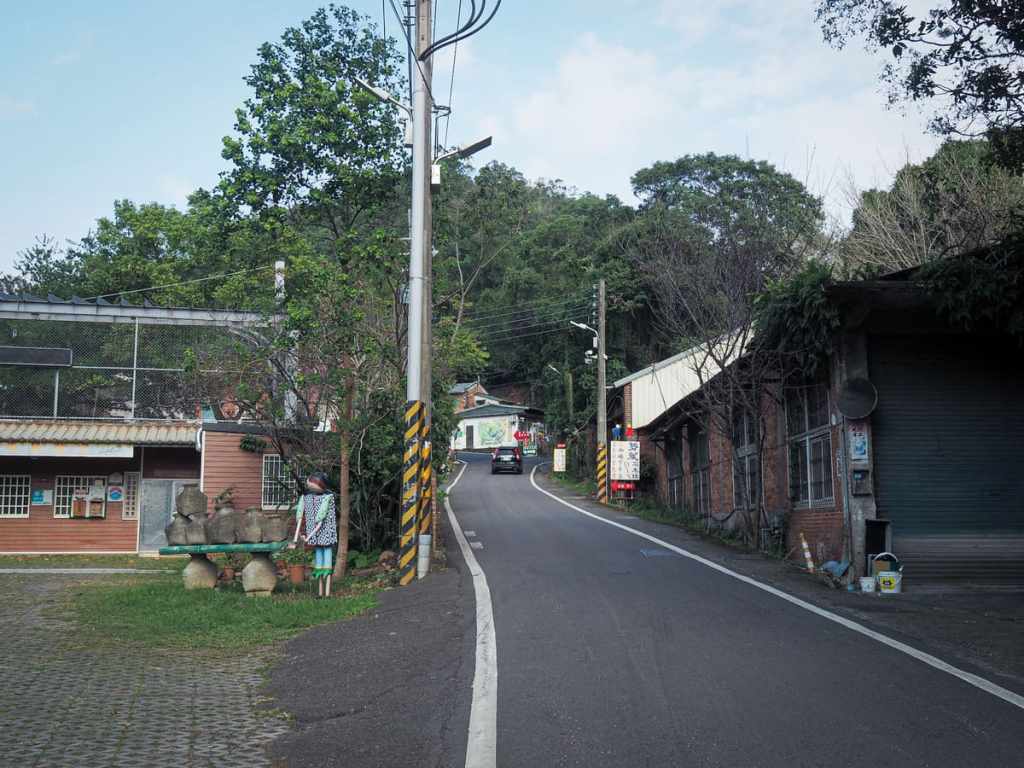
We parked on a patch of land in front of Ren’an Community Development Association and admired the various sculptures made from recycled bits and bobs before heading up the road.
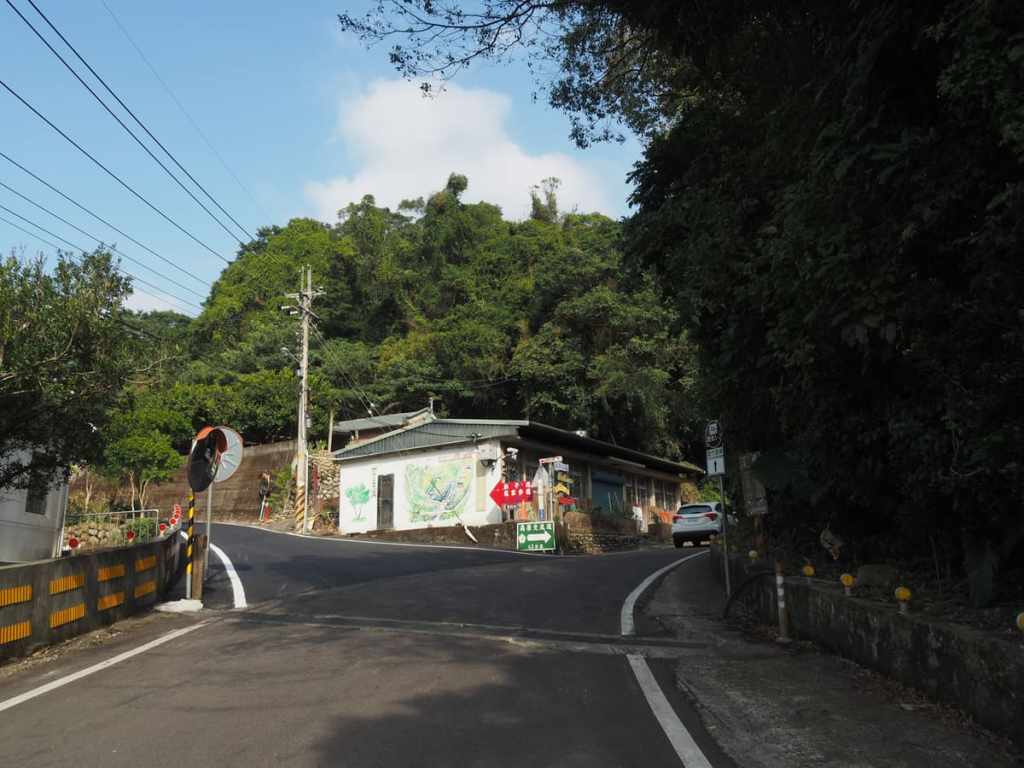
Very soon, we reached a fork in the road and the steps marking the start of the trail begin just to the left of the building decorated with a map.
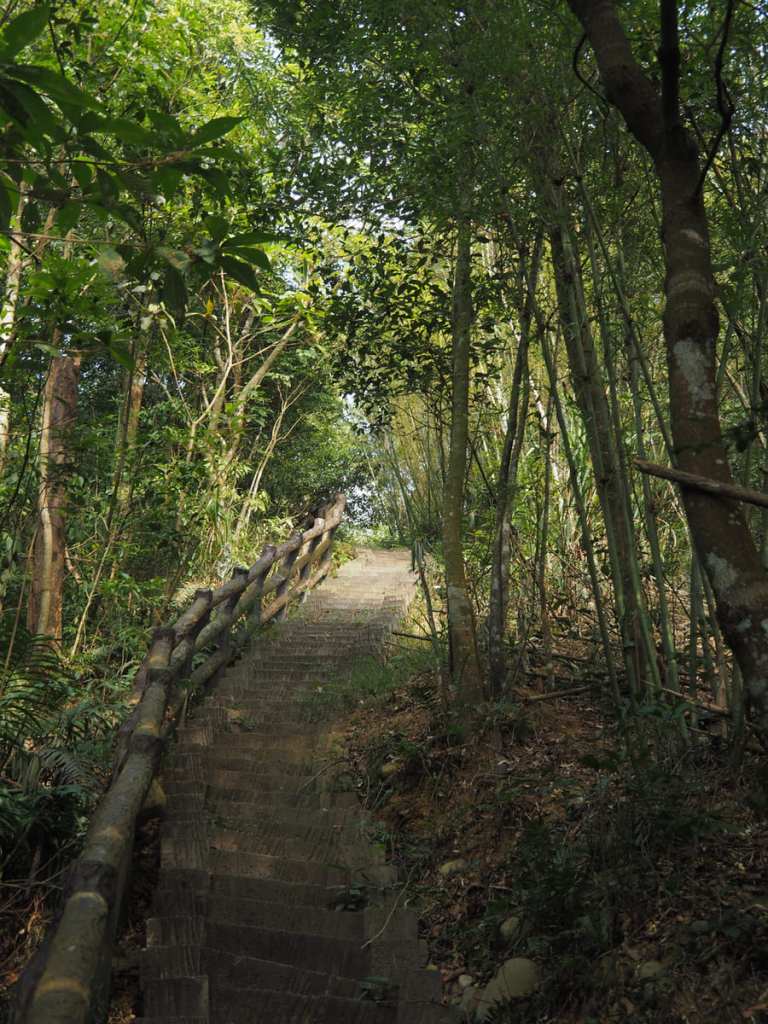
For the next 400 metres, steps climb steeply up a bamboo-covered slope.
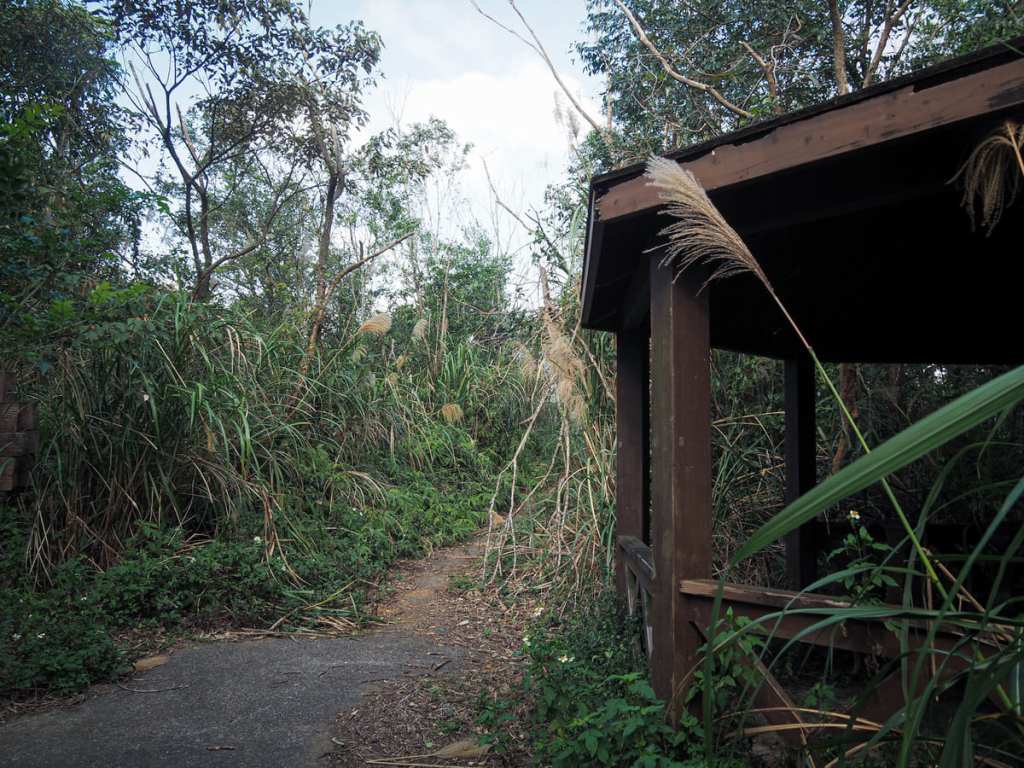
Right where the steps level out into a track, there is a pavilion that has seen better days.
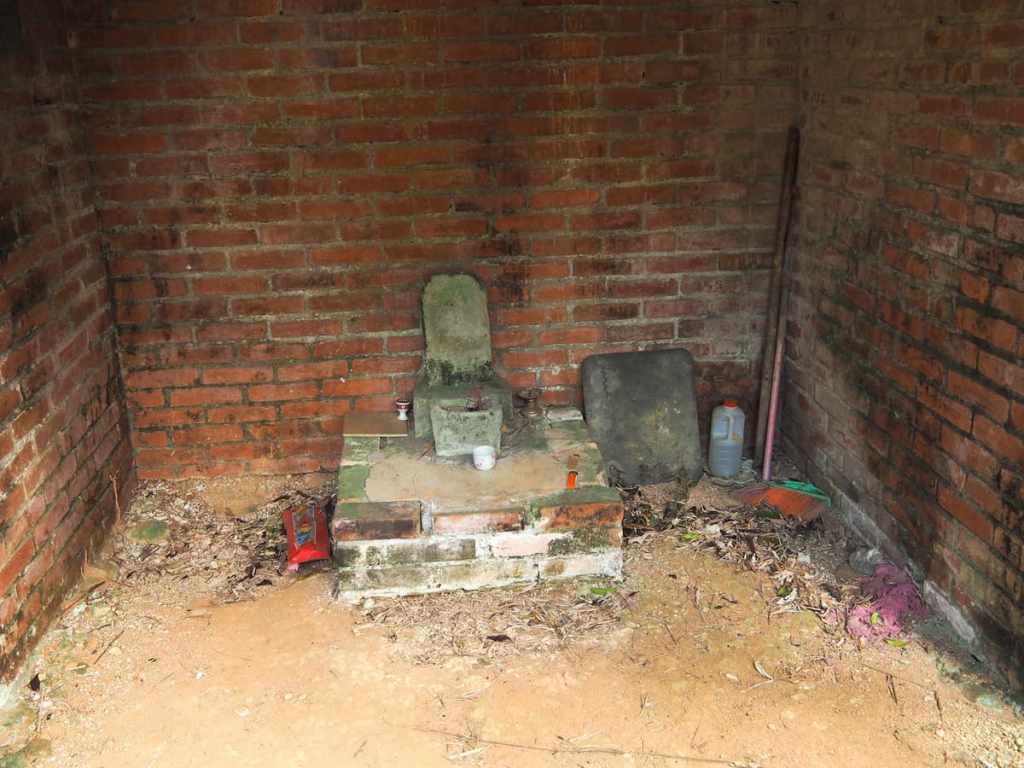
On the opposite side of the clearing, a small red-brick structure stands with its back to the trail. Signage nearby indicates that this is a monument dedicated to Huang Jie (from whom the trail takes its name). Huang was a Chinese medicine salesperson who frequently travelled this trail in the course of his work as he shuttled between Longtan and Guanxi. Huang would often pause in the villages he passed to offer medical assistance to those in need. His kindness earned him many admirers, and so when he passed away, nearby residents clubbed together to build this small marker.
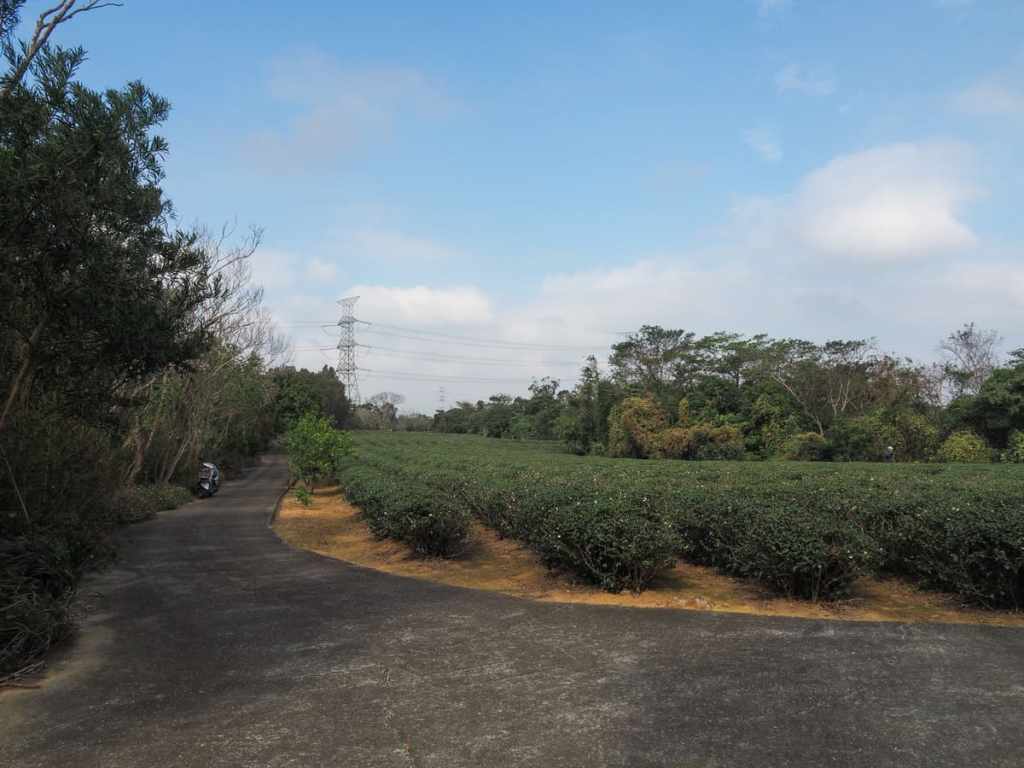
Heading along the trail from the pavilion, we soon found ourselves at the edge of a hilltop tea plantation. The path veers to the left here to follow along a broad ridge.
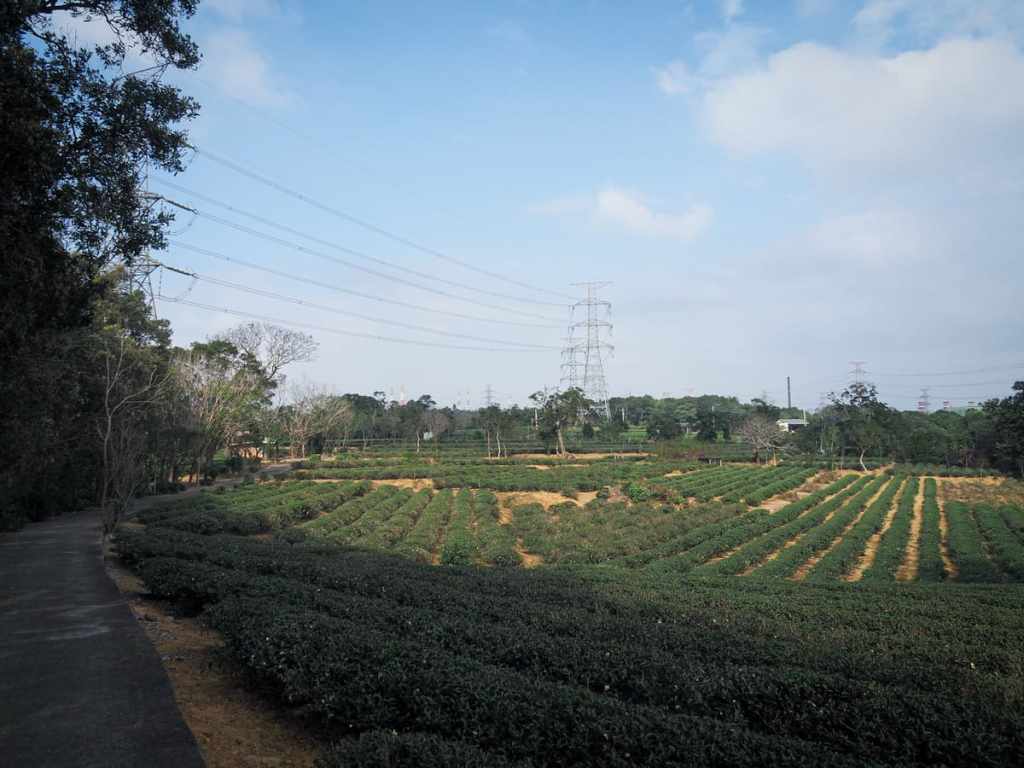
Rows of tea criss cross the land in a geometric patchwork.
The only other people up there were a couple who were staring intently at one of the distant hedgerows. Just as we passed them, they called us back and dug out handfuls of freshly picked organic kumquats from their pockets, not letting us go until each of us had some. We were accompanied on the walk by a friend who had just come back from the States so this unexpected hospitality felt like a nice welcome back to Taiwan.
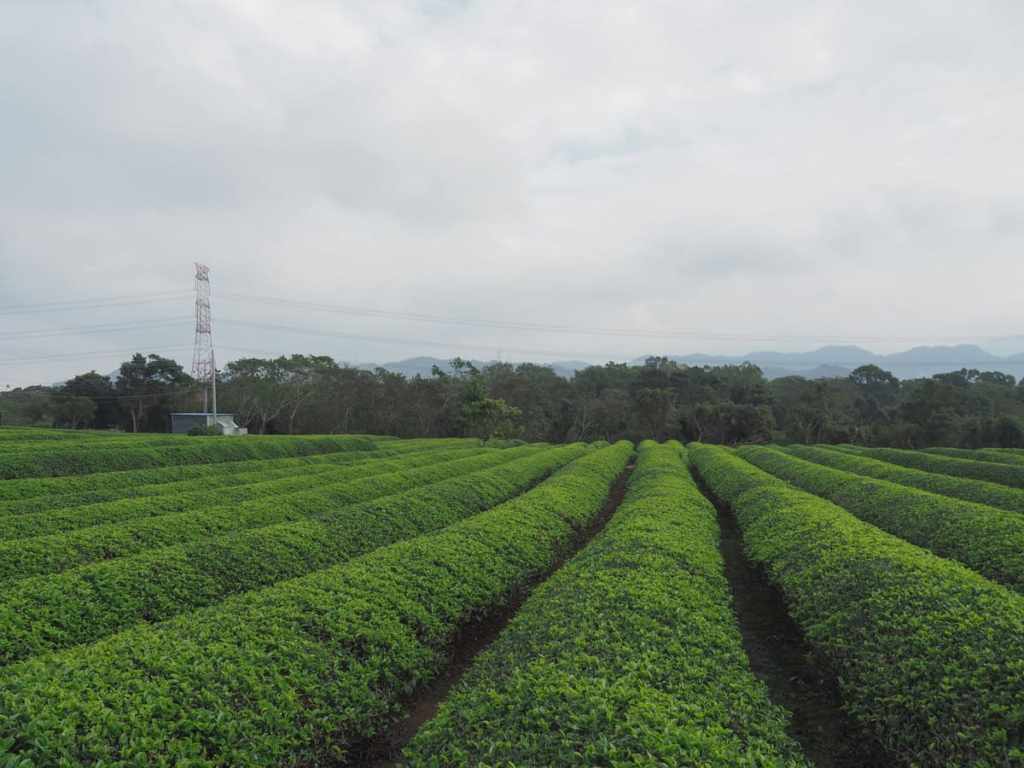
I haven’t figured out why yet, but some plots have boxy tea shrubs, while others have this domed shape. It appears that they’re different varietals, since the boxy ones were all flowering, but the domed ones weren’t.
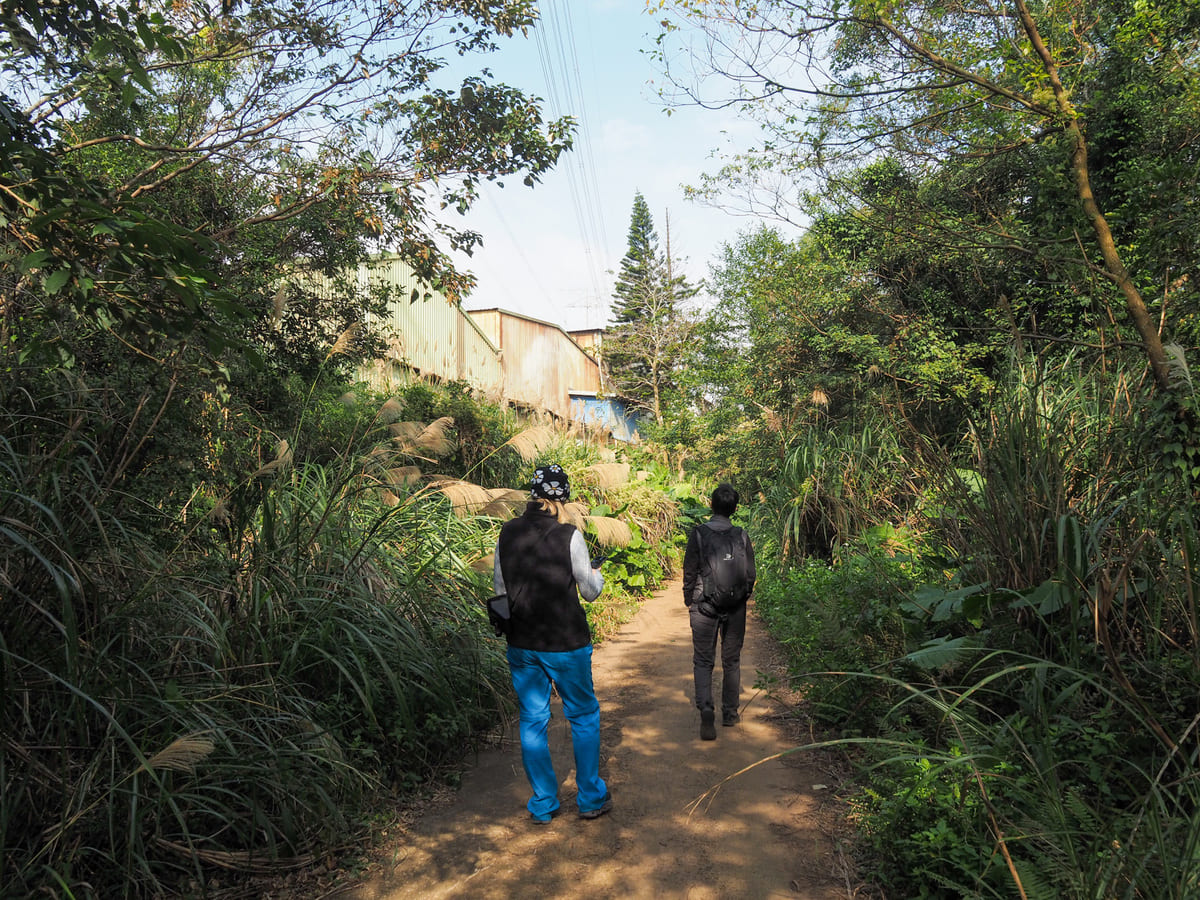
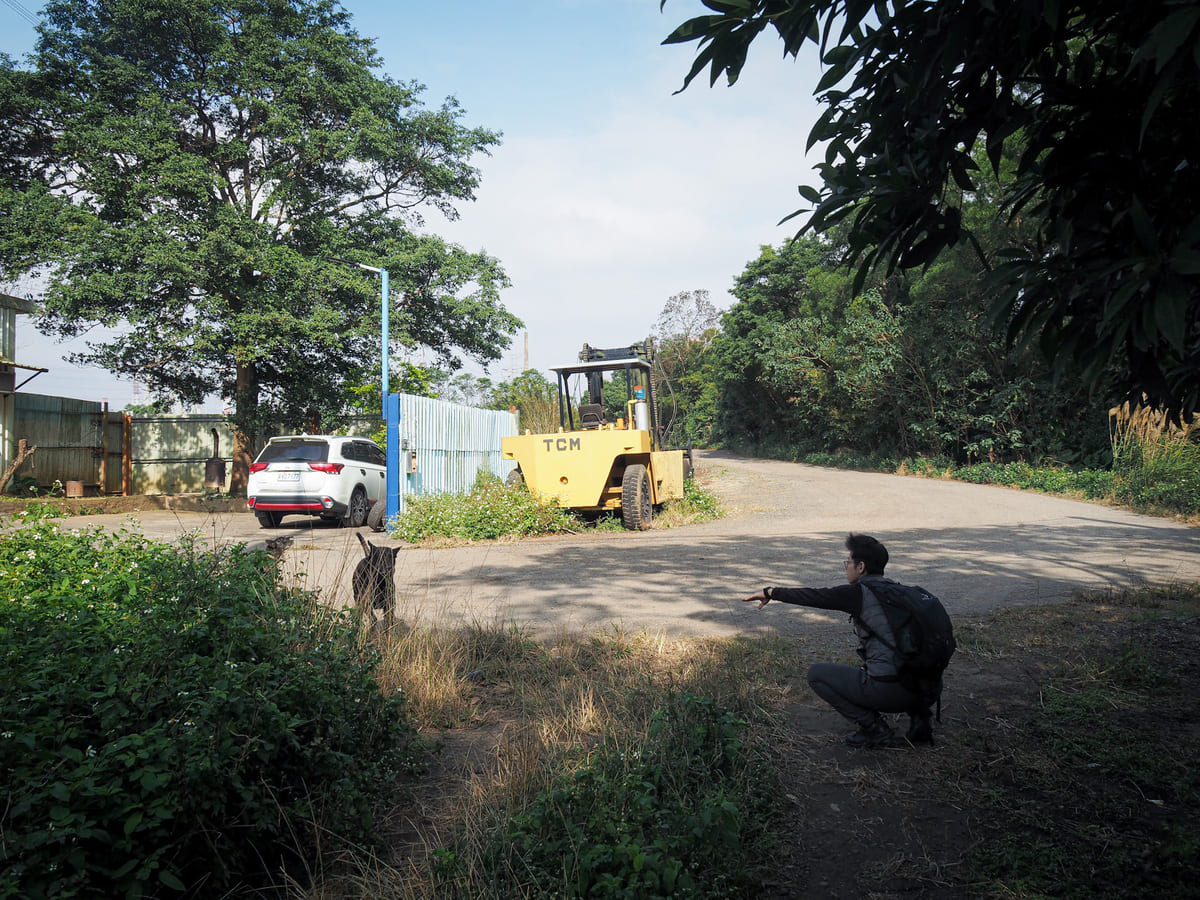
The track eventually runs out of tea fields and cuts through some scrubby farmland at the rear of some kind of steel girder production and/or storage facility. Reviewers on Google Maps warned that the yard is guarded by “aggressive dogs” but only the barking was aggressive. They shot out in a pack to protest our approach, but when Teresa called to them and offered to say hello, all but one slunk away and pretended they could no longer see us.
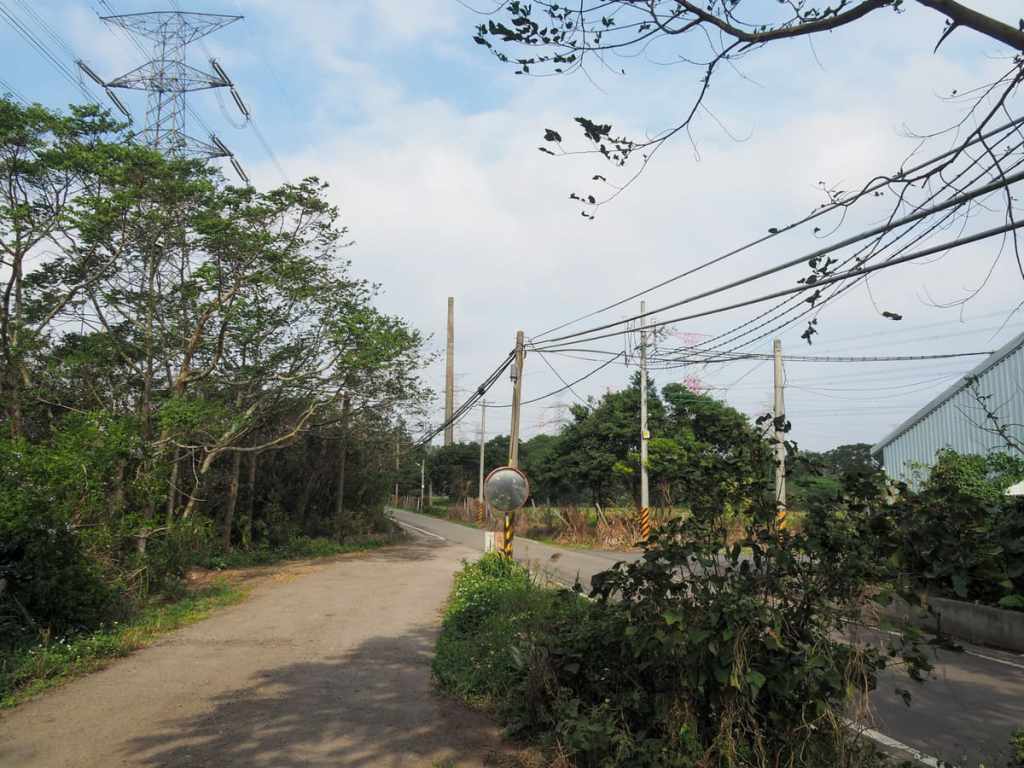
At the end of the track, turn right onto Shuimu Niang Road (水母娘路). When I first saw this name, I found it rather funny. “Shuimu” means jellyfish and “niang” means woman or mother, so it sounded like we were walking on Ms Jellyfish Road. It wasn’t until near the end of the walk that we realised why the road had been given this unique name.
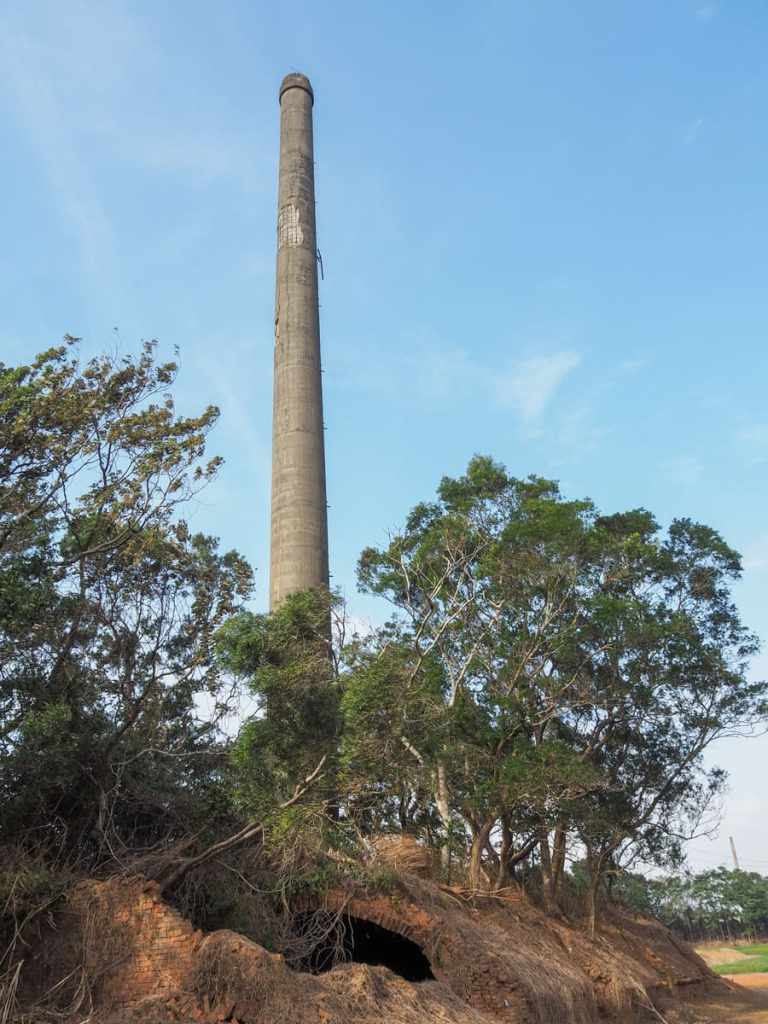
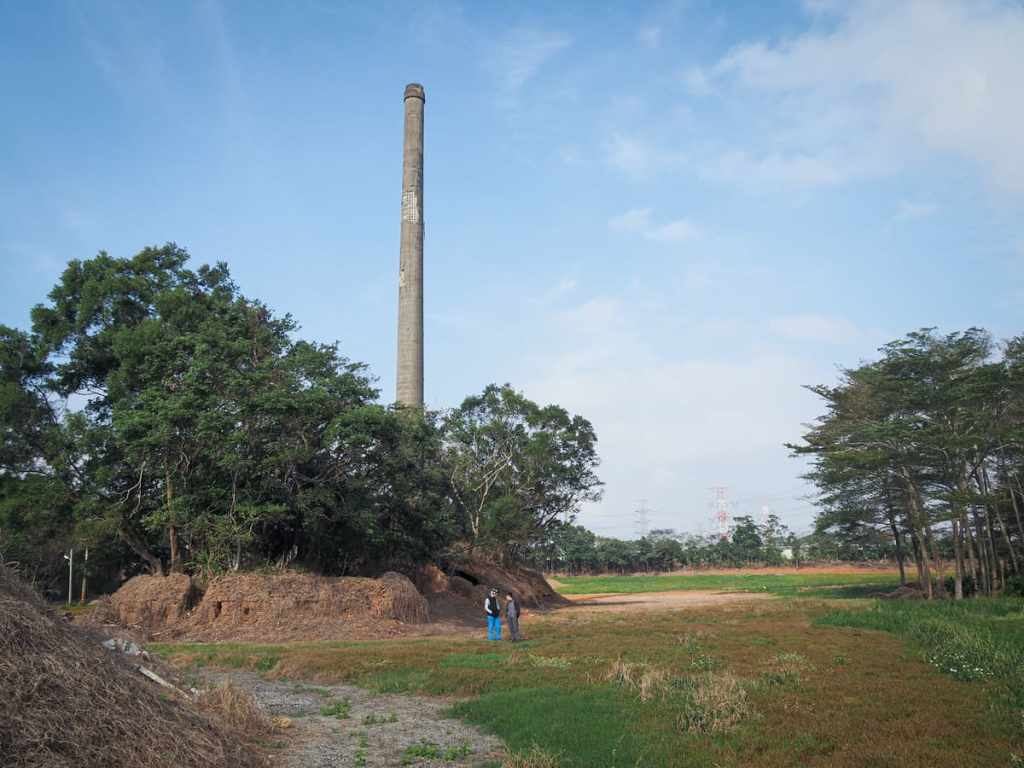
We’d already seen one of the area’s old brick kiln chimneys before turning right, and very soon, two more came into view.
There is little about these structures online, and even less in English, but as is often the case when I’m looking into the histories of some of Taiwan’s more obscure landmarks, I had some of my questions asked (and research done) by Alexander and Josh of Spectral Codex and Josh Ellis Photography.
The kilns were built for firing bricks in the early 1970s, and each one was owned by a different company. Why would three competing companies set up shop so close together? Evidently the composition of the earth here is particularly good for brick production.
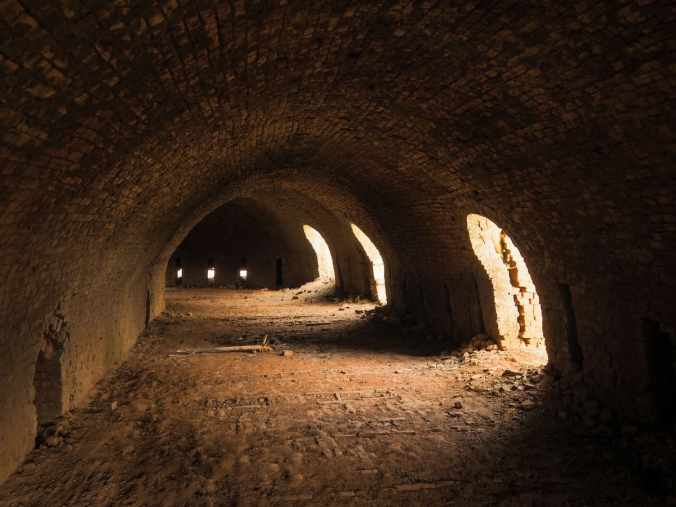
The structures are built in a style known Hoffman Kilns — a design which features a circular or elliptical (or, in the case of the Guanxi kilns, almost octagonal, meaning that the local name for them is Bagua Kilns) — tunnel positioned around a central smoke stack. The interior space is segmented into chambers that can be blocked off from each other by retractable plates. When the bricks in chamber one are being fired, the bricks waiting in chambers two and three are drying (which makes them less likely to crack during the firing process), then, as the firing was moved on to the next chambers, the cold air would be sucked in over the fired bricks in chamber one, this speeding up the cooling process. In this way, the kiln was able to operate continuously with the fire just rotating around the building.
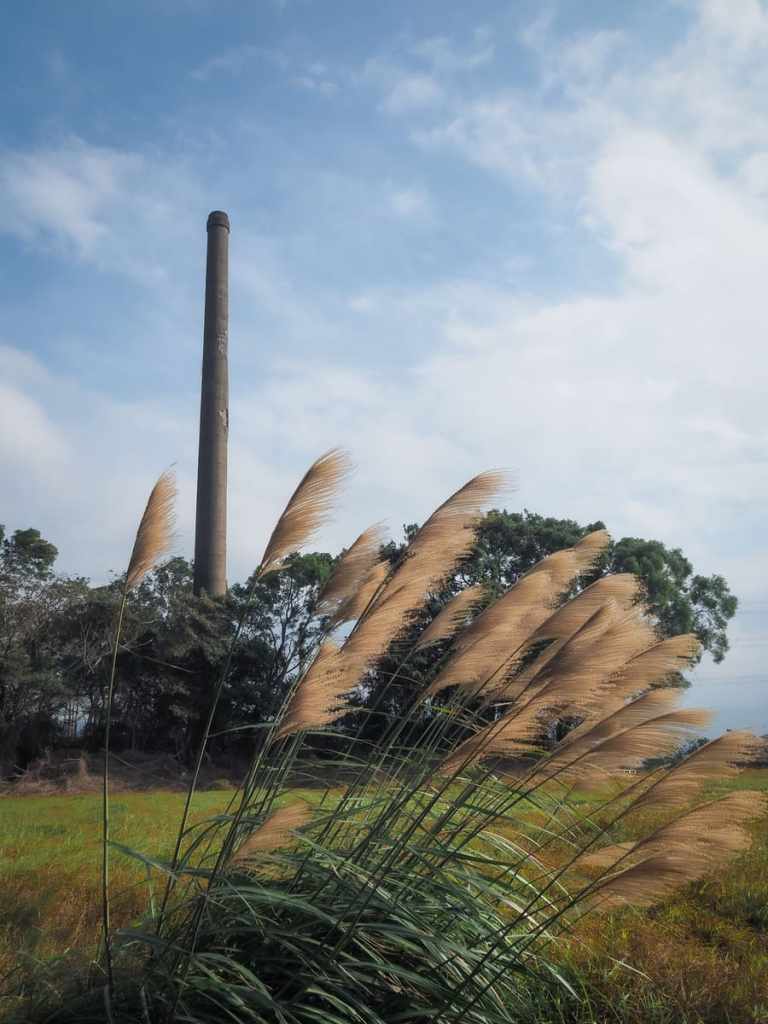
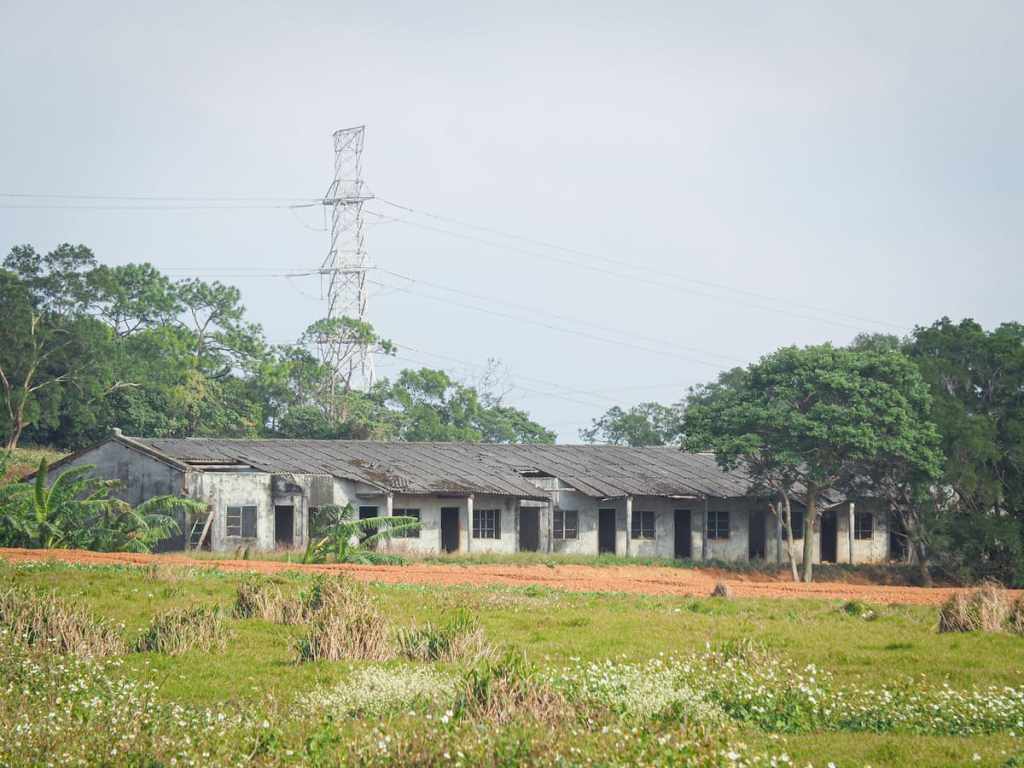
Looking at the kilns from a distance, they look just like chimneys rising from greenery, but if you draw closer, it becomes easier to discern the shape — you can even walk inside, just be aware that some sections of the roof have collapsed and maybe aren’t the most stable. And in the fields between two of them, you can spot a row of single-storey buildings that may have been offices at some time.
Moves are afoot to preserve these structures as part of Taiwan’s growing appreciation of its heritage, but whether or not funding arrives in time to stop them deteriorating any further remains to be seen.
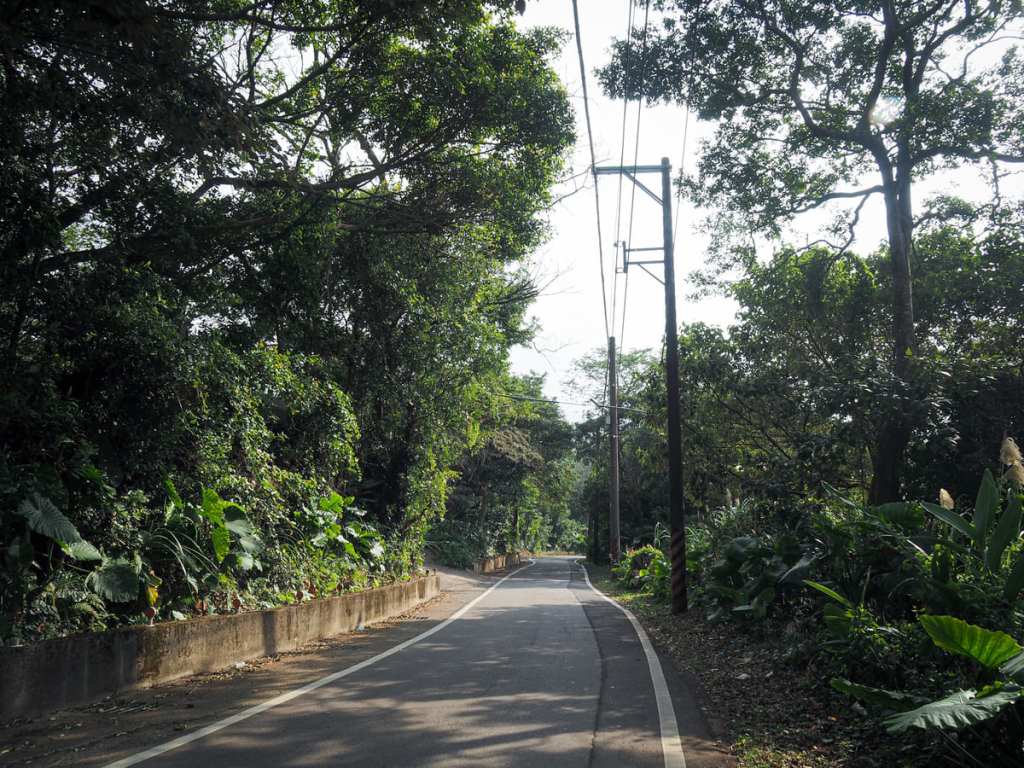
Leaving the brick kilns behind we continued down Shuimu Niang Road in the direction of where we’d parked.
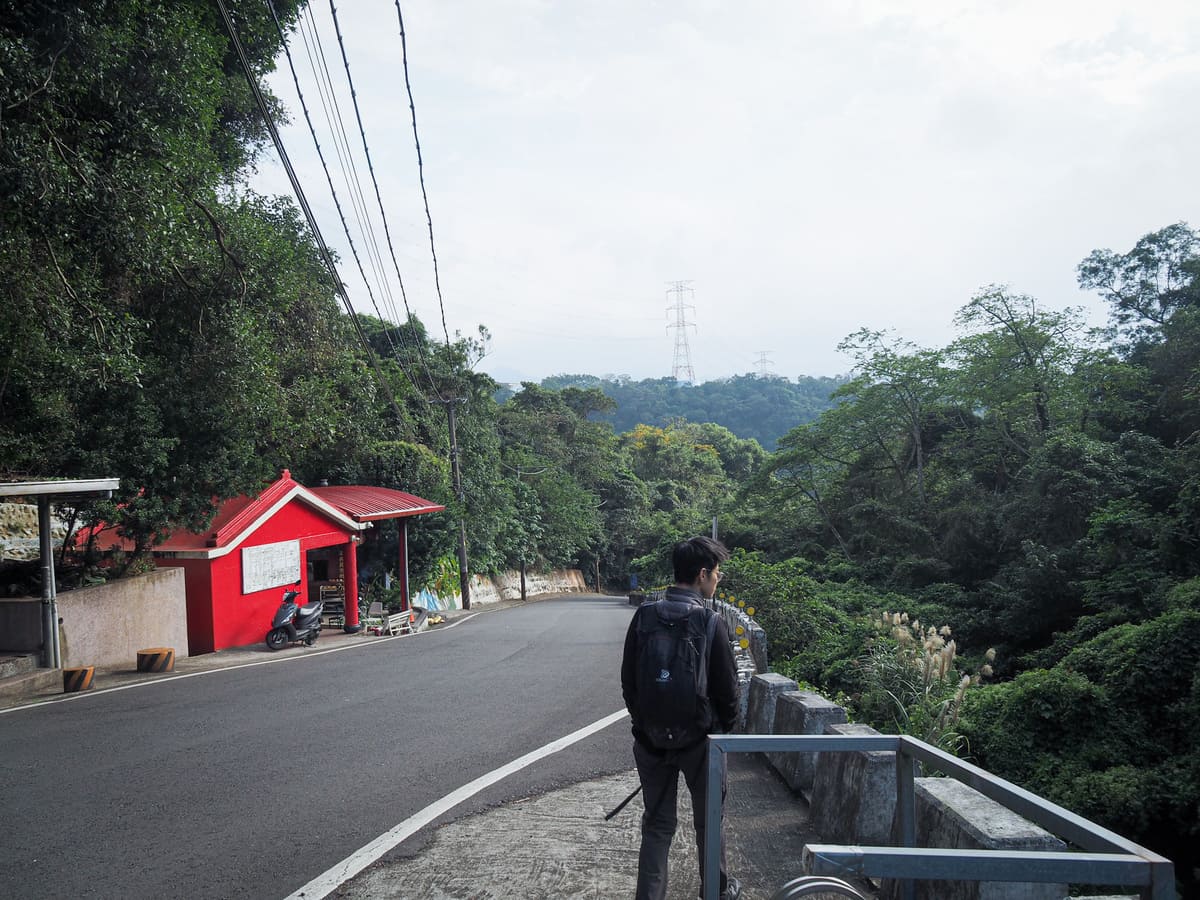
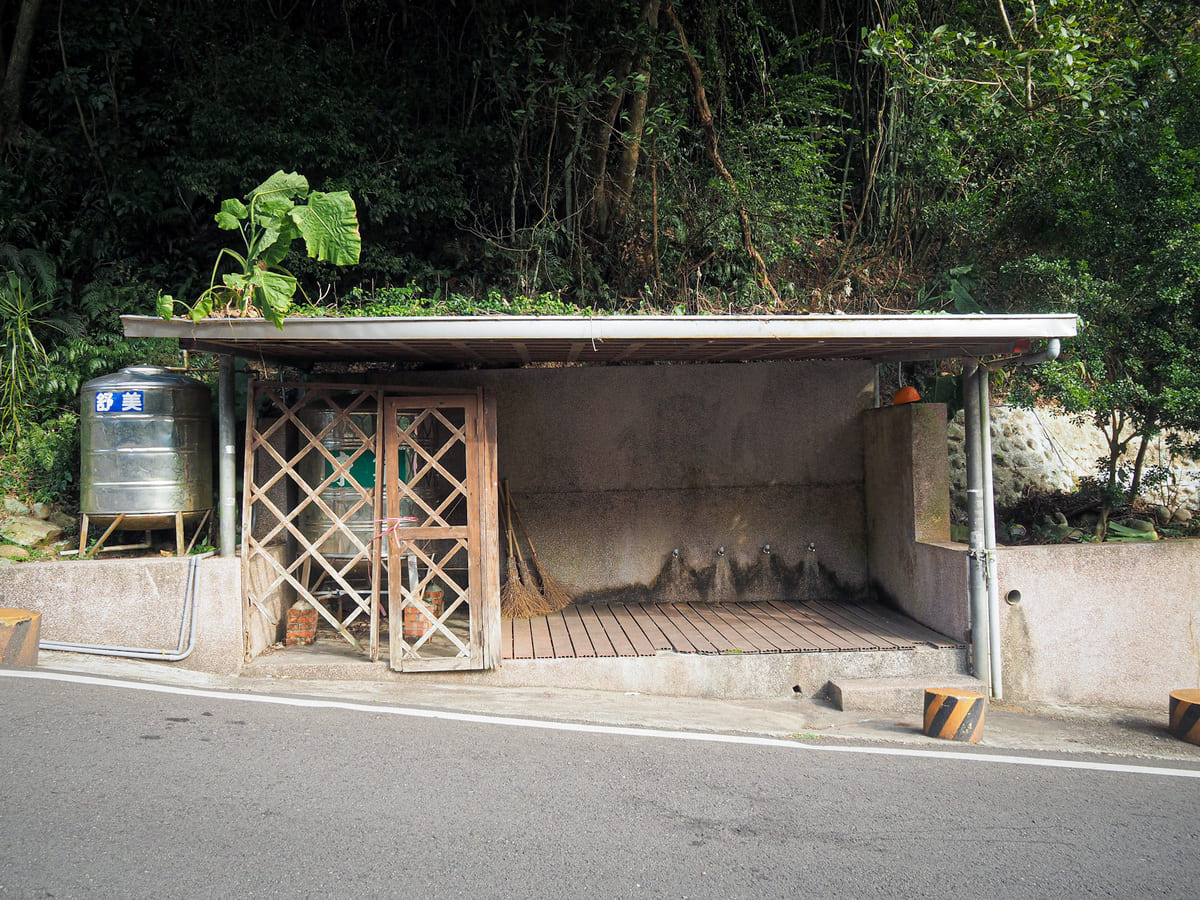
A little more than halfway down the road, the bright red form of a temple came into view. It isn’t unusual to find a temple on a rural back-road, but what made this one somewhat special was its name the fact that it was built on top of a spring.
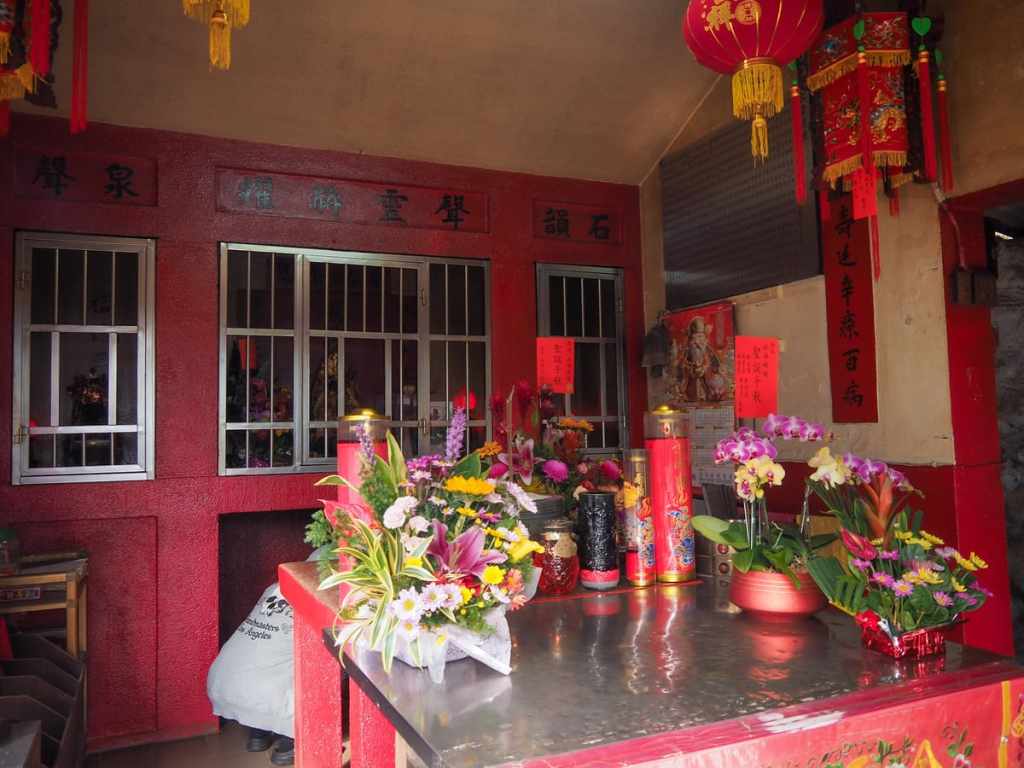
The temple is called Shui Mu Niang Niang Temple (水母娘娘廟), or water mother/goddess temple. It turns out there were no jellyfish hiding in Guanxi, just a spring overseen by a female deity.
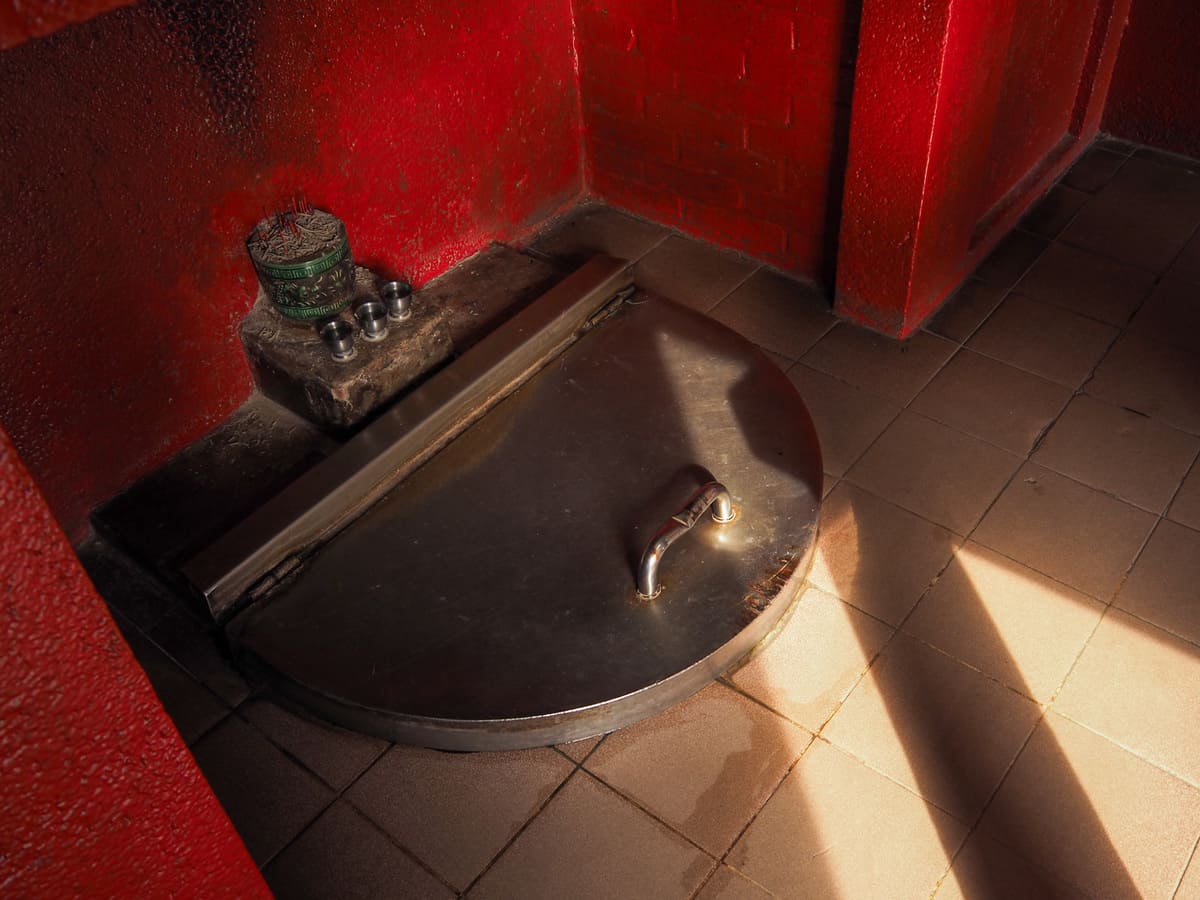
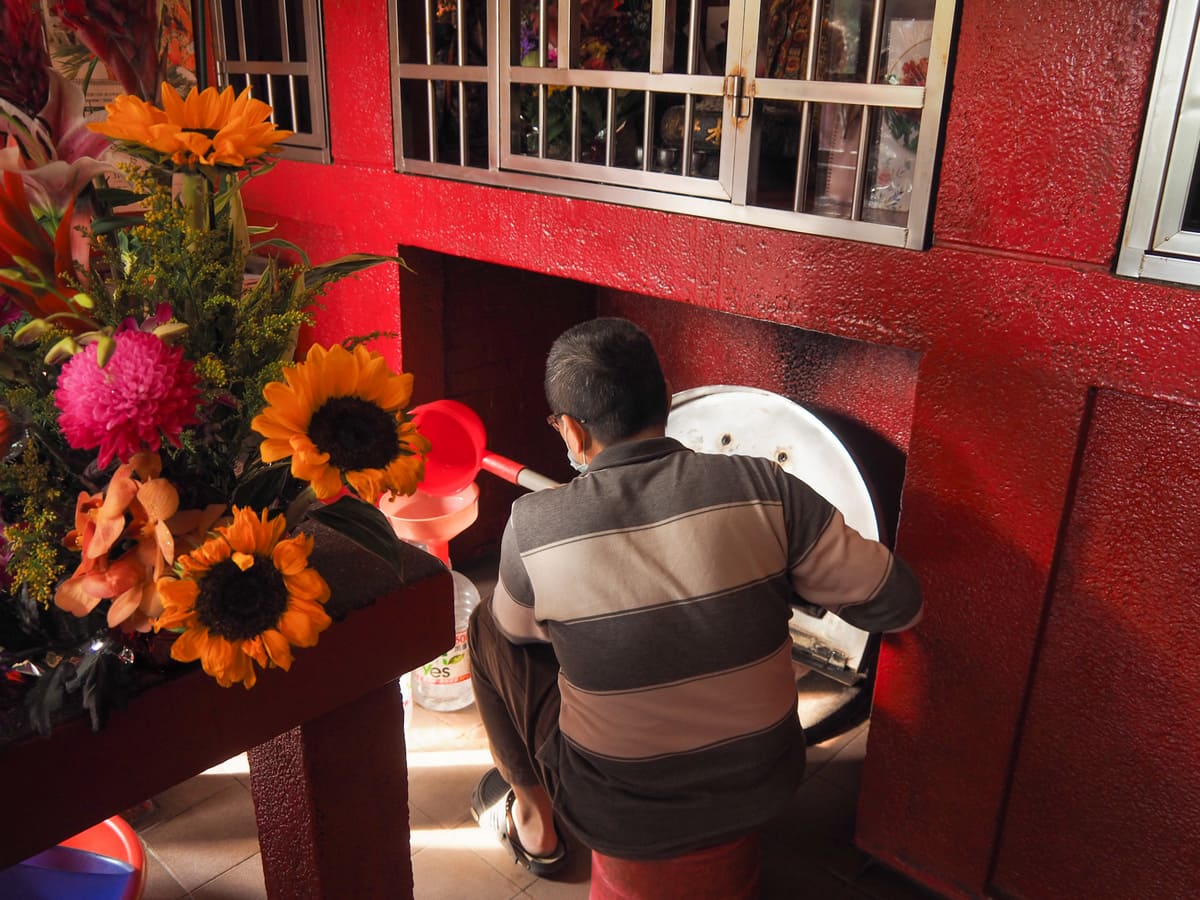
If you walk into the temple and crouch down to look below the altar, you’ll find a covered semi-circular well full of spring water. As we watched, a family came to pray and collect their blessed water…
… I still think Ms Jellyfish Road would be a cool street name though.
How to get there
Google Maps address: The walk featured here starts and ends not far from Ren’an Community Development Association. There are a few parking spaces at the spot linked here.
GPS location: N24 48.150 E121 11.240
Public transport: The 1820 or 1820A bus service leaving Taipei Bus Station bound for Leofoo Village will take you directly to Guanxi. At the time of writing, buses leave from the fourth floor every 30 minutes. The journey takes about 80 minutes and costs about $115. You’ll have to walk to the trail from the town centre.
Nearby trails:
- Raknus Selu – Day 2
- Raknus Selu – Day 3 via Bailing Pavilion
- Raknus Selu – Day 3 via Du’nan Historic Trail
Huang Jie Trail Map
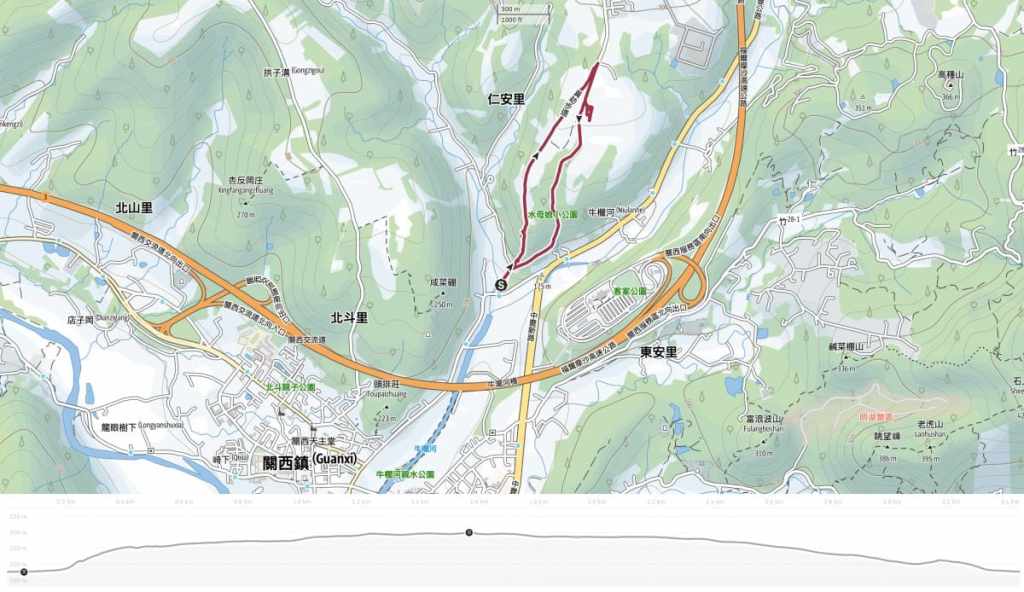
GPX file available here on Outdoor Active. (Account needed, but the free one works just fine.)
 Taiwan Trails and Tales