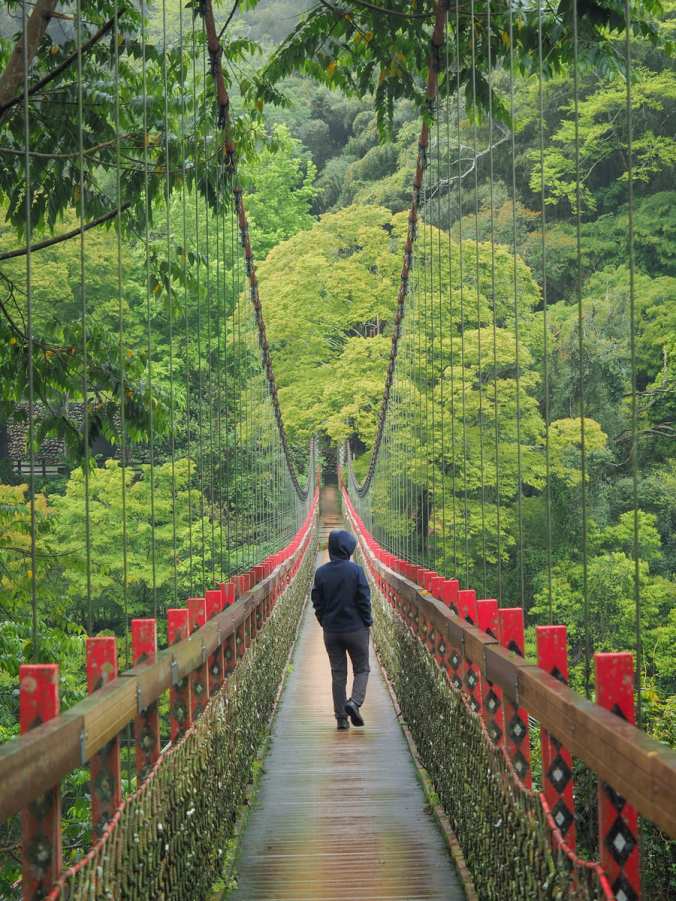
After admitting defeat to the rainy conditions higher up, we bailed on an overnight hiking trip and retreated to the lower and less rainy conditions of Qingquan, a Tayal Indigenous village in Hsinchu’s Wufeng Township. This short walk encircles the village and offers hot springs, historic figures, and a little peek into life in an Indigenous village.
A little note for clarity: as you walk around the town, you will find signs referring to Chingchuan, Qingchuan, Qingquan and Cingcyuan — these are all the same place.
Distance: About 2 kilometres.
Time: 1-2 hours of gentle ambling.
Total ascent: About 70 metres.
Difficulty: 1-2/10 — Whether you’re a seasoned or novice Taiwan hiker, you should find this pretty easy. There are a few steps (some of which are rickety), but essentially, it’s just a wander around a village.
Risks and dangers: After heavy rains, the roads are often littered with fallen rocks, so it might be worth saving your visit for good weather.
Water: We didn’t take any water with us on a cool April day, but in summer, I would have wanted a small bottle with me. There are a couple of mom and pop style convenience stores in the village and some refreshments are sold from the stalls by the first carpark.
Shade: Some shady sections and some exposed sections.
Mobile network: Clear throughout.
Enjoyment: I was pleasantly surprised — as I often am by unplanned forays into the hills — to learn about a slice of history I had previously been entirely ignorant of.
Bathroom facilities: There’s a toilet block by Zhang Xue-Liang’s former residence.
Route type: Wonky loop.
Permit: None needed.
Jump to the bottom of this post for a trail map and GPX file.
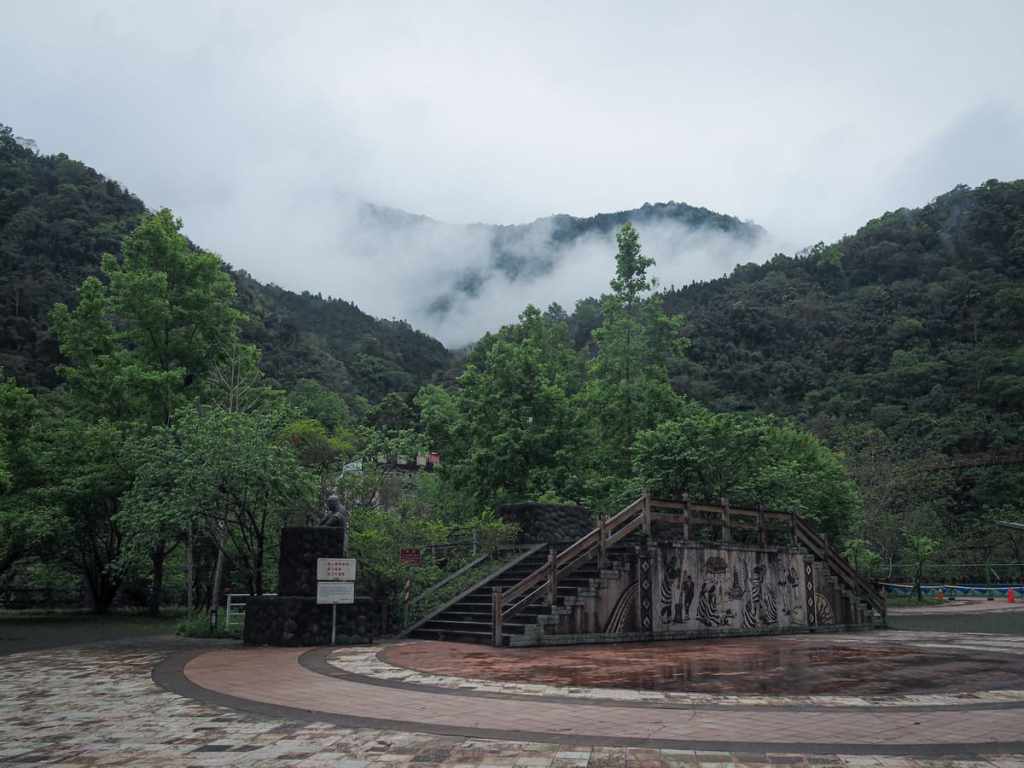
We started our walk from the first car park beside a row of food stalls that hadn’t quite opened yet.
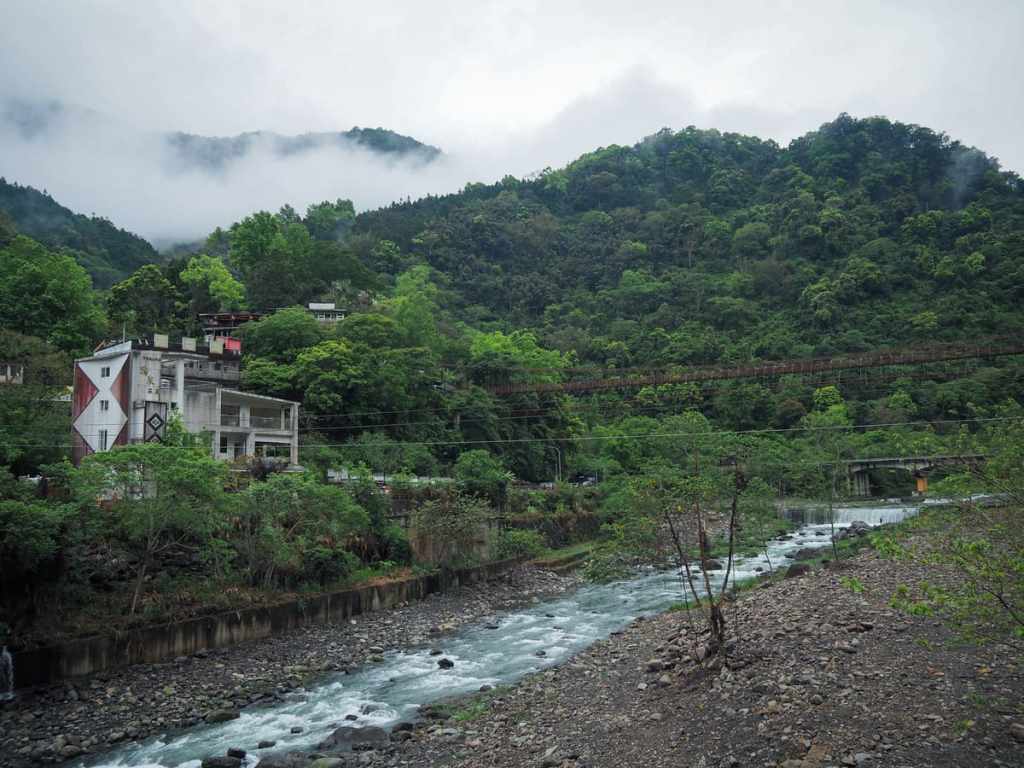
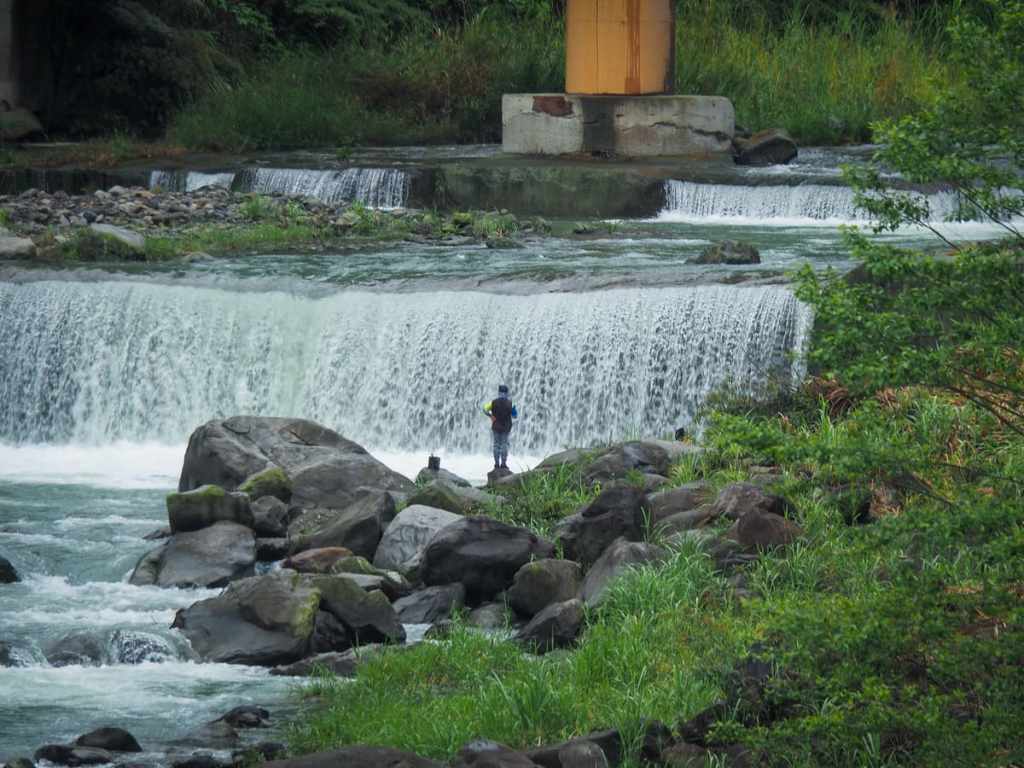
Crossing over Shangping River, I spotted someone fishing in a rain-swollen pool.
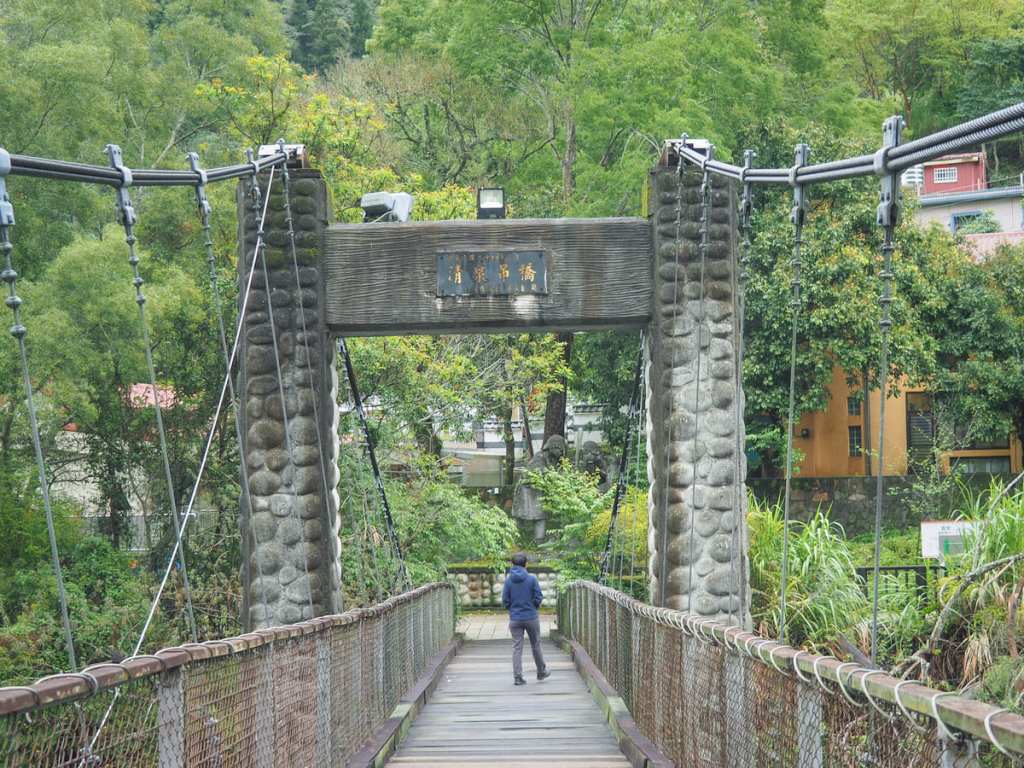
The village maps show four suspension bridges, but I think maybe only two of these are currently passable.
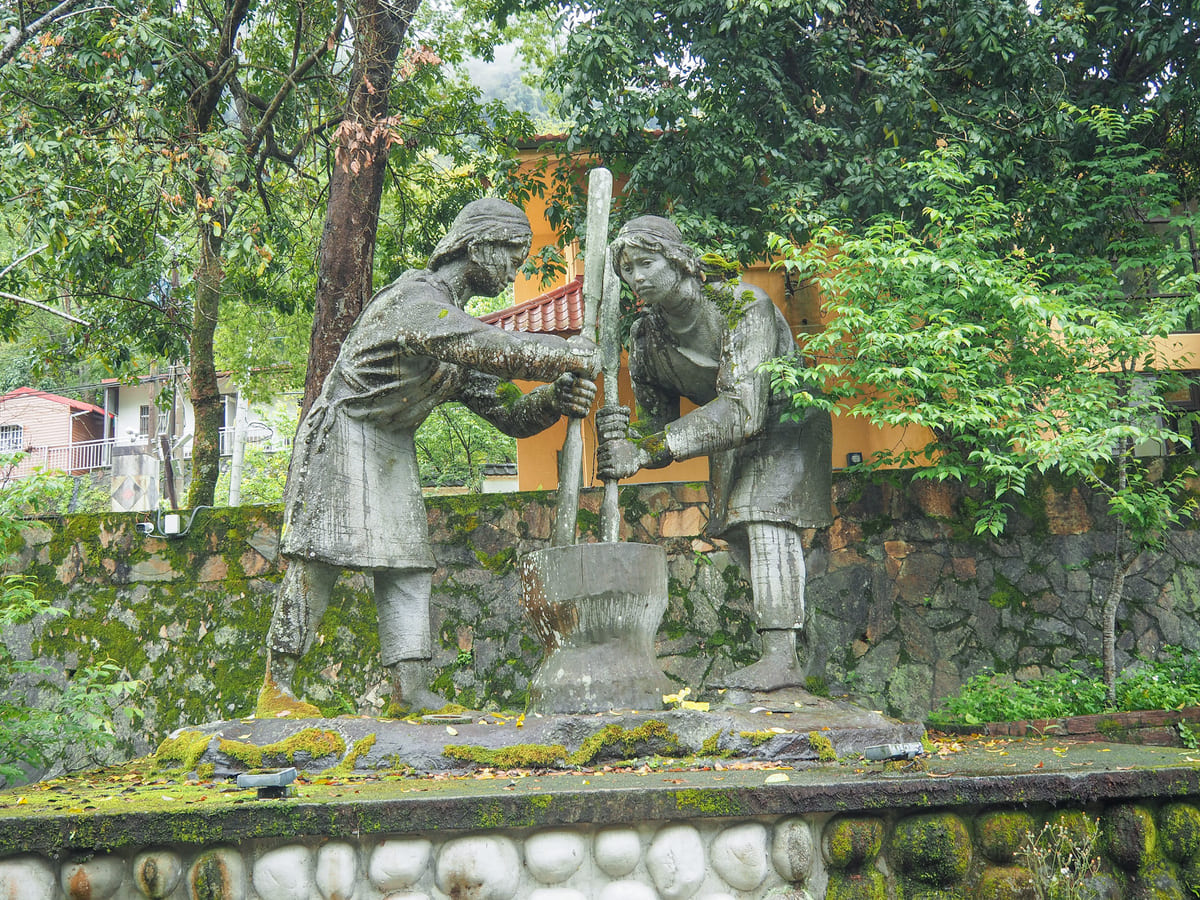
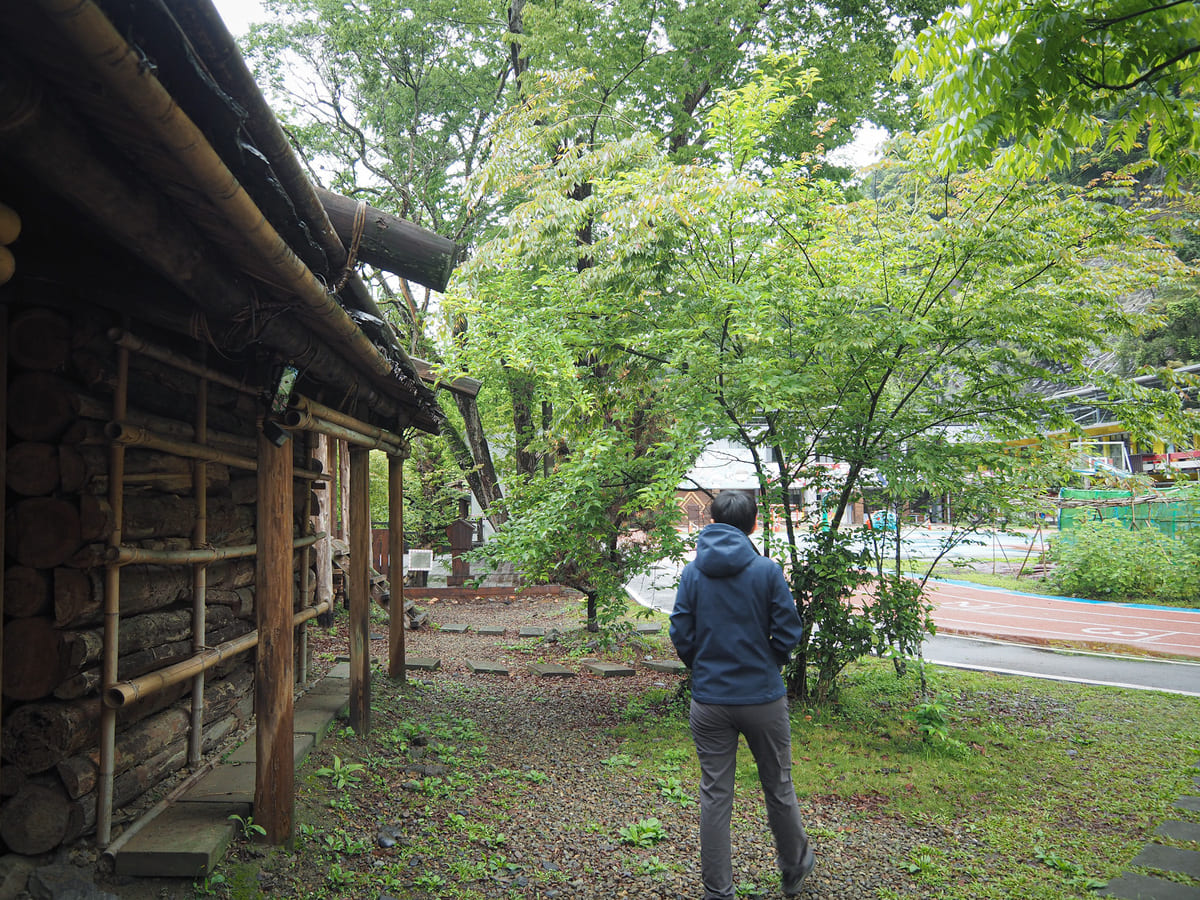
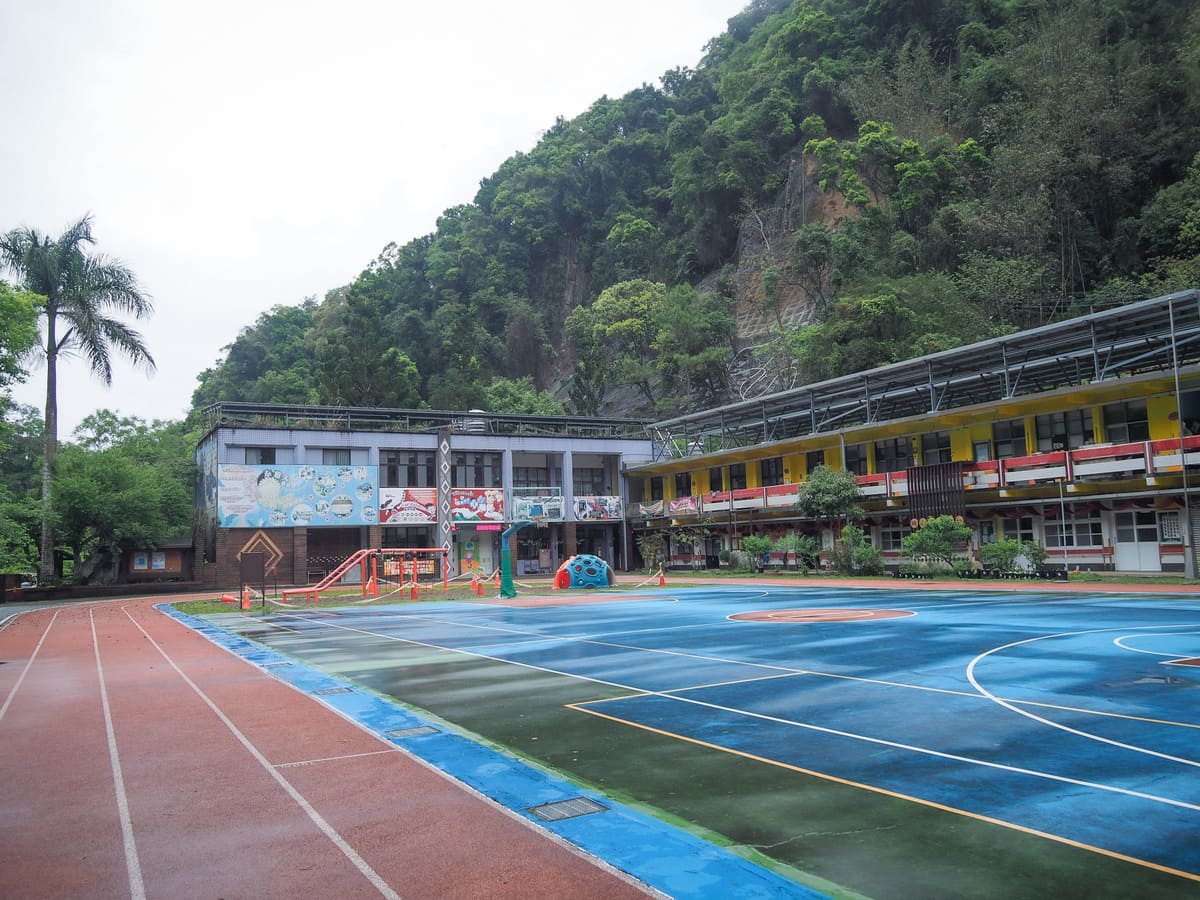
On the far side of the first bridge, we found Taoshan Elementary School. The kids here clearly have a different kind of experience to city kids — their doors are adorned with Tayal motifs and there are replica traditional wooden houses and food storage buildings beside the running track.
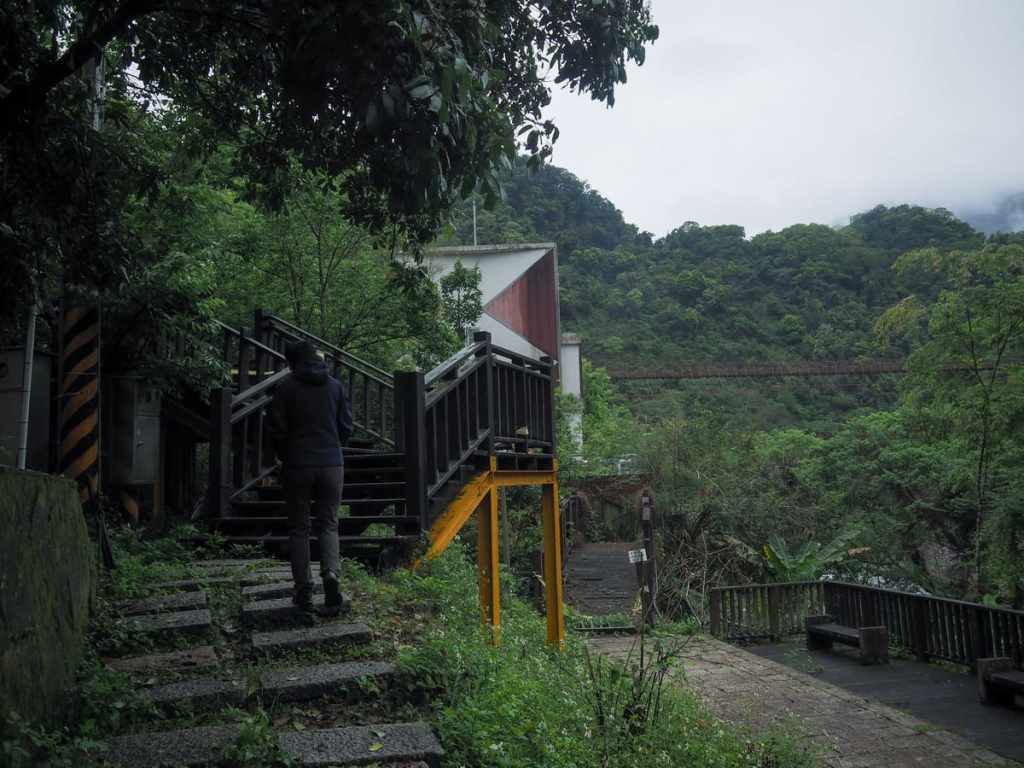
From the school, we headed up some dodgy steps following signs to the hot spring pool.
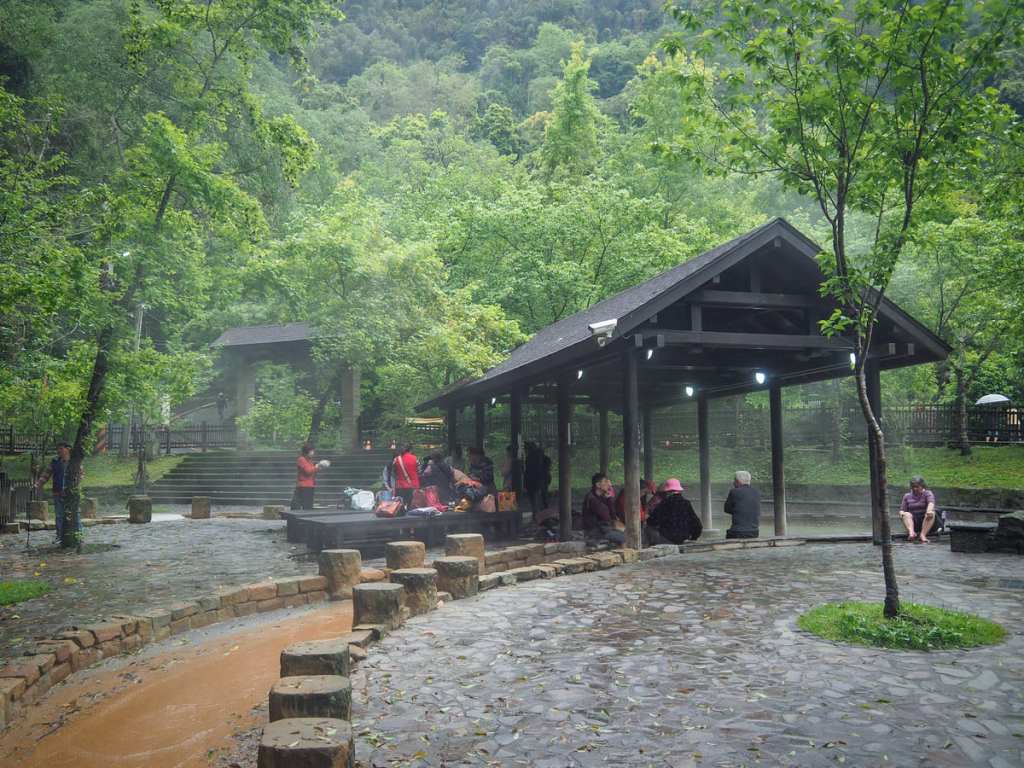
A free public hot spring footpath has been built beside the road and is evidently very popular with visitors. We’d actually stayed in our car nearby the night before, and from that experience, we learnt that not only does this pool not shut down over night, but it also has a reputation among car campers. When we walked past at 9pm, the pool was full of people in their swimming costumes and someone had set up a portable changing tent.
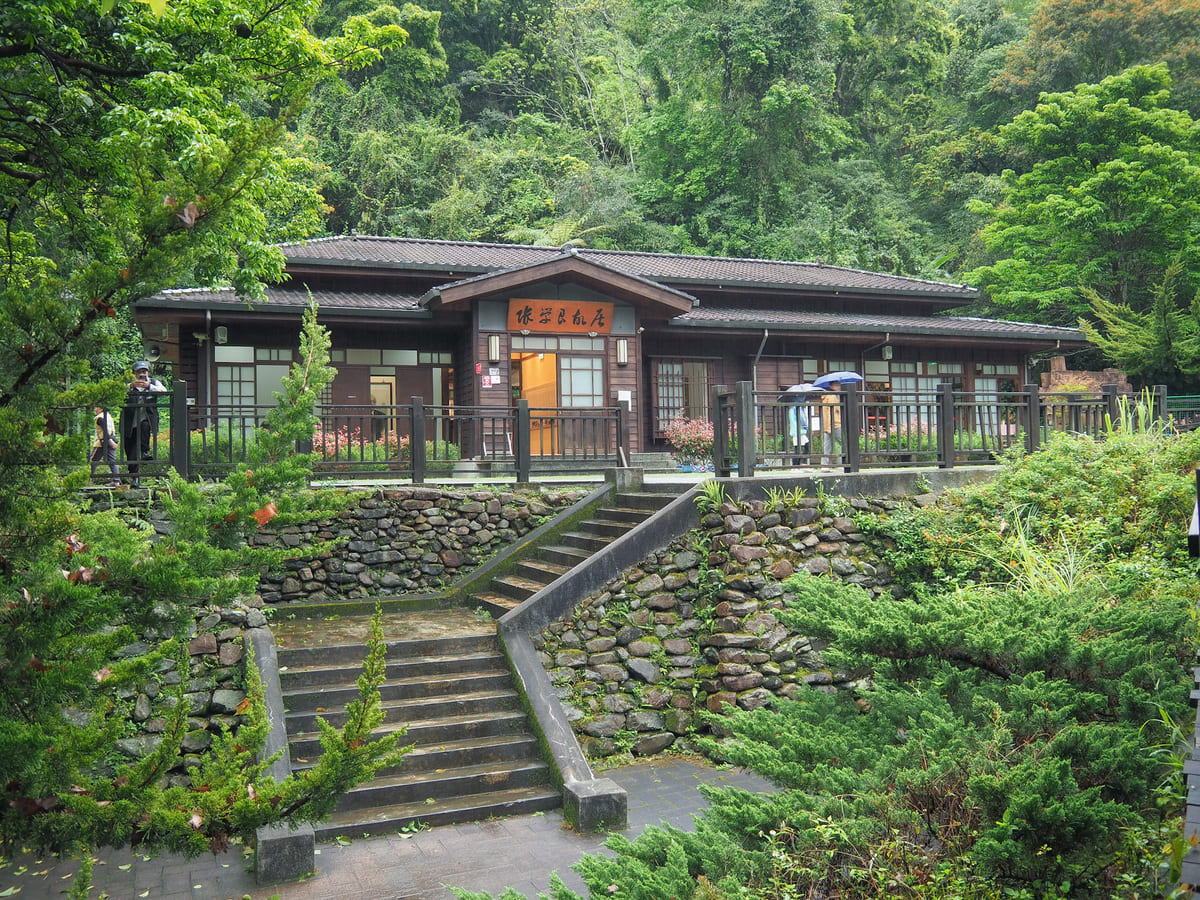
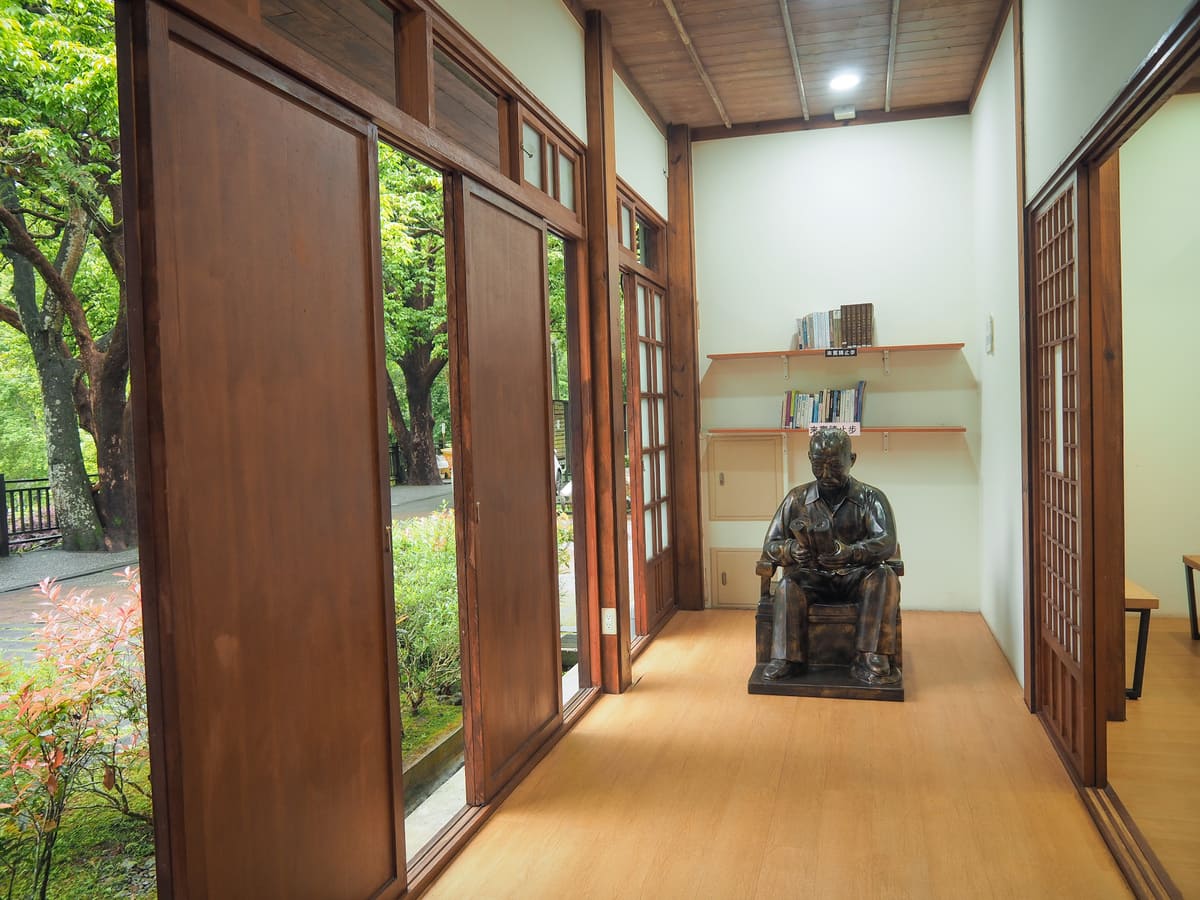
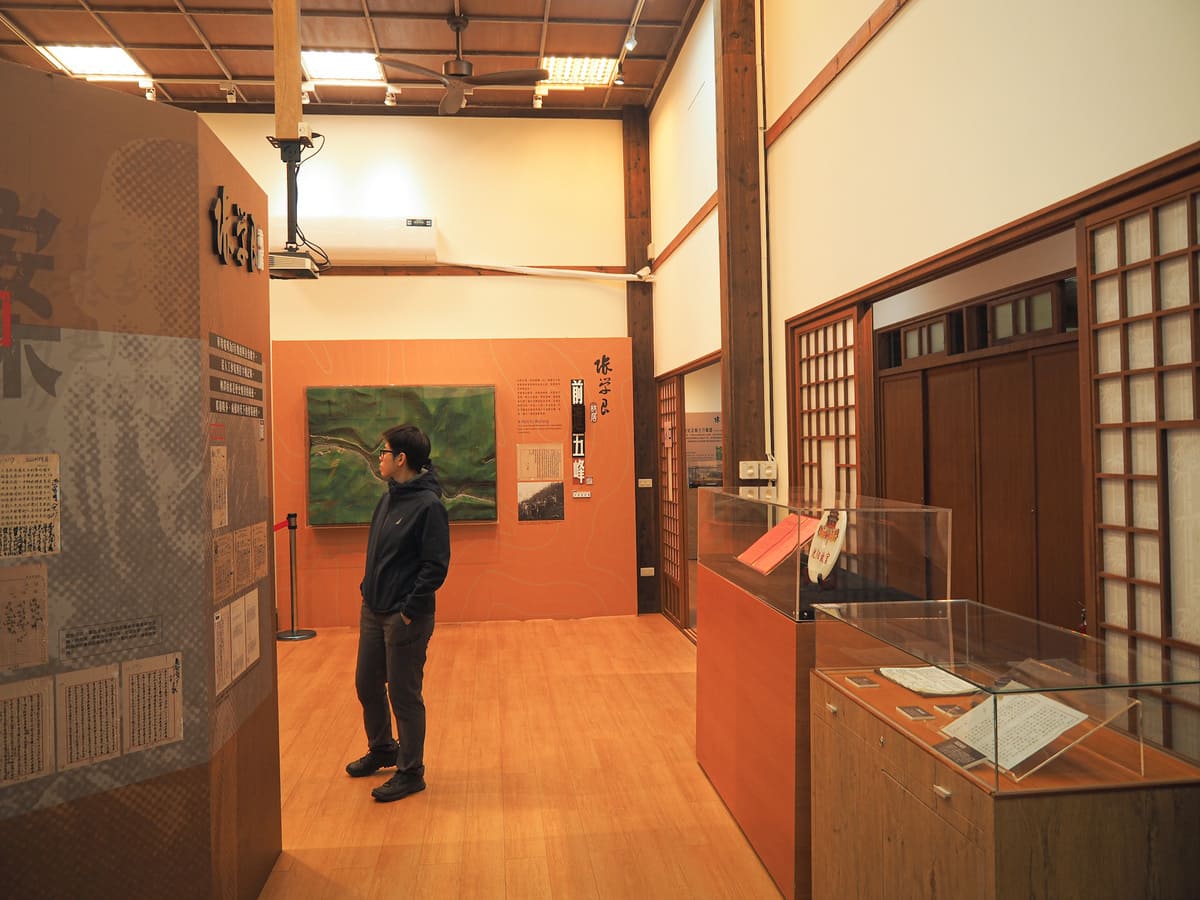
Just beyond the hot spring, there is a prettily renovated Japanese-style building. The original structure it’s fashioned on was an old police dormitory built during the Japanese colonial era, but the reason this specific one has been deemed worthy of special preservation efforts is the fact that — between 1946 and 1957 — it was home to Zhang Xue-Liang, a high-ranking military leader whose role in the Xi’an Incident saw spend over 50 years under house arrest.
What’s the Xi’an Incident? At the risk of seriously oversimplifying matters, it was a 1936 political snafu instigated when Zhang ordered his soldiers to arrest Chiang Kai-Shek (the two were ostensibly on the same team) until Chiang agreed to call a ceasefire and align the Nationalist government of China with the CCP and push back against the Japanese together. Chiang was held captive for 10 days, and after his release, one of the first things he did was to place Zhang under house arrest.
In Zhang’s Qingquan prison, there are displays that detail his life in captivity (photos of chickens and tennis), and an infographic showing the 11 different locations he was held before all restrictions were lifted. Of the 11, the Qingquan house was the location he spent the longest time on house arrest (he spent longer in Beitou, but by that time he had been afforded a quasi-free status). Then, in 1994, he and his third wife Zhao Yidi emigrated to Hawaii, where they lived to a ripe old age (101 in Zhang’s case).
Another interesting feature of the museum house is the corner given over to discussion of the site’s importance to Chinese people on the other side of the Taiwan straight. Unsurprisingly, Zhang is remembered somewhat differently over there and back when there were a lot of Chinese tourists coming into Taiwan, this would be one of the sites they came to visit
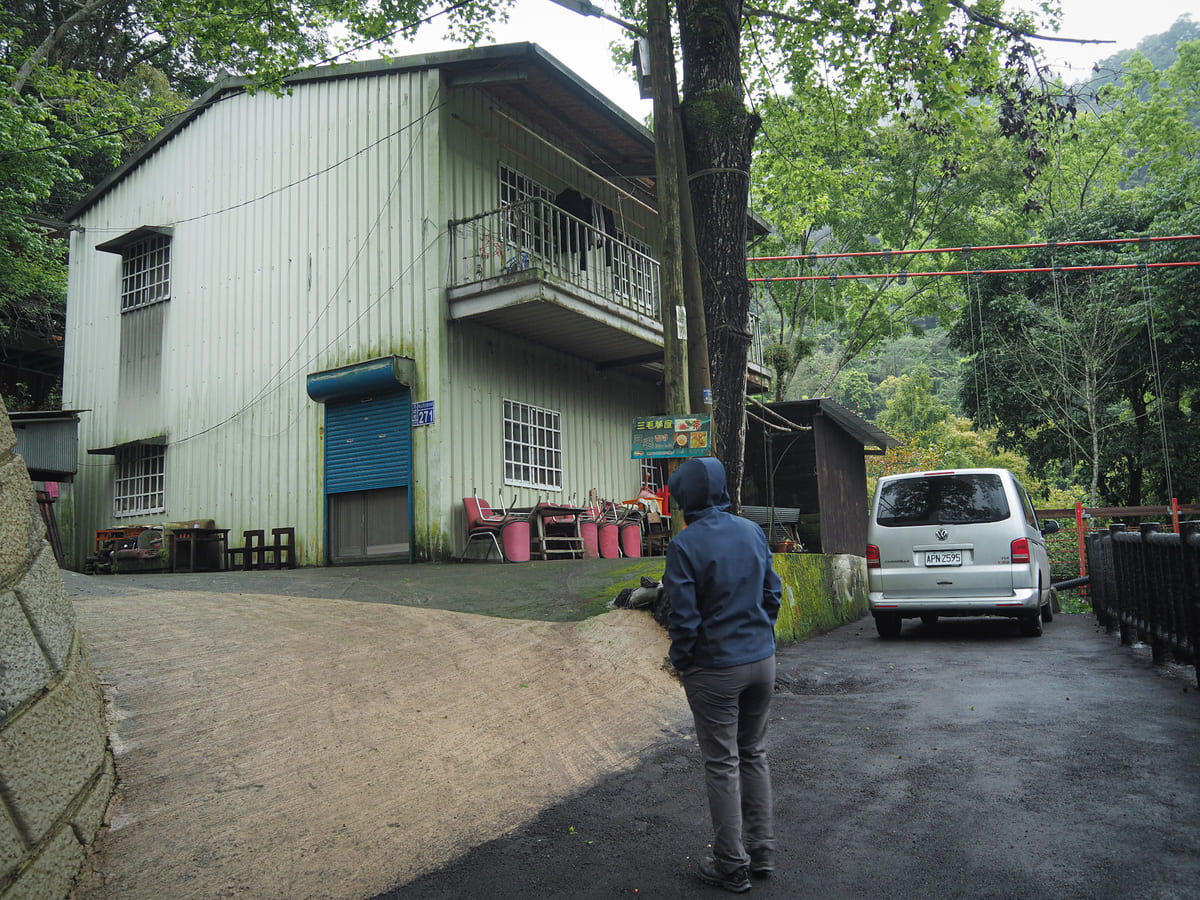
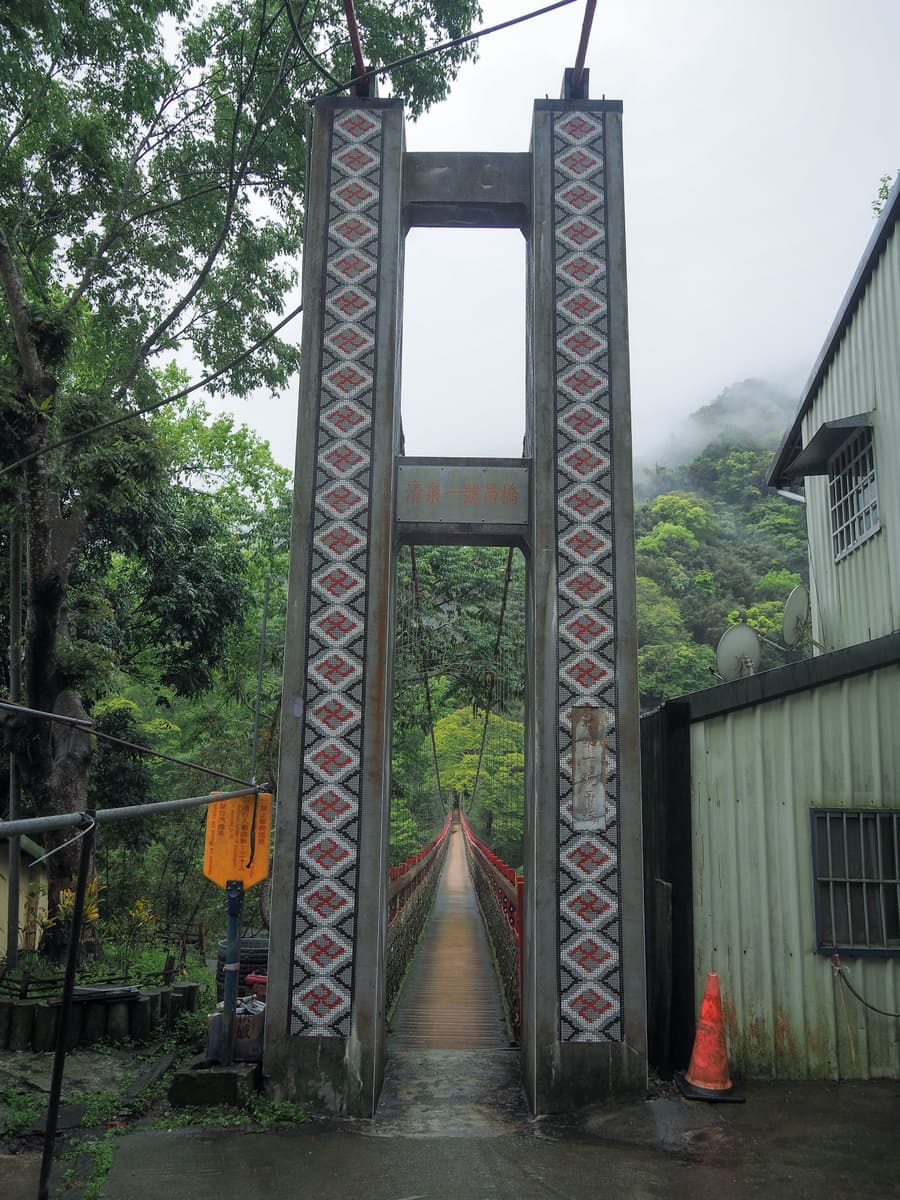
From Zhang’s house, we doubled back and walked past the hot spring and up a lane leading to the suspension bridge and the old brick residence of a famous writer and translator called Sanmao. We didn’t stop at her house (which I think is now a coffee shop), but the location is a popular spot with fans of Taiwanese literature. Sanmao (also called Echo Chen) was born in Chongqing in 1943 to a Christian family and moved to Taiwan with them at the age of six. Clearly bright, Sanmao was a student of Taipei First Girl’s High, but she railed against the restrictiveness of the system and dropped out and was home-schooled instead. In fact, she seems to have been born way before her time, because her life path (studying philosophy, moving to Spain as a solo young adult, marrying a foreigner) are all enough to raise the eyebrow of even pretty modern and open-minded Taiwanese parents. The amount of social pressure she must have faced is daunting.
The Stories of the Sahara was her first book (although not her first published writing). In it, she recounted experiences of living in the Sahara with husband José María Quero y Ruíz. The travelogue style and glimpse of the outside world proved popular with people back home and Sanmao would later go on to publish many more books.
Despite being called Sanmao’s house, Sanmao never actually lived here. She visited Qingquan several times at the request of Father Barry Martinson, founder of the village’s Catholic Church, and on one such visit, the dilapidated red brick building caught her eye. Something about it provoked a kind of romantic need within her and with Father Martinson’s help, she secured permission from the owner to rent it for a period of time. After all the work was completed, Sanmao only visited once before her death by suicide at age 47.
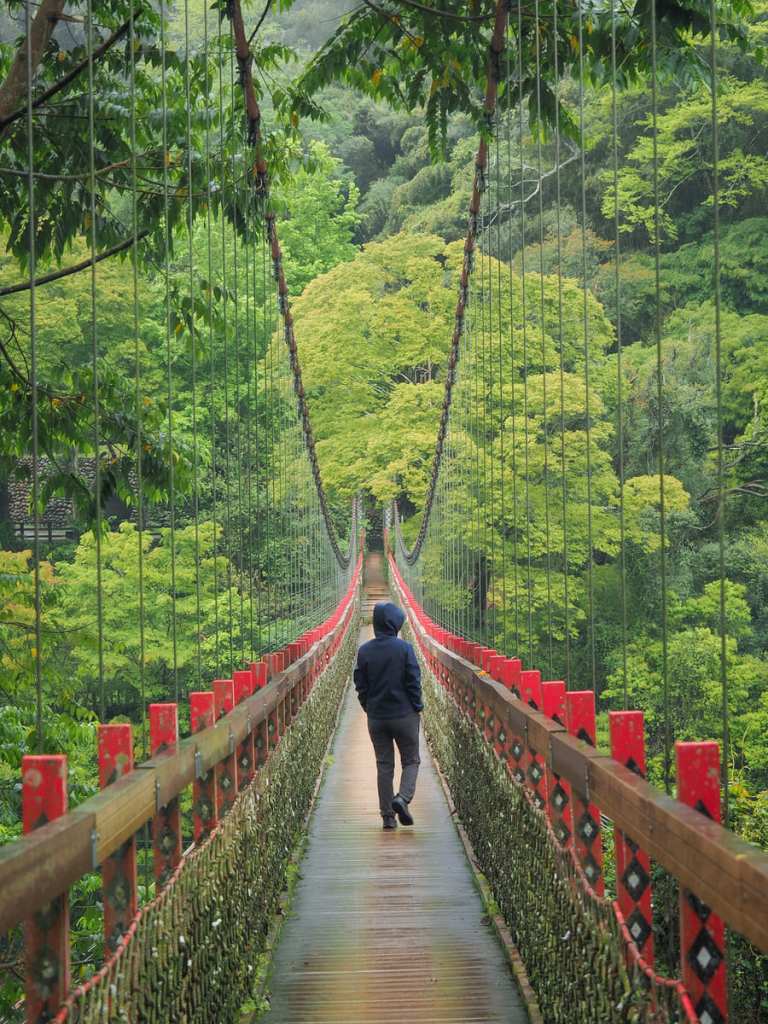
Crossing over the village’s highest bridge. At night time, this one is all lit up in bright colours.
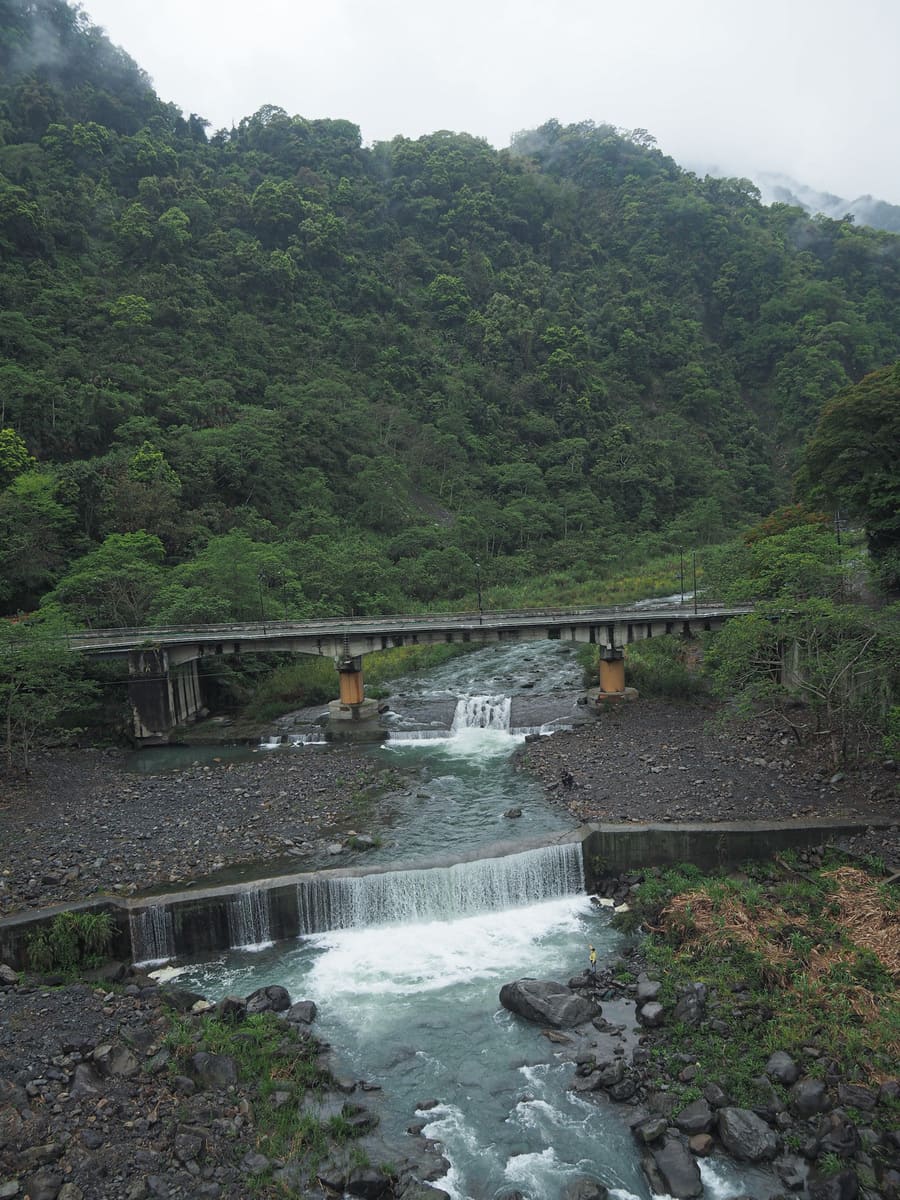
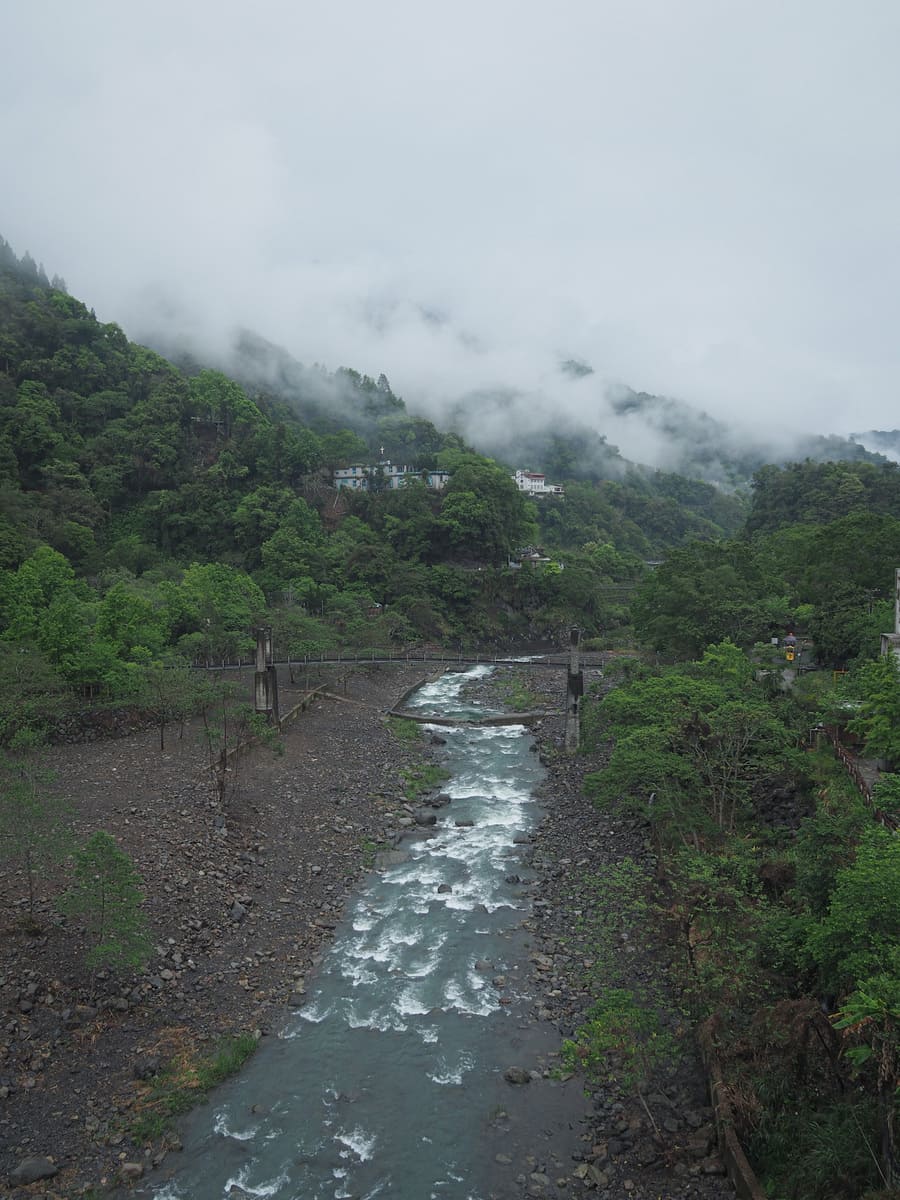
From up here, you can enjoy views both up and downstream. Somehow, the village seems to almost disappear into nothing — it feels much more substantial when you’re walking through it.
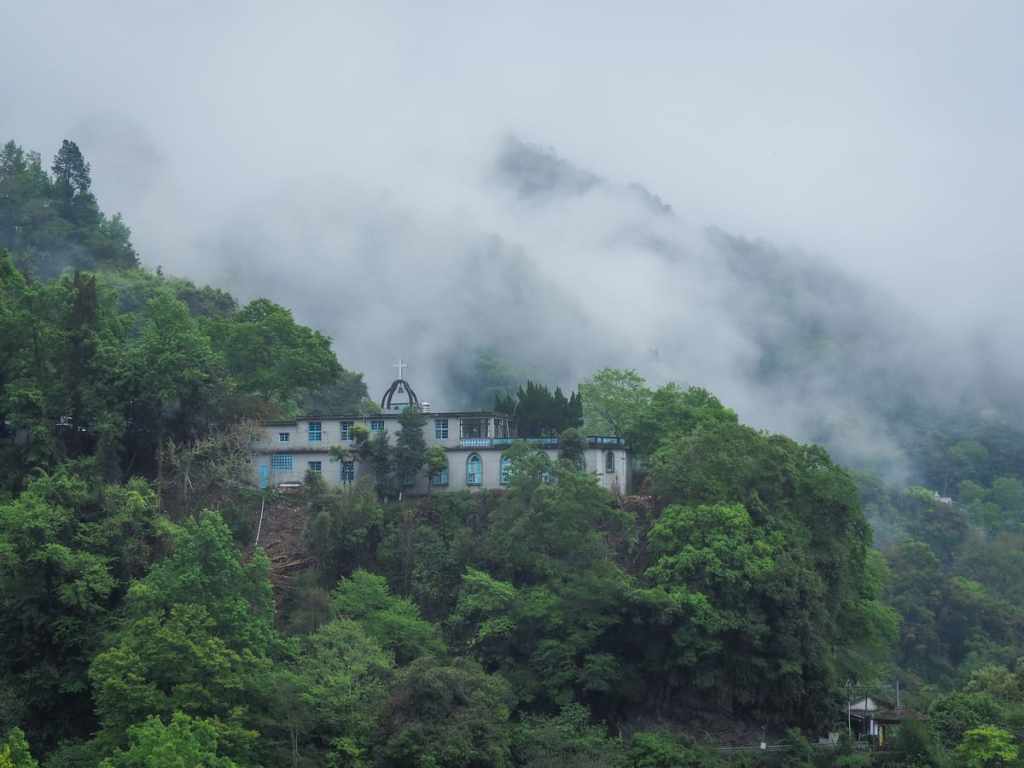
Qingquan Catholic Church perched high up above the river banks with tendrils of cloud filtering through the hills beyond.
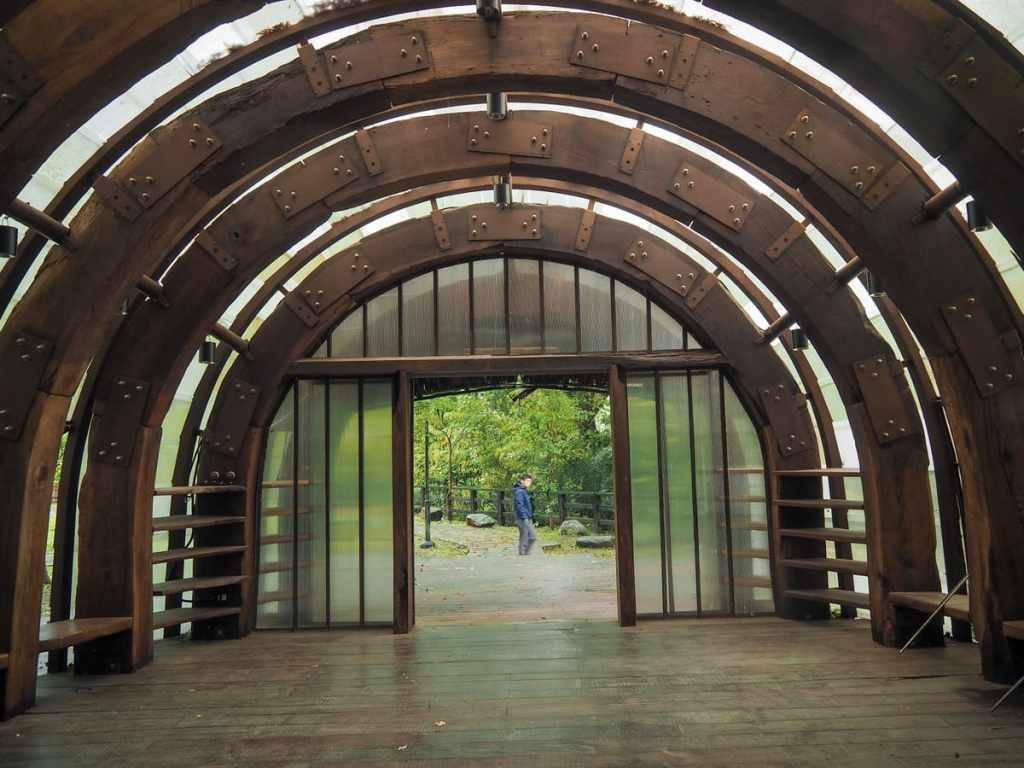
At the far end of the bridge, we turned right to follow the trail back towards the church, but first, we went to explore an incongruously placed art park. According to signage, the park is funded by Hsinchu County and one of the artworks is donated by Shi Jun-Qing, a Chinese businessman who visited and was moved by the fate of Zhang Xue-Liang.
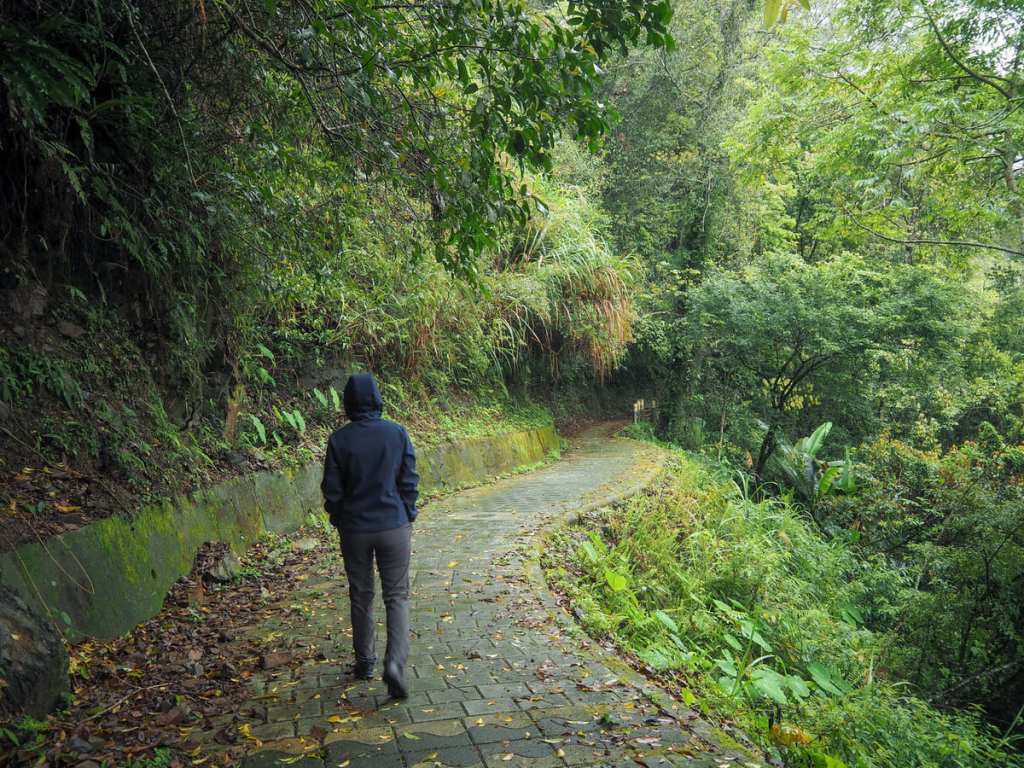
The path from the bridge to the church is quiet and shady.
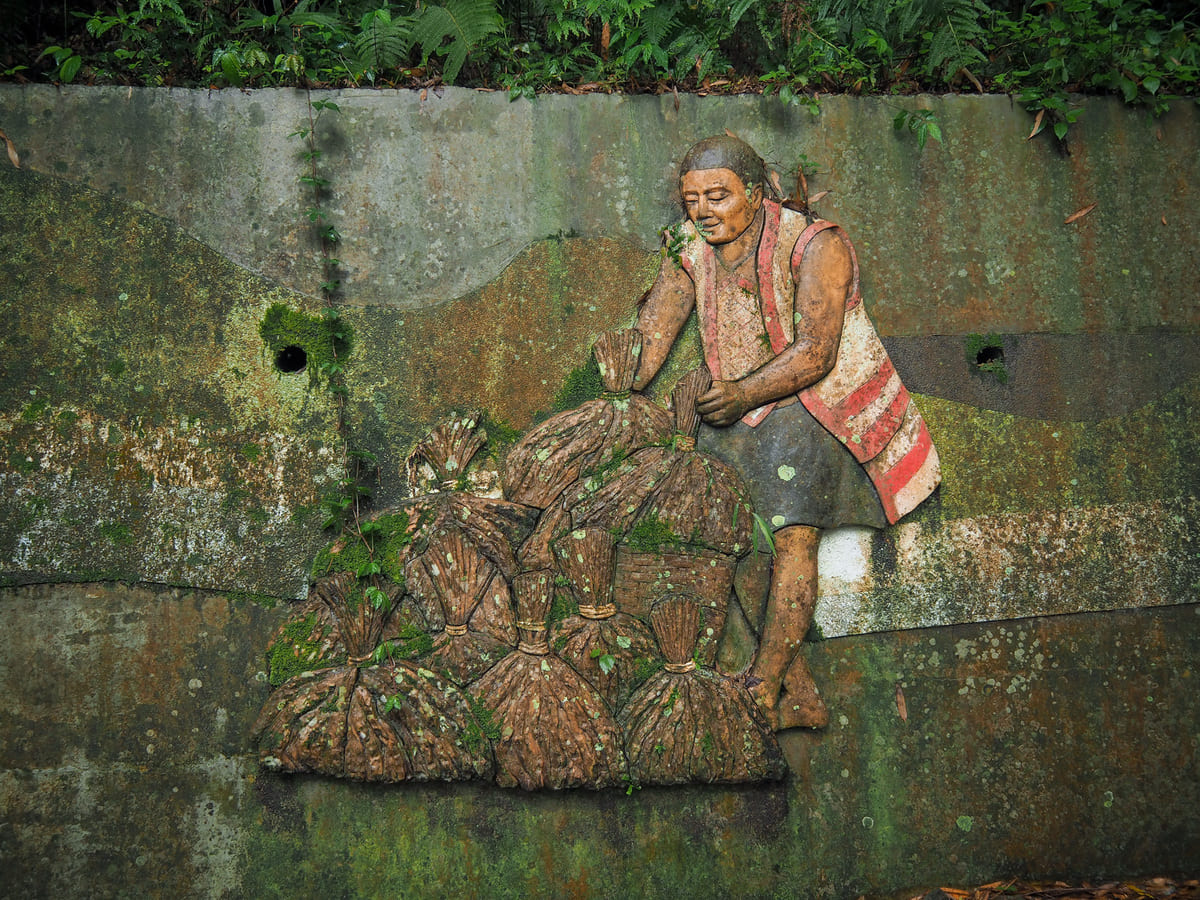
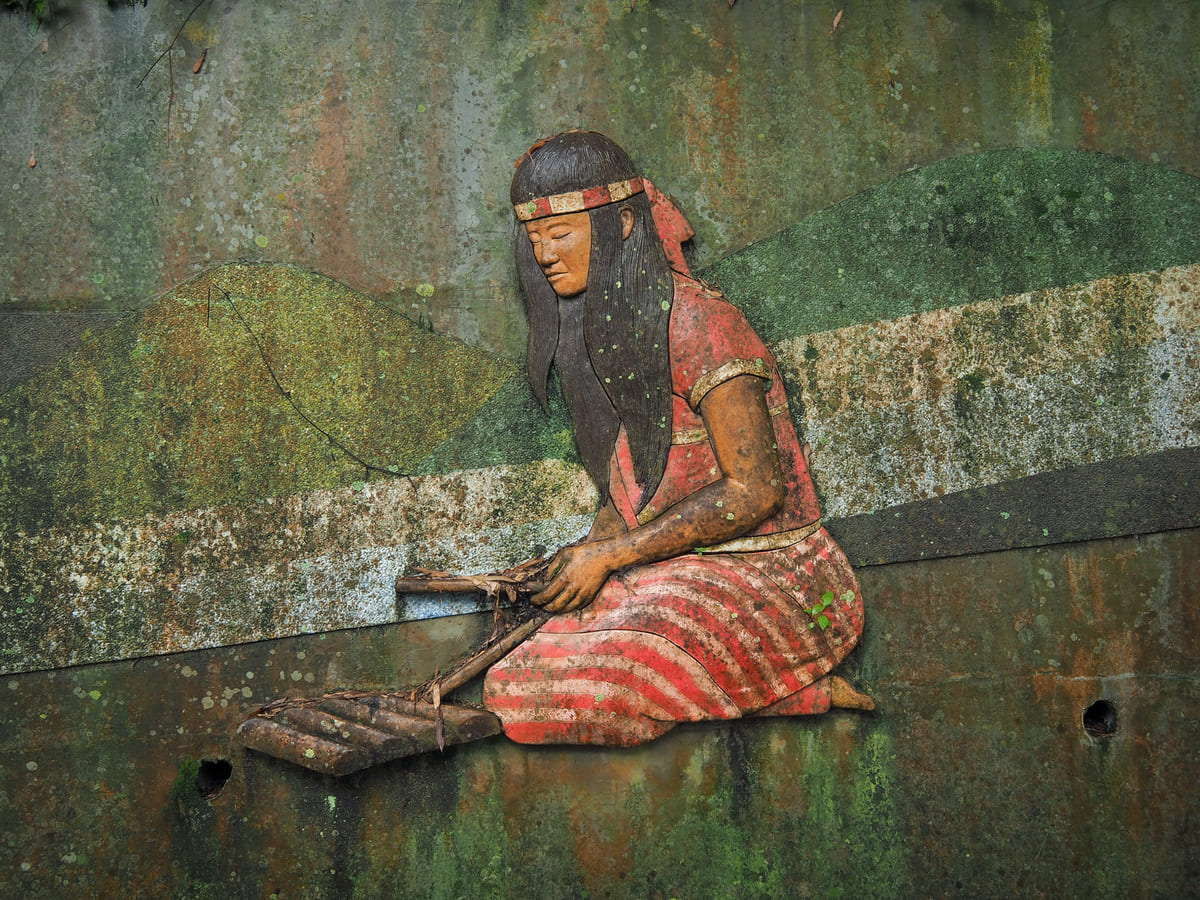
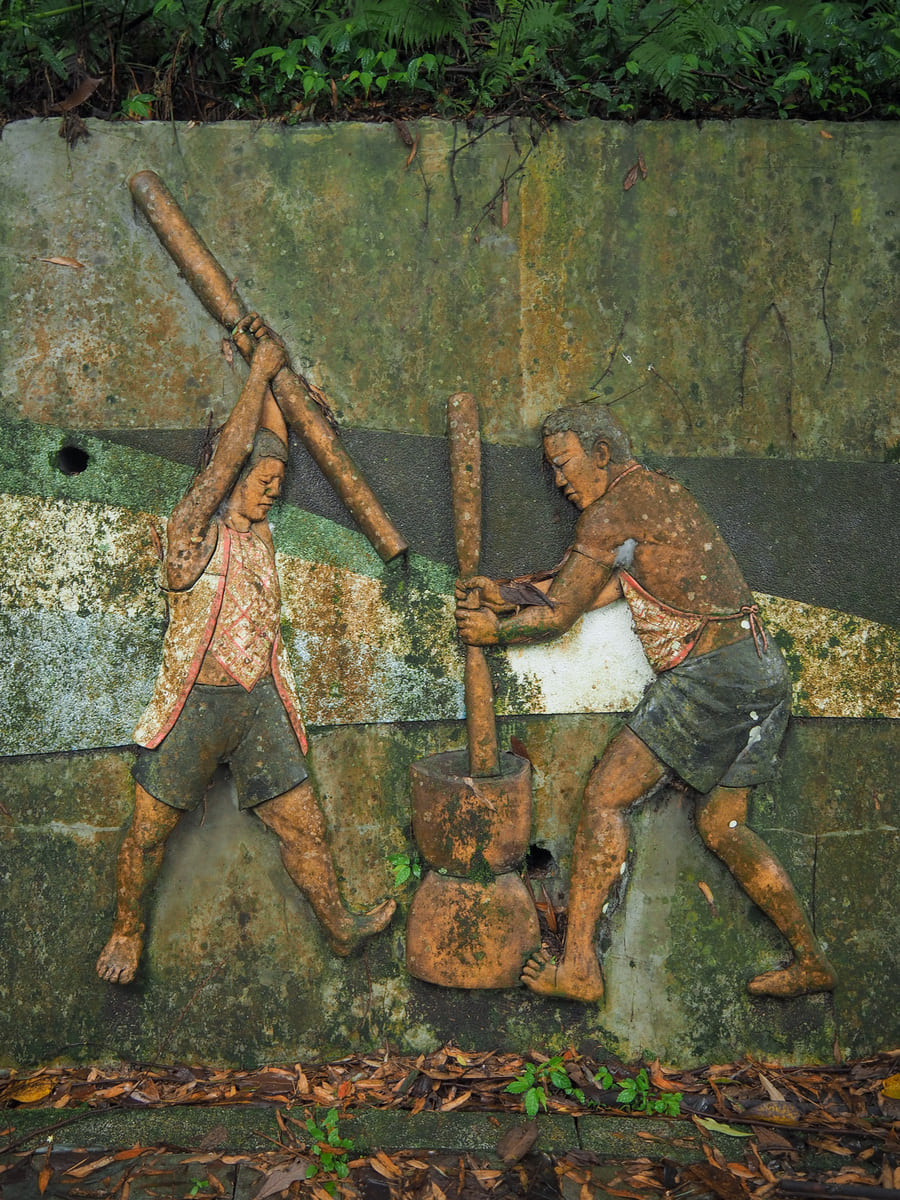
The walls along the way are decorated with artwork showing scenes from depicting the traditional Tayal way of life.
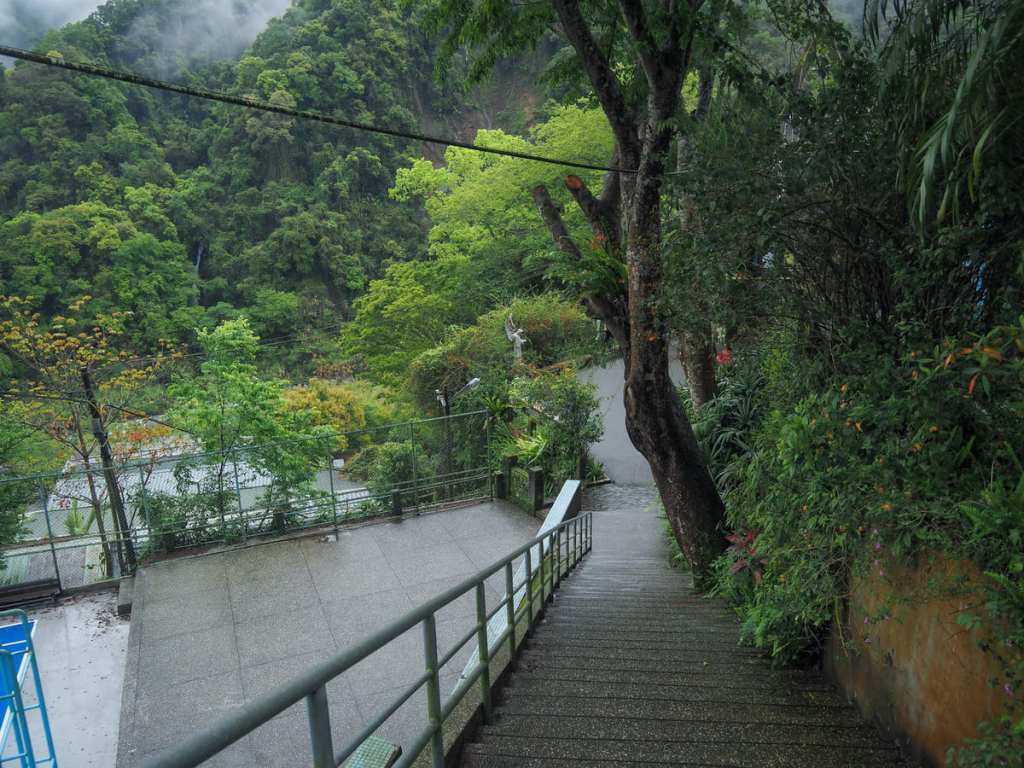
We managed to time our arrival at the church with the end of a Sunday morning service, so I didn’t get any photos of the spot, but it’s hard to go wrong. Just look out for the steps leading down beside the church.
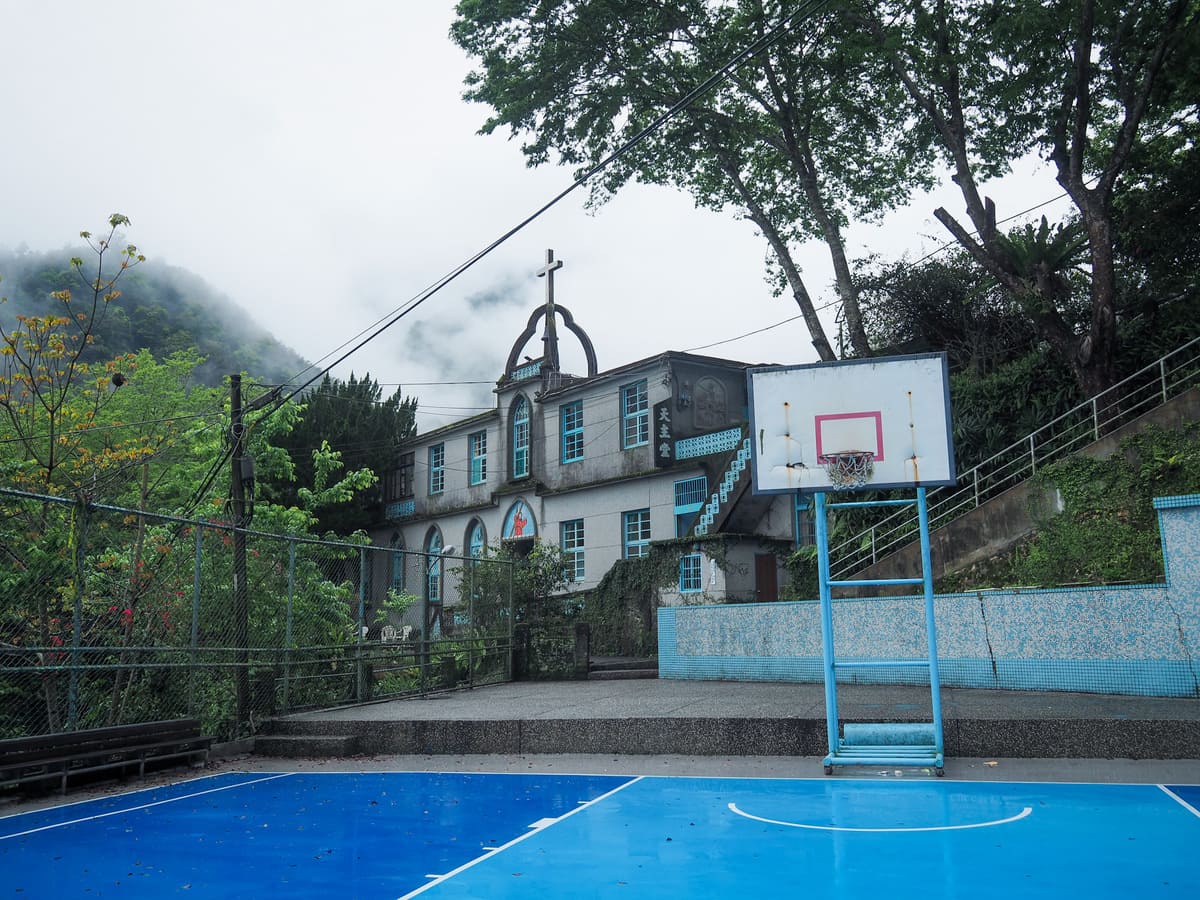
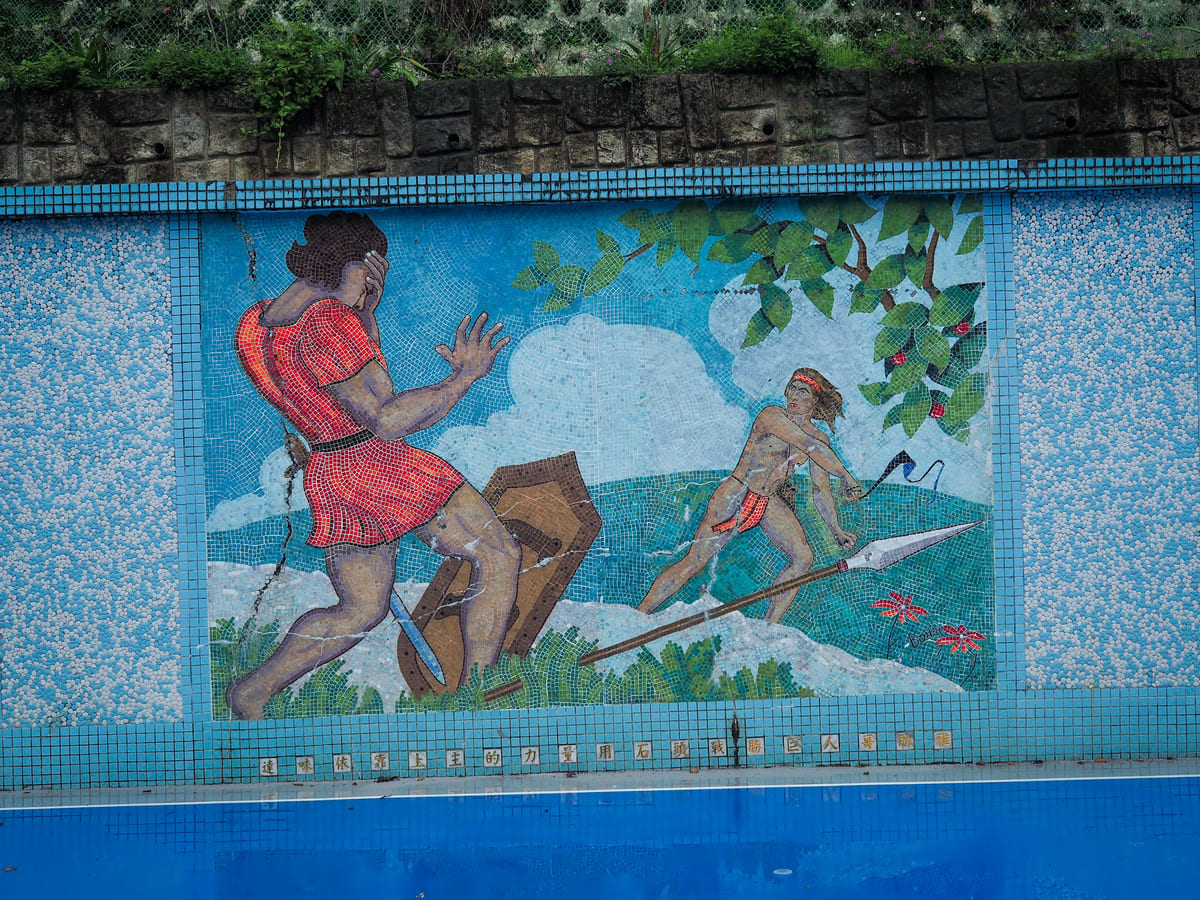
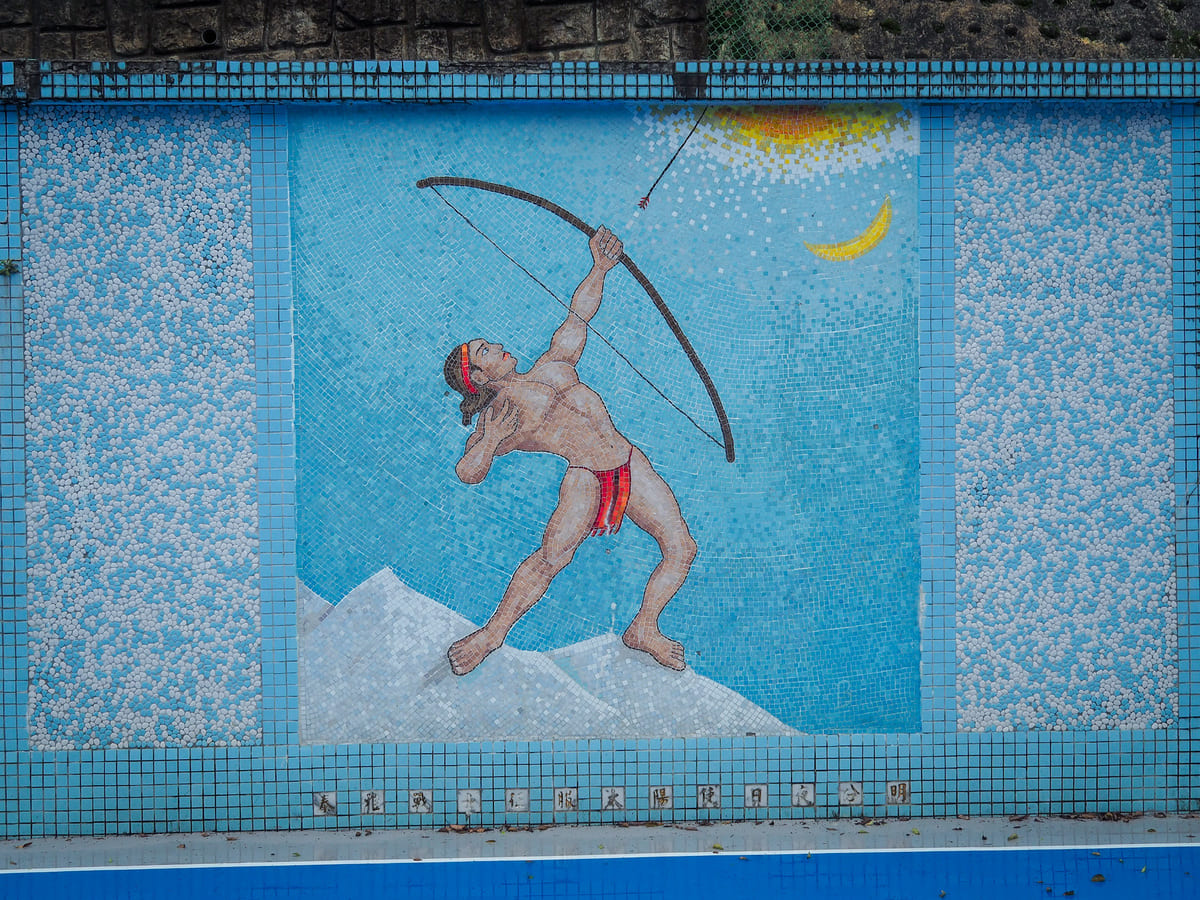
The steps take you past the church’s basketball court, which is adorned with mosaic pieces depicting bible and Tayal stories. The art is the work of Father Barry Martinson, a preacher who was assigned to serve the village in 1976 and has ended up staying decades.
Beside the basketball court, there’s also a church-run youth hostel that hikers sometimes stay in before venturing into the higher mountains.
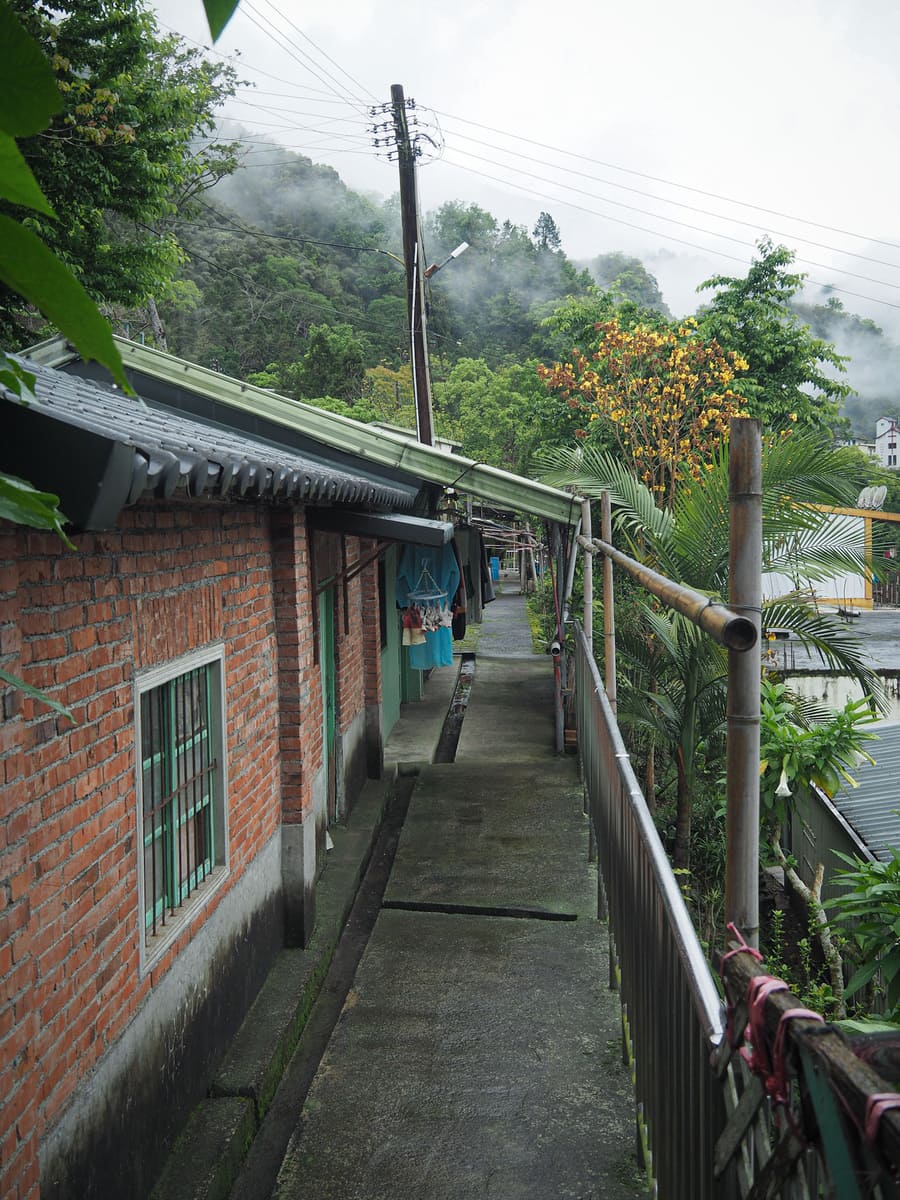
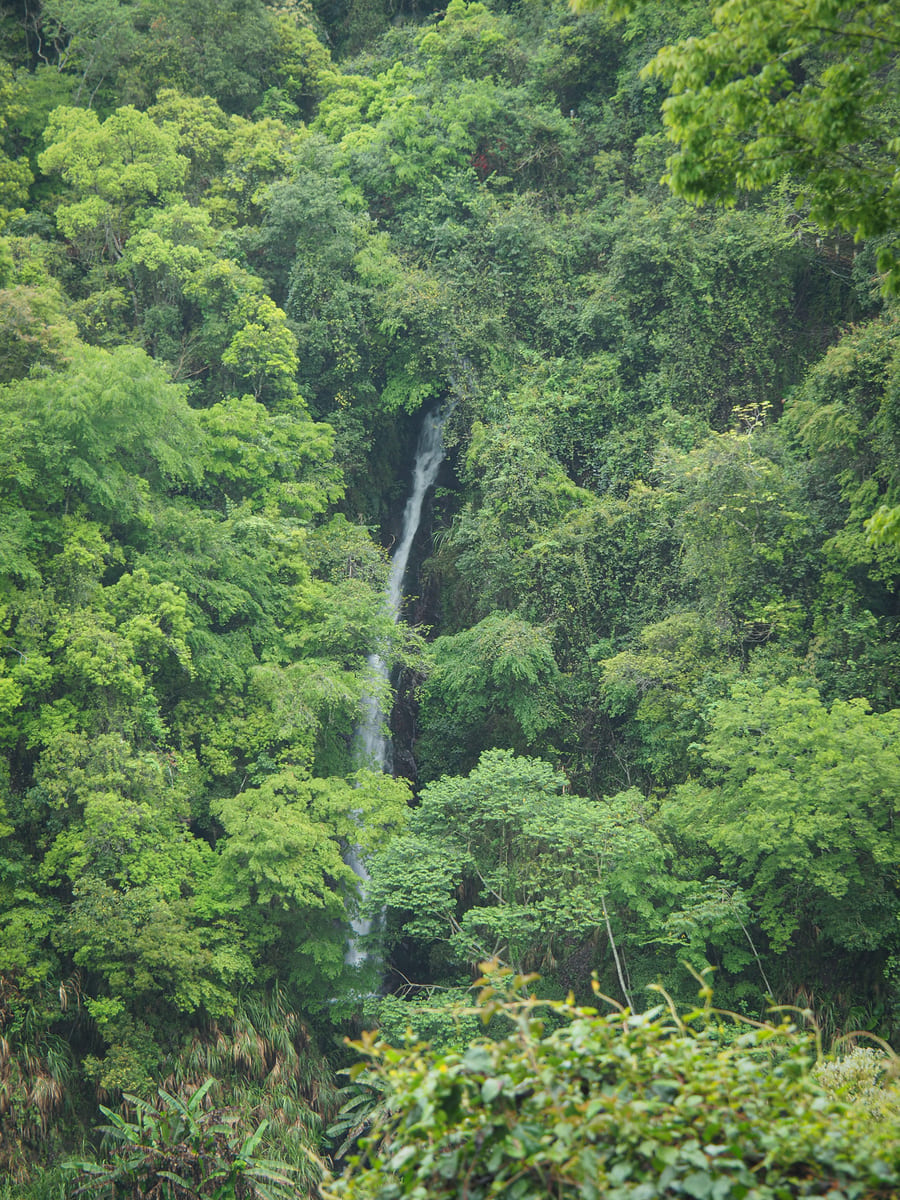
Continuing downwards, the sound of Qingquan Falls rings out loud and clear from across the valley, then at the bottom of the steps, we turned right, and were back at the carpark in no time.
How to get to Qingquan Tribal Village
Google Maps address: The walk starts and finishes from Qingquan’s first carpark in the middle of the village.
GPS location: N24 34.490 E121 06.250
Public transport: Getting here from Taipei is a little bit of a faff in that it requires two buses. First, you’d need to take the Kuo-kuang bus number 1820 bound for Zhudong from Taipei Bus Station. The service currently leaves from the fourth floor of the bus station. Ride it for about ninety minutes and alight at bus station then walk to Taiwan Cement bus stop, hop on the 5630A and ride it for another hour to Qingquan.
My new words learnt on this hike:
- 玩伴 / wán bàn — playmate
Qingquan Village Trail Map
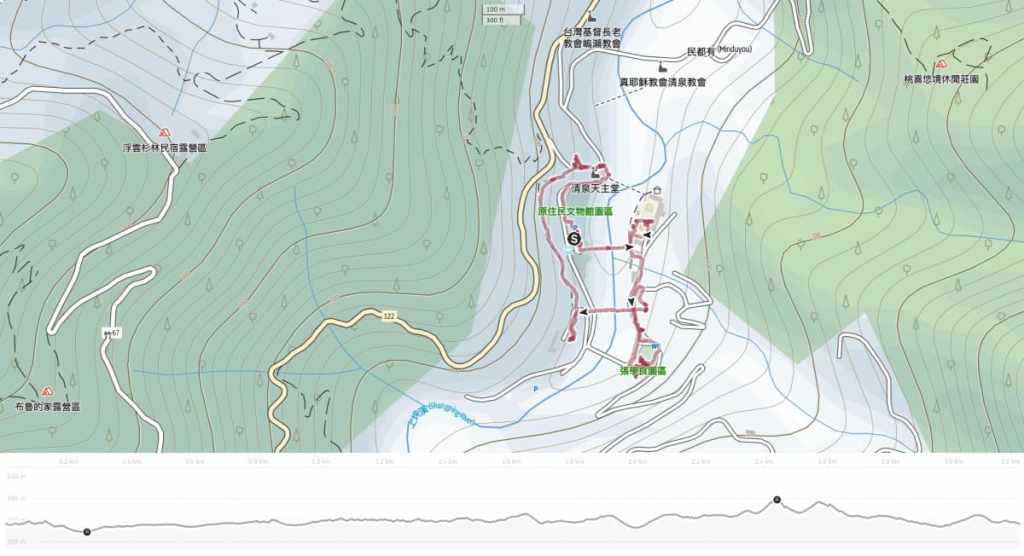
GPX file available here on Outdoor Active. (Account needed, but the free one works just fine.)
 Taiwan Trails and Tales