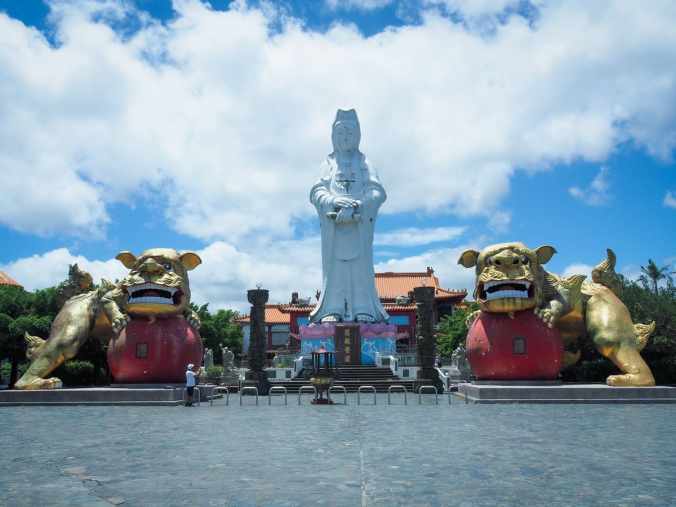
A Short Walk to One of the Best Views in Keelung
Keelung may have a reputation for being Taiwan’s Swansea (coastal and with a perpetually damp micro-climate), but don’t let that put you off. The city has plenty of interesting sites to explore, and is well deserving of your time. On this visit, I climbed to the hilltop statue of Guanyin before heading back down to sea level for a dip in the pool in Heping Island Park.
Distance: About 2.5km with options to shorten or extend depending on energy levels.
Time: An hour should be enough.
Difficulty (regular Taiwan hiker): 0.5/10 – No difficulty, just a few steps.
Difficulty (new Taiwan hiker): 1.5/10 – There are some steps, and the trails are a bit of a maze, but there’s no risk of getting too far lost.
Total ascent: Around 100m.
Water: A single small refillable bottle should suffice.
Shade: There are some shaded areas and some that are exposed. On a sunny day, I really needed my umbrella.
Mobile network: Clear throughout.
Enjoyment: This is a lovely short and sweet excursion to enjoy if you have a spare hour in Keelung.
Route type: Point-to-point or loop versions available.
Permit: None needed
Jump to the bottom of this post for a trail map and GPX file.
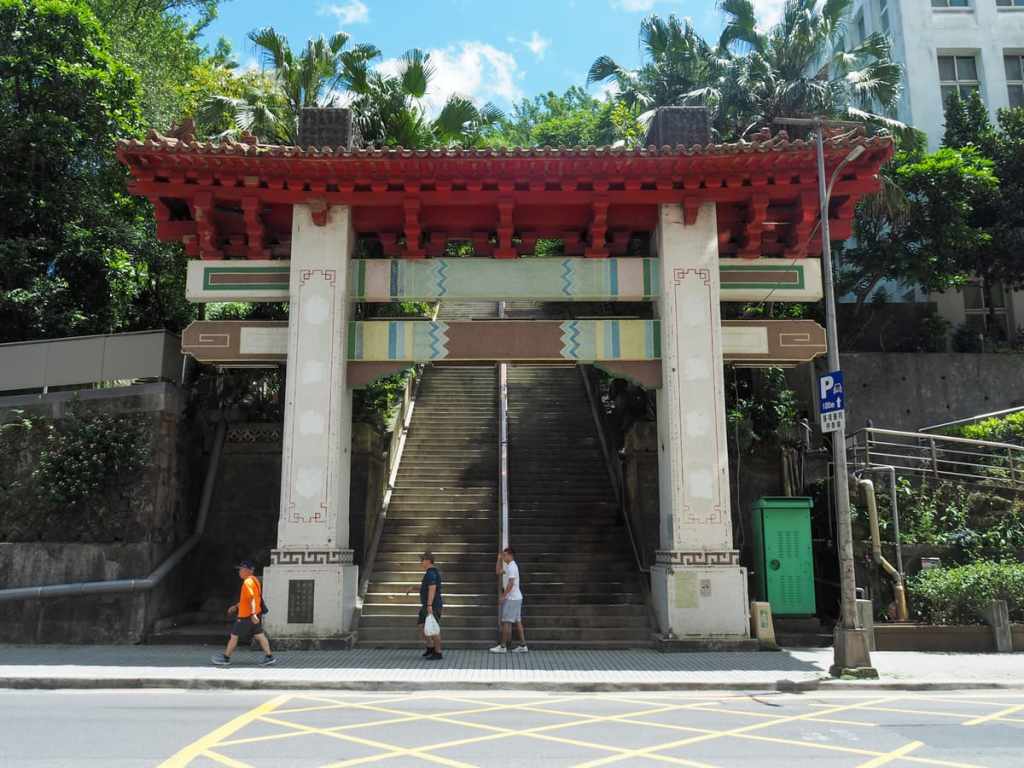
The walk starts across from the fire station on Xin’er Road, and like many walks in Taiwan, it begins with some steps.
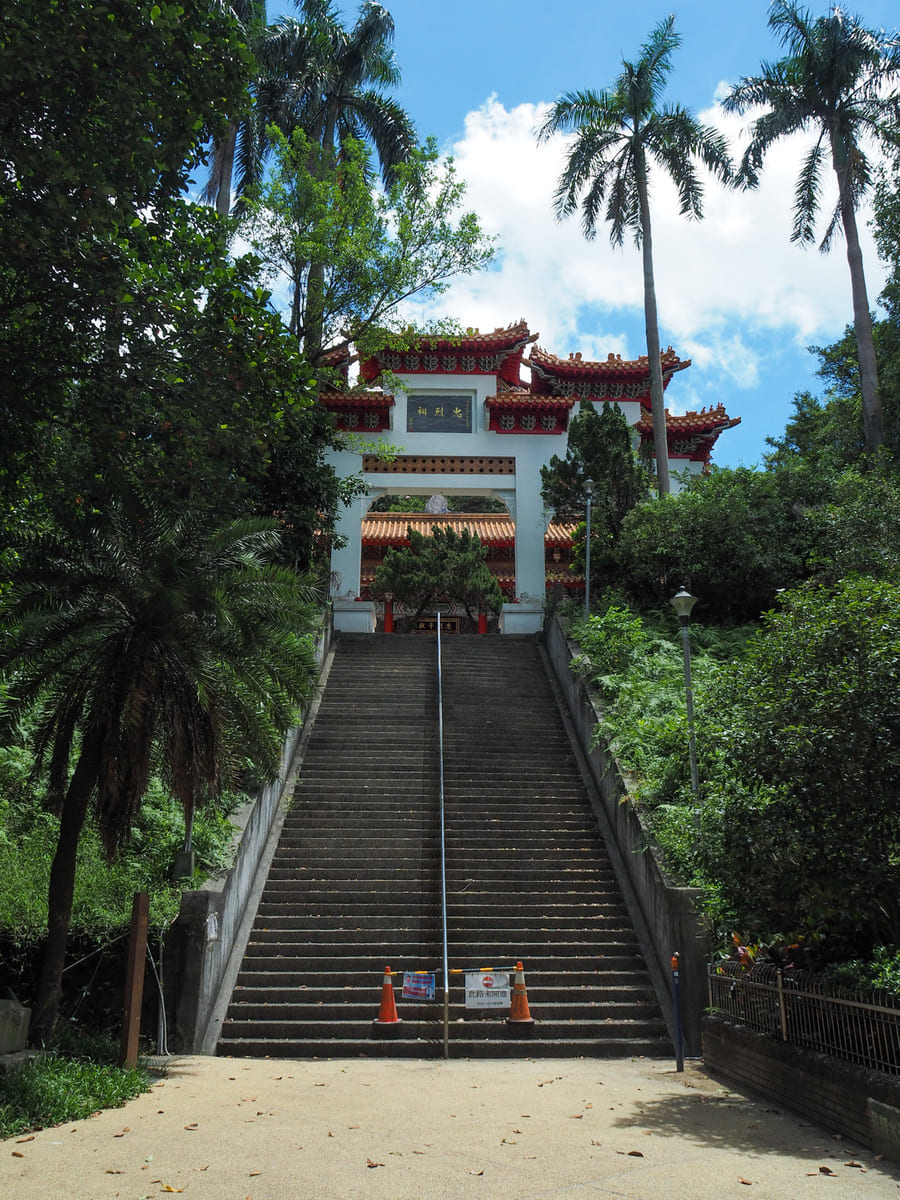
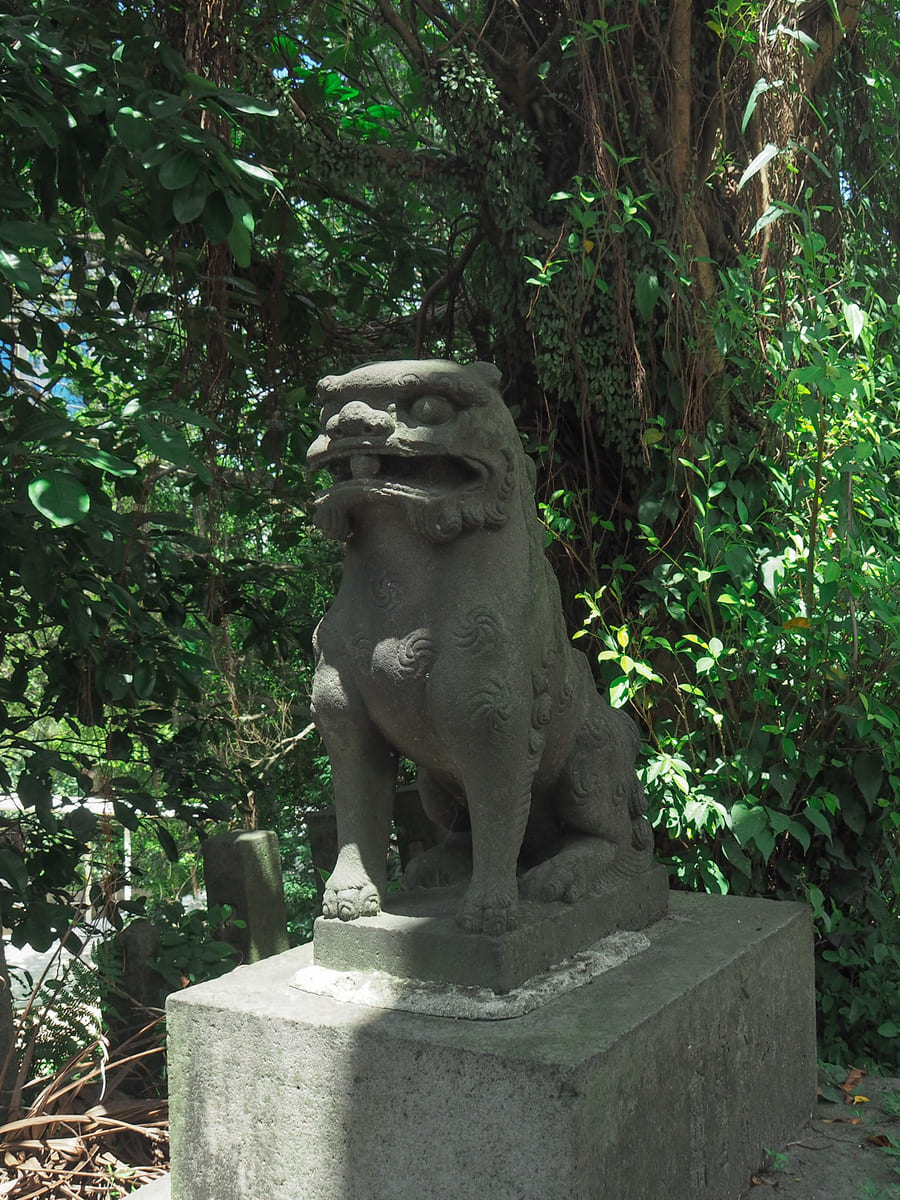
This first flight of steps leads up to an open seating area with shade and benches. On the right, a second flight of stairs climbs up to Keelung Martyrs’ Shrine, and on the left, you’ll find the trail leading onwards and upwards to Zhongzheng Park.
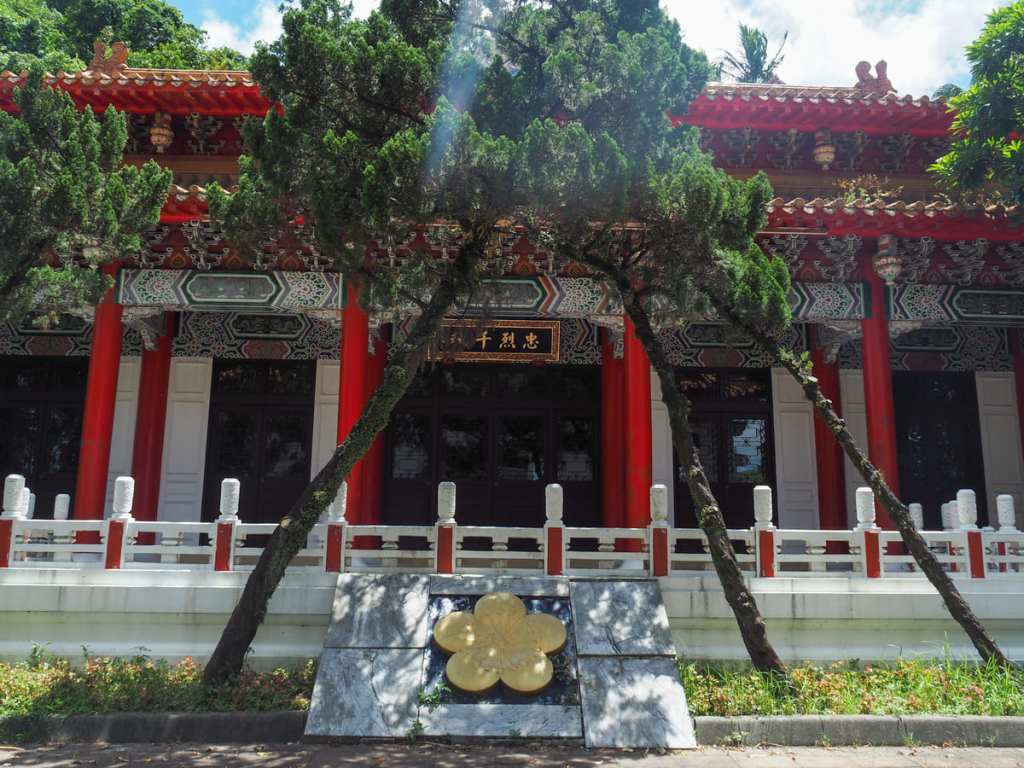
I took a little detour up to see the Martyrs’ Shrine. As is the case with many of the martyrs’ shrines across Taiwan, this one was formerly a Shinto shrine built during the Japanese colonial era and later co-opted by Chiang Kai-shek’s government to serve as monuments to the “brave soldiers who sacrificed their lives for the country.” The original Shinto shrine was constructed in 1912 and in respect to the location, enshrined deities known for protecting seafarers and those whose trade was somehow connected to the oceans. For more information on this specific subject, I strongly recommend Josh Ellis’s post. He’s been busy over the past few years making sure that Taiwan’s martyrs’ shrines are all written about in English.
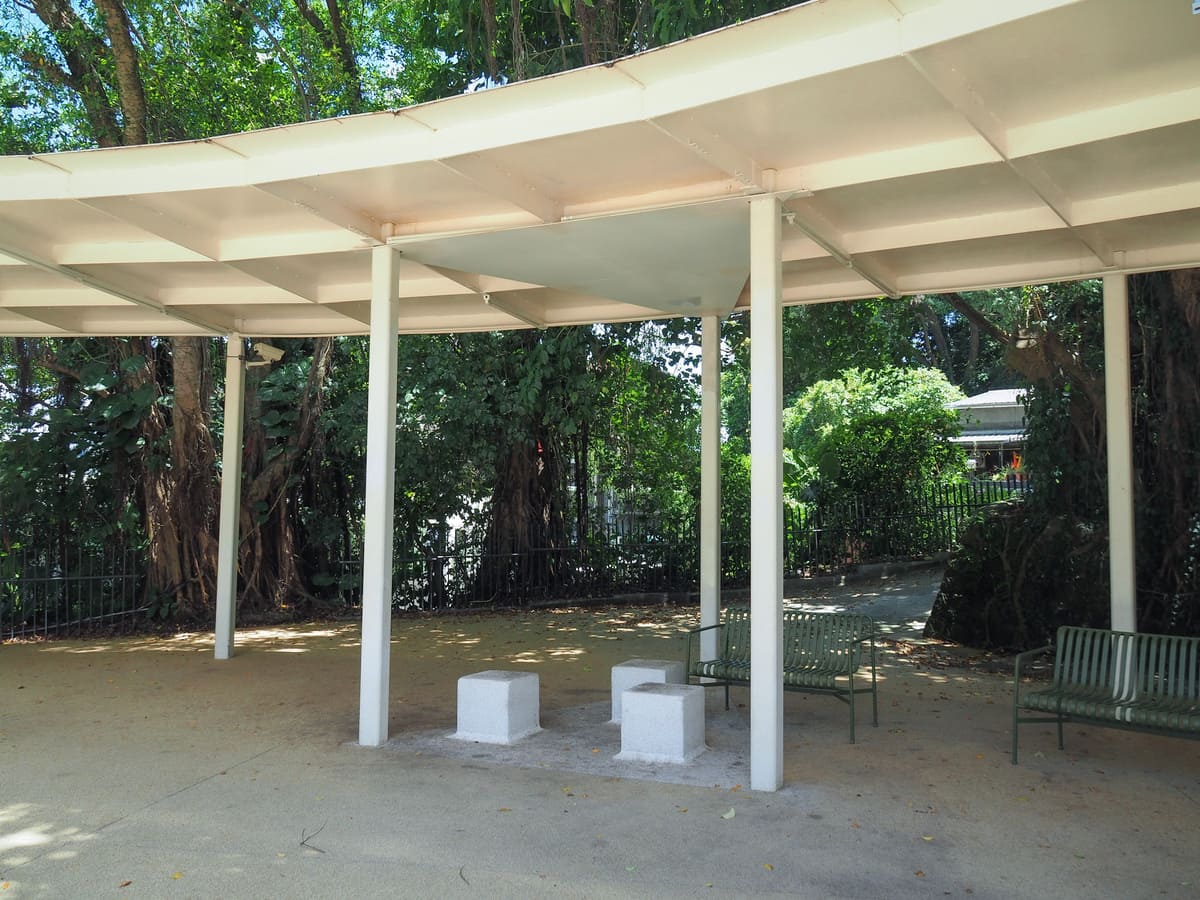
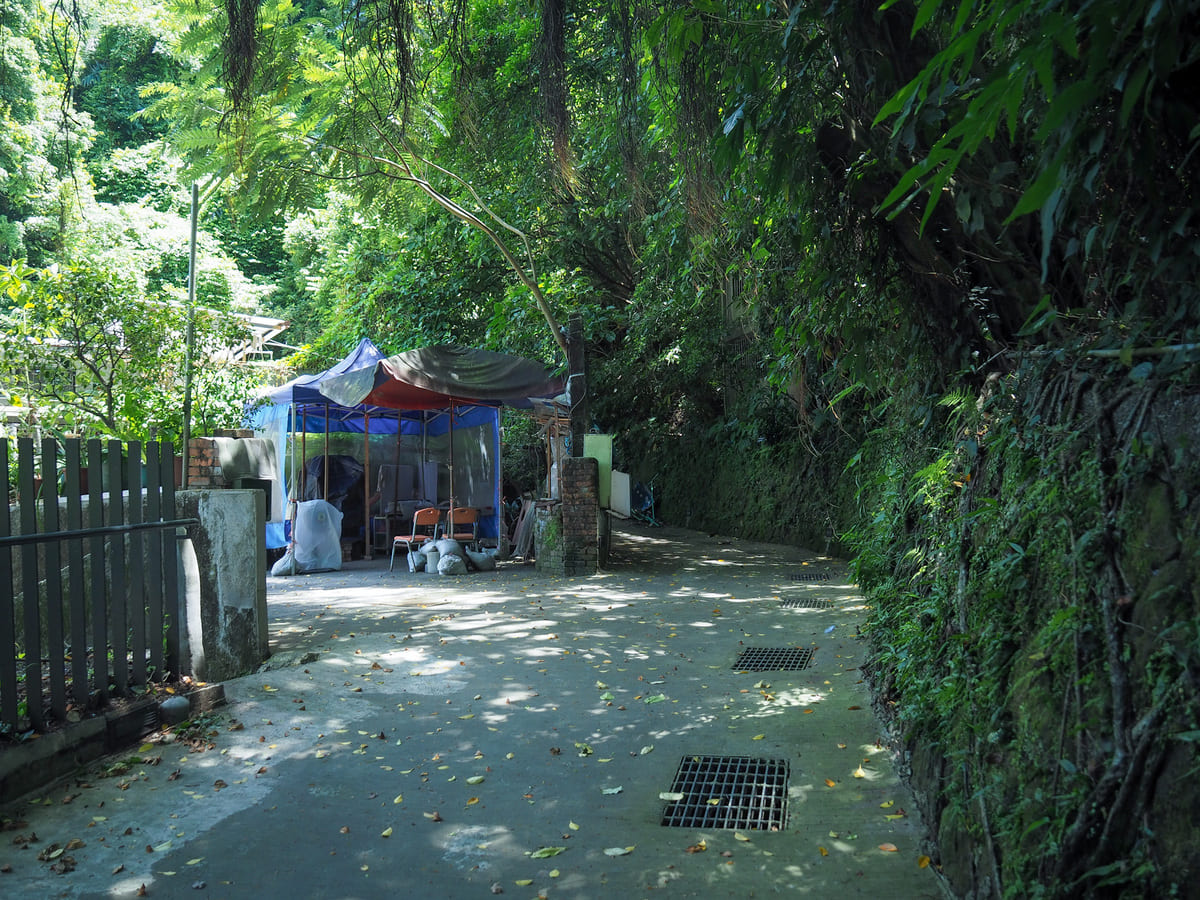
Previously it was possible to follow a path from the shrine over to Zhupu Altar, but it seems as if that is currently undergoing construction, so instead, I had to retrace my steps back down to the seating area and then follow the path on the left. The trail heads past a toilet block and continues around the side of the hill.
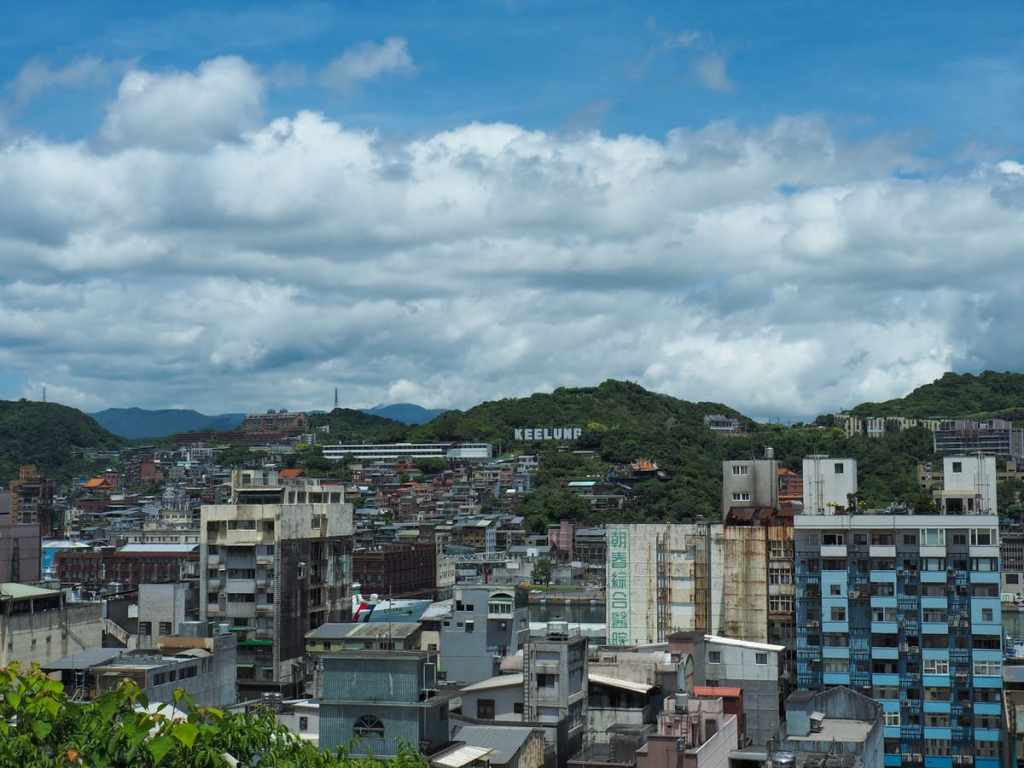
A sheltered seating and viewing area look out over the inland top edge of Keelung Harbour and the Keelung “Hollywood” sign. On Keelung’s rare blue-sky days, it looks like a reasonable landmark, but in the more normal dreich and dreary drizzle that Keelung is famed for, it feels almost mocking-a poor simulacrum of the American landmark.
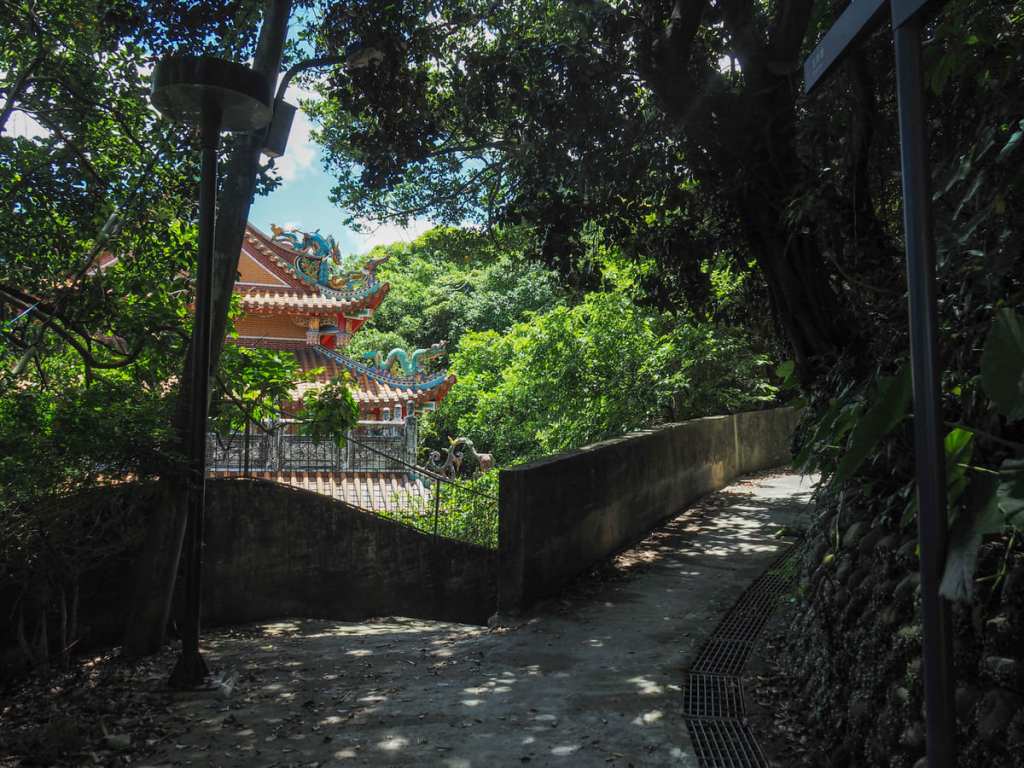
The path curves right around the back of Ci’an Temple.
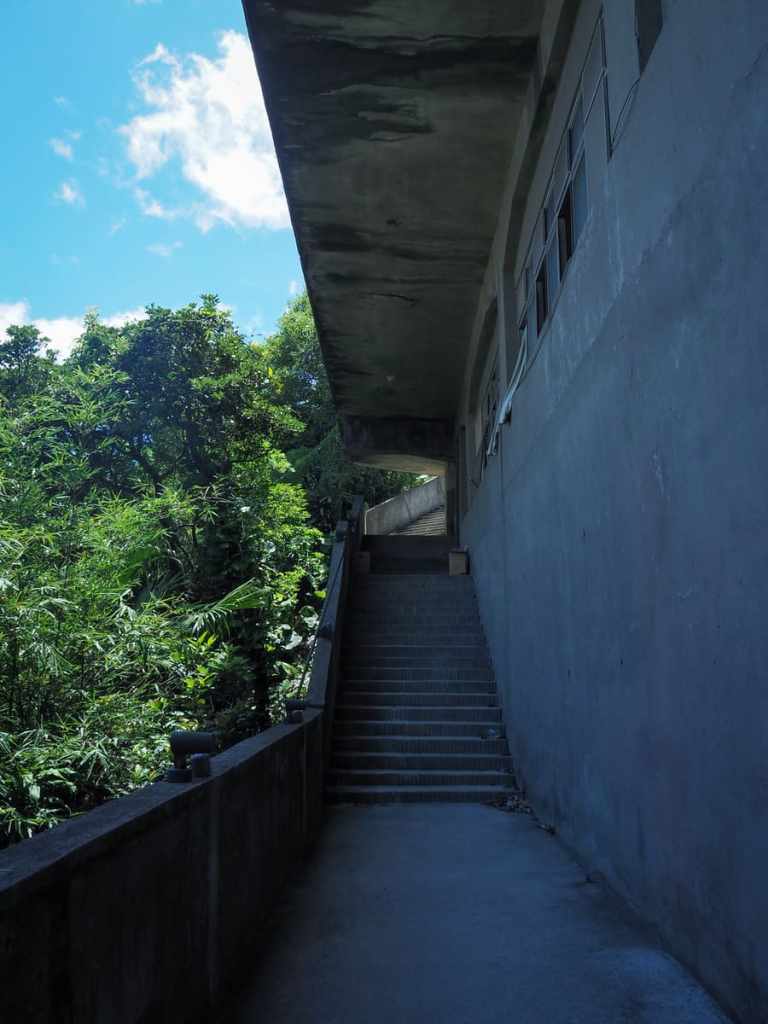
Then it passes beside the weirdly half-abandoned rooms below Zhupu Altar. As someone more familiar with Taipei, the state of abandonment/use of Keelung’s older spots is always a touch disconcerting.
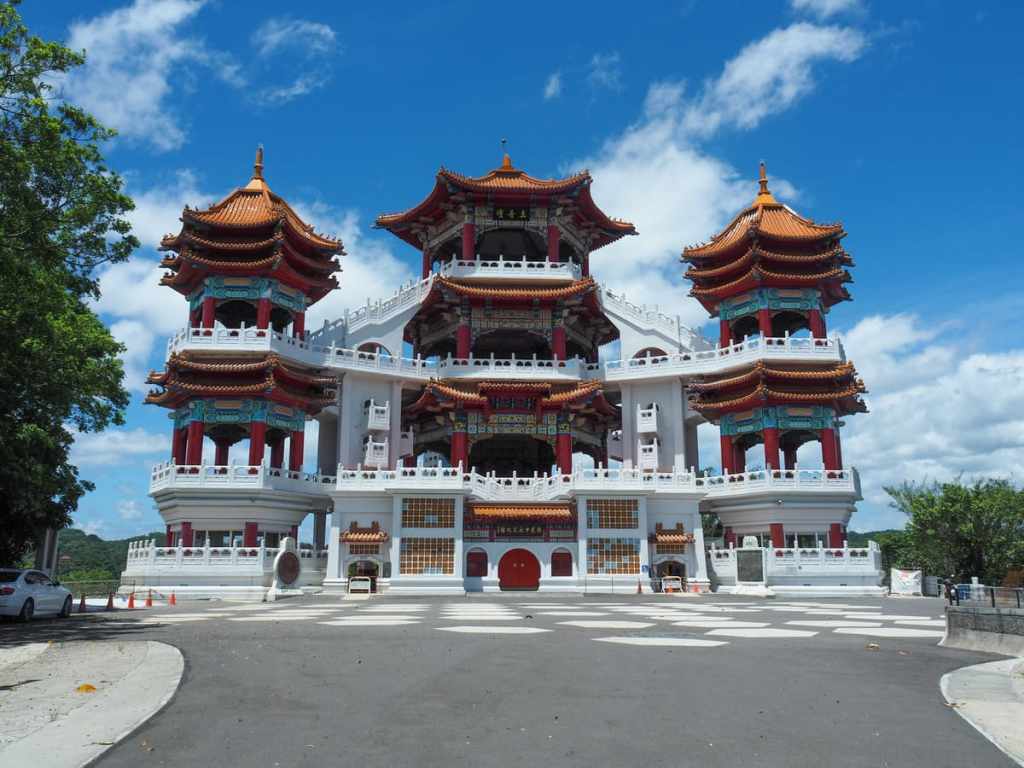
Steps climb up to the huge open area in front of the impressive structure of Zhupu Altar. This is the site of a large annual religious festival. On the 15th night of the 7th lunar month, huge offerings are laid out here to mark the opening of the gates to the spirit realm. Ghost month is a big deal in Taiwan and the celebrations are serious business. I haven’t yet attended the Keelung festivities, but I hope to one day.
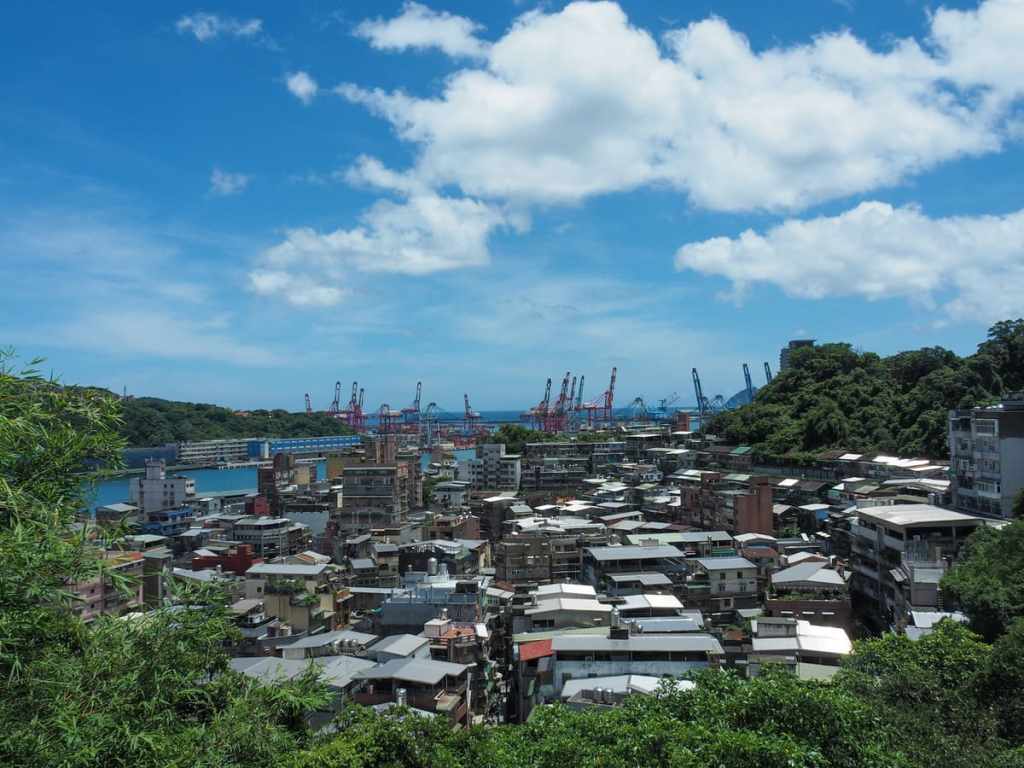
From the eastern edge of the plaza, you can see over the roofs of Zhonzheng District towards the long-necked cranes of Keelung’s Inner Harbour.
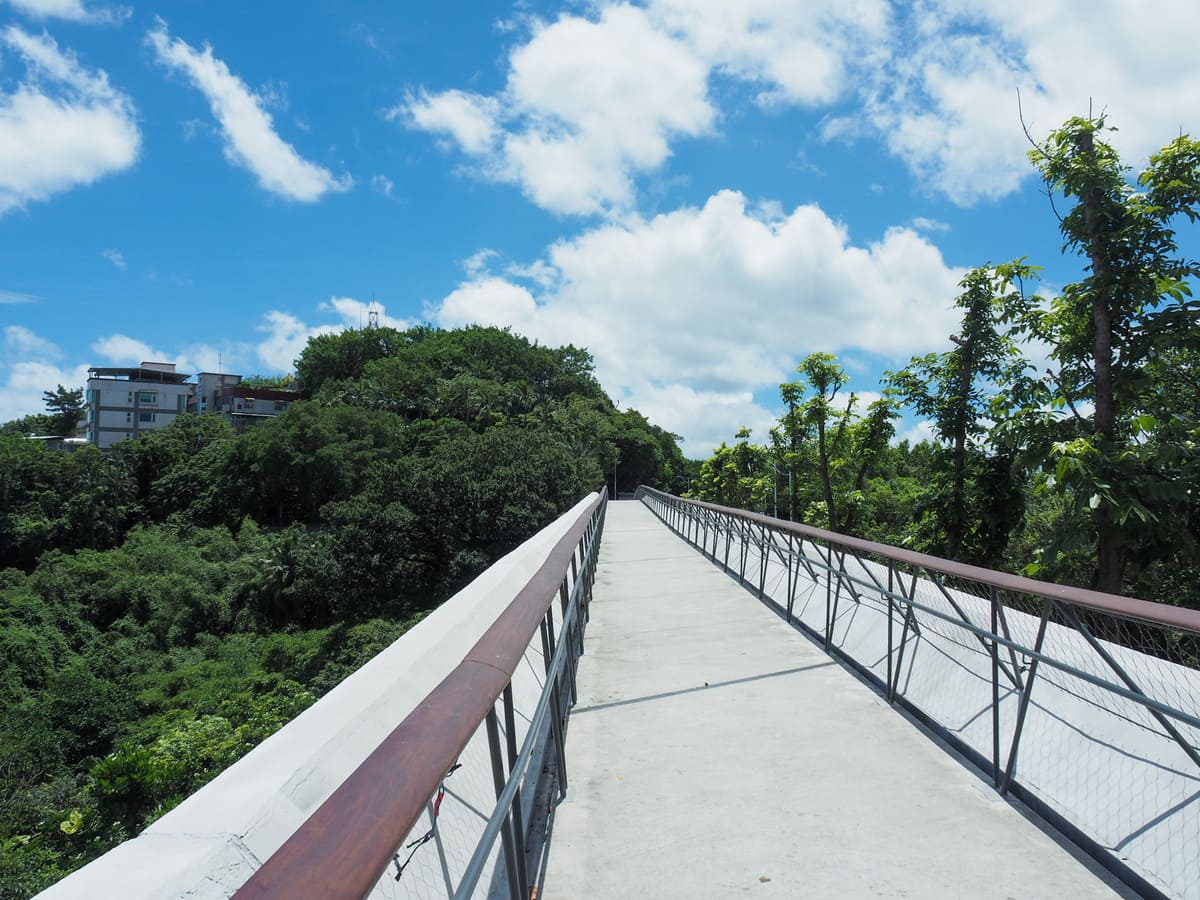
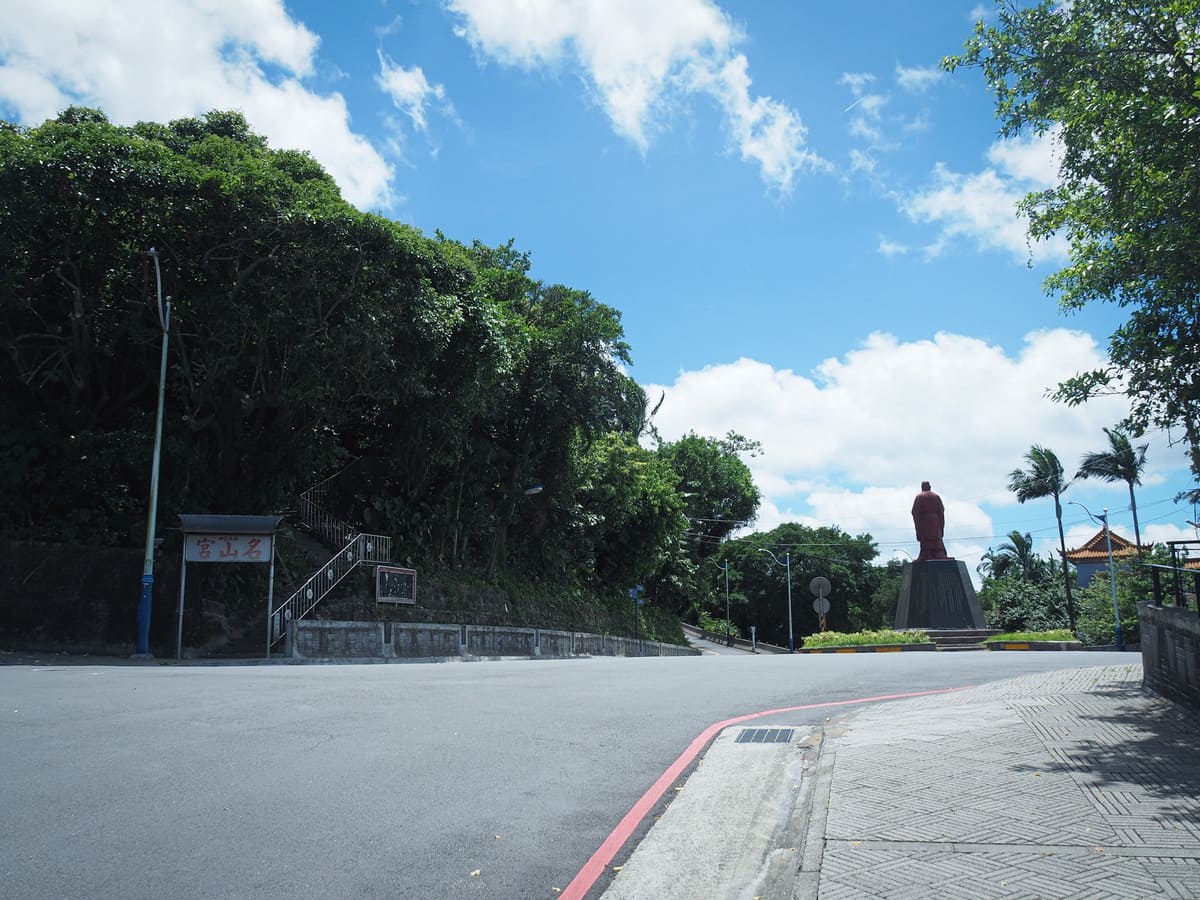
Cross over the pedestrian bridge (or just follow the road) towards a small metal archway announcing the entrance to Mingshan Temple (名山宮).
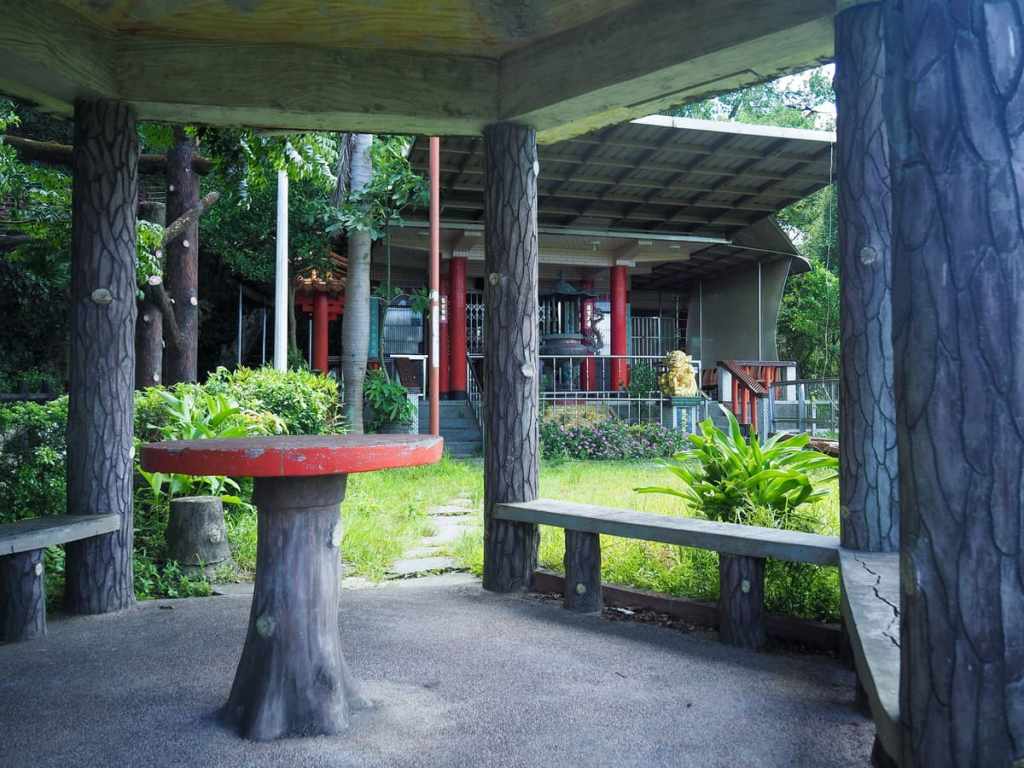
The path led me up and through a pavilion before arriving at the small temple. A metal grill kept the resident gods shuttered off and protected from the world at large.
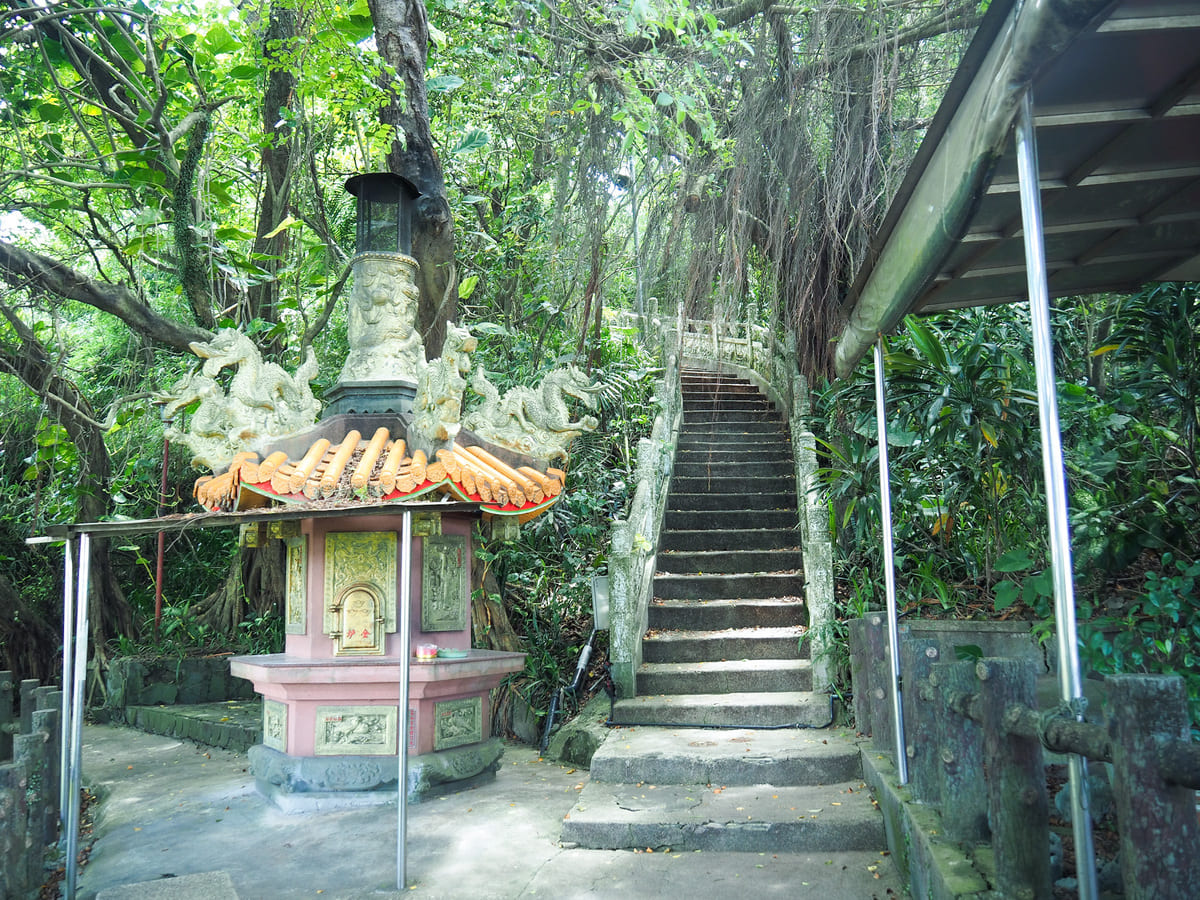
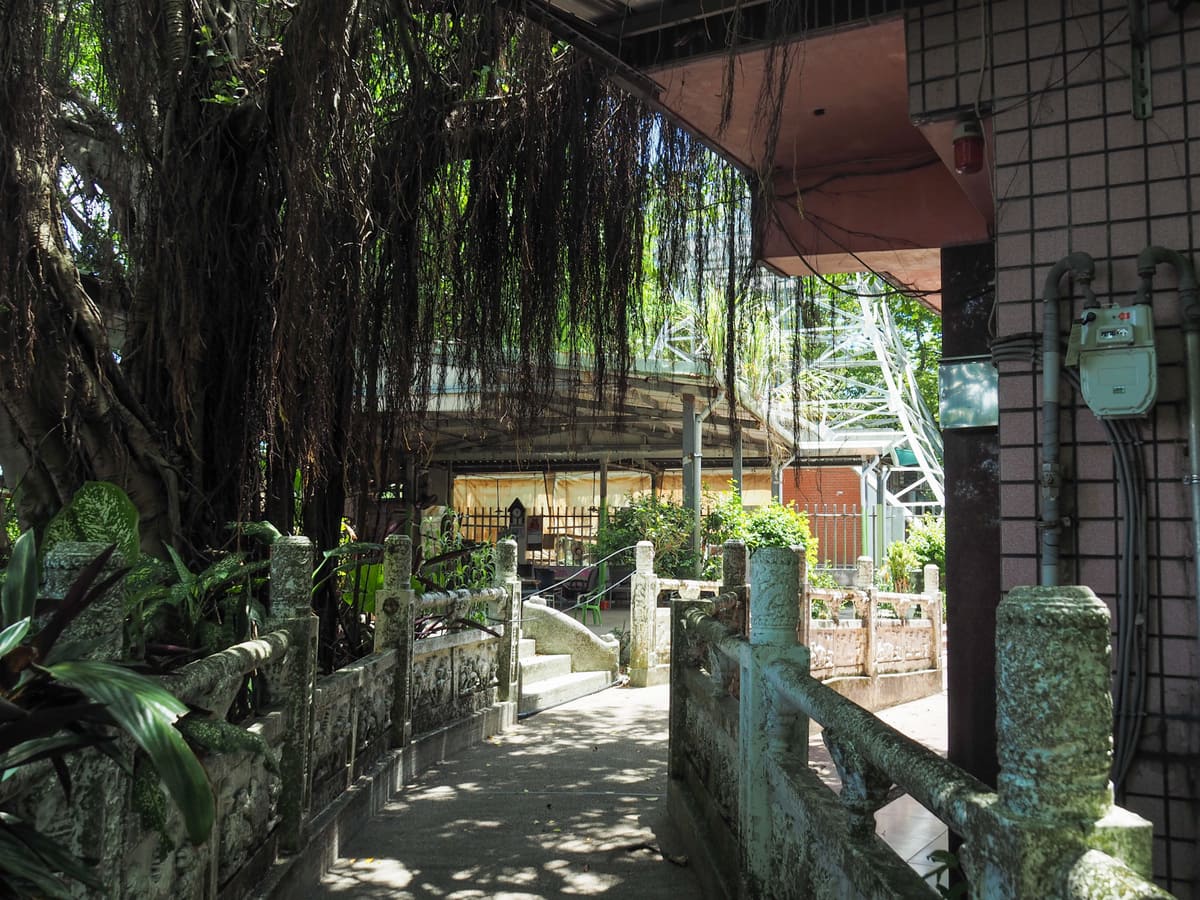
Take the steps leading past the ghost money burner and keep heading up until you reach the plaza in front of another, larger temple.
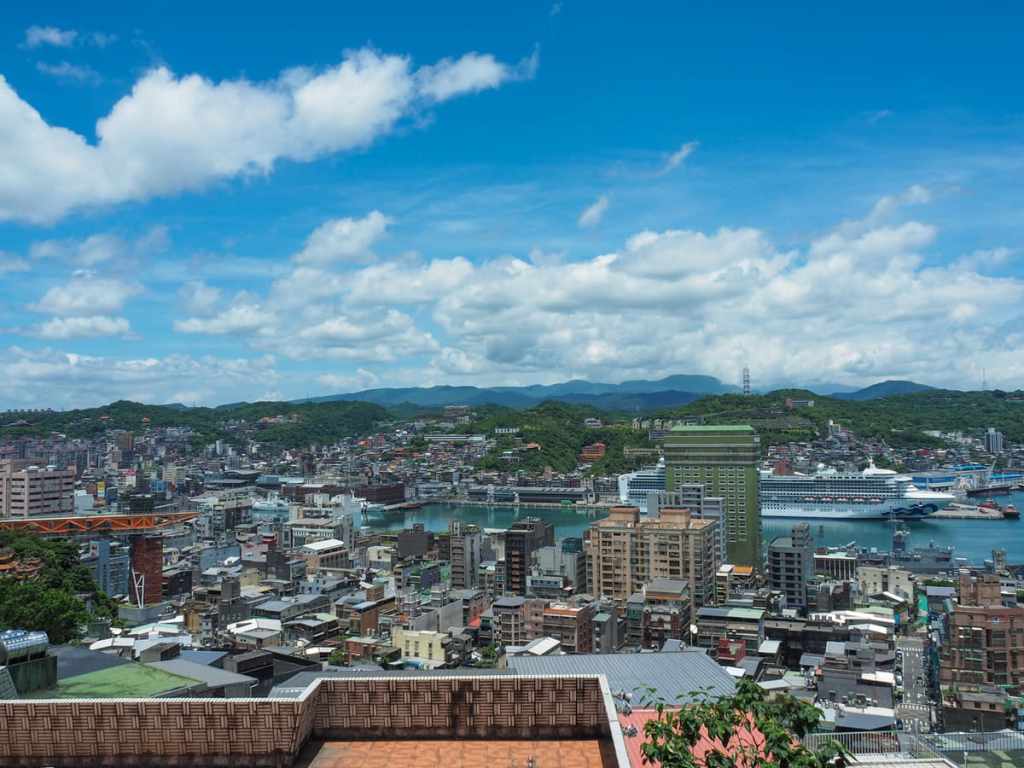
From the front of the platform, there’s an expansive view of pretty much all Keelung.
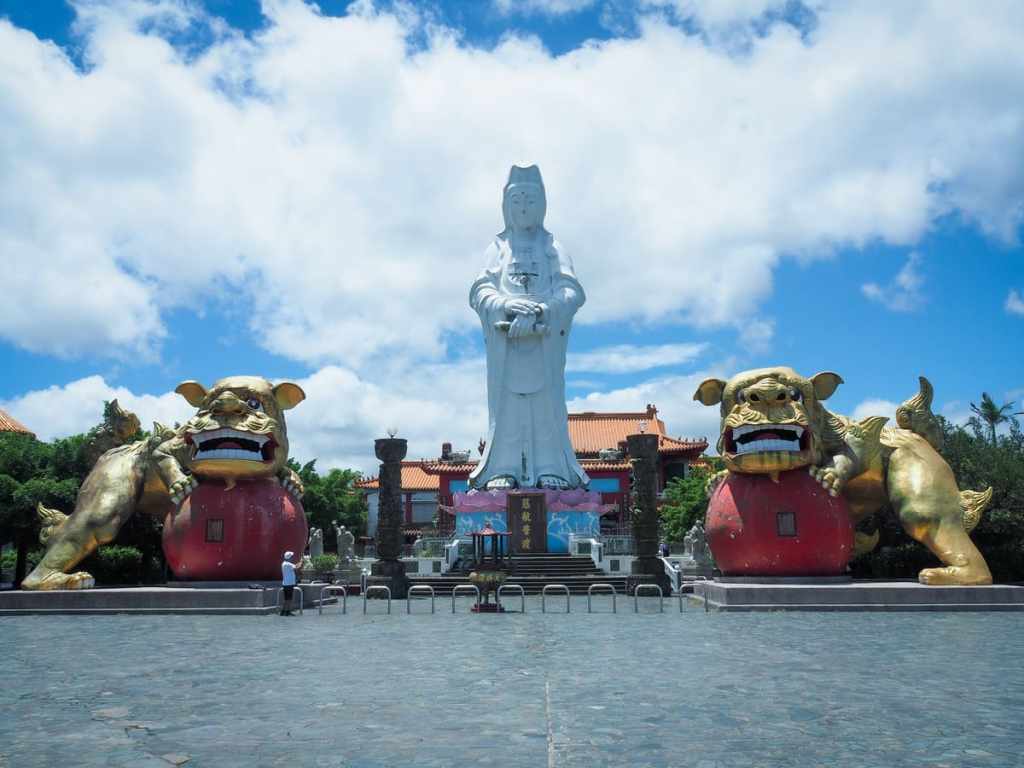
The presence of tour groups was also evident in the number of tourists milling around the statue and the temple, too. The site of the 22.5m Guanyin statue flanked by grimacing guardian lions is undeniably impressive. It must be comforting for residents to look up and see the goddess of mercy gazing down upon them.
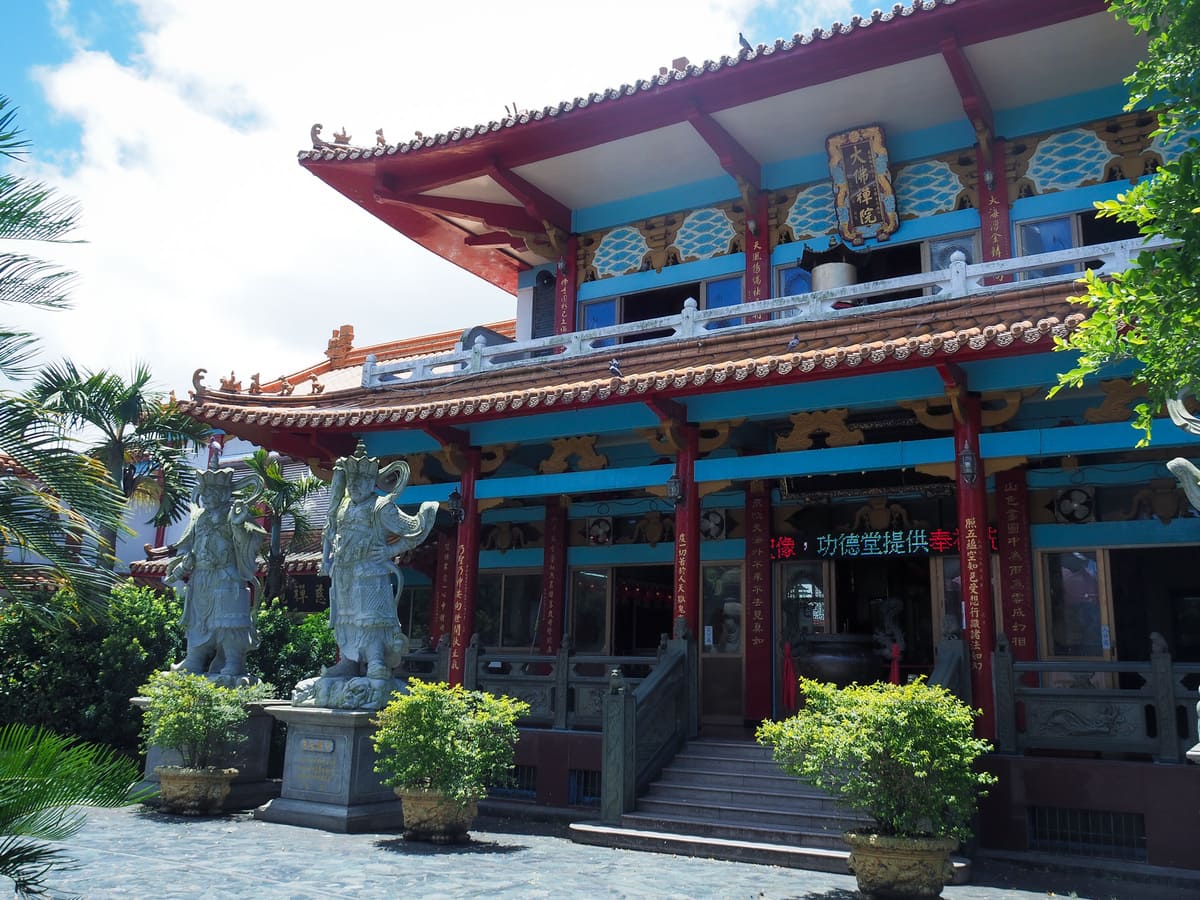
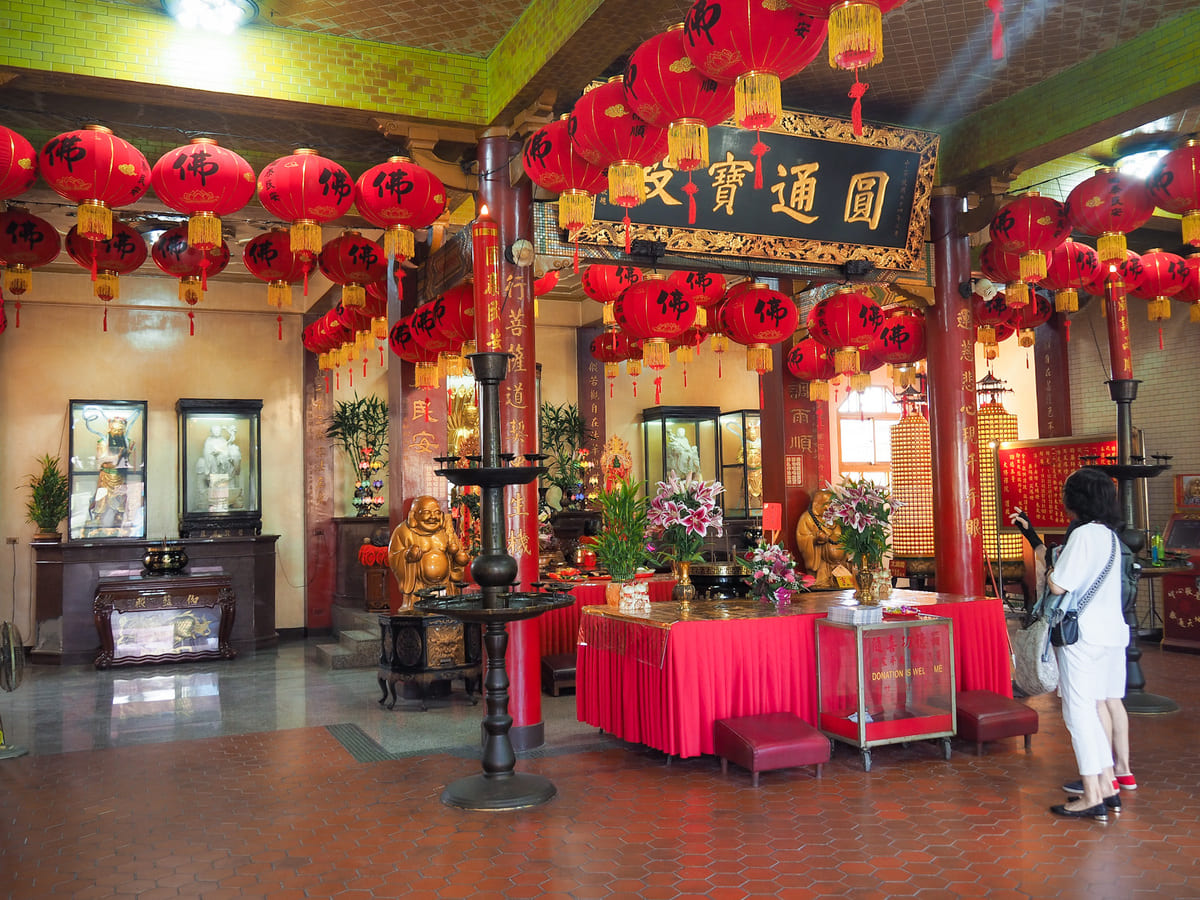
The statue has a temple to its rear, and I popped in for a quick look. It’s unfussy, but obviously lovingly maintained.
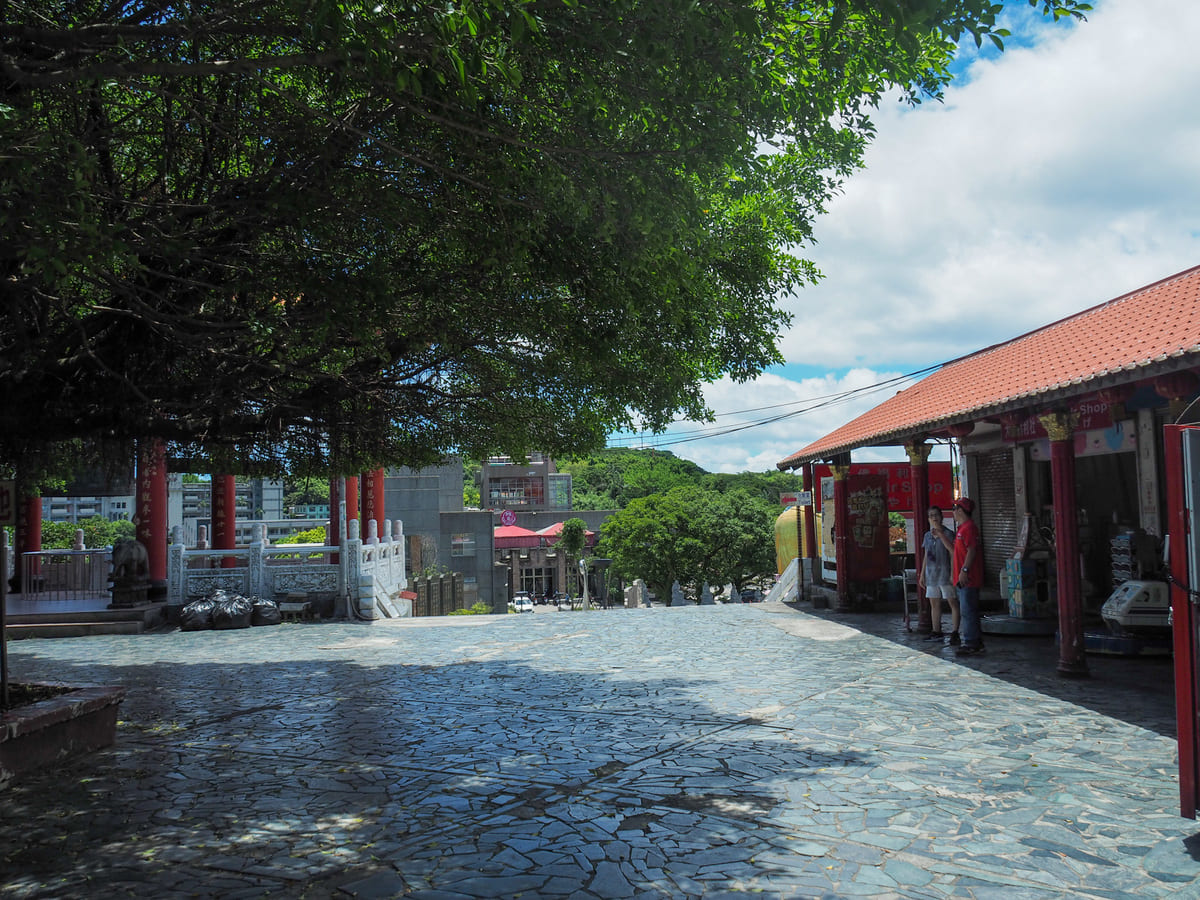
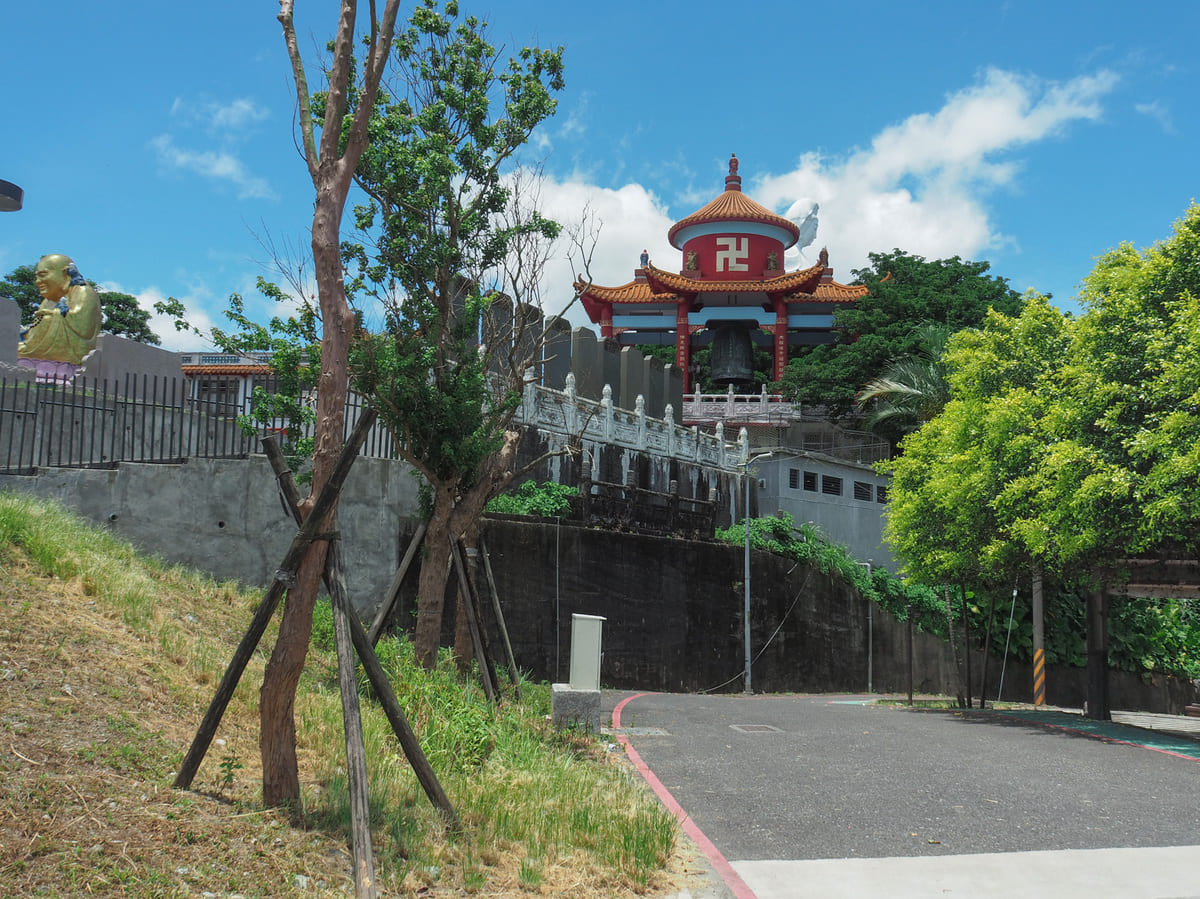
To complete my wander, I took the steps heading down beside the temple’s large bell, then turned left to follow the road downhill.
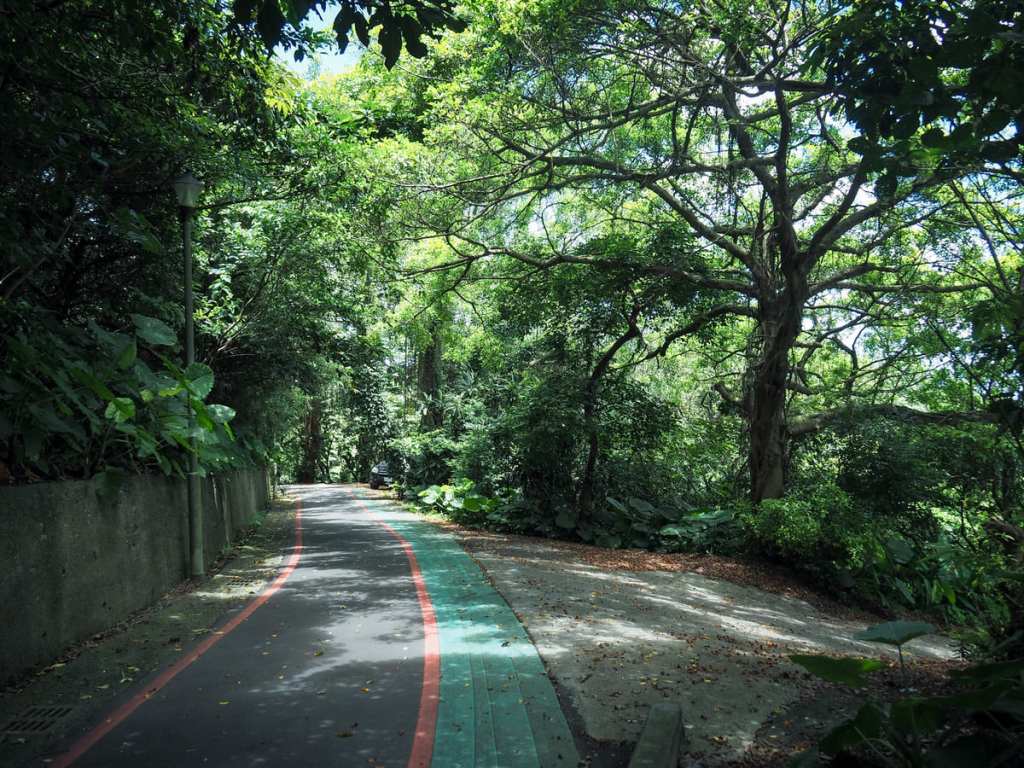
I was grateful for the shady trees.
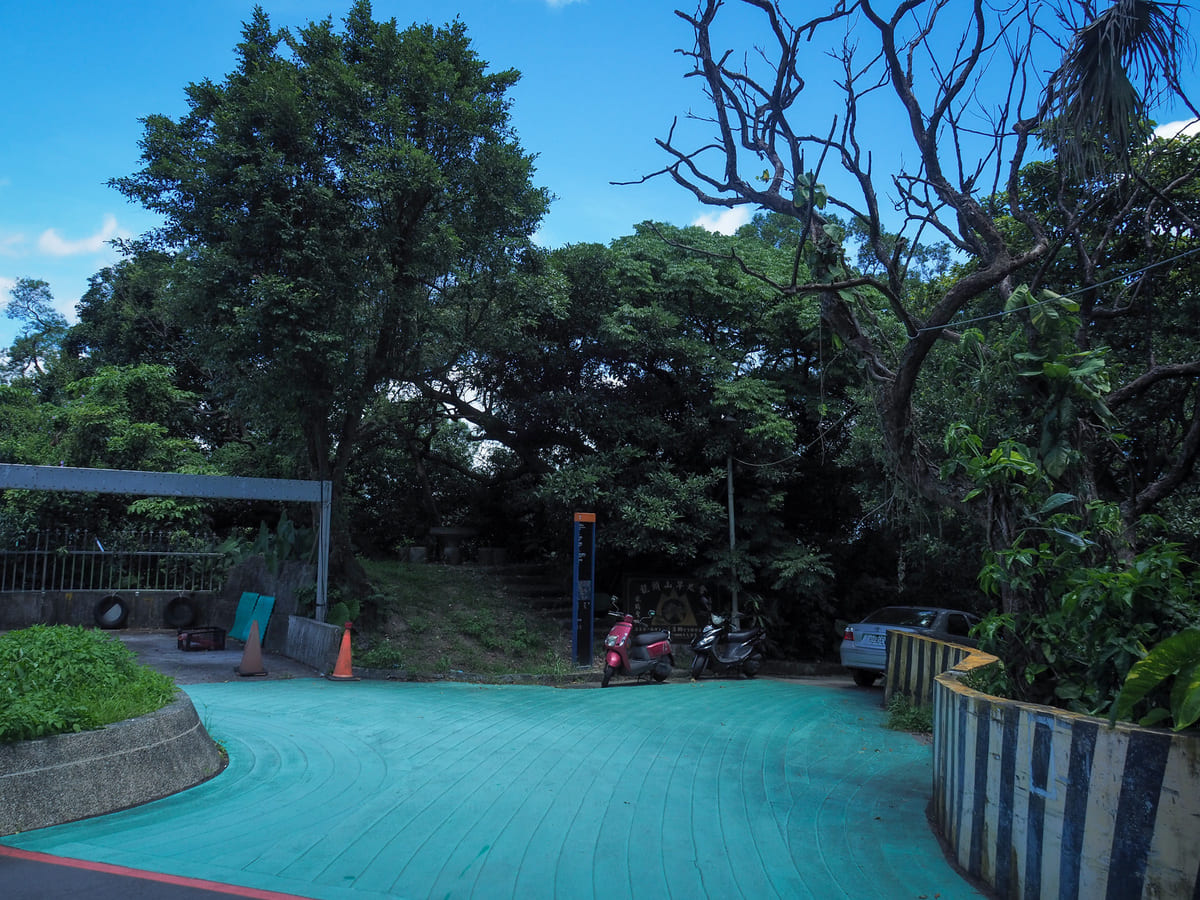
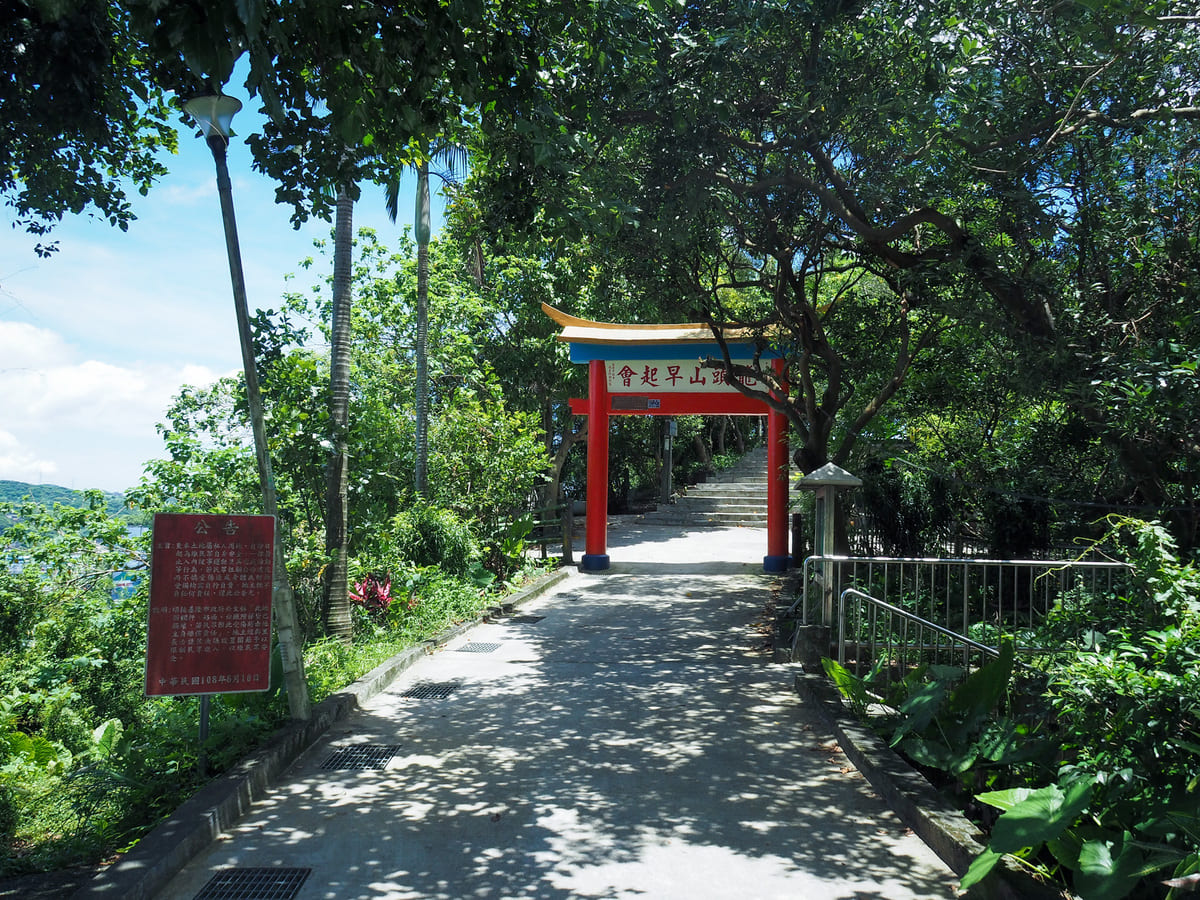
At the junction, I first headed right to take a look at the view from Longtou Hill (龍頭山). Translated directly, this means Dragon Head Hill, I wonder if it looks like a dragon from the far side of the harbour.
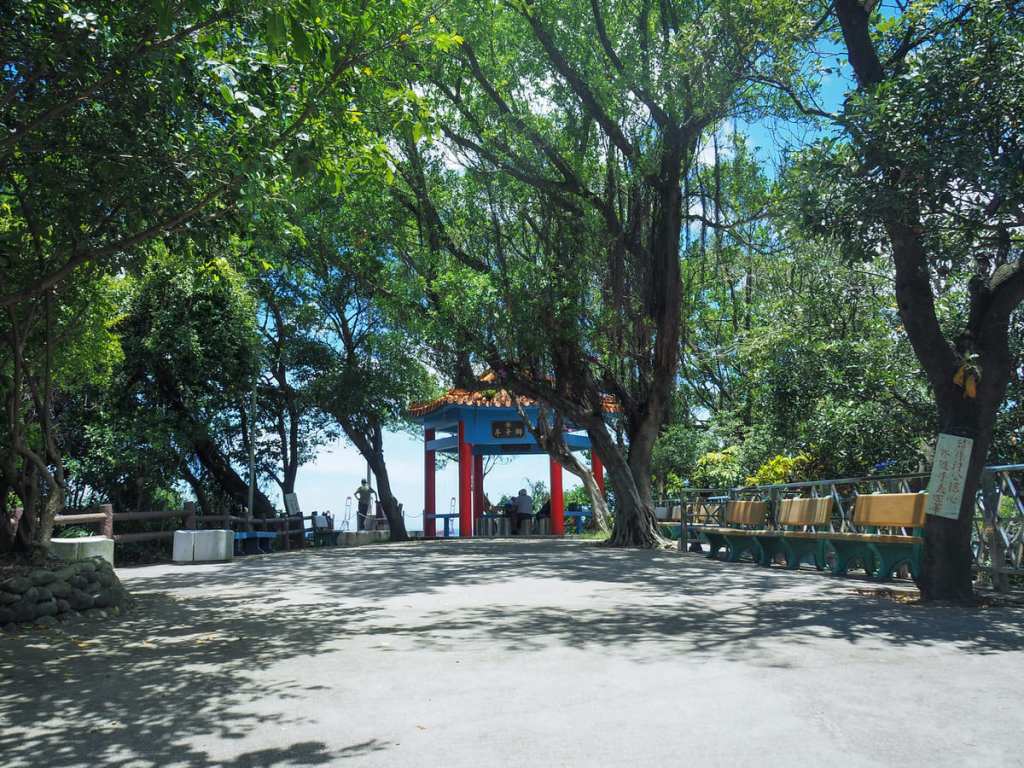
The summit is marked by some benches and a pagoda that was being occupied by shade-seeking retirees.
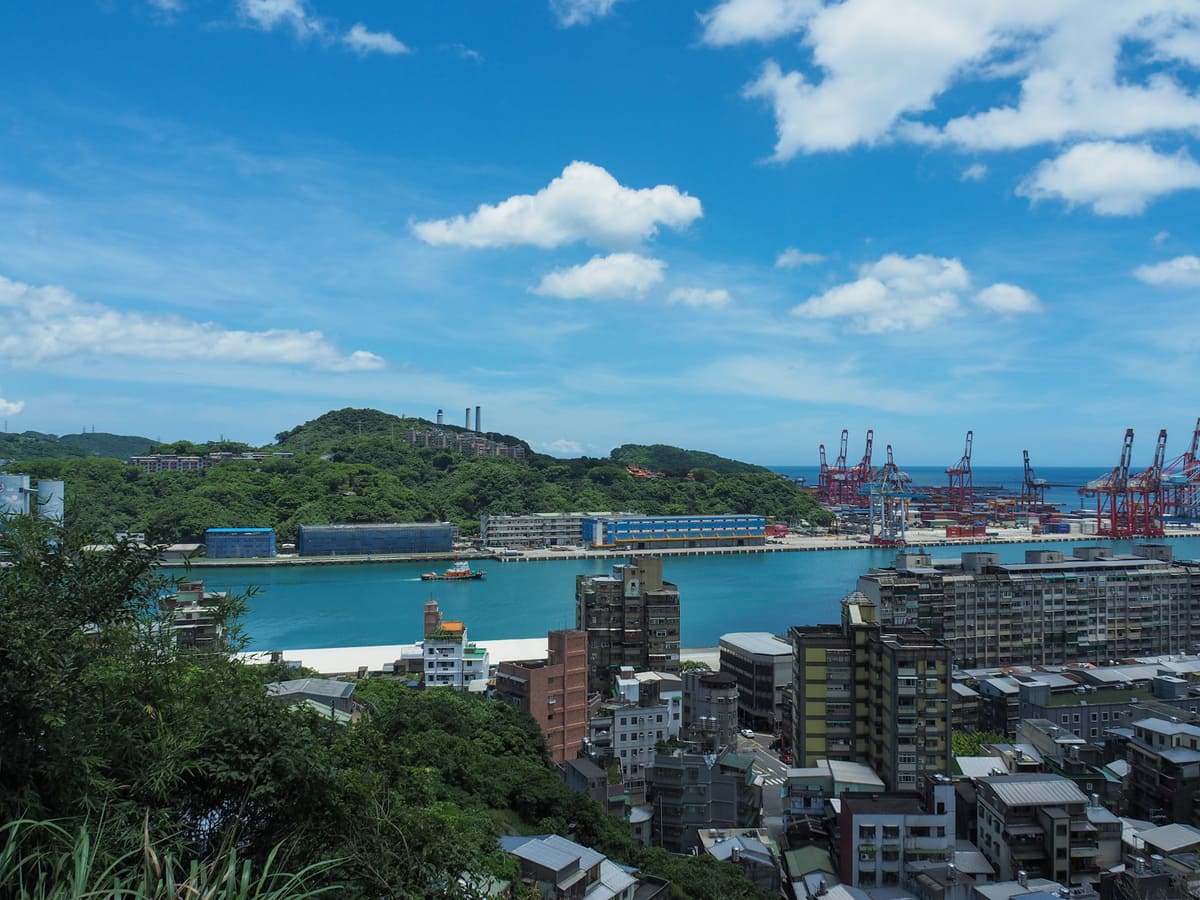
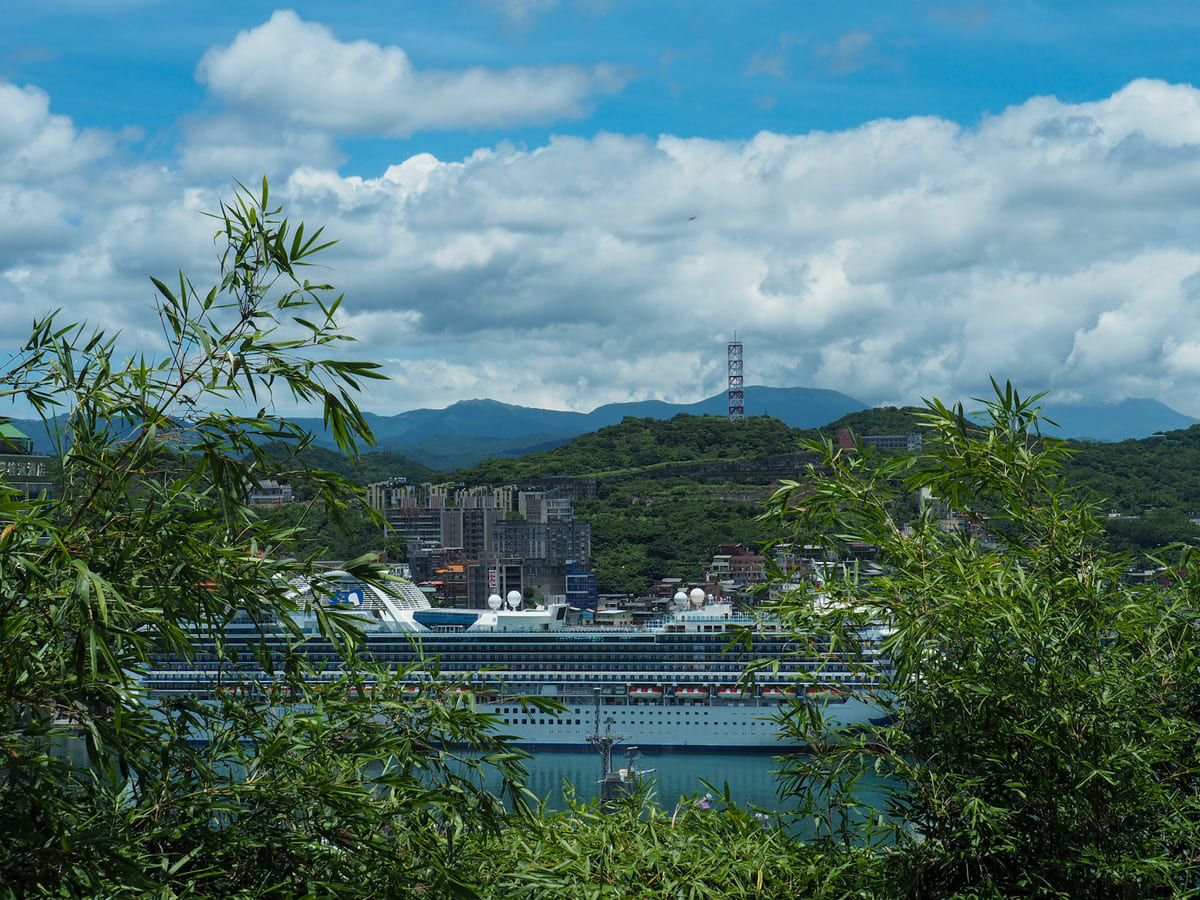
And from the water-facing edge, you can look out over the container cranes close to where Buddha’s Hand Cave is located (I still haven’t managed to make it there).
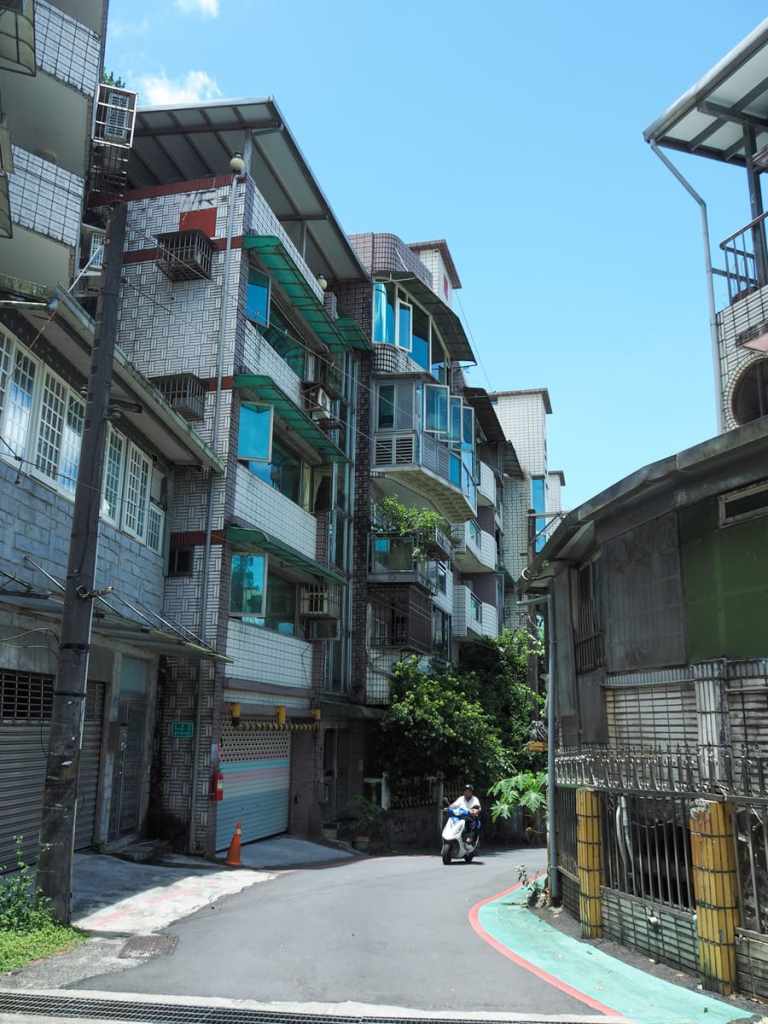
Retracing my steps, I returned to the junction and continued to follow the road.
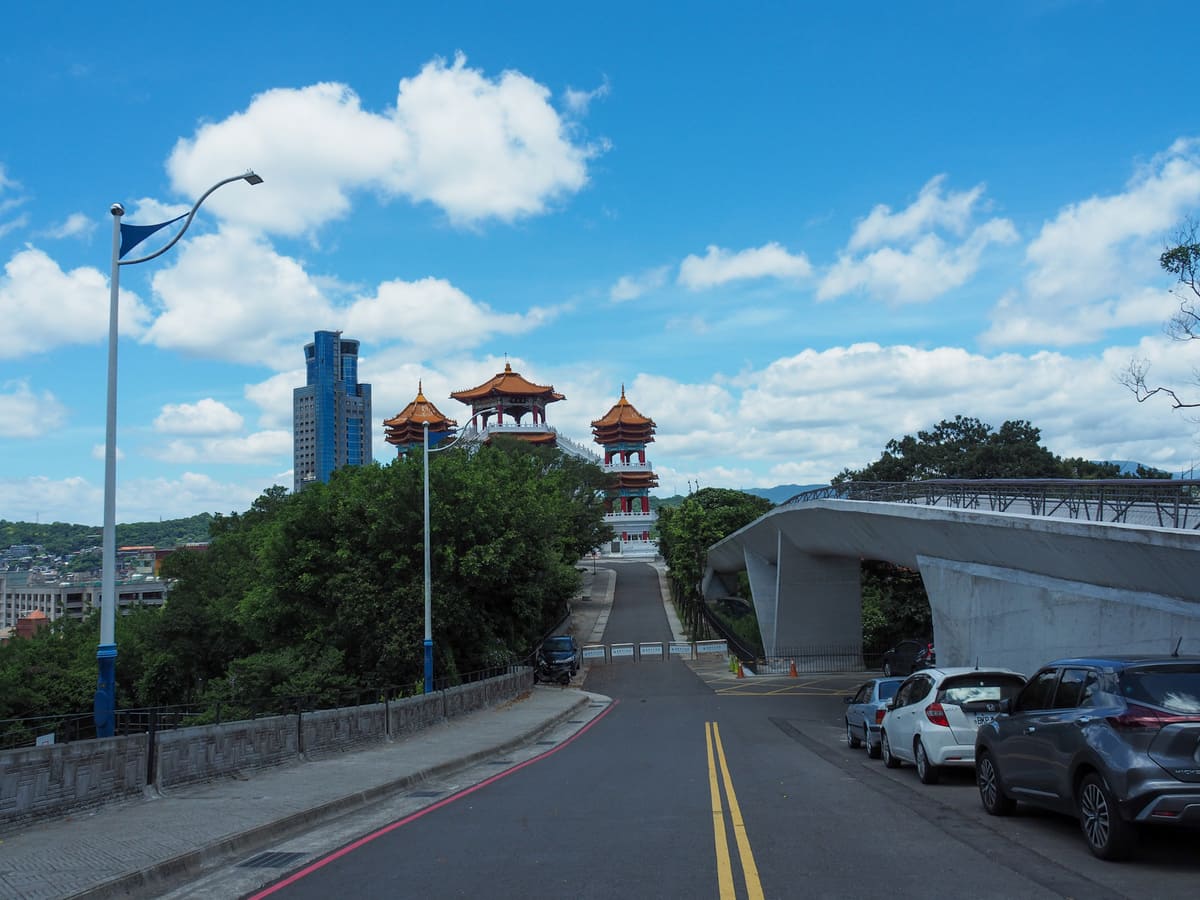
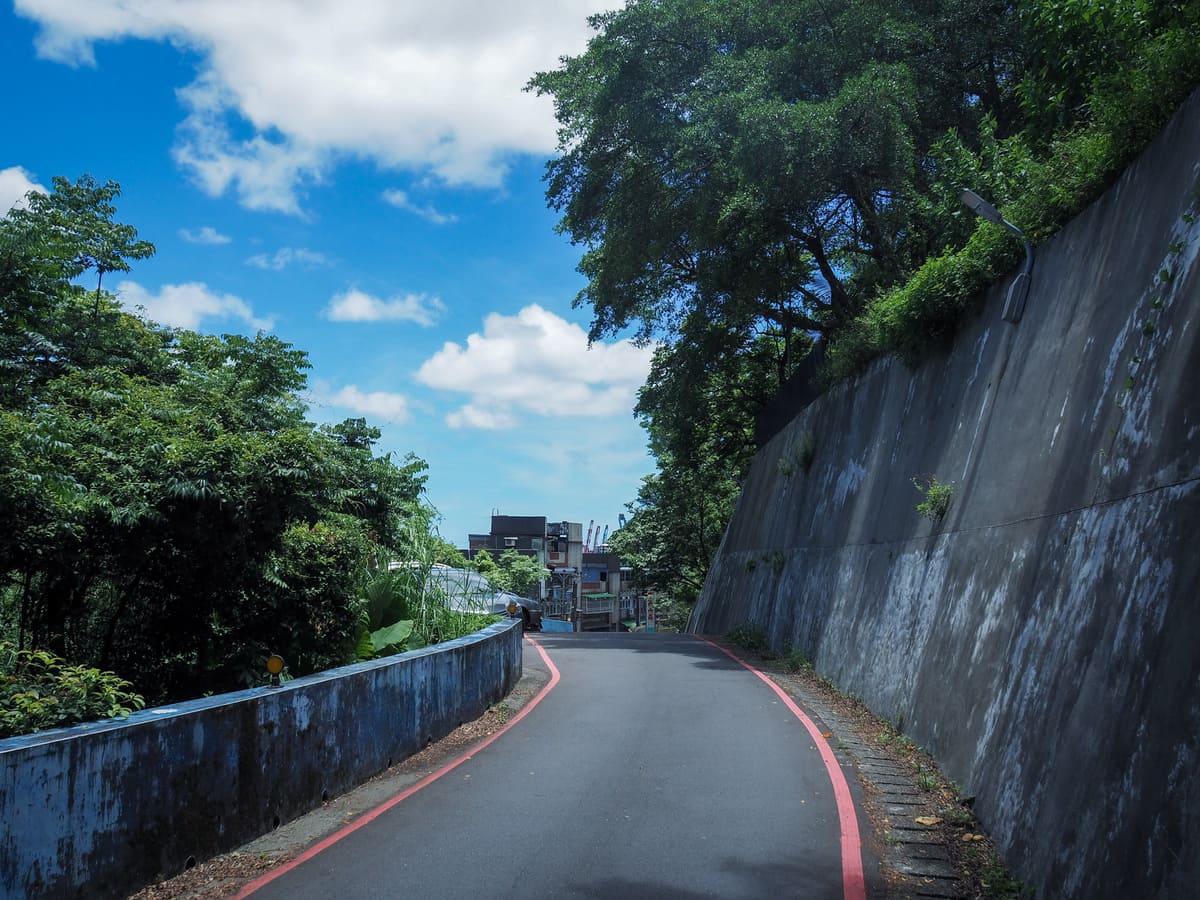
Before long, it had looped back around the base of the giant Guanyin statue’s plaza and returned to the pedestrian bridge in front of Zhupu Altar. Of course, it would be easy to retrace your steps back to the start from here, but I decided to explore an alternative route down, so I turned right under the bridge.
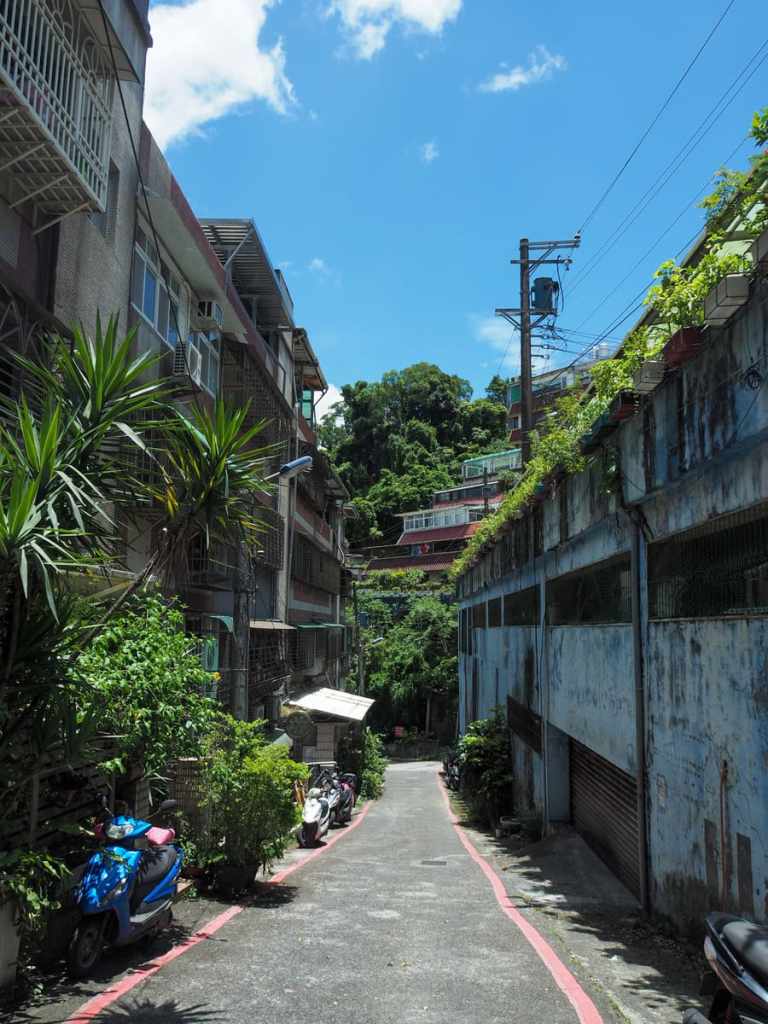
If you follow the lane as far as it can go, it looks increasingly like a dead end.
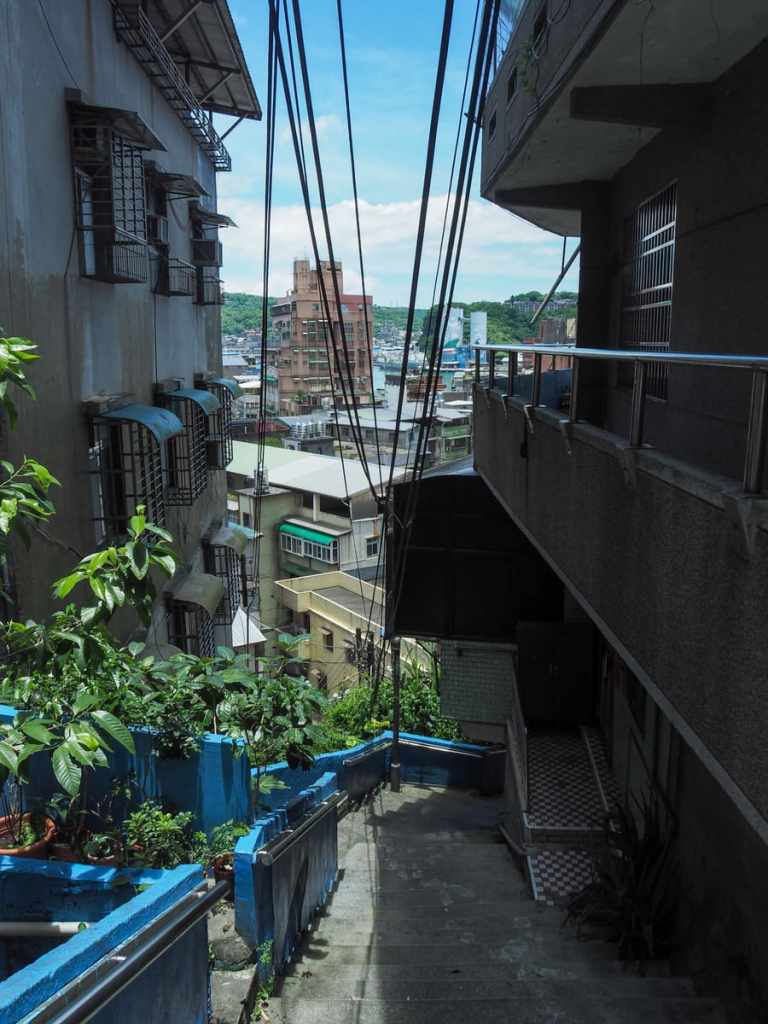
However, once I reached the end, I noticed a flight of steps on my left.
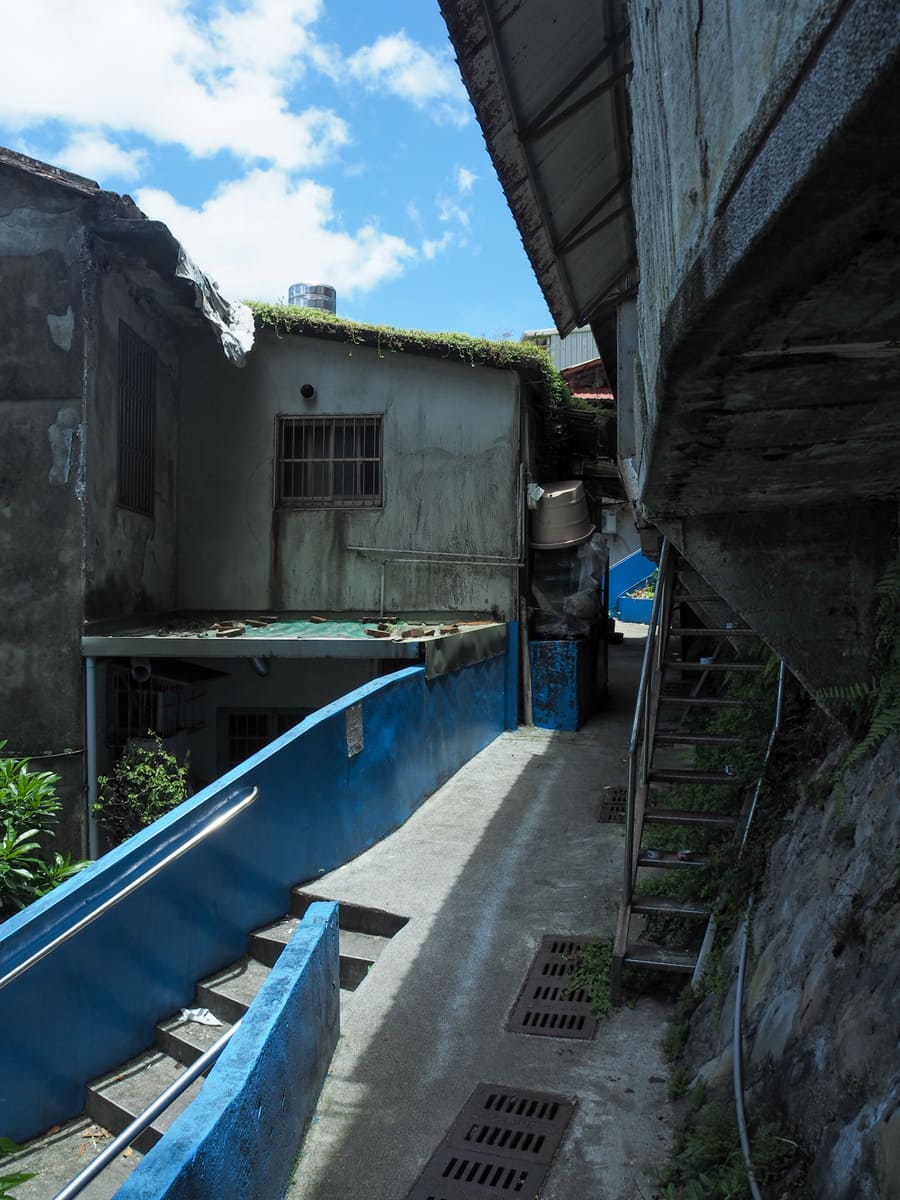
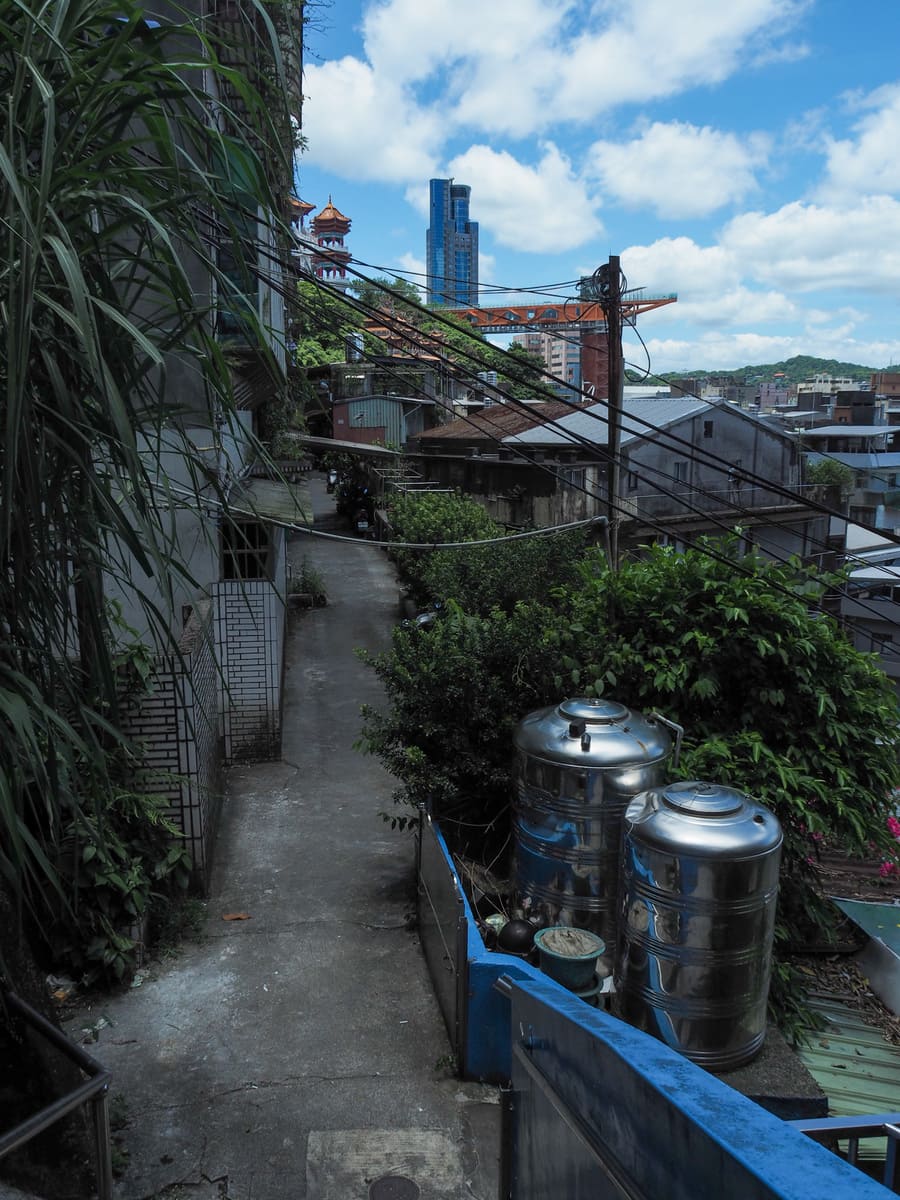
The steps descend steeply through the densely packed houses, zigzagging left and right as they make their way down.
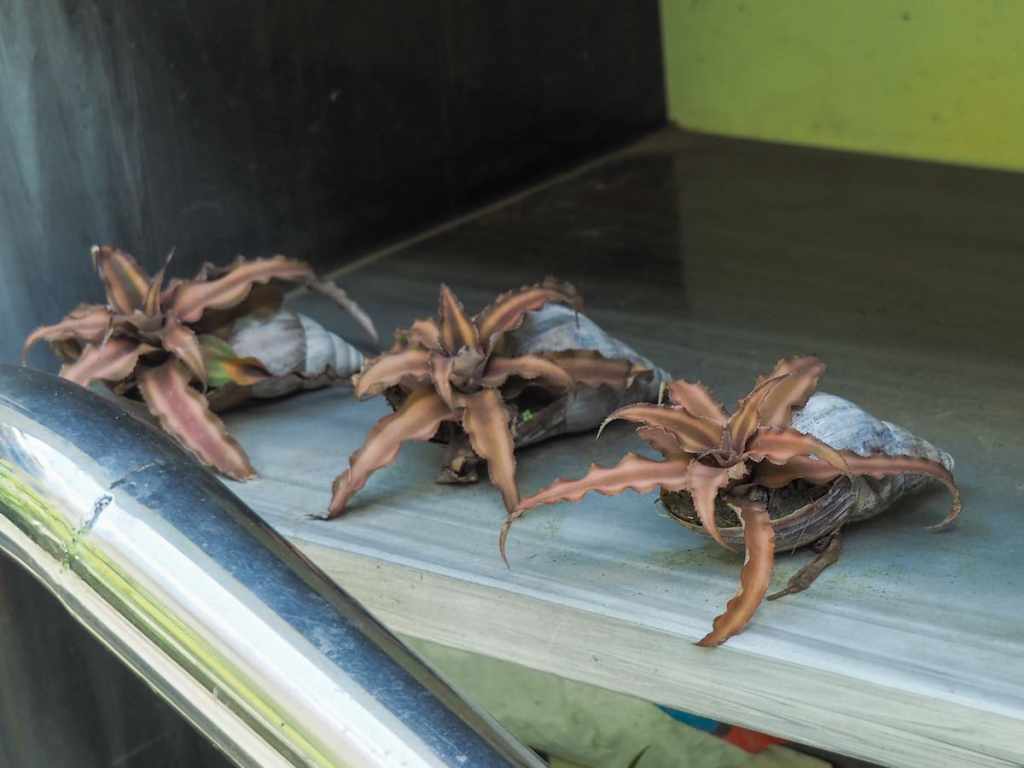
A resident had turned these snail shells into planters for spider plants.
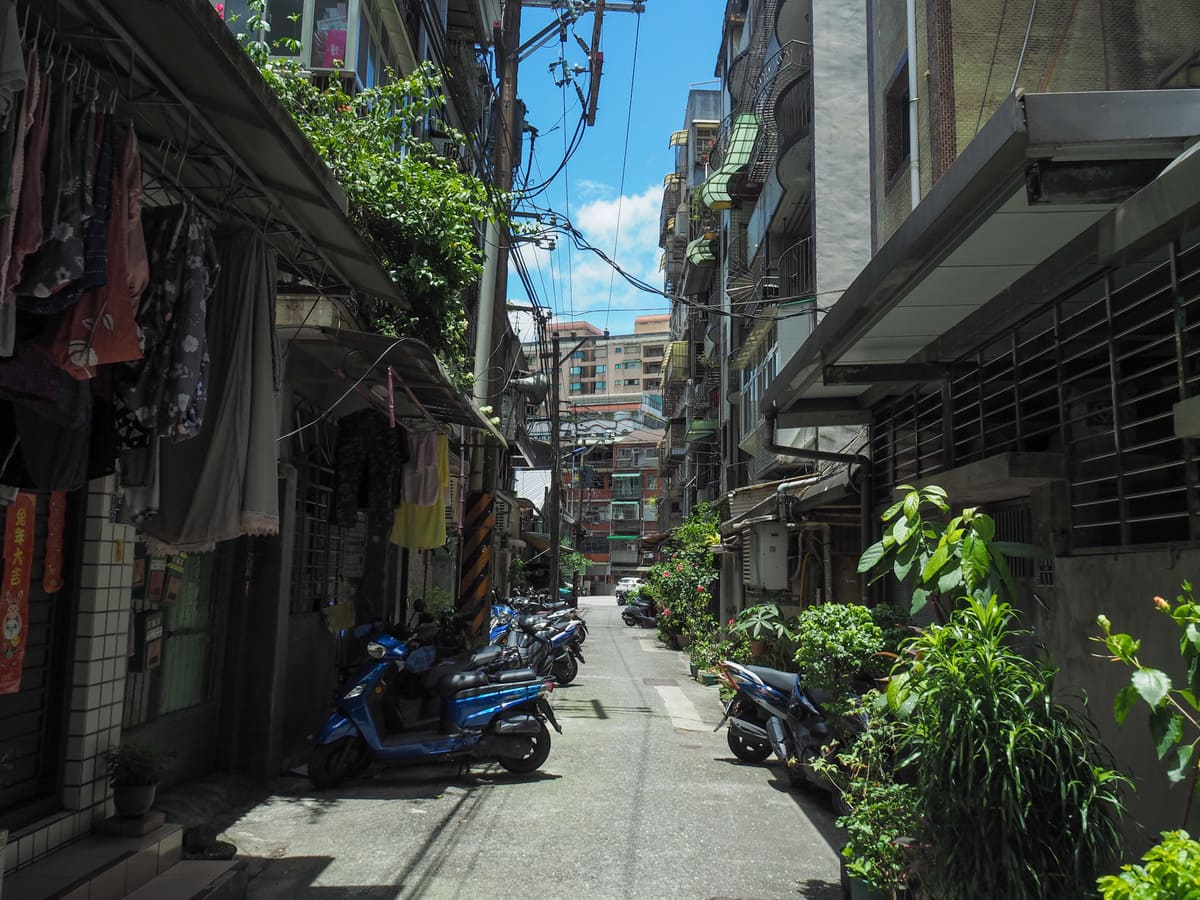
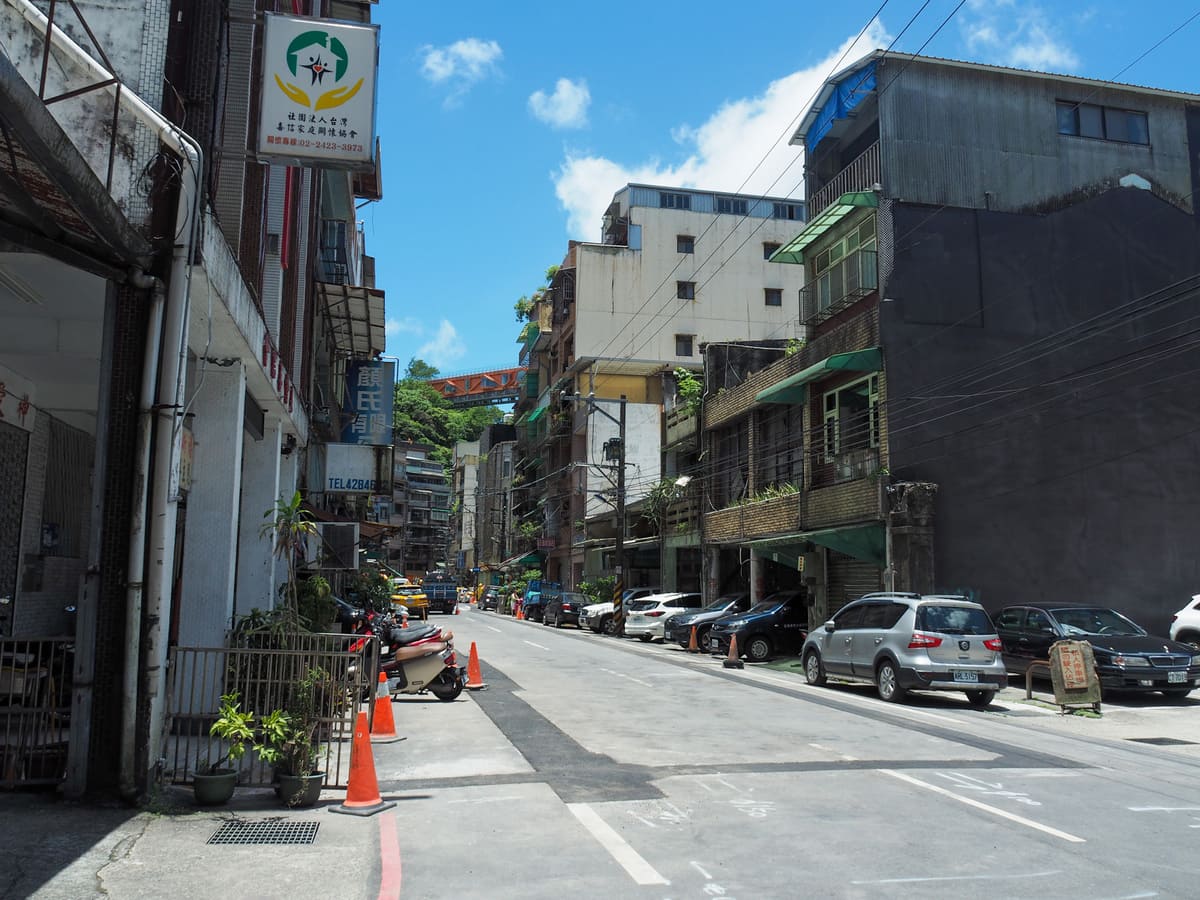
Once you’re down on the flat, walk straight to Zhengyi Road, then keep heading straight until you reach Yi’er Road (義二路). From there, you can either turn left and walk back towards the centre of Keelung, or alternatively, you can get on a bus back.
How to get to Keelung’s Big Buddha
Google Maps address: The walk starts across from the fire station on Xin’er Road and finishes on Zhengyi Road.
GPS location:
- Xin’er Road entrance – N25 07.865 E121 44.770
- Zhengyi Road exit – N25 08.065 E121 44.910
Public transport: Depending on where you’re coming from, you might find it easier to get to Keelung either by bus or by train. The intercity buses all drop visitors off by the train station, so it neither one is more practical than the other. Once you’re in Keelung, you can walk to the start of the trail in about 10 minutes. (There are buses, but you might find yourself waiting for longer than the bus journey.)
Nearby trails:
- Bitoujiao
- Heping Island Park
- Keelung Islet
- Mount Gongziliao
- Mount Keelung
- Rongxuan Trail
- Shen’ao Rail Bike
- Wangyou Valley Trail
Keelung Giant Buddha Statue Trail Map
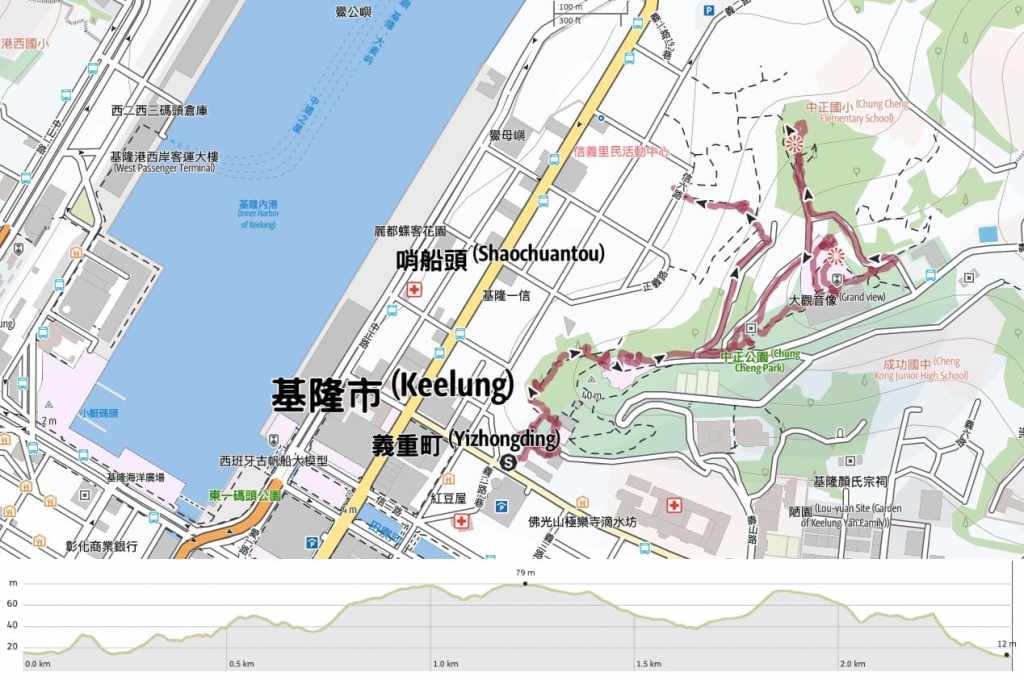
GPX file available here on Outdoor Active. (Account needed, but the free one works just fine.)
 Taiwan Trails and Tales