This page details all of the station memorial stamps for Taipei MRT’s Zhonghe-Xinlu Line. I collected these as part of a personal one-day challenge, but you could just as easily collect the stamps casually as and when you have reason to visit each station.
Basic information: Construction on the first phase of the Zhonghe-Xinlu Line (中和新蘆線, also known as the Orange Line) started in 1992. When it opened in 1998, the initial route connected Nanshijiao with Guting. Since then, the line has expanded to pass through central Taipei, and it splits in two at Taipei Bridge Station, with one route running southeast to Huilong and another running northeast to Luzhou. The entirety of this line is underground.
Number of stations: 26
Length: 29.3km
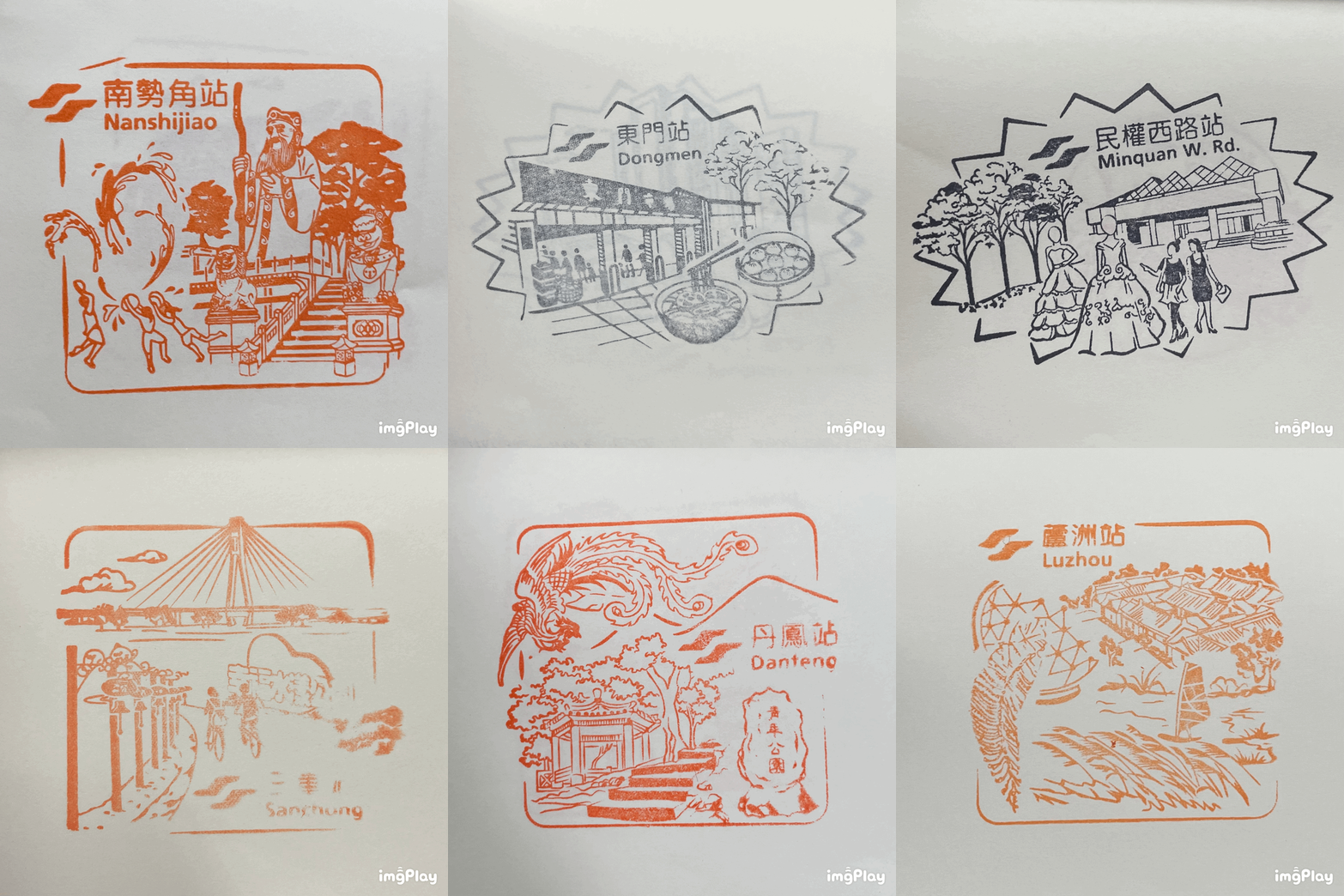
Stamp description: The Zhonghe-Xinlu Line’s commemorative stamps are rendered in orange ink and are square (except for transfer stations, which are black and shaped like a spiky text bubble).
Station music:
O01 – Nanshijiao (南勢角)
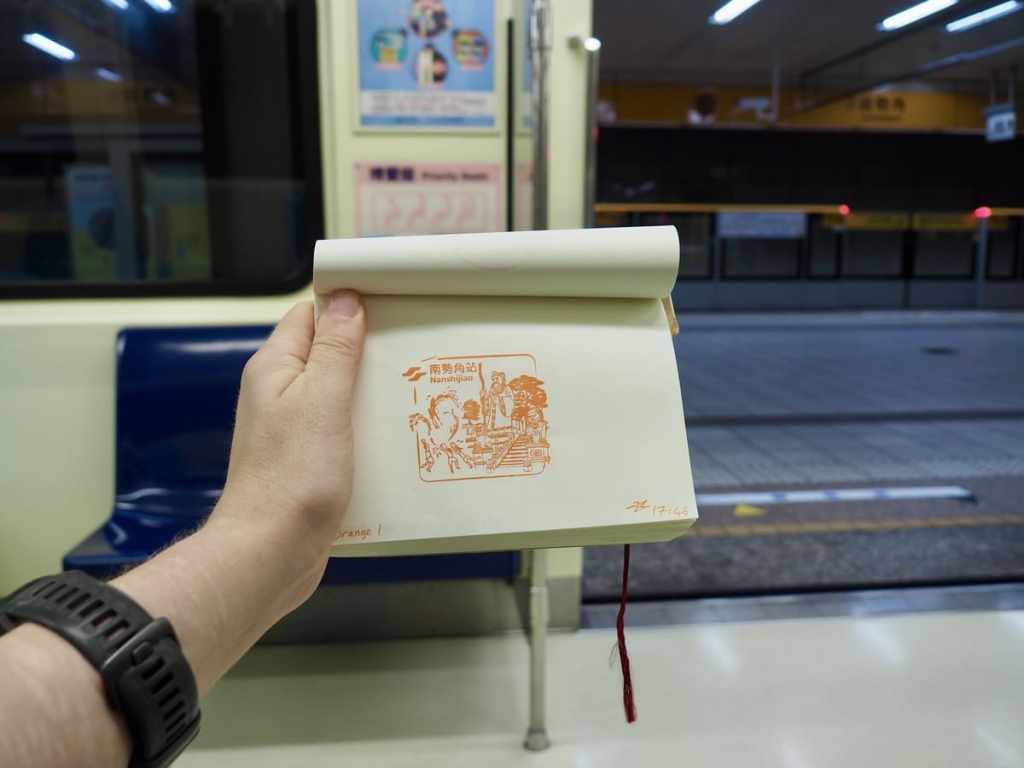
The first stamp on the orange line shows the giant Tudi Gong statue up at Hongduli Nanshan Fude Temple. And on the left, there is a depiction of Thingyan Festival, the Burmese New Year celebrations (usually held in mid-April). The reason a tradition from Myanmar shows up here is the fact that Nanshijiao is where you can find Little Burma (or Myanmar Street, the English name is still in flux). This street is a really interesting fluke of local history, which deserves far more space than it will get here. (You can find plenty of information about it online though, so I suggest reading up on the subject.) It’s also a great place to stop for lunch or dinner.
O02 – Jingan (景安)
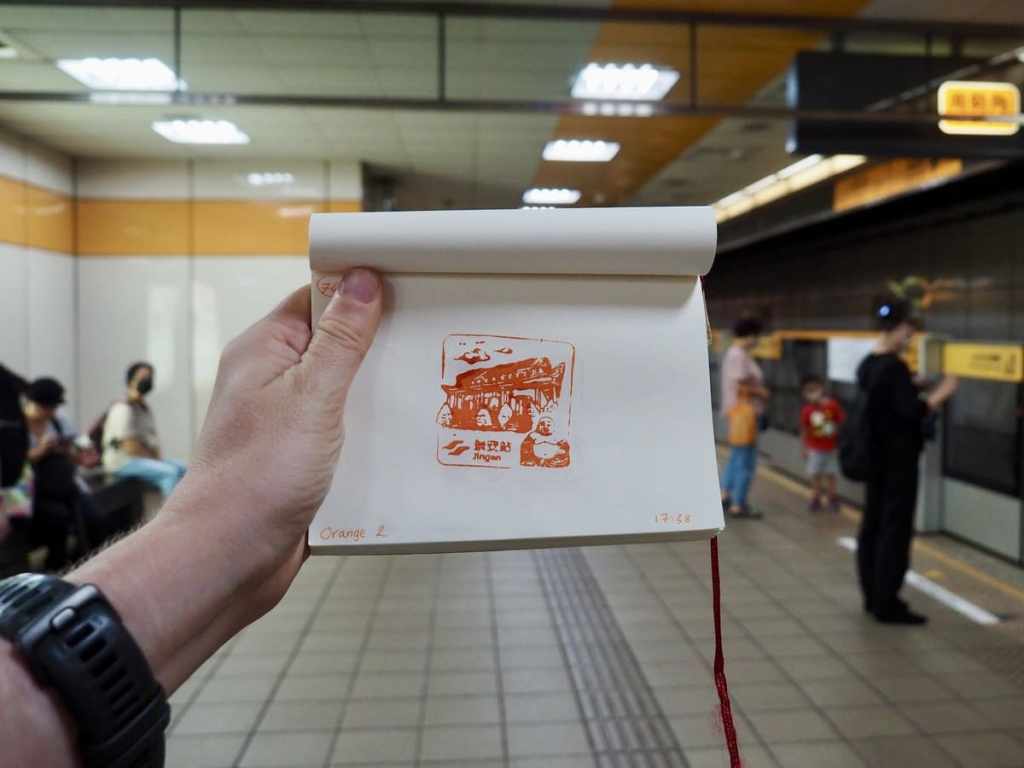
The stamp for Jingan Station shows Zhonghe Yuantong Temple (中和圓通寺). The temple, which sits up on a hill overlooking the city, has a prominently placed stone Buddha welcoming visitors.
O03 – Yongan Market (永安市場)
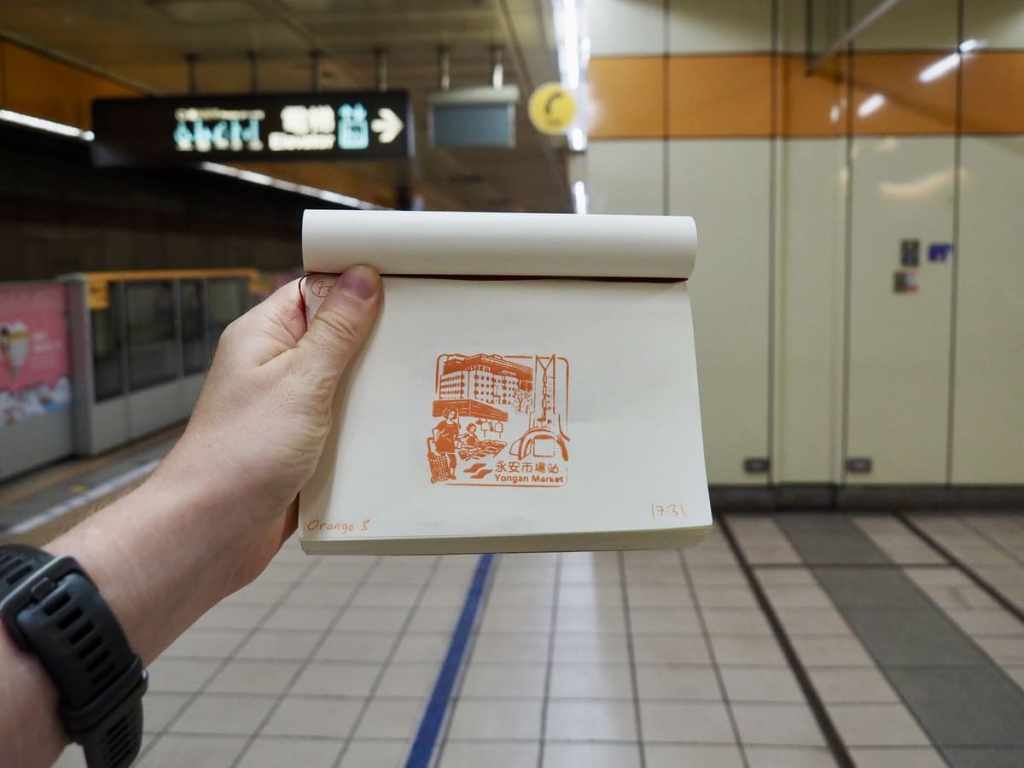
Yongan Market features on the stamp for this station alongside a monument commemorating the August 23rd artillery bombardment of Kinmen that occurred in 1958. The memorial is part of 823 Memorial Park. Also included in the stamp is a depiction of National Taiwan Library. The library (the largest library in Taiwan) is also found within the bounds of the park.
O04 – Dingxi (頂溪)
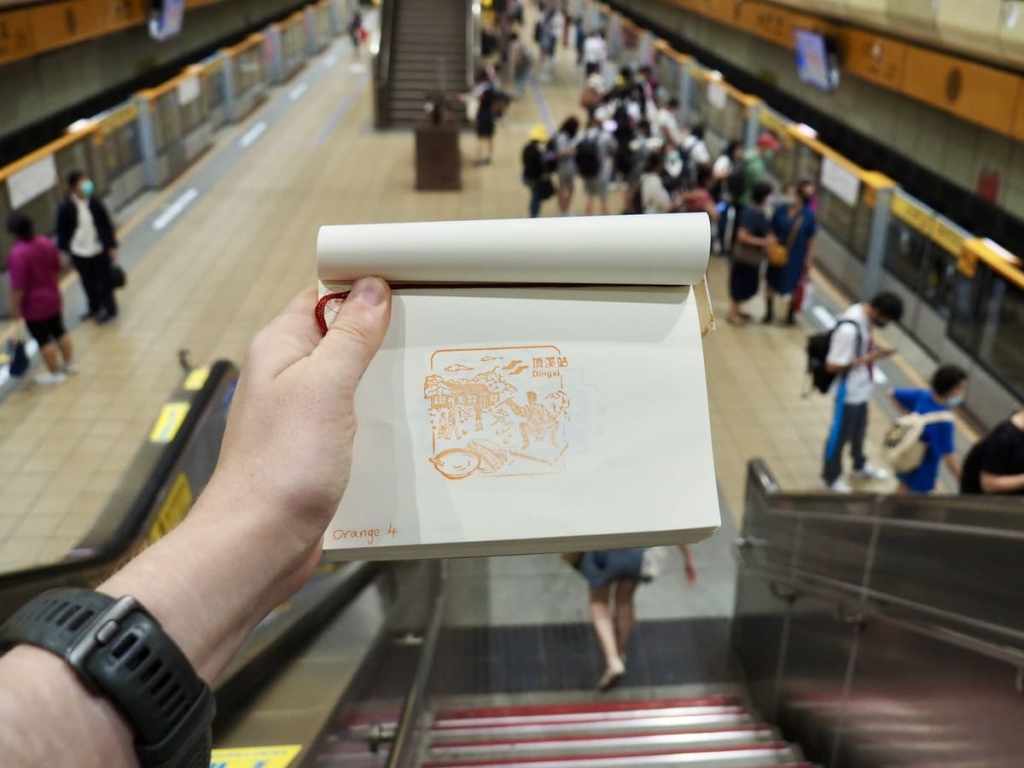
My attention is immediately drawn to the crispy youtiao and comforting bowl of soy milk the foreground of this stamp’s design. “Yonghe Doujiang” shops selling all manner of traditional breakfast treats can be found up and down the length of Taiwan. Also shown is the Yang San-Lang Museum and a depiction of Mr Yang, the artist himself.
O05 – Guting (古亭)
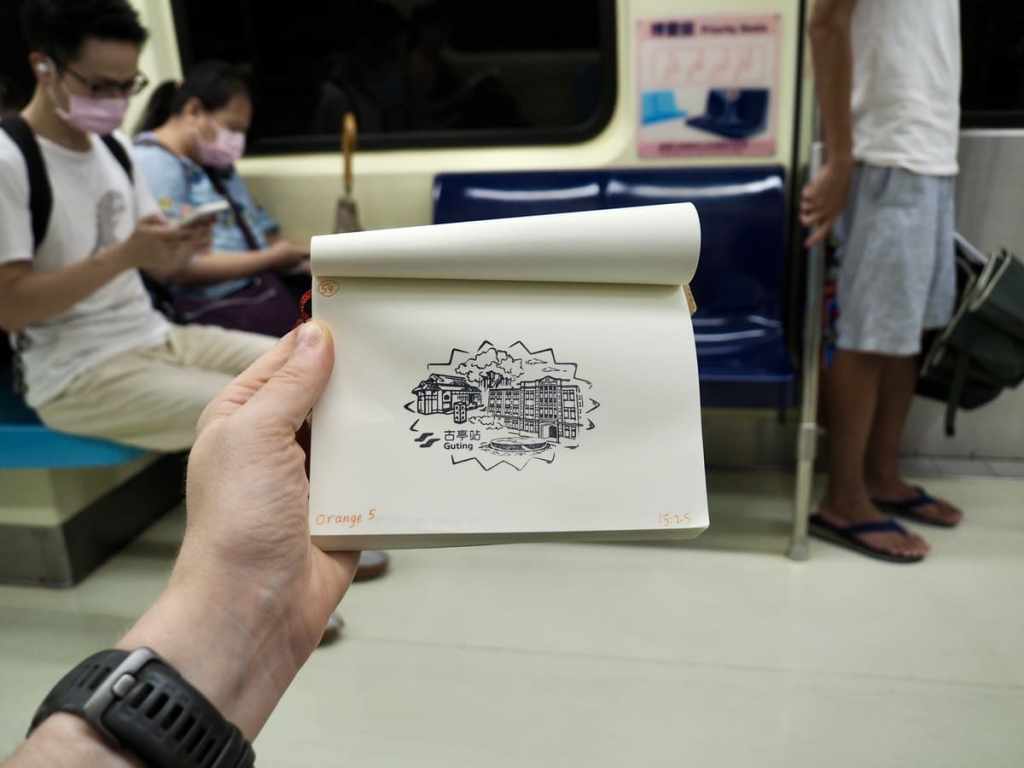
The Kisha A Forest of Literature is an art space in a renovated Japanese building and was Taiwan’s first art space dedicated solely to literature as an art form. The stamp also features one of the handful of Japanese-era buildings that can be seen on the campus of National Taiwan Normal University, the students from which bring life and energy to the streets in this area.
O06 – Dongmen (東門)
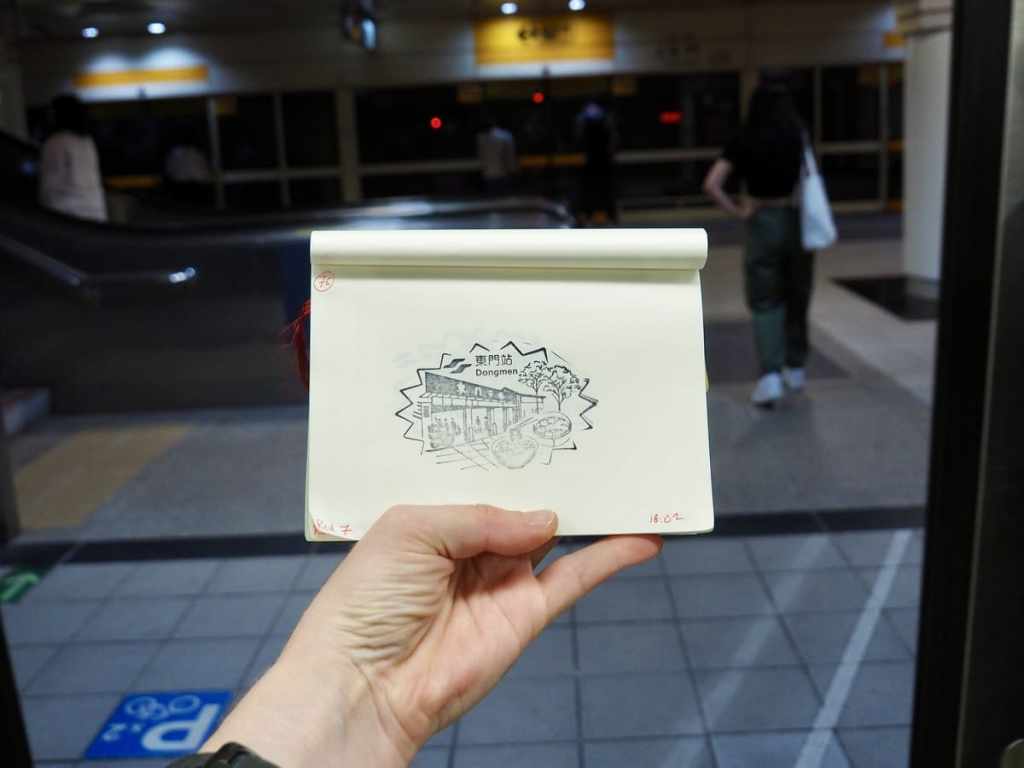
Dongmen’s stamp shows Dongmen Market. Apparently, nearby Yongkang Street is reknowned for its beef noodles and xiao long bao, hence the bamboo steamer and bowl or noodles in the foreground.
O07 – Zhongxiao Xinsheng (忠孝新生)
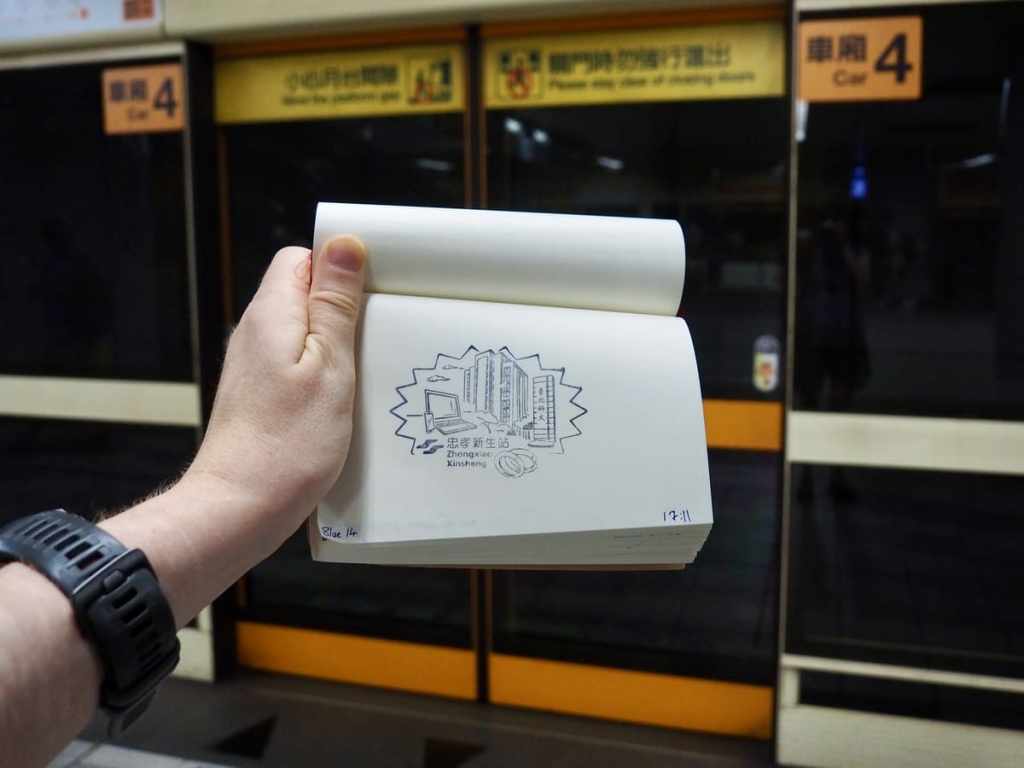
The three elements that comprise Zhongxiao Xinsheng’s stamp are Taipei National University of Technology, electronic devices from Guanghua Digital Plaza (a tech-lover’s paradise), and bangles from Jianguo Holiday Jade Market.
O08 – Songjiang Nanjing (松江南京)
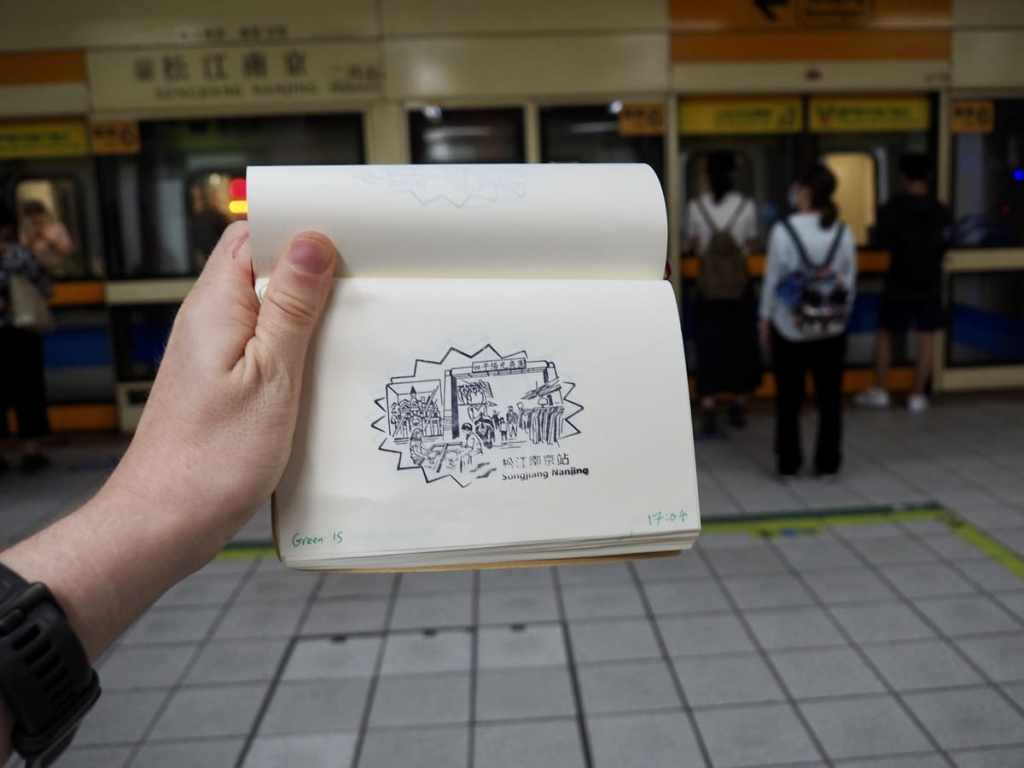
The places included on Songjiang Nanjing’s stamp are meant to illustrate this area’s business and cultural offerings. The largest amount of space is given over to Siping Yangguang Commercial District, then on the left, the Miniatures Museum of Taiwan and a depiction of people making paper at Suho Paper Memorial Museum.
O09 – Xingtian Temple (行天宮)
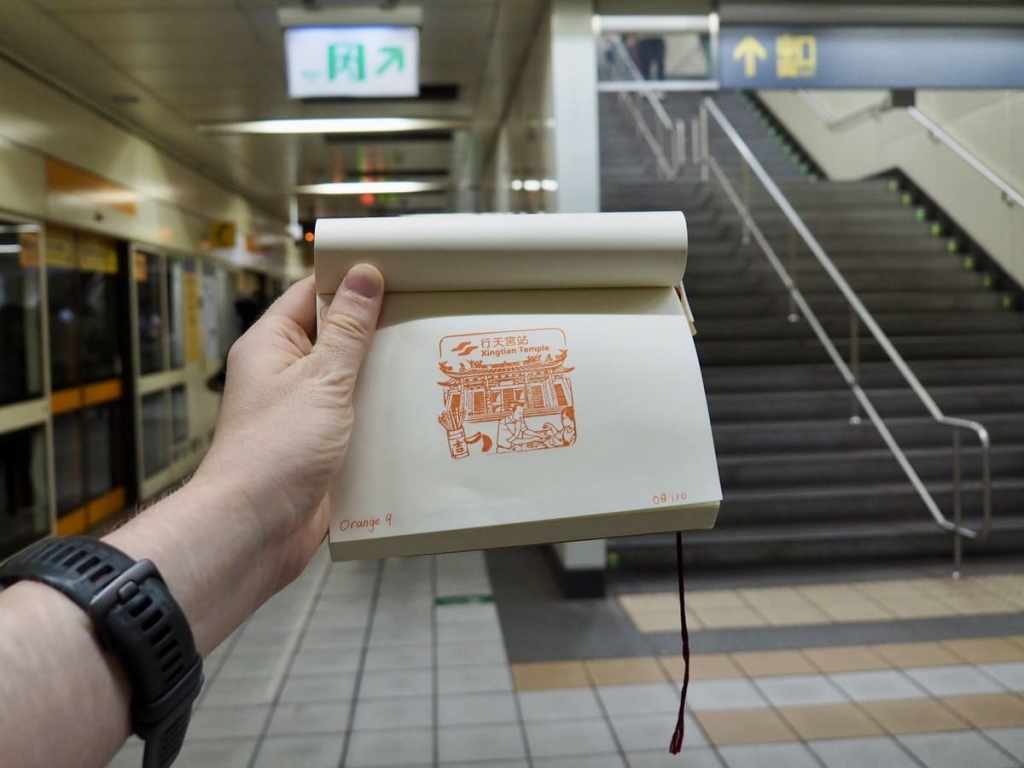
Naturally, Xingtian Temple is the star of this stamp. In front of it, there’s also a pot of fortune sticks and a palm reader talking to a customer. The latter is a reference to the subterranean fortune-telling street that can be found close to the temple.
O10 – Zhongshan Elementary School (中山國小)
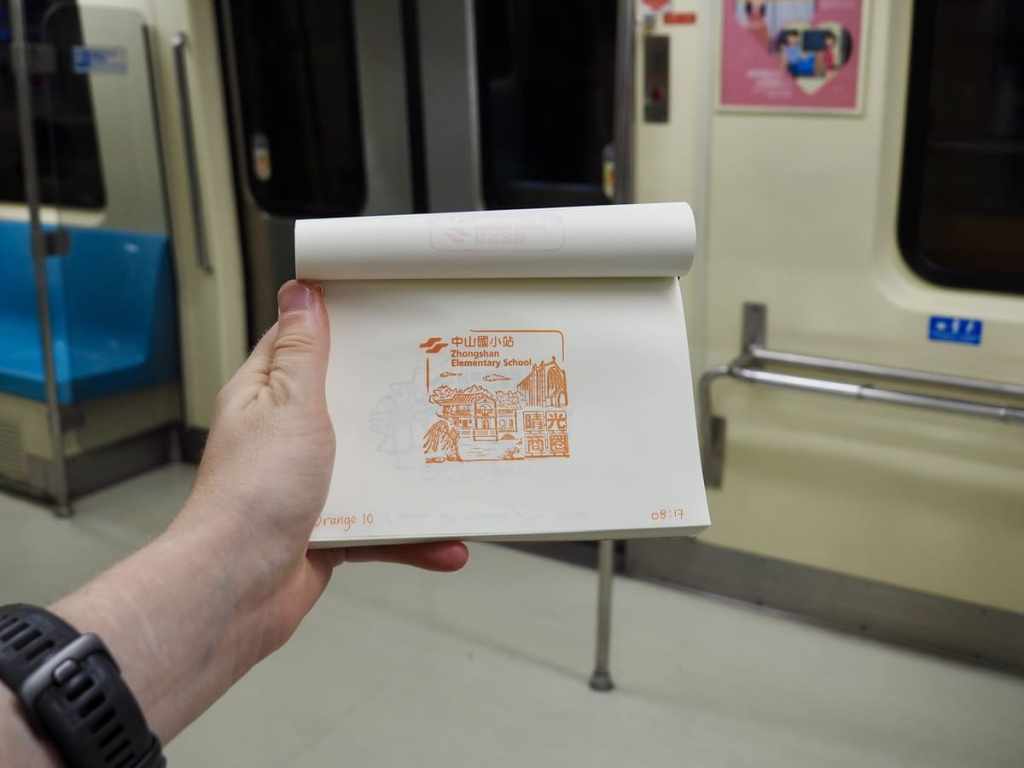
The eponymous school doesn’t get a look in on this stamp. Instead, it features two architecturally different buildings that can be seen in the area. On the left is the beautiful form of Lin An Tai Historical Historical House (林安泰古厝), which can be seen standing in the north Xingsheng Park area of Taipei Expo Park (a large and sprawling park with different corners dedicated to different kinds of floral beauties). On the right, is the True Light Church (真光堂), an elegant 1950s building. Qingguang Commercial District (晴光商圈) also gets a brief mention.
O11 – Mingquan West Road (民權西路)
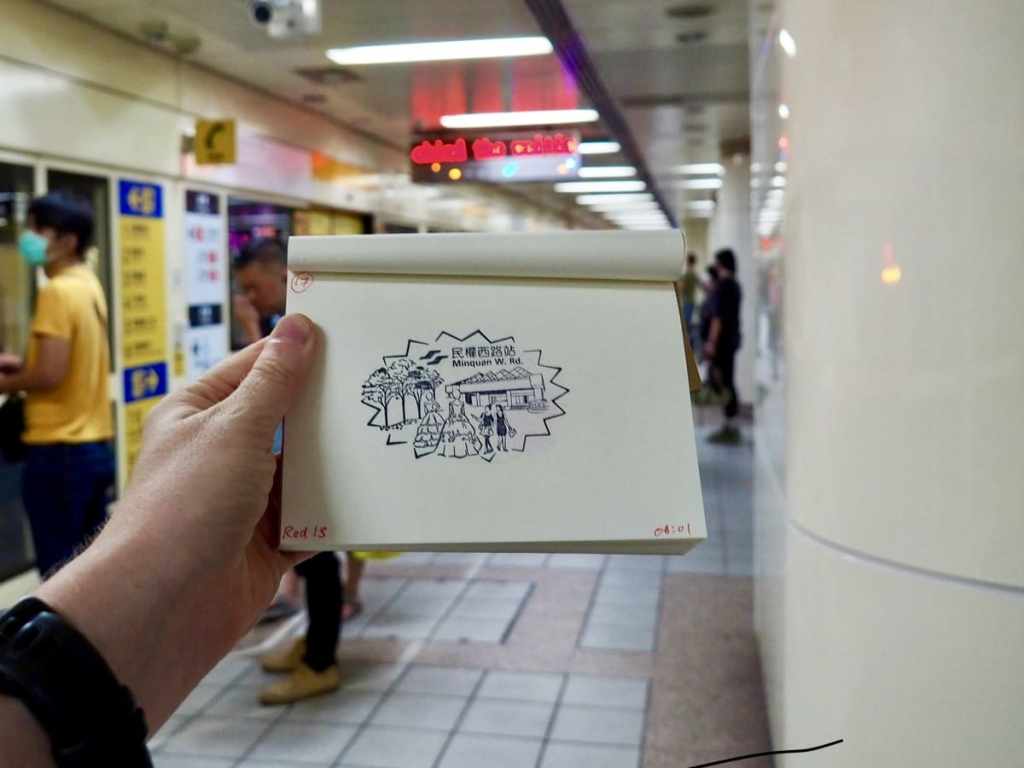
The stamp shows a pair of stylish shoppers looking at beautiful dresses on the area’s wedding dress street. Behind them are the pyramid peaks of the MRT station.
O12 – Datouqiao (大頭橋)
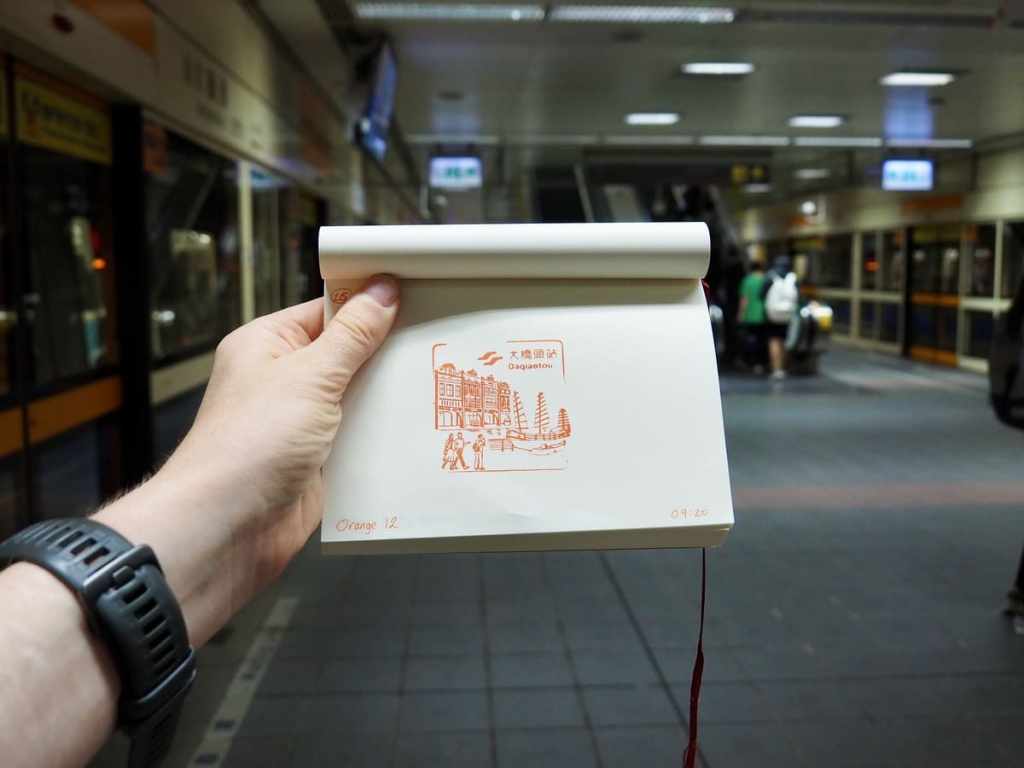
This stamp shows the pretty frontages of Dihua Street and one of the old ships that would have plied the waves here long ago. A replica of one such ship can be seen at Dadaocheng Wharf.
O13 – Taipei Bridge (台北橋)
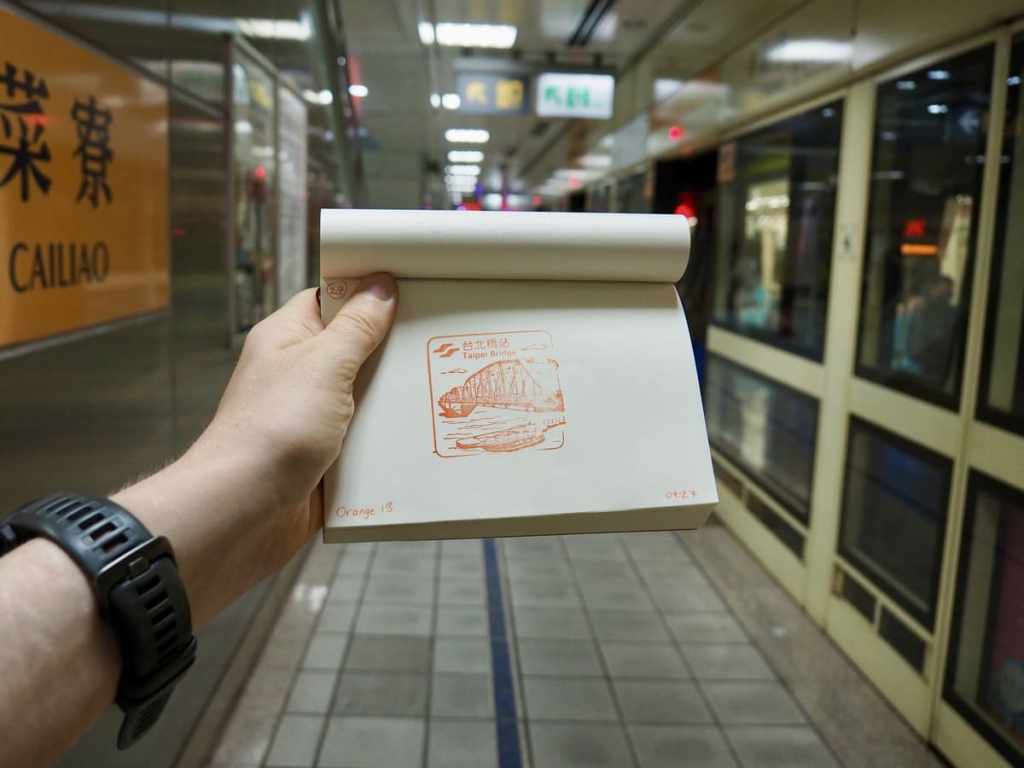
There has long been a bridge at this location. Before watching the sunset from the (then new) iron bridge became one of the “Eight Scenic Wonders of Taipei” in the Japanese era, residents had to cross via a wooden bridge, or by boat. Boats would have shuttled between Dadaocheng Wharf in Wanhua District and Zhongxiao Wharf over the water in Sanchong. Both the bridge and the Zhongxiao Wharf can be seen in this stamp’s picture.
O14 – Cailiao (菜寮)
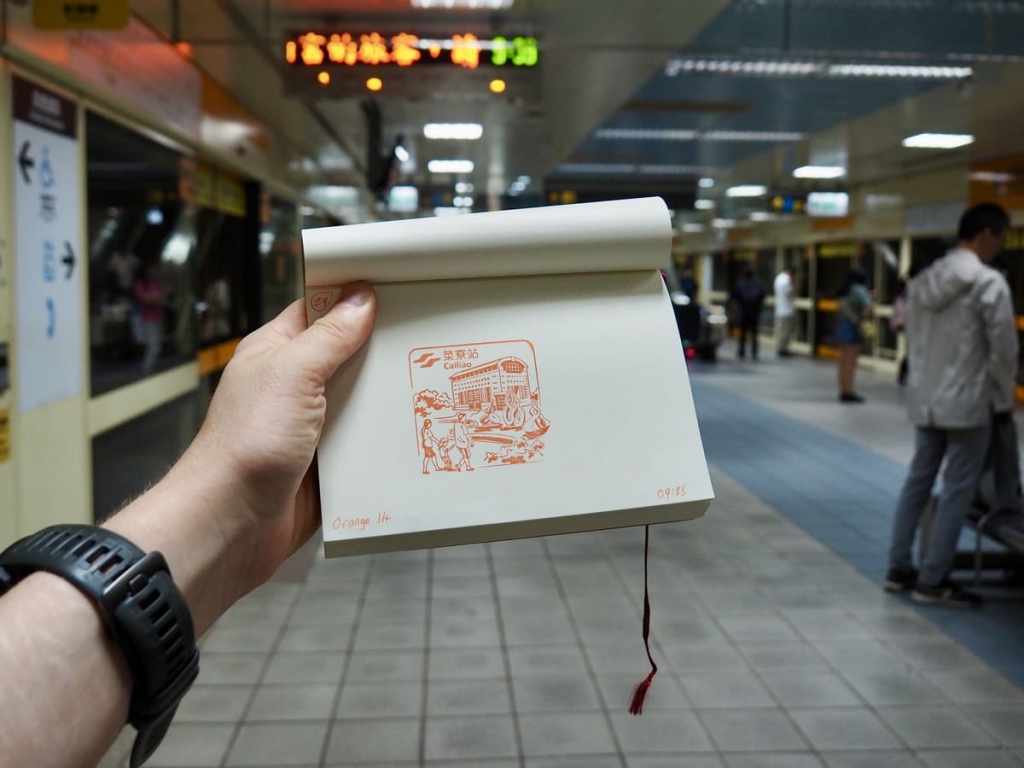
Cailiao’s stamp feels like a bit of a letdown after the last two. It shows Sanchong Comprehensive Gymnasium (三重綜合運動館), and a trio of sculptures that can be found in Zhongshan Art Park (中山藝術公園).
O15 – Sanchong (三重)
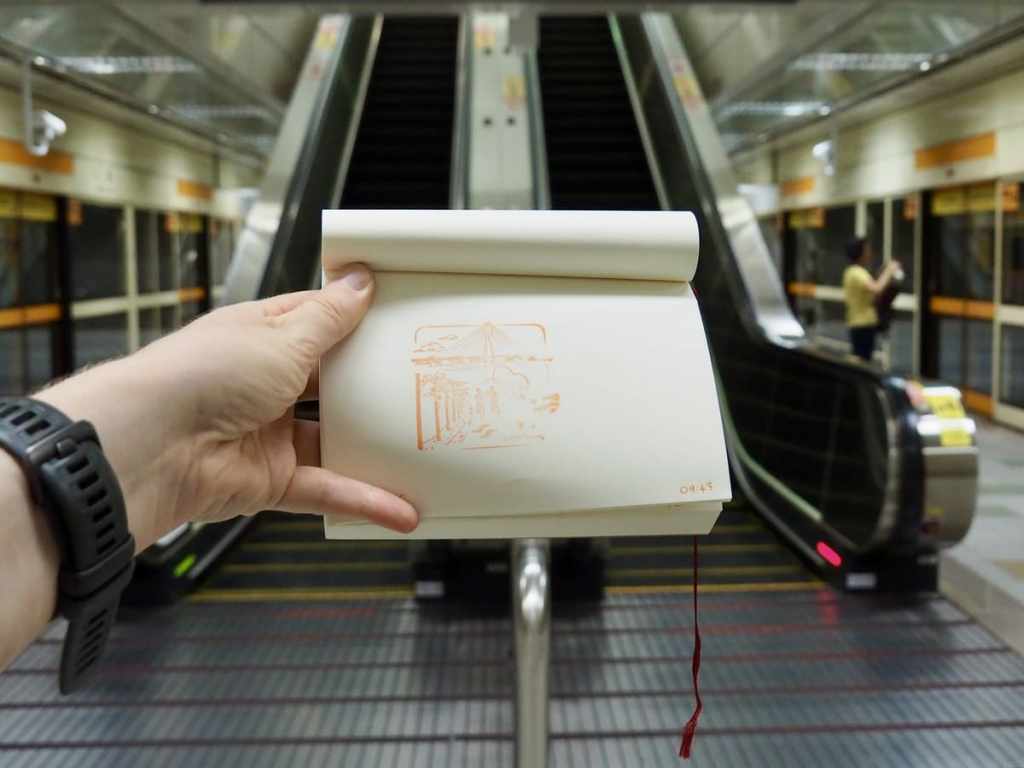
The stamp for Sanchong shows a pair of cyclists making their way through Xingfu Shuiyang Park (幸福水漾公園). The park is full of many little artworks and installations. It’s also a favourite spot for people wishing to see Taipei Bridge (also in the stamp) lit up at night.
O16 – Xianse Temple (先嗇宮)
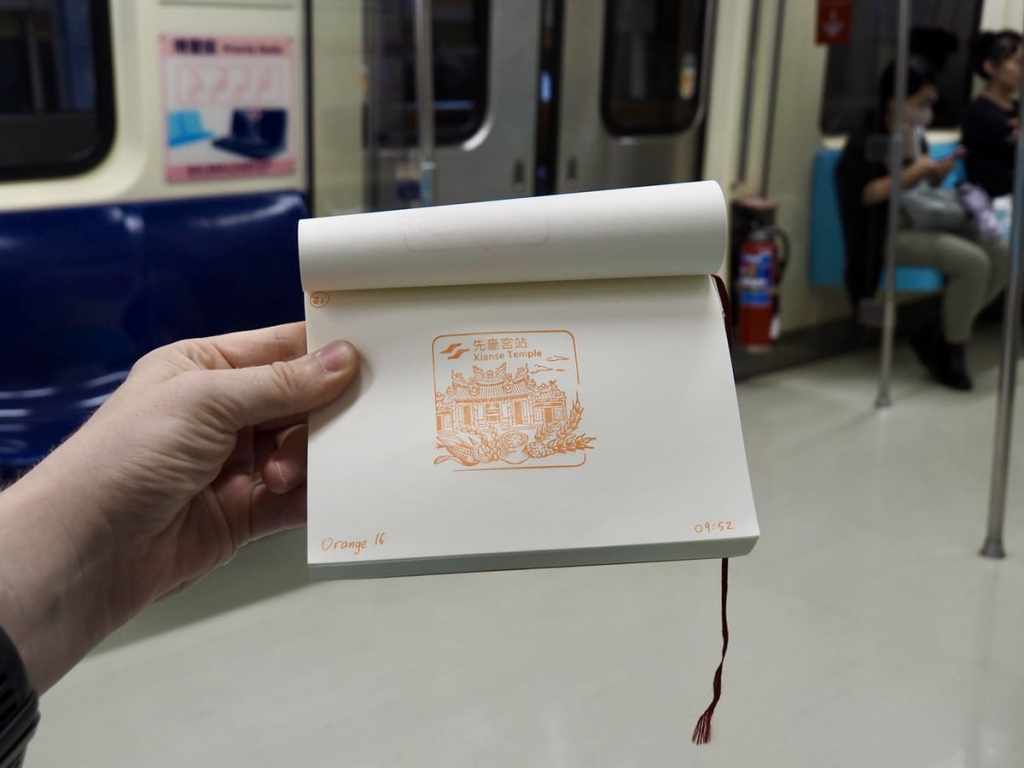
Before this part of Taipei grew into the urban jungle it is today, it was occupied mostly by farmers. 200 years ago, those early residents built Xianse Temple to worships gods known for their benevolence towards farmers. The stamp depicts the current form of the temple along with a bounty of local agricultural produce.
O17 – Touqianzhuang (頭前庄)
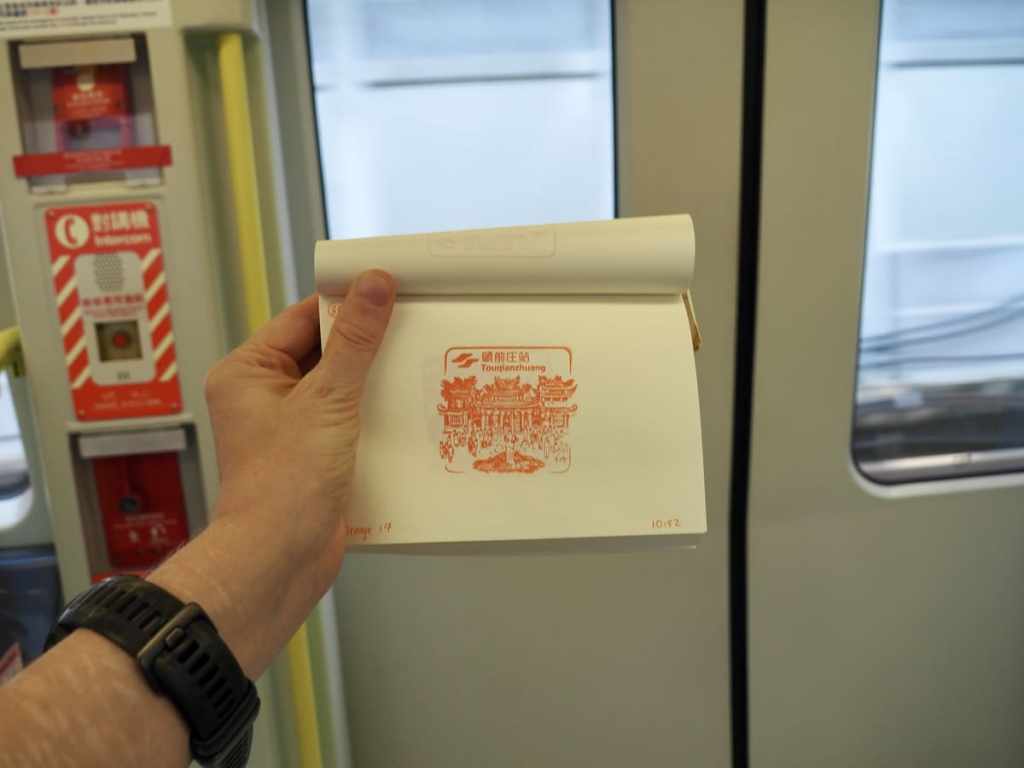
Unusually, the stamp for Touqianzhuang shows a single location-based event (most of the other stamps show several nearby attractions). In the centre of the image, there’s a depiction of a man carrying his temple’s idols over a heaped pile of embers, with onlookers crowded around him in the Baoyuan Temple’s courtyard. The Bayuan Temple Fire Walking Ritual is held every October and has been designated as a local cultural asset. Strangely, given this designation, there is no English information or reporting on the subject, but you can see a video of the fire-walkers in action here.
O18 – Xinzhuang (新莊)
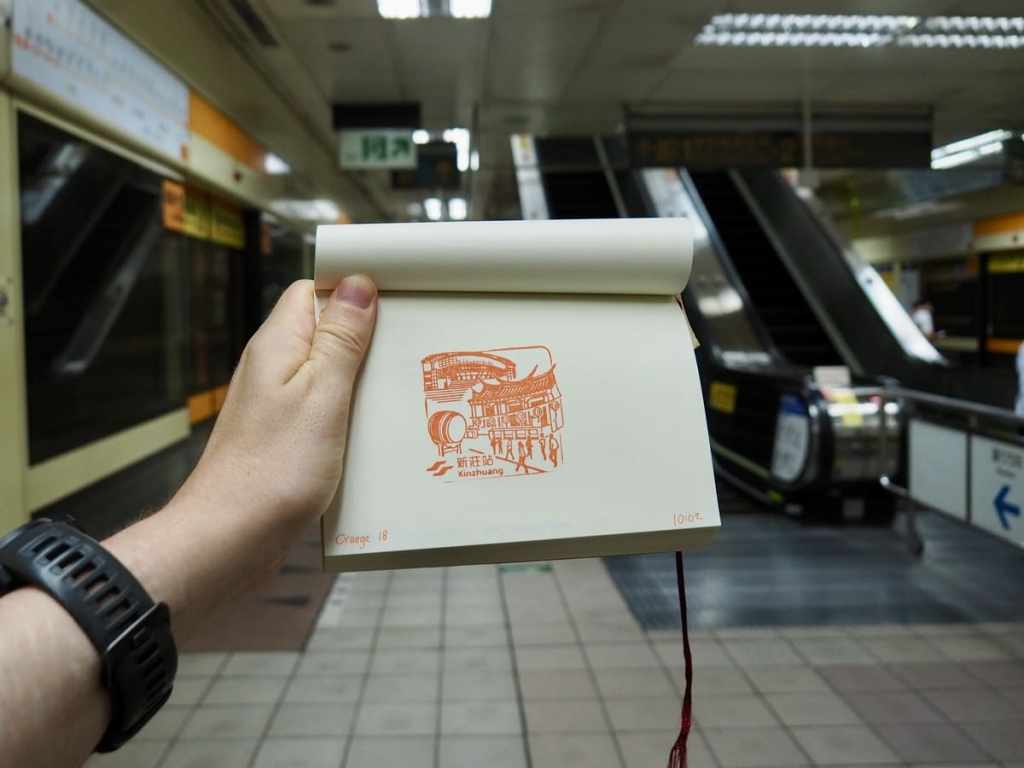
Despite it’s current appearance as a modern district full of high-rise apartment blocks and a fast connection to both central Taipei and Taoyuan International Airport, Xinzhuang is an old settlement with over 300 years of history. The stamp shows Ciyou Temple (慈祐宮), Xinzhuang Gymnasium and a huge traditional drum. The latter represents Xiangrenhe Bell and Drum Factory, a drum manufacturer that has been supplying temples and performance groups with drums for over 100 years.
O19 – Fu Jen University (輔大)
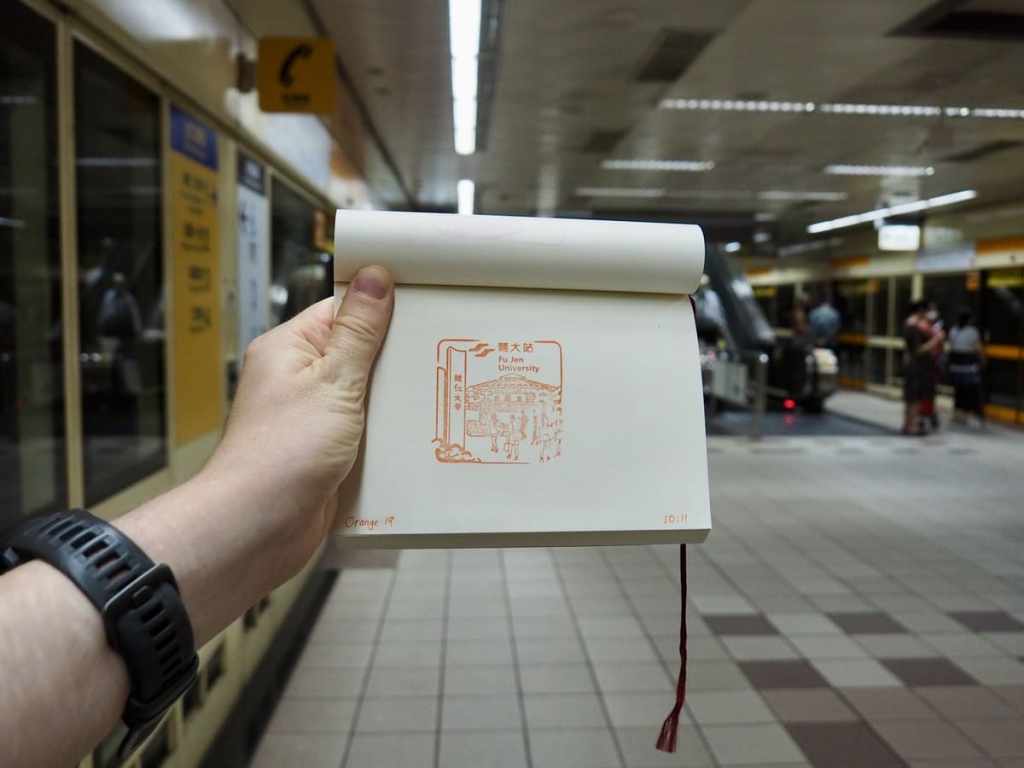
This is another of the station stamps where the station’s namesake features prominently. Fu Jen Catholic University was apparently Taiwan’s first catholic university. Its sprawling green-filled campus pretty much spans the distance between the Zhonghe-Xinlu Line and the Taoyuan Airport Express Line.
O20 – Danfeng (丹鳳)
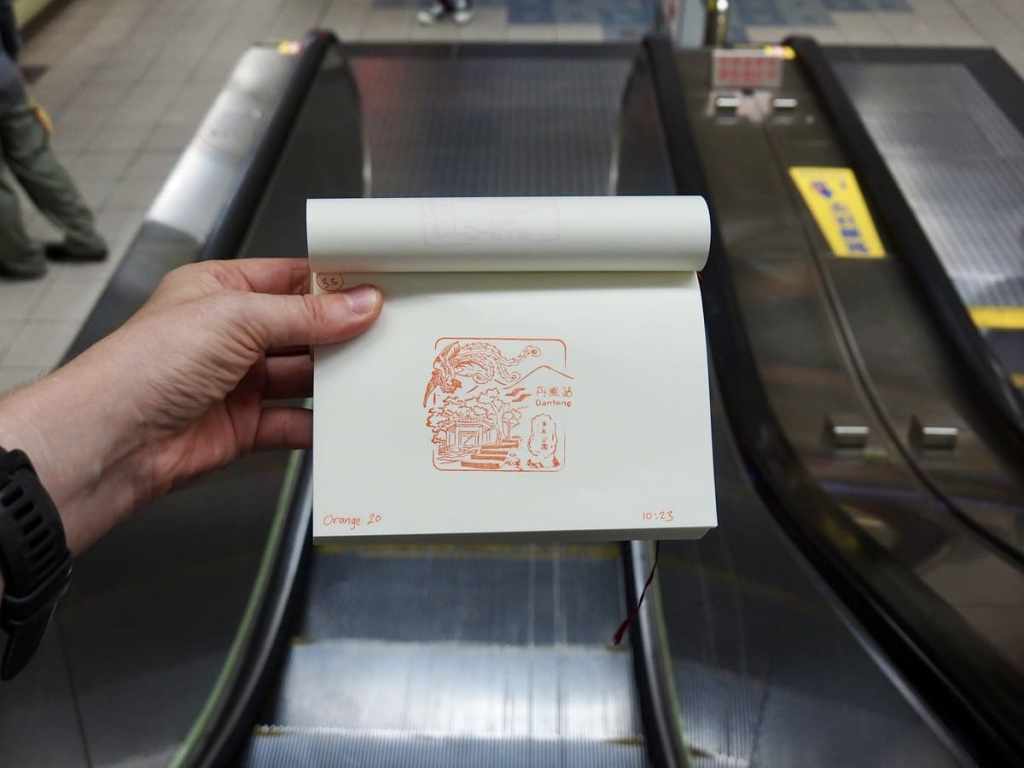
The stamp for Danfeng Station features scenes from Xinzhuang Youth Park and a soaring phoenix. The phoenix speaks to the origins of Danfeng’s name. In the past, local residents used to say that Mount Shibafenkeng and Mount Baipao resembled phoenixes gazing toward the central Mount Mudanxin.
O21 – Huilong (回籠)
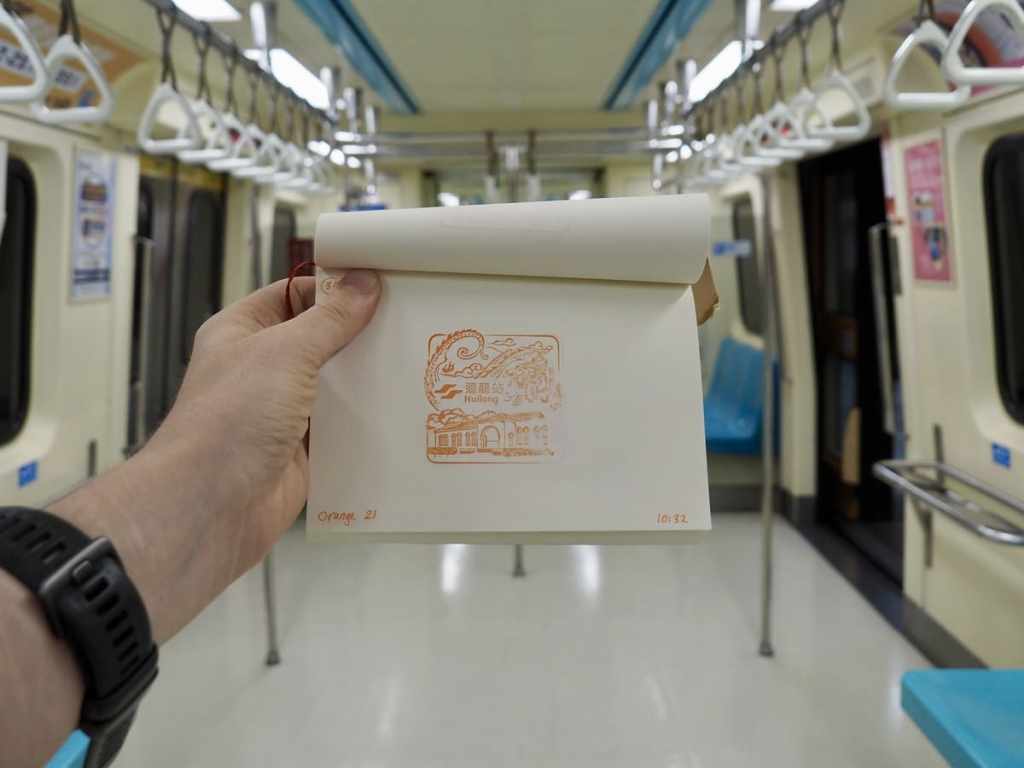
There must be something mythical in the waters in this end of New Taipei City, because after the twin phoenixes of Danfeng, Huilong is home to a dragon. According to local folklore, Huilong Station is located in the vicinity of a dragon’s lair. The top half of the stamp is given over to a depiction of the creature, while the bottom half shows the old Lo-Sheng Sanitorium (樂生療養院). This historic building was constructed during the period of Japanese occupation to house people affected by leprosy. (A great write-up with photos of the site can be found here.)
O50 – Sanchong Elementary School (三重國小)
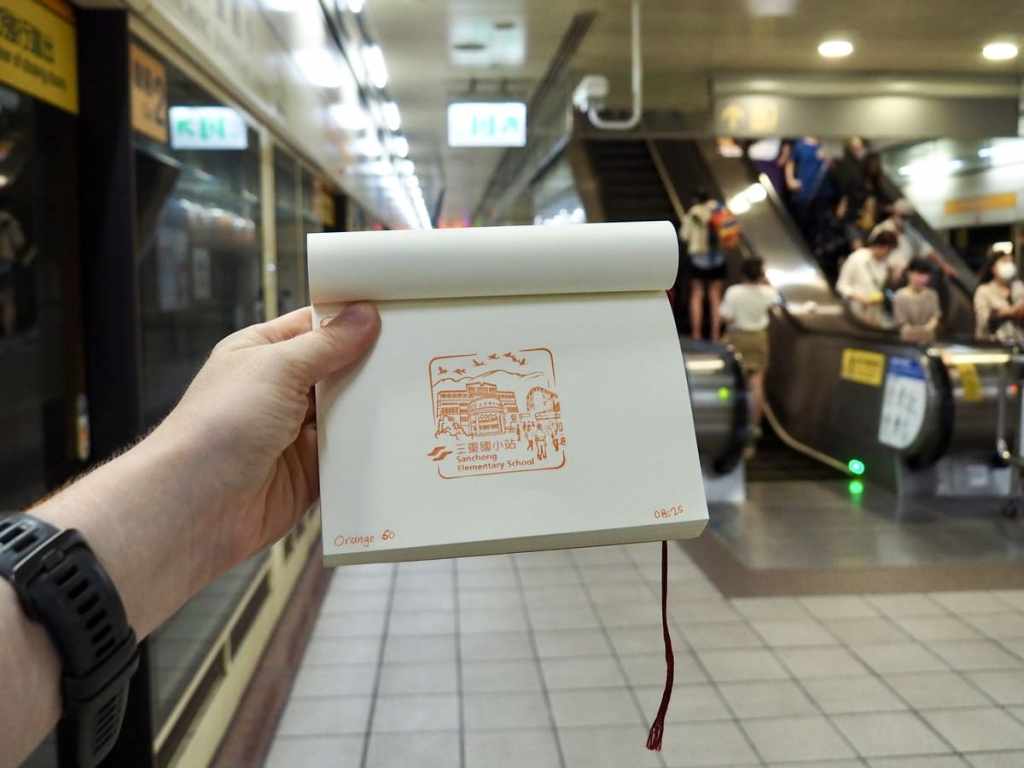
Unsurprisingly, Sanchong Elementary School takes pride of place in this stamp. Above it, a flock of egrets flies over undulating hills. Apparently, the station’s design took the theme of “egrets flying over an ocean of flowers” as its starting point. Personally, I can’t quite see it, but maybe I’m looking at it the wrong way.
O51 – Sanhe Junior High School (三和國中)
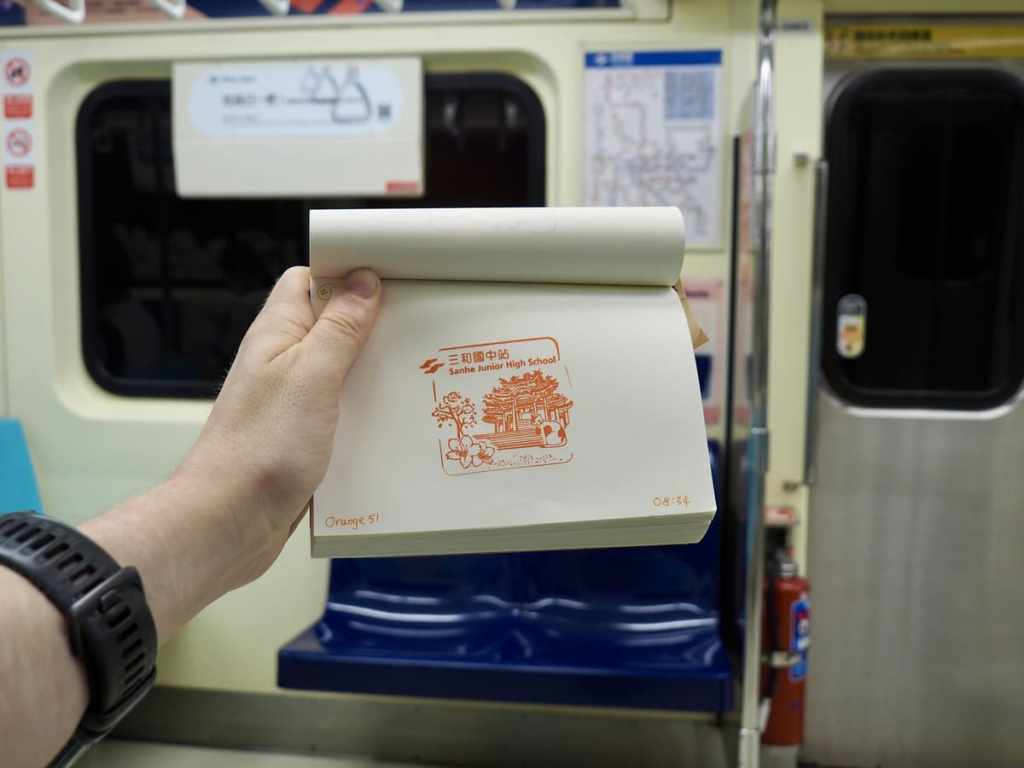
Sanhe Junior High School itself is absent from the station’s stamp. Instead, it depicts Yitian Temple (義天宮). This temple is one of the most dramatic looking in the area, with the upwards swoop of its eaves emphasized by its position above street level. In addition to looking cool, the temple has also earned a reputation for being a “cat temple” on account of all the strays that the temple staff have taken in. They’re so serious about it that they cats even have a page on the temple’s website.
O52 – St. Ignatius High School (徐匯中學)
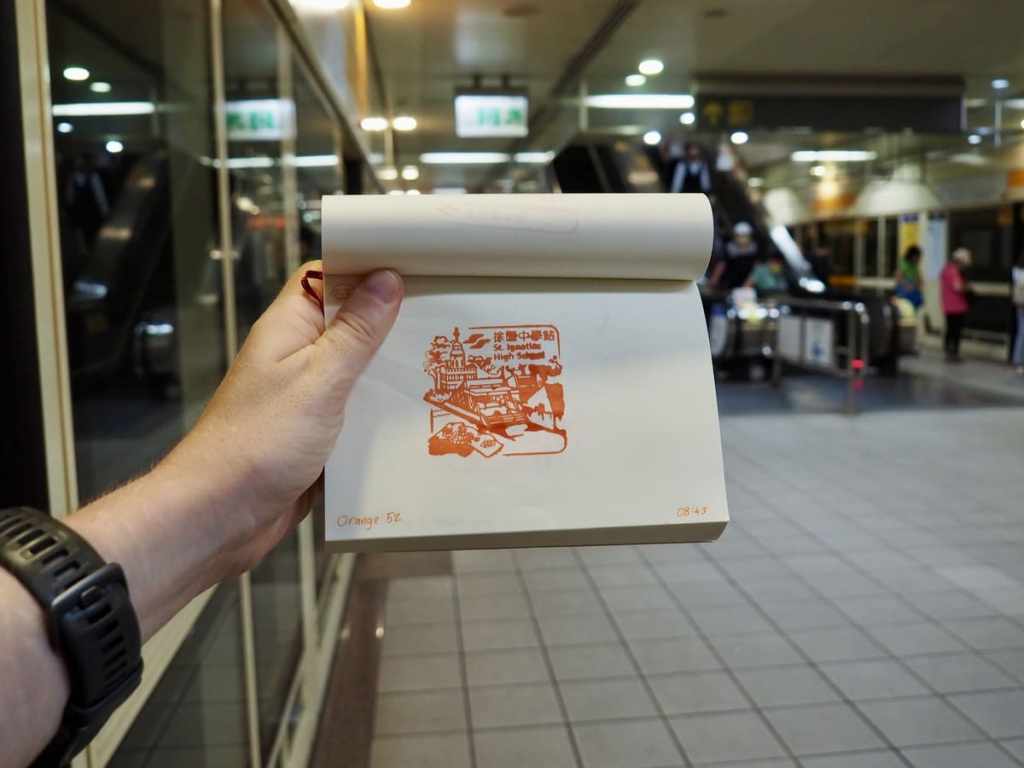
The St. Ignatius High School Station’s stamp features one of the entrances to the station, and behind it, one of the Christian high school’s buildings. In the bottom left, there is also a length of fabric representing the nearby fabric wholesale district of Bihua Textile Street.
O53 – Sanmin Senior High School (三民高中)
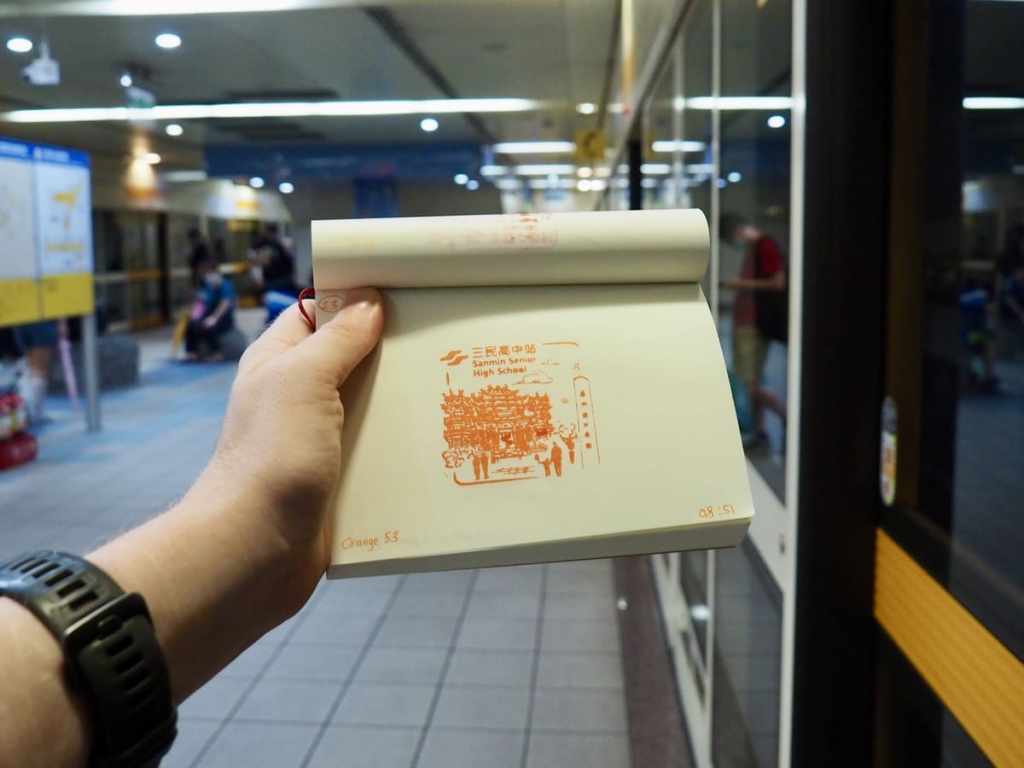
Sanmin Senior High School’s stamp is almost entirely given over to showing the grand frontage of Yonglian Temple (湧蓮寺). The temple has been in existence for over 100 years, and over this span of time, it has become an important community hub.
O54 – Luzhou (蘆洲)
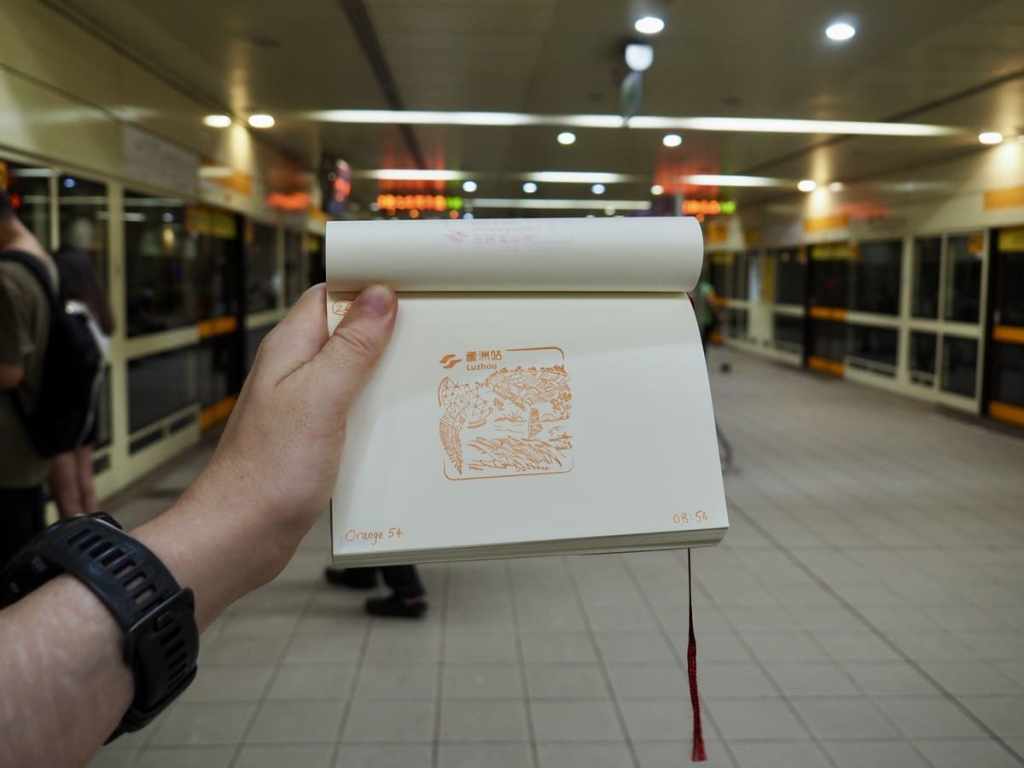
The reeds in the foreground of this stamp are a reference to the origins of the area’s placename. Luzhou was named after the reed-filled sandbanks lining the river here (“reed” is “蘆葦” or “lúwěi,” while “sandbank” is “沙洲” or “shāzhōu”). Another nod to the nearby river is contained in the form of a windsurfer beyond the reeds. In the background of the image, you can make out the complex structure of Luzhou Lee Family Mansion (蘆洲李宅). This is a beautiful historic building, and is worth making a trip out to the end of the line for.
 Taiwan Trails and Tales