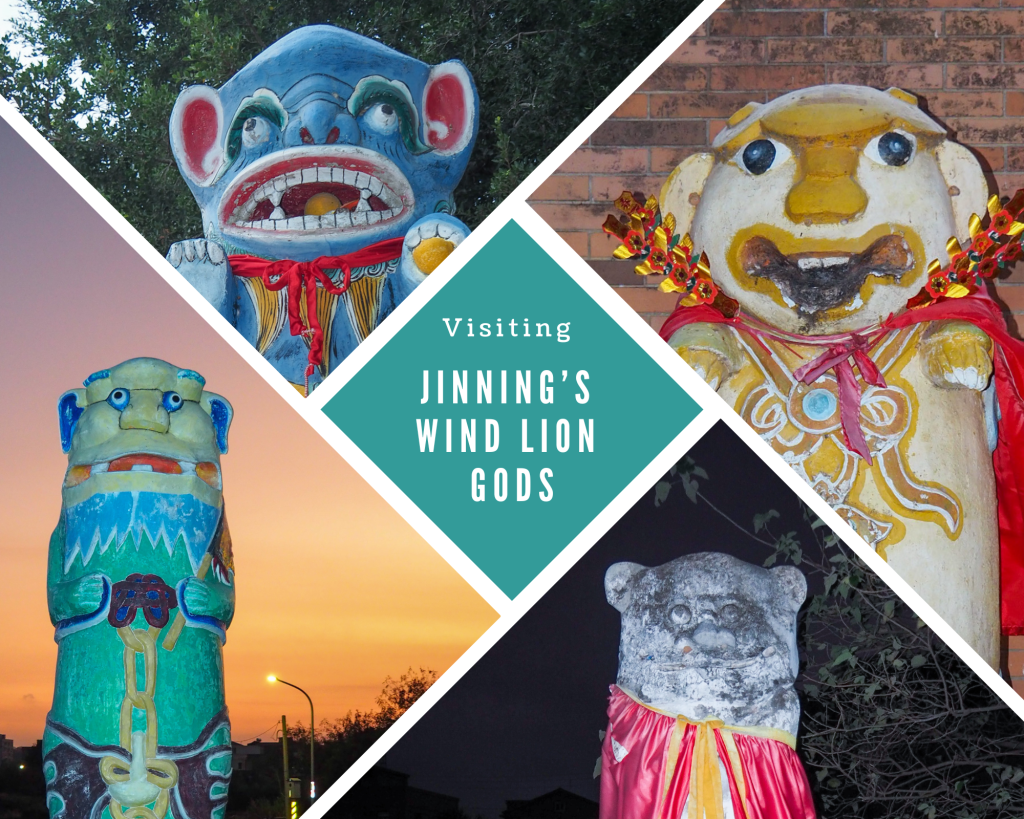
Least densely populated of all of Kinmen’s townships, Jinning also has the smallest number of wind lion statues. Still, it has a fair few attractions that you can explore while hunting the rare deities. There’s Ci Lake, where I saw pied kingfishers and blue-tailed bee eaters. There’s also the village of Gunningtou, with its battle-scarred buildings that have become a backpackers’ hostel and Shuangli Wetlands Ecological Centre.
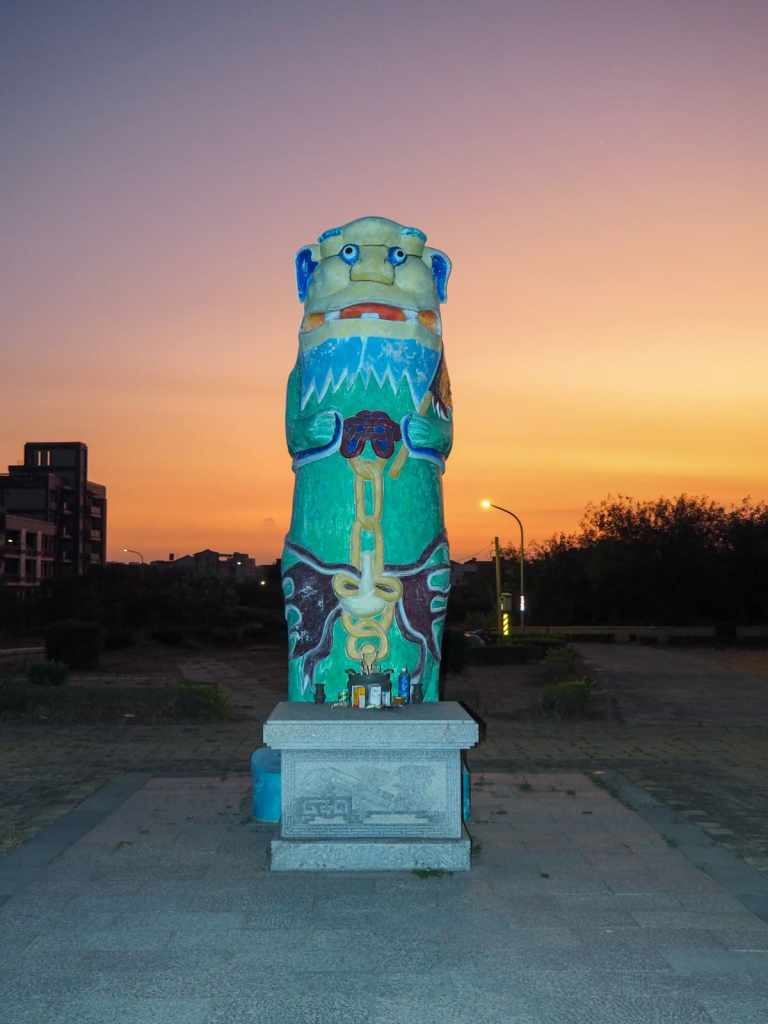
69. Anqi Village – 安岐
Even in normal lighting, Anqi Wind Lion God would strike an imposing figure, but the the glow of dusk made it even more impressive. Standing at 378cm, it is one of the tallest among Kinmen’s wind lion gods.

71. Dongzhou Village – 東洲
Dongzhou Wind Lion God sits in a courtyard beside Fuyou Temple (孚佑廟), and is the subject of a rather miraculous claim. Villagers say that it once pursued a criminal who had escaped out to sea, bringing him back to Kinmen to stand trial. In addition to blocking the wind, the Dongzhou Wind Lion God also protects villagers from feng shui-related disturbances and assists in locating misplaced items.
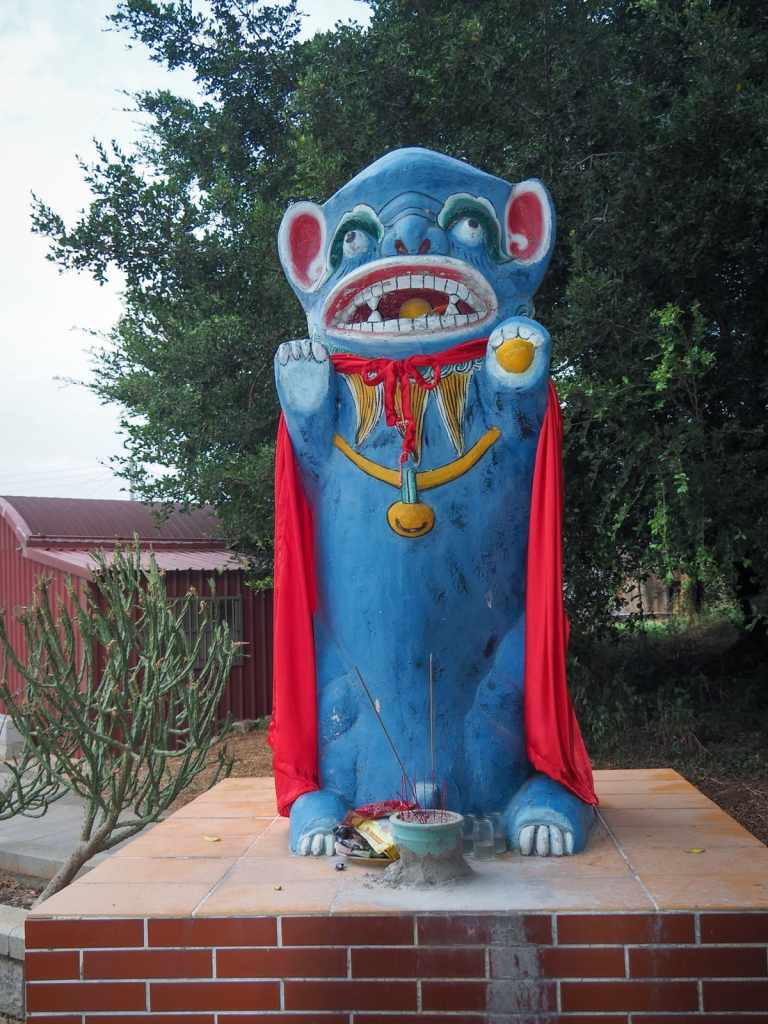
75. Xiguoshan Village – 昔果山
Xiguoshan Village’s clay wind lion god was called into service during the construction of the nearby airport. Evidently, the construction process perturbed the villagers, so they asked their temple’s deity for guidance. They were told that a wind lion of three specifications would help keep things settled.
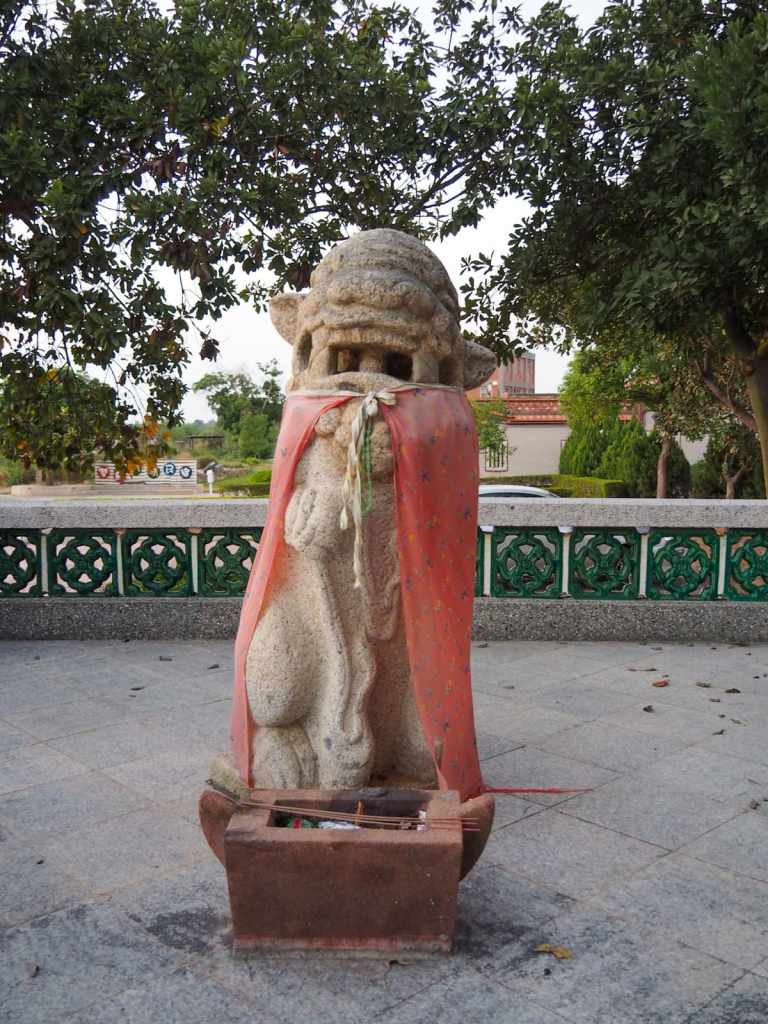
78. Beishan Village – 北山
Standing on the shore of Shuangli Lake facing Xiputou Village on the far bank, Beishan Village’s wind lion god is carved from stone and unadorned. In the past, before land management changes were made, it would often end up flooded, but that doesn’t happen any more. From here, it’s just about a five minute scooter to Beishan Broadcasting Tower — the giant speaker that was previously used to stream propaganda across the water to Xiamen.
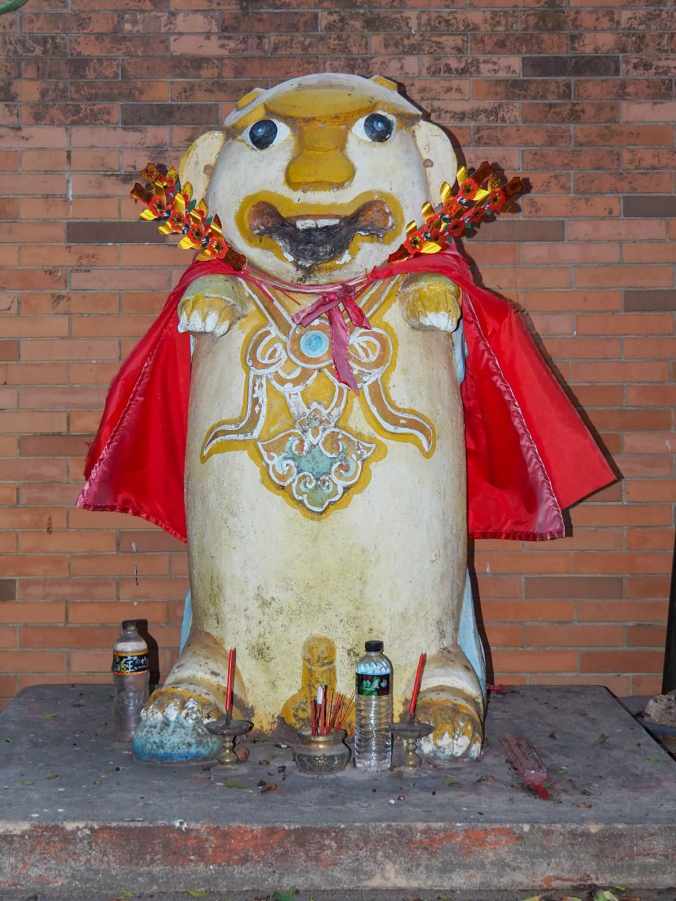
84. Huxia Village – 湖下
Huxia Village’s wind lion god is a squat and cheery looking clay fellow with a pretty yellow coat of paintwork and (at least when I visited) a bright new cape. It’s located close to the Kinmen-side end of Kinmen Bridge, an impressive span that connects the main island with Little Kinmen. It’s also not far from Ci Lake, which is a fruitful birdwatching location.

86. Houhu – 后湖
The current Houhu Wind Lion God is the second generation of the deity in this location. It was first enshrined after airport construction work caused the nearby village to be buffeted by even worse winds than usual.
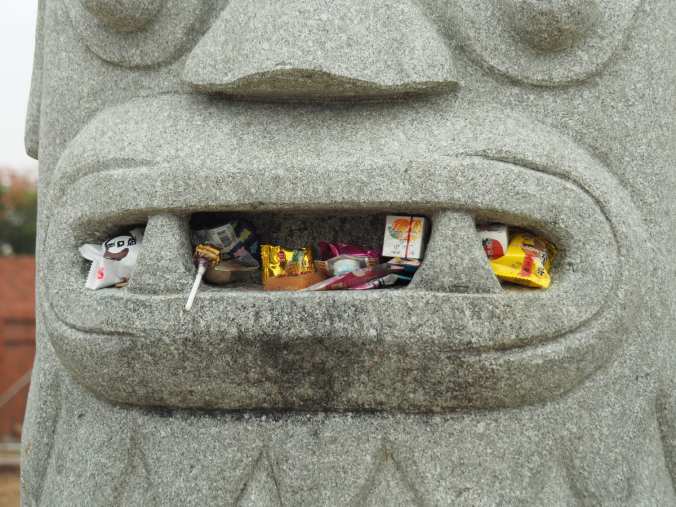
This one, like several others that are low enough to reach, has offerings stuffed in its mouth as well as a few placed at its feet. I was amused to spot a few Halloween treats in the mix.
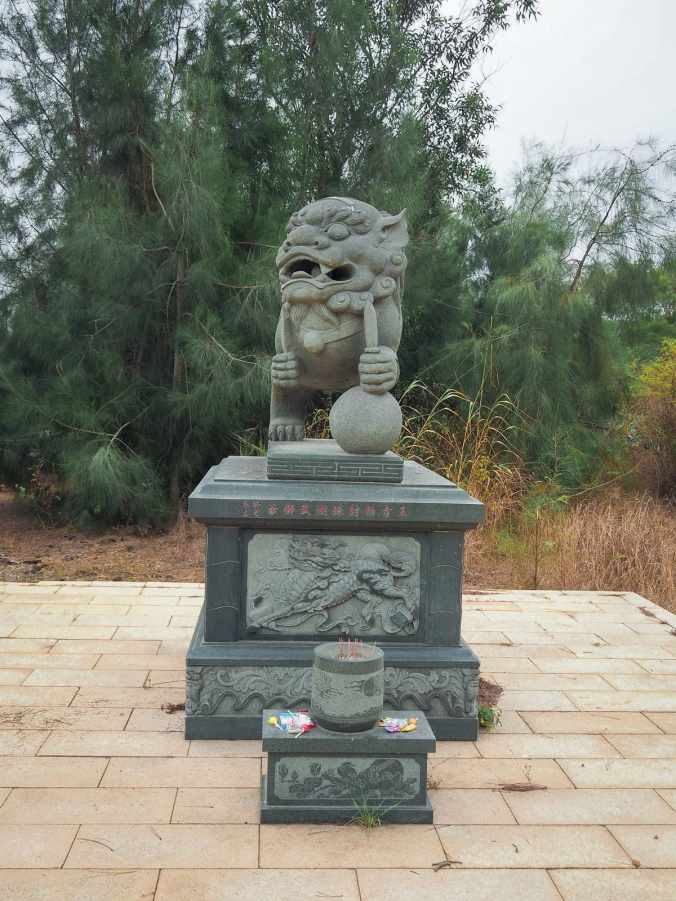
Bonus Houhu Village
This wind lion god is not one of those featured on the app. It’s the first of two we visited on Donghu Road, and was evidently re-carved on the wishes of the local deity, who thought the original effort was somewhat lacking.

87. Banglin No. 1 – 榜林(一)
Banglin Wind Lion God guards a previously dangerous junction and is credited with having significantly lowered accident rates. Its face is oriented towards the junction, and of the ones we encountered in Jinning and Jincheng, I think it’s probably the only one that isn’t looking straight ahead.

88. Banglin No. 2 – 榜林(二)
The stone Banglin Wind Lion God No. 2 was enshrined in 1997 after the original clay figure was found to be destroyed. With a bell slug around its chest and a calligraphy brush in one hand, this is also one of a handful of female wind lion gods.

92. Houpanshan Village – 后盤山
Standing at the northern boundary of Houpanshan, this deity had a somewhat sweetly funny expression on its 200-year-old weathered face. A little closer to the centre of the village there is an ancestral shrine belonging to the Wang clan, but that aside, there is little to see in this small settlement.
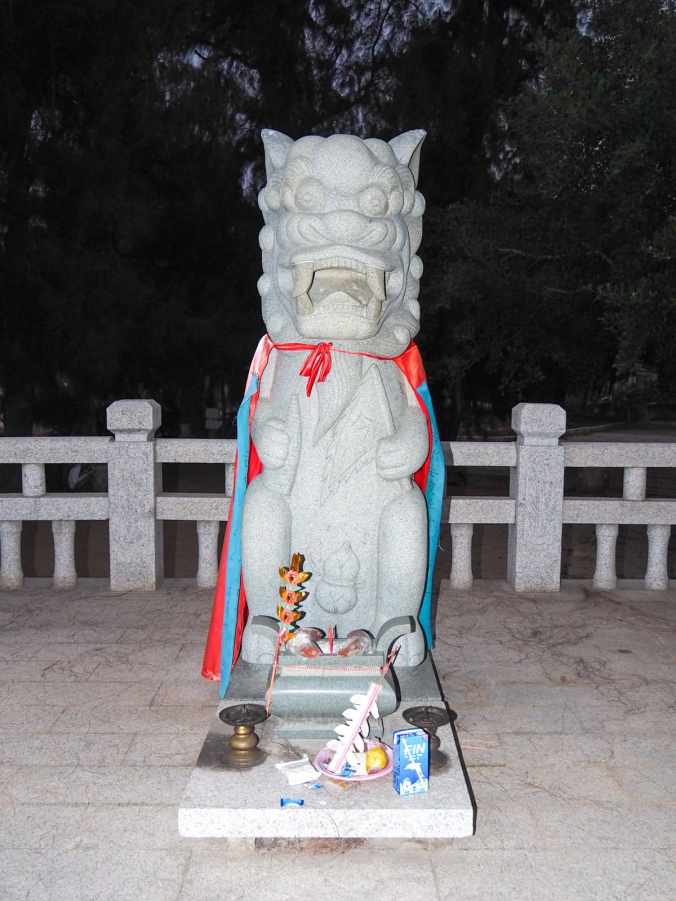
99. Housha Village – 后沙
The wind lion god currently protecting the village of Housha is not the first deity to hold this role. Sources say that the original statue was very effective in its protective duties situated in such a way as to cause a disruption between residents of Housha and neighbouring Lücuo Village. Consequently, Lücuo residents commissioned a statue of Li Guang, (a famous Han Dynasty general known for his marksmanship) to be placed in the village’s temple. The general blinded Housha Village’s wind lion god in one eye, which in turn seemed to resolve the problem between the two villages. However, that wounded lion was lost to fighting and the current one dates to 2006.
 Taiwan Trails and Tales