This page details all of the station memorial stamps for Taipei MRT’s Wenhu Line. I collected these (and all of the other Taipei Metro stamps) as part of a personal one-day challenge, but you could just as easily collect the stamps casually as and when you have reason to visit each station.
Basic information: For the past few years, the Wenhu Line (文湖線), also known as the Brown Line (棕線), has been the line I use to commute to and from work. It is also Taipei”s oldest MRT line. Construction began in 1988 and the first section entered service in 1996—a full five years after it was slated to start running. The delay was due to a number of different complications—lightning strikes, train derailments, cracks in the supporting pillars, fires, and computer failures. Unsurprisingly, these problems had a negative impact on public faith in the system, and ridership was low at first. So low, in fact, that the original trains only ran with two carriages (these days, each train has four carriages). Over time, the passenger volume increased, but apparently, the line still receives criticism for technical problems. Of the line’s 22 stations, only two are underground, and the rest are elevated, meaning that during typhoon winds, the unmanned trains have to run at a reduced speed.
Number of stations: 22
Length: 25.1km
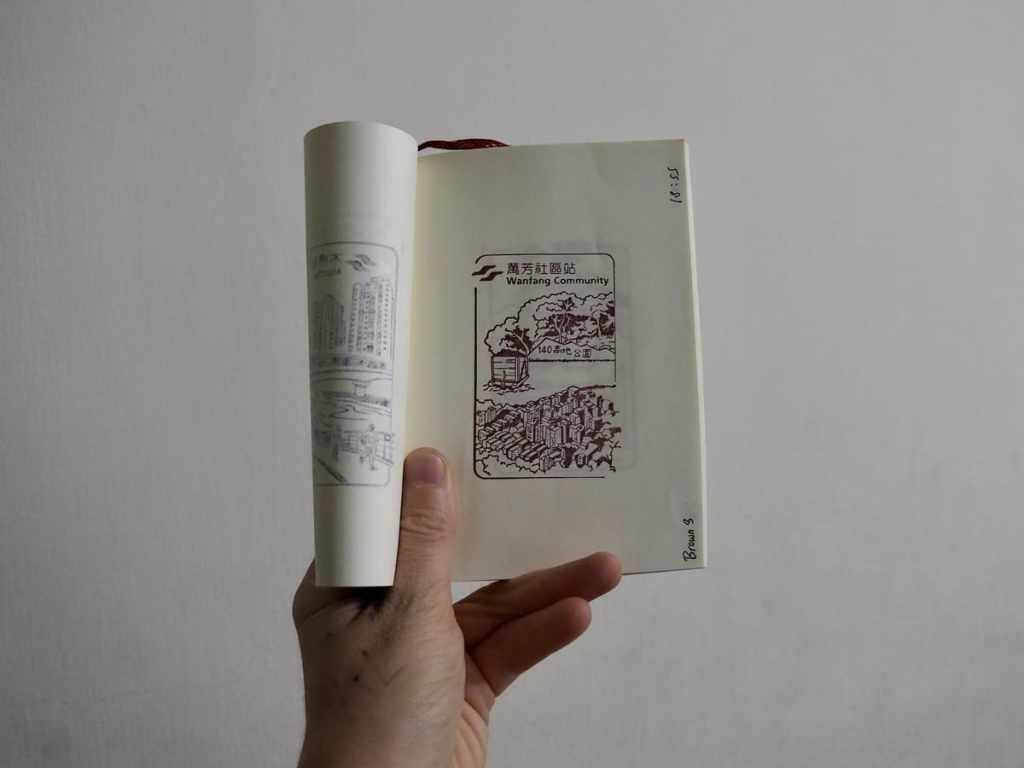
Stamp description: The Wenhu Line’s commemorative stamps are rendered in brown ink and are portrait-oriented rectangles (except for transfer stations, which are black and shaped like a spiky text bubble).
Station music: Note that this music is never actually played in the stations. I don’t know why the MRT authorities decided not to give this track its music because it’s quite pleasant.
BR01 – Taipei Zoo (台北動物園)
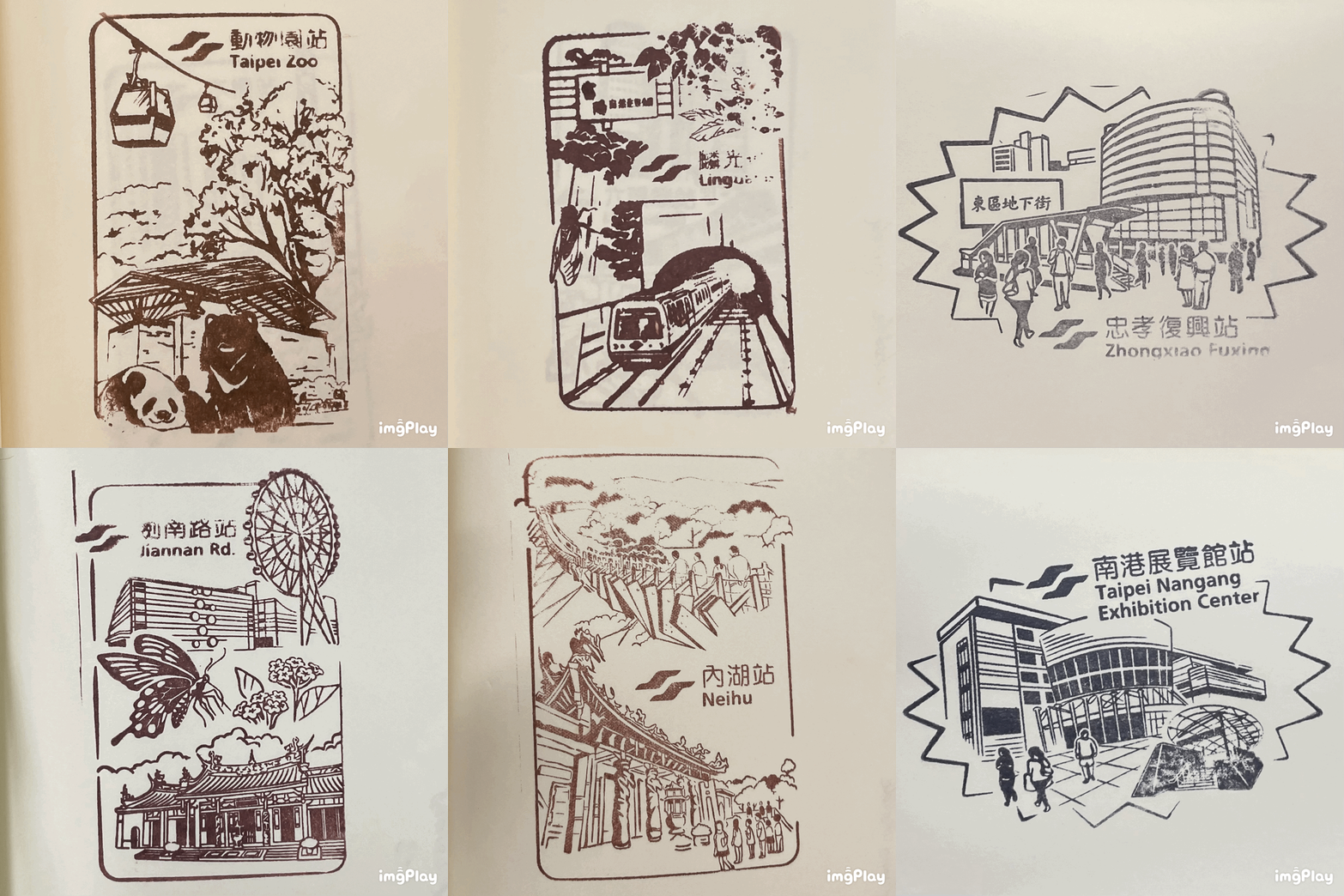
Two bears represent Taipei Zoo: a dozy-looking panda bear and a Taiwan black bear. The stamp also shows Muzha Gondola soaring over the trees and upward to the tea terraces of Maokong.
BR02 – Muzha (木柵)
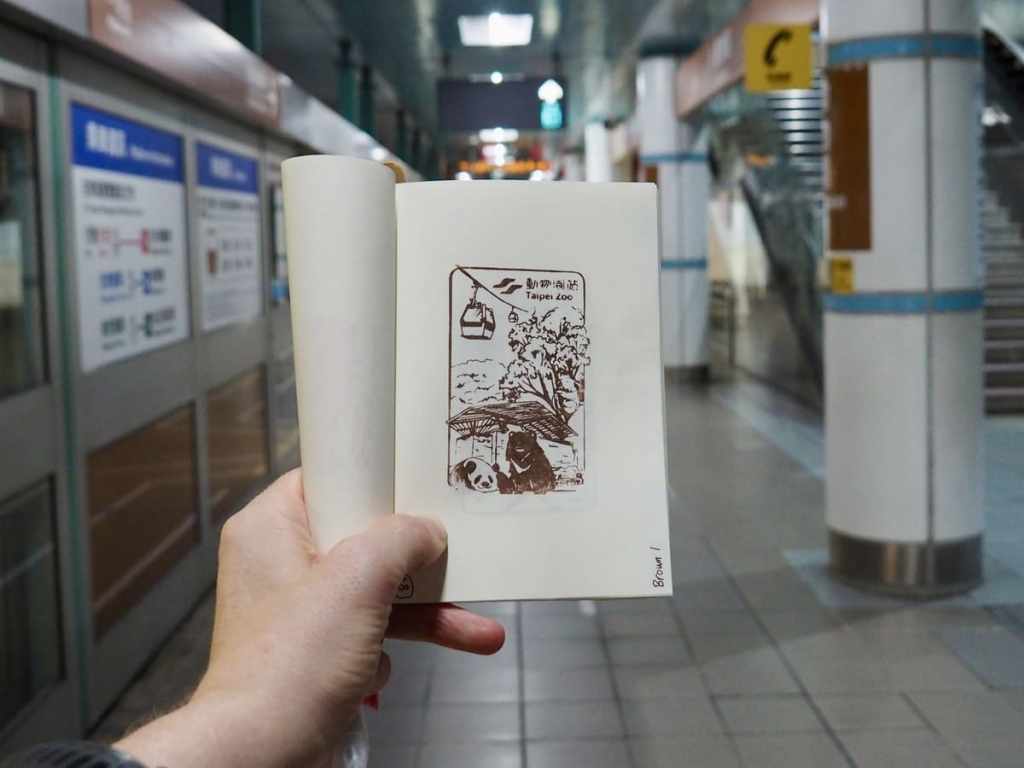
This image shows the Wenhu Line train passing over some joggers exercising in Jingmei Riverside Park. Behind it, the giraffe image on the smokestack of Muzha Incineration Plant rises in the distance.
BR03 – Wanfang Community (萬芳社區)
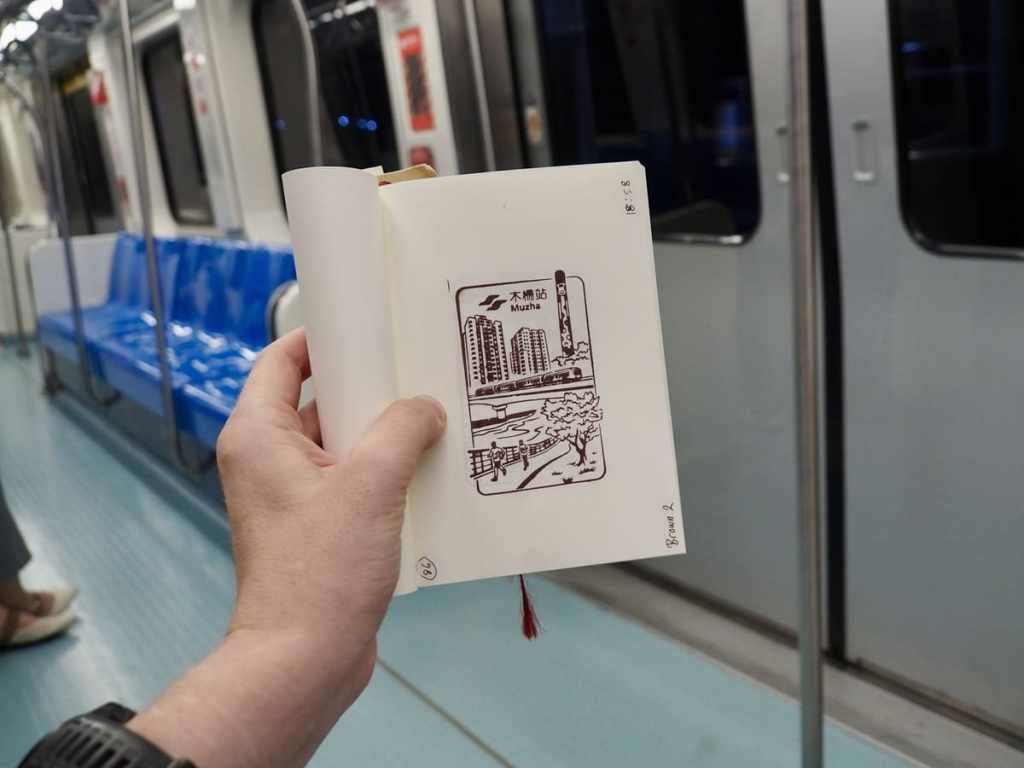
This stamp depicts the area’s mining past with a cart full of coal. There used to be two mines in the area, one of which was Wanglong Coal Mine, the other being Fangchuen Coal Mine. The community’s name was formed by taking the first character of both mines’ names. The lower half of the stamp shows the community snuggly nestled into the hillside- a view that can be enjoyed if you climb up to 104 Hill Park.
BR04 – Wanfang Hospital (萬芳醫院)
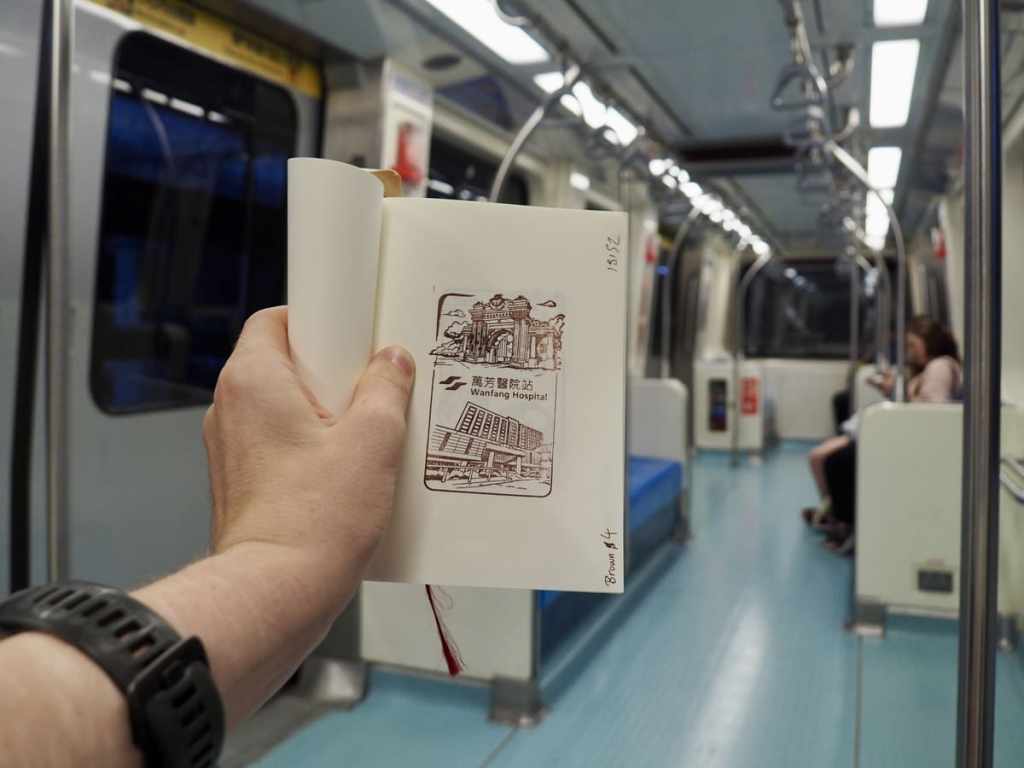
The top half of this image shows Taiwan Police College, while the bottom shows Wanfang Hospital. Apparently, the hospital and station were built simultaneously, and the hospital was also the first in Taiwan to be publicly owned but privately run.
BR05 – Xinhai (辛亥)
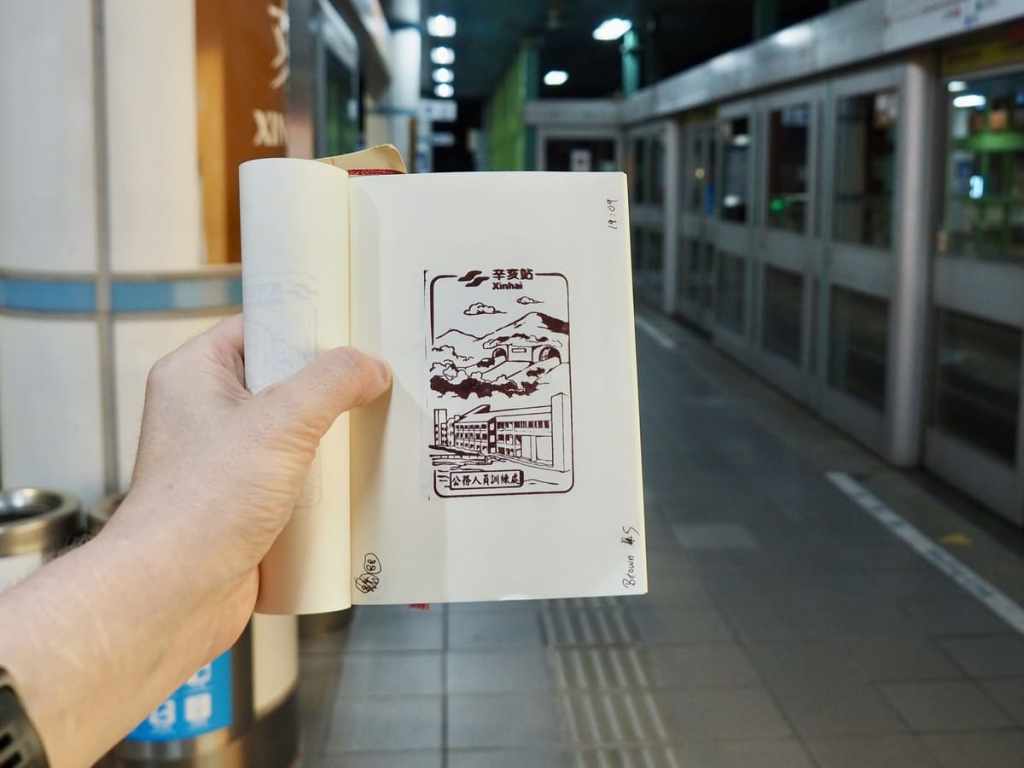
This station’s stamp shows the allegedly haunted Xinhai Tunnel, as well as the Department of Civil Service Development. Do you think they ran out of landmarks at this point?
BR06 – Linguang (麟光)
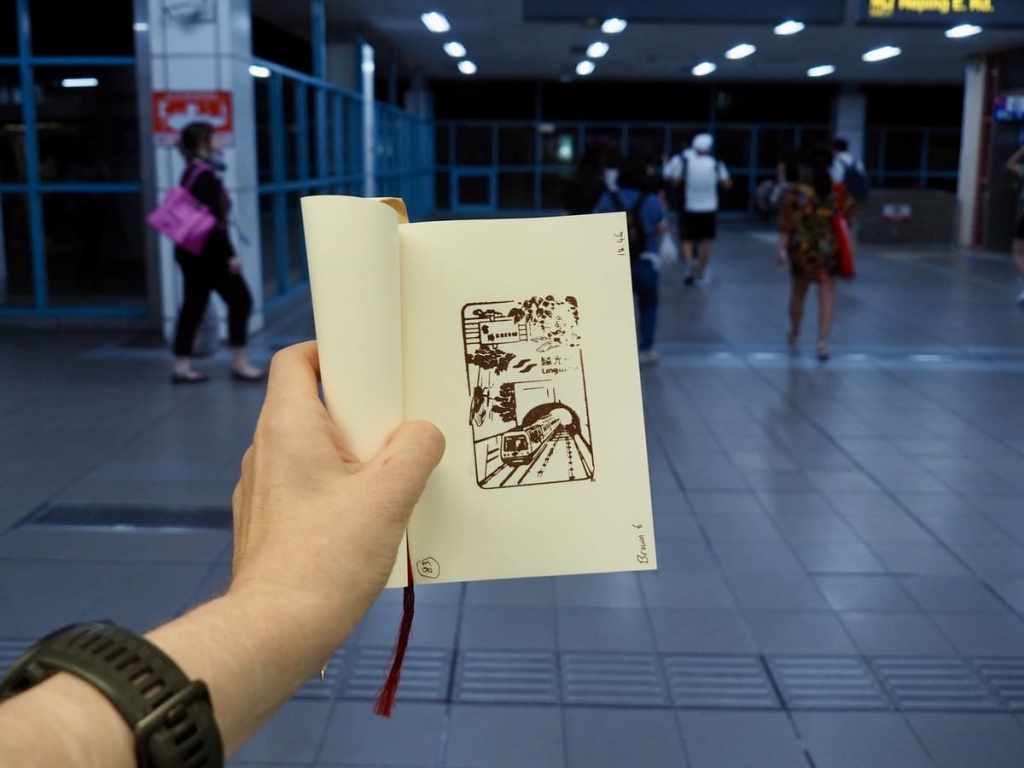
This stamp shows an MRT train emerging from the tunnel between Xinhai and Linguang stations. On the left, there’s a cicada to represent the plentiful wildlife found in Fuyang Eco Park.
BR07 – Liuzhangli (六張犁)
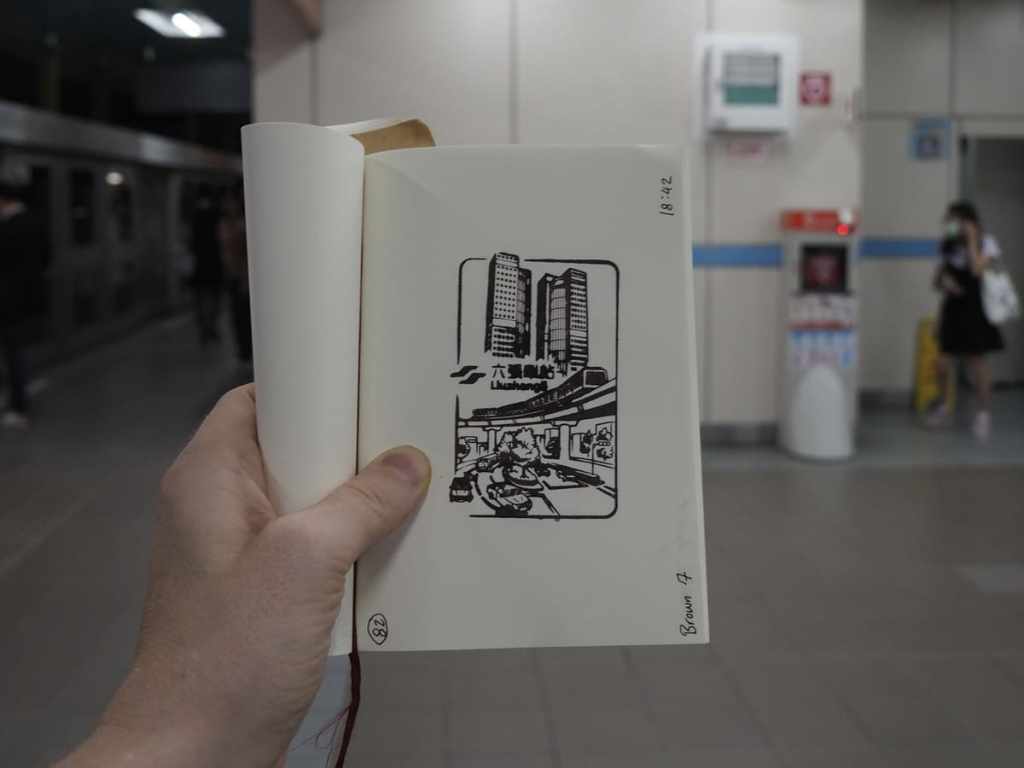
This stamp shows the roundabout junction just below the station. This type of junction isn’t common compared to back home, so I guess it’s a noteworthy feature of the area.
BR08 – Technology Building (科技大樓)
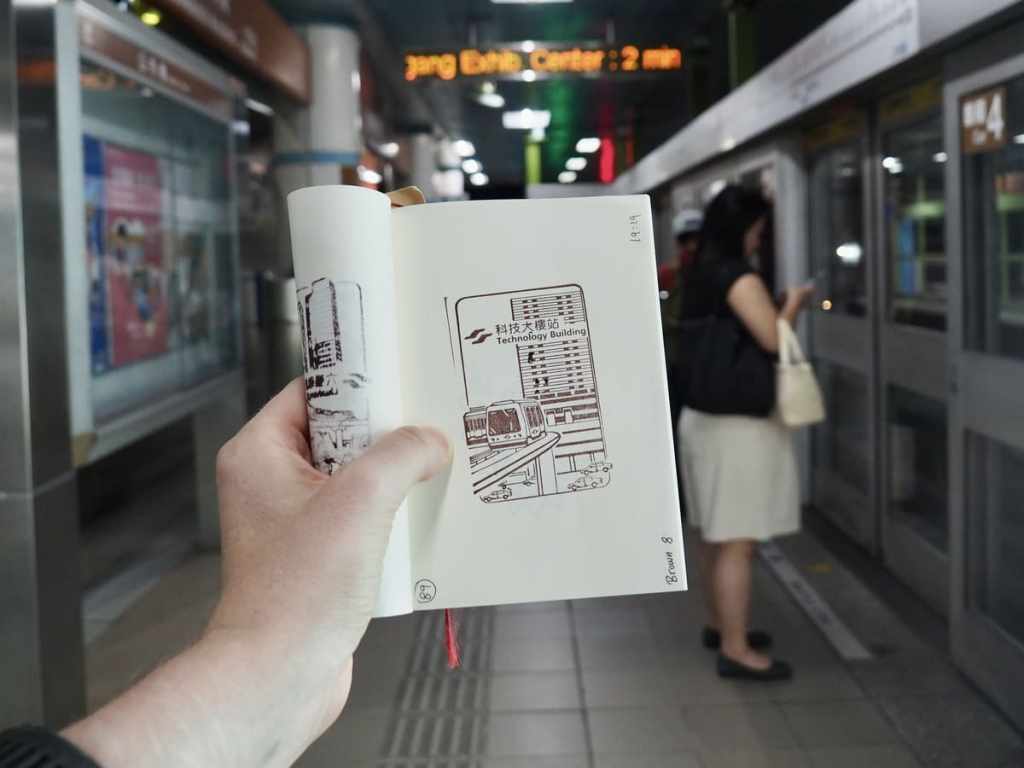
This stamp shows a train rounding one of the elevated Wenhu Line’s 90° bends. The building pictured is the one that houses both Taiwan’s Ministry of Science and Technology, as well as the Institute for Information Technology.
BR09 – Da’an (大安)
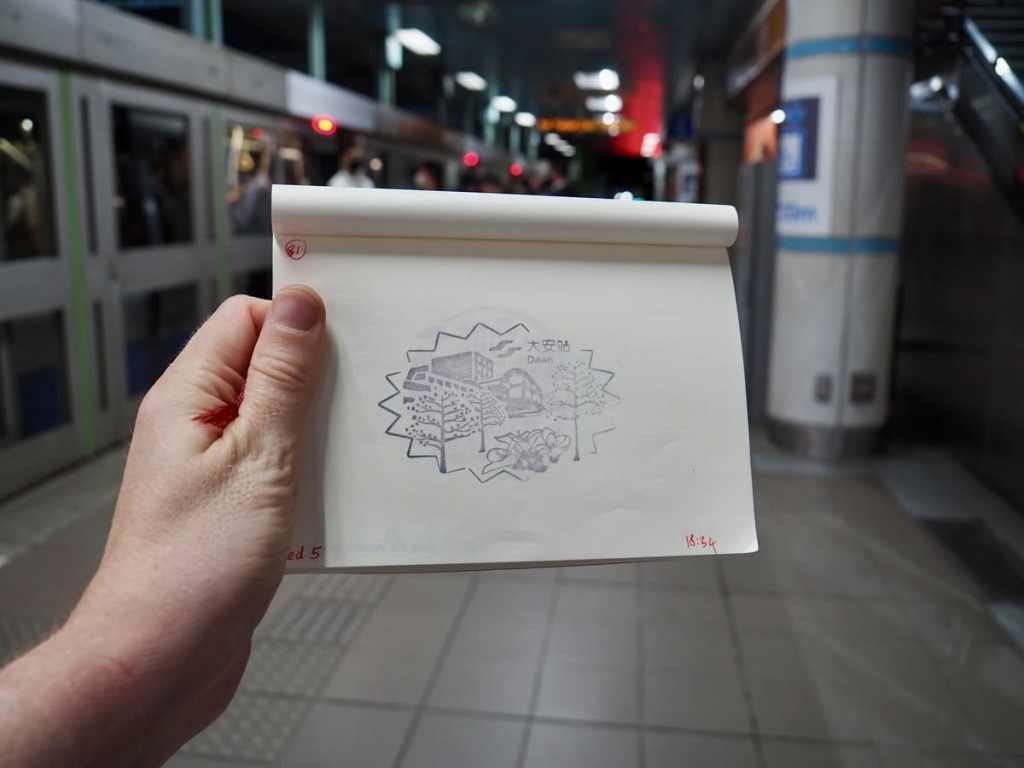
This stamp shows the raised Wenhu line portion of the station and some of the many cotton trees (also called kapok trees), lining Fuxing South Road.
BR10 – Zhongxiao Fuxing (忠孝復興)
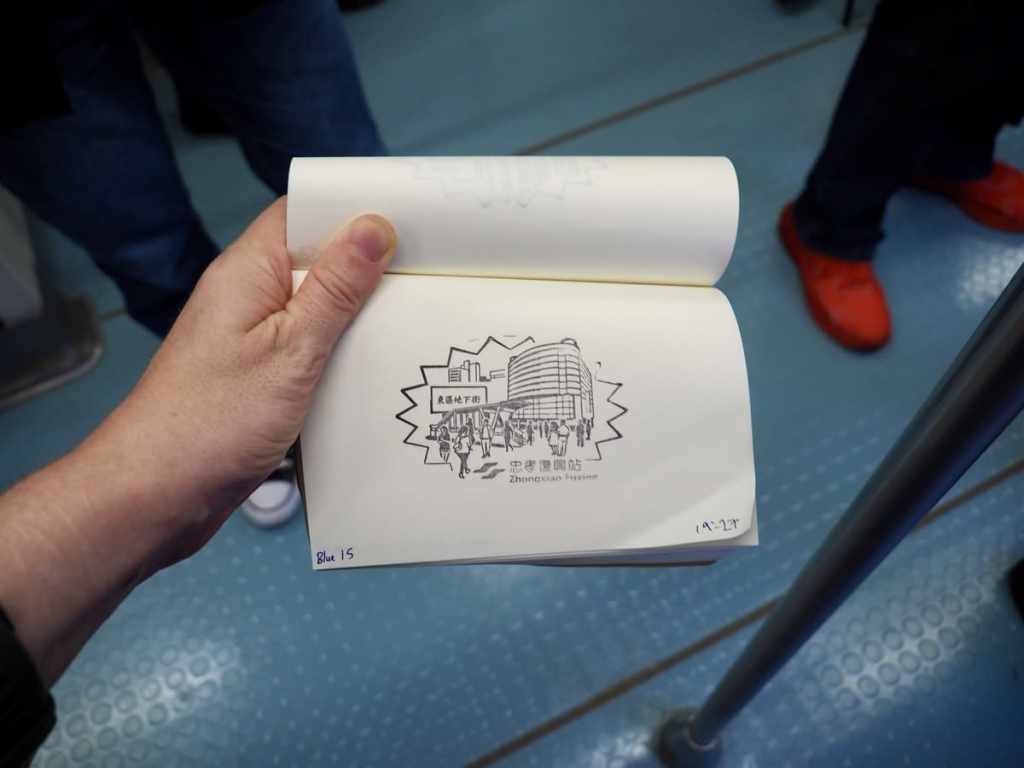
Fittingly, the stamp for this shopping Mecca has a sign reading “Dongqu Underground Shopping Street” and also shows the frontage of SOGO.
BR11 – Nanjing Fuxing (南京復興)
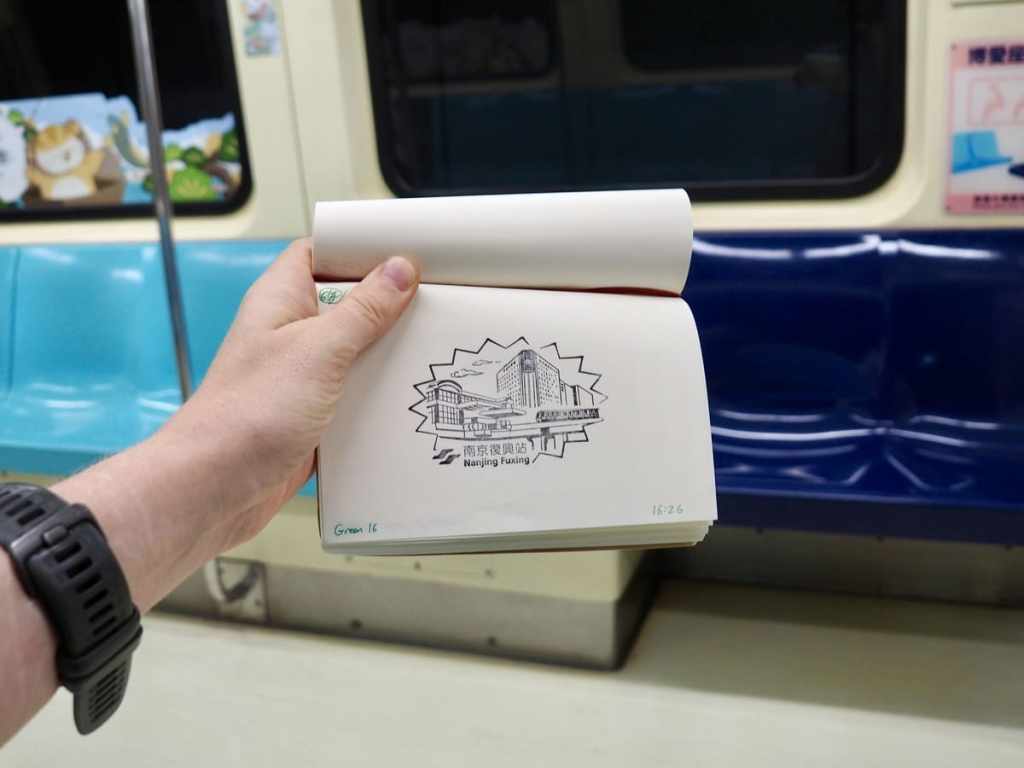
Nanjing Fuxing is perhaps one of the more boring stamps. It shows the station itself as well as the wedge-shaped brother hotel.
BR12 – Zhongshan Junior High School (中山國中)
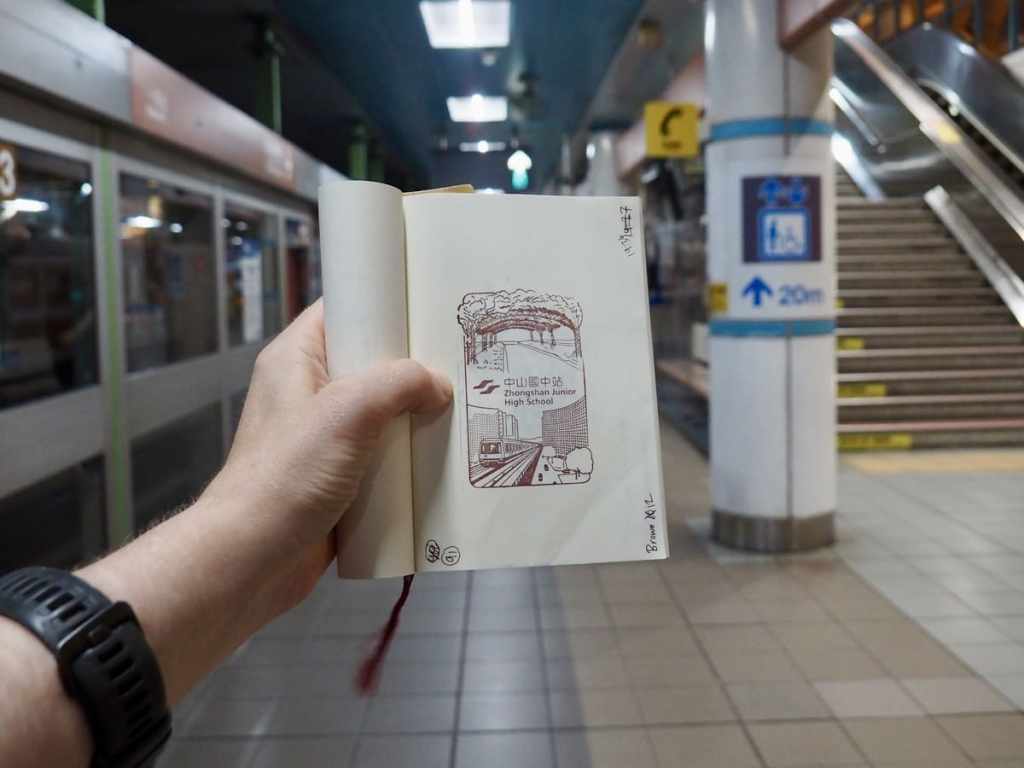
I think this is one of those stations where the designers drew a blank. The bottom shows the train ploughing its way between the “forest of high-rises” (that’s how the metro company refers to it in their own materials), and the top shows a trellis-covered walkway in nearby Rongxing Park.
BR13 – Songshan Airport (松山機場)
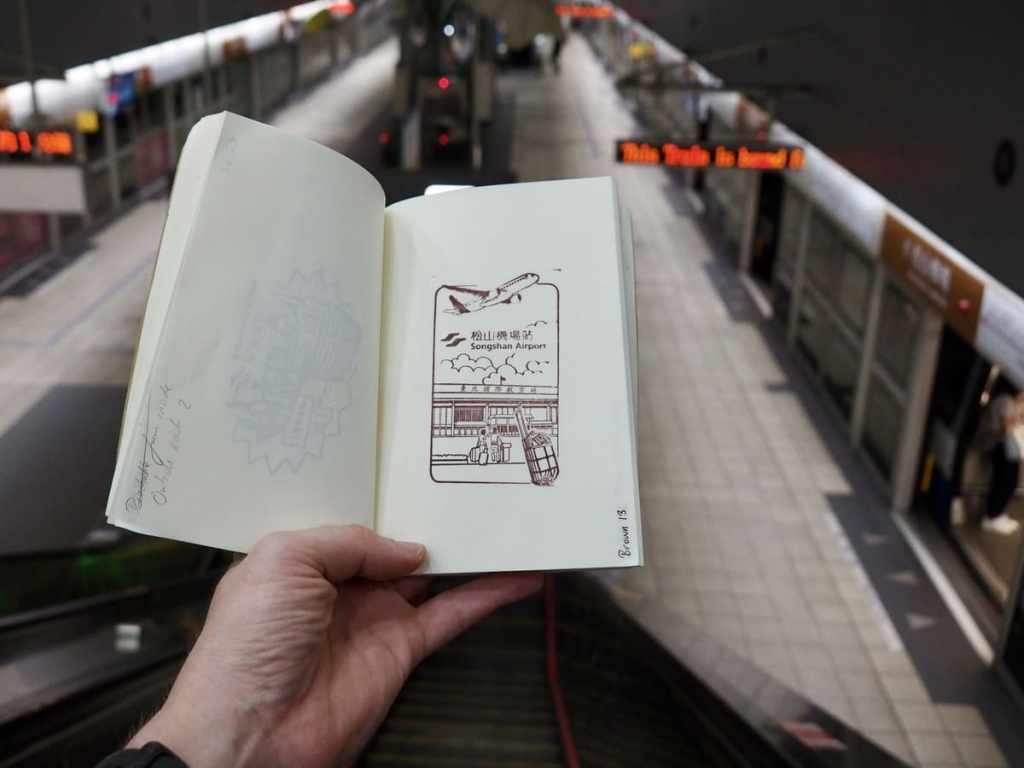
This stamp shows a pair of suitcase-laden travellers about to enter Songshan Airport. A plane soars out of the frame above them and in the front right edge of the image, you can see “The Baggage”, a public artwork that can be seen outside one of the MRT station exits.
BR14 – Dazhi (大直)
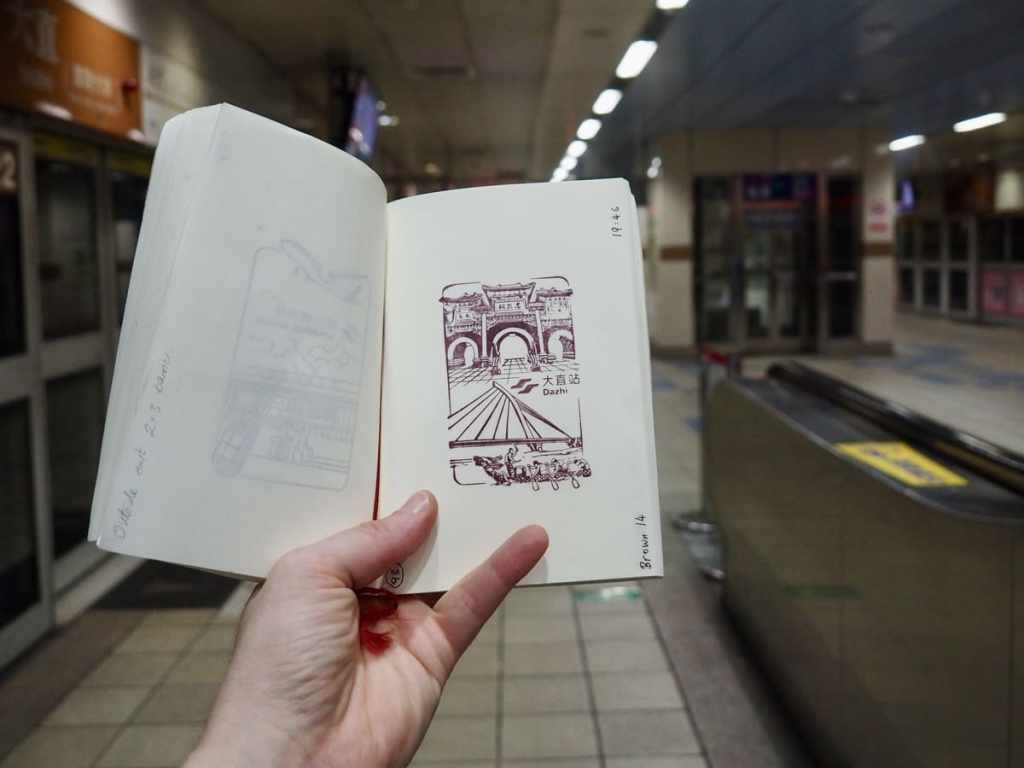
There’s a lot going on in the Dazhi stamp. The top half shows the National Revolutionary Martyrs’ Shrine (which is probably closer to Jiantan than Dazhi), and the bottom half shows scenes from Dajia Riverside Park: Dajia Bridge crossing Keelung River, and some dragon boat racers (Taipei’s annual dragon boat races are held in the riverside park here.)
BR15 – Jiannan Road (劍南路)
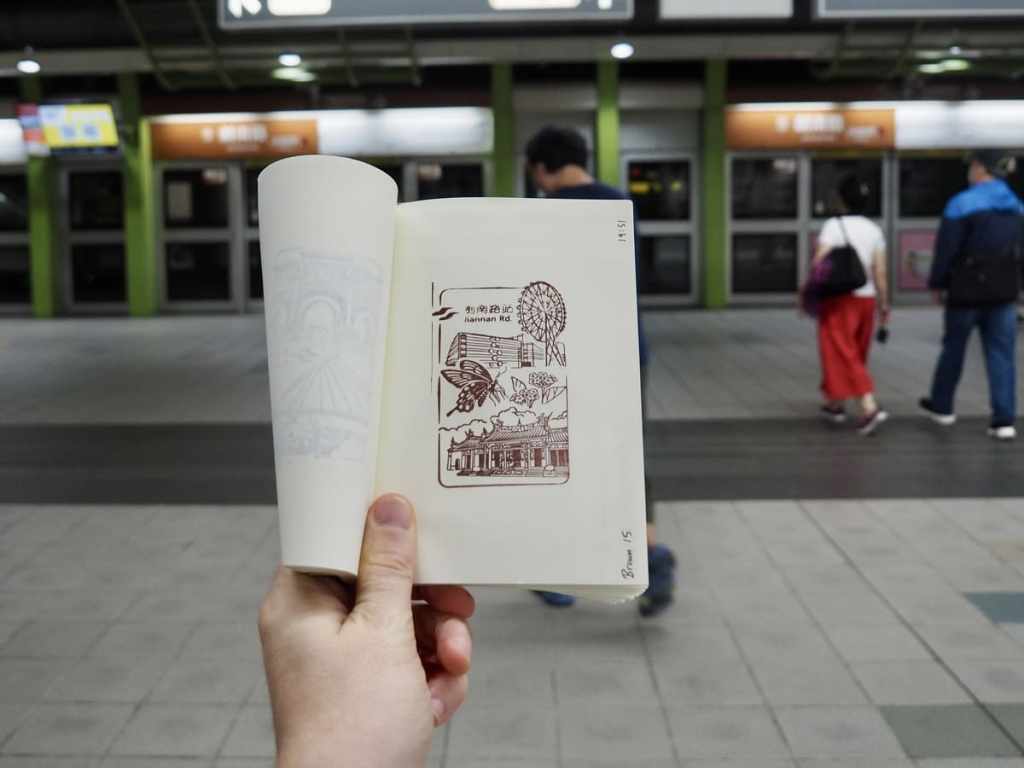
From top to bottom, the Jiannnan Road stamp shows Miramar Mall and Ferris wheel, butterflies that breed in nearby Jiannan Park, and the beautiful old form of Jiantian Historical Temple. If you’ve never visited the latter, it’s an unknown gem in this area.
BR16 – Xihu (西湖)
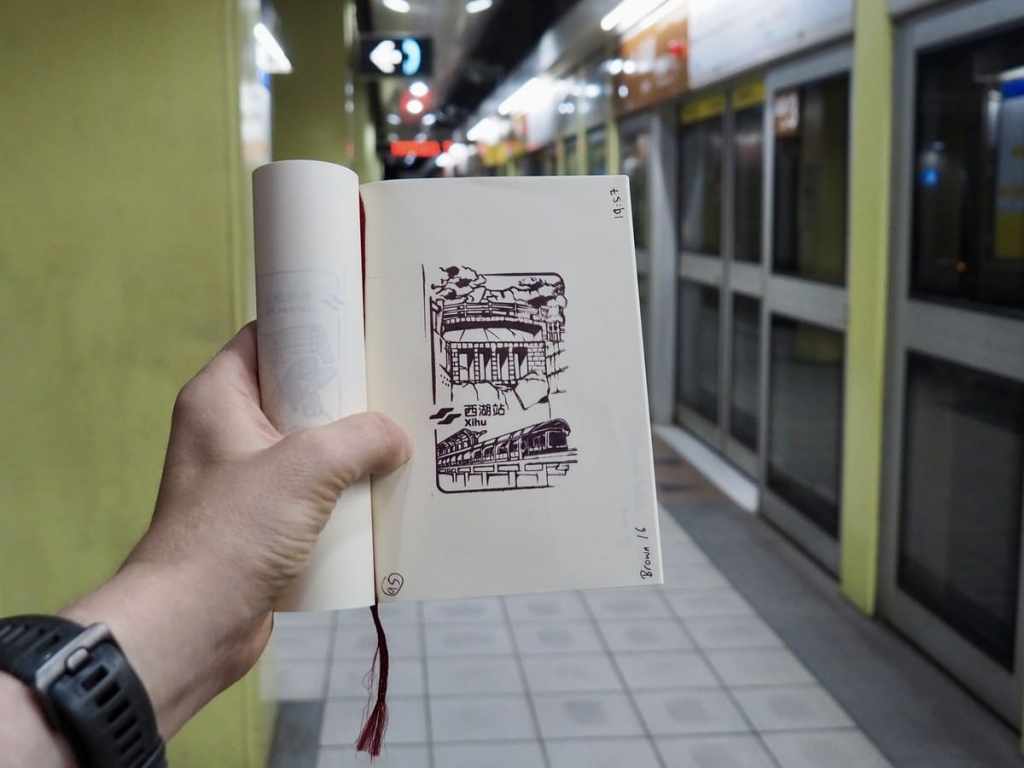
The bottom half of this stamp shows Xihu Station, while the top shows the park at the start of Scissors Rock Hiking Trail and some of the old stonework from the area’s Qing-era quarry.
BR17 – Gangqian (港墘)
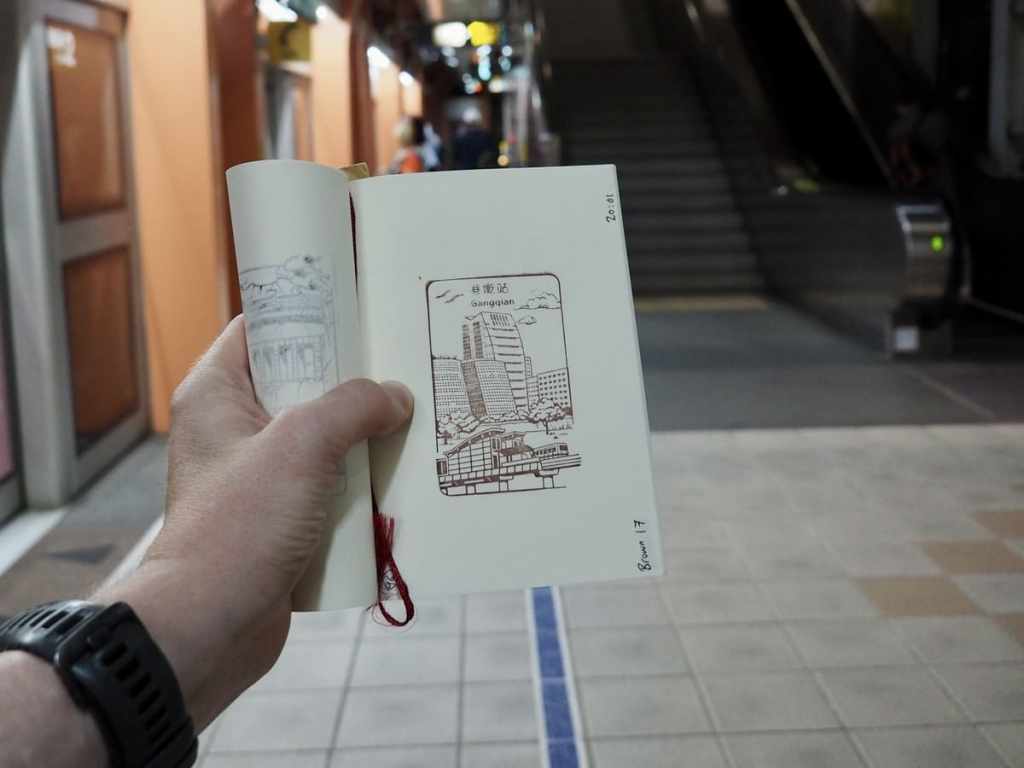
The office area of Gangqian is fittingly represented by the numerous office buildings of Neihu Technology Park. In the past, this area was the location of a wharf. Fabric, camphor and other goods from upstream flowed out and brought in wealth. These days, this area still brings wealth into Taiwan, but rather than from the exchange of physical goods, it’s more likely to come as a result of thousands of cubicle workers beavering away at their desks for long hours.
BR18 – Wende (文德)
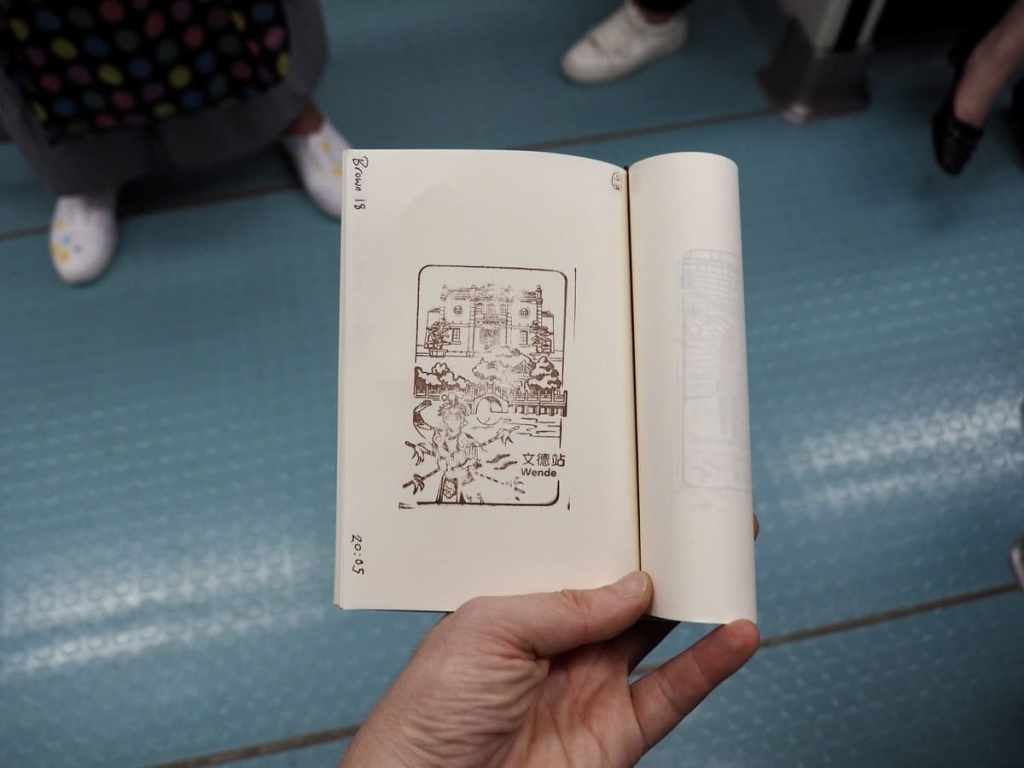
Wende’s stamp shows the pretty zigzag walkway in Bihu Park, and above that, Guo Ziyi Memorial Hall (郭子儀紀念堂, also called the Neihu Red House). This nicely renovated historic building is an under-appreciated spot in this area. The bottom left half of the image shows a performer trained at the National Taiwan College of Performing Arts, which can be found on the eastern edge of Bihu Park.
BR19 – Neihu (內湖)
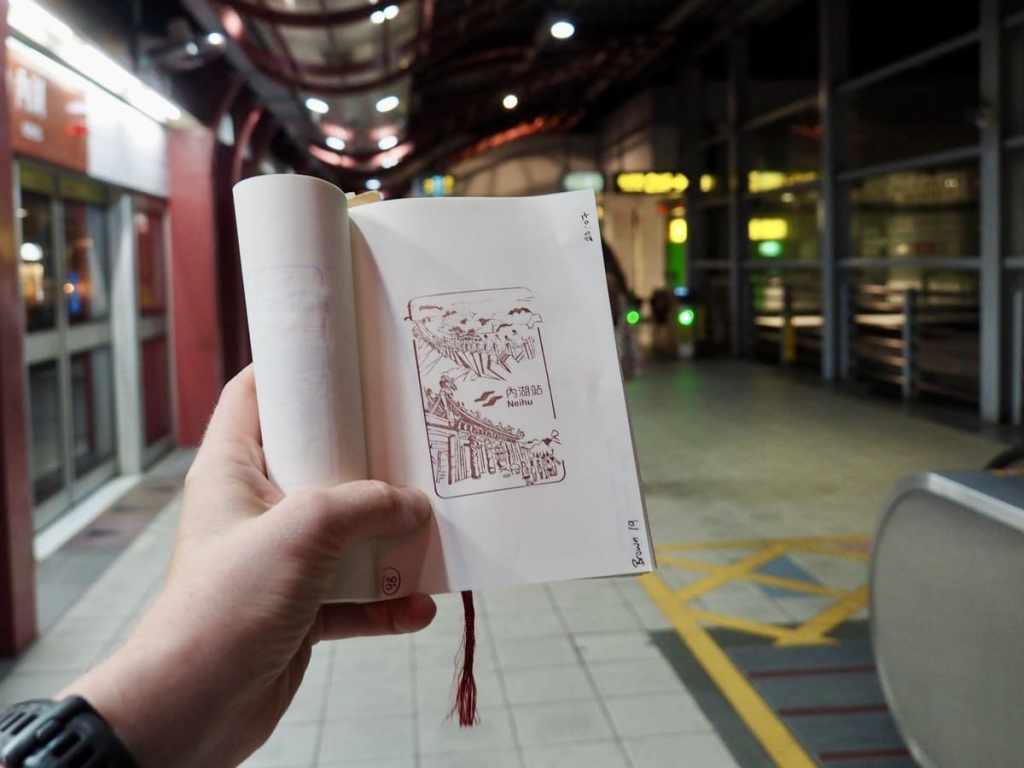
The landmarks on this stamp are all a bit of a distance away from the station. The top shows Baisihu Suspension Bridge, and below that is Bishanyan Kaizhang Shengwang Temple.
BR20 – Dahu Park (大湖)
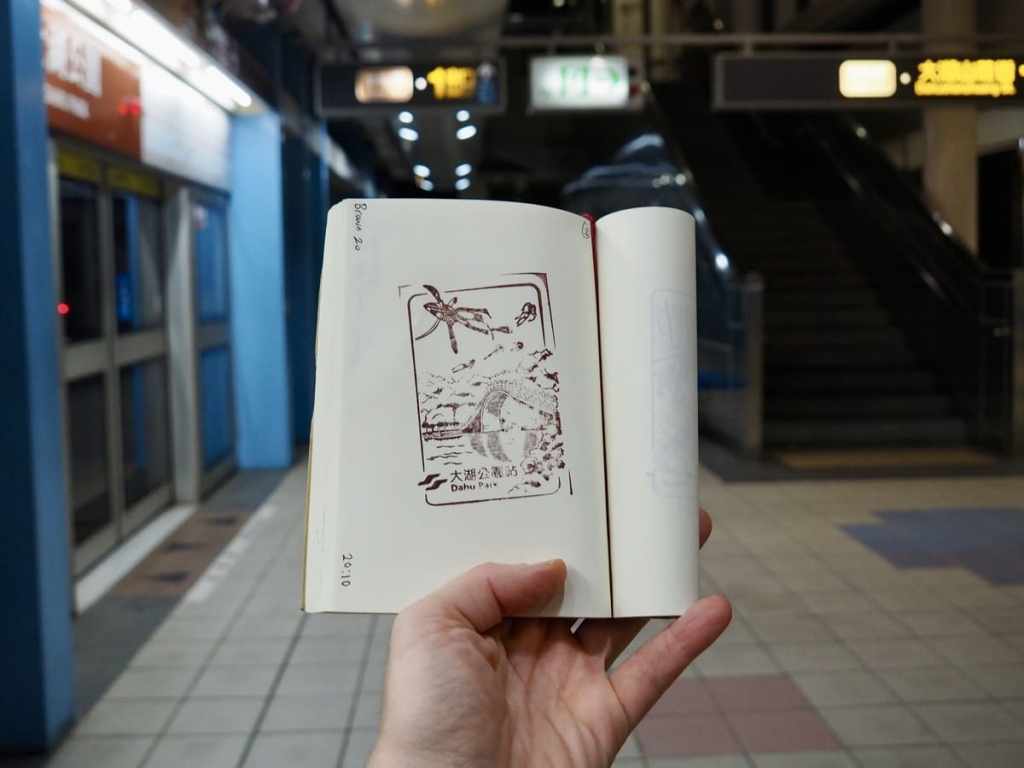
This stamp features the elegantly arched moon bridge of Dahu Park (a favourite with photographers), as well as what looks like flying squid. In fact, they are meant to be soaring kites, and a number of them adorn the stairway leading from the park into the station.
BR21 – Huzhou (湖州)
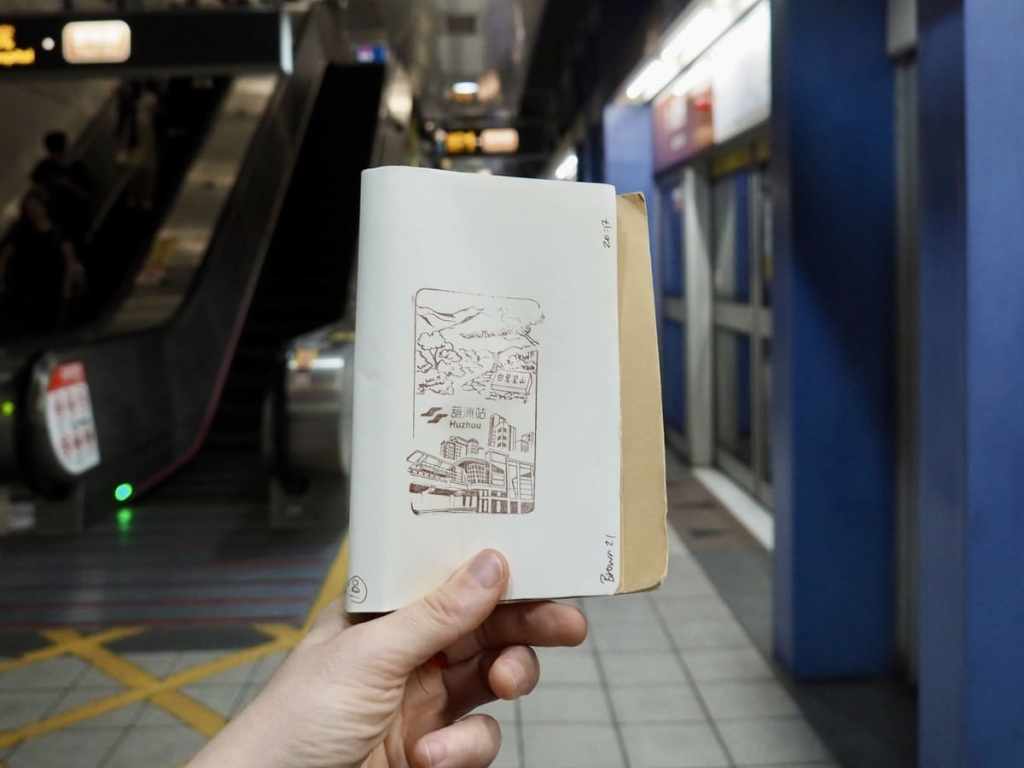
Huzhou’s stamp features a flying white great soaring over the entrance to Egret Hill Hiking Trail (this trail is actually between Neihu and Dahu Park). The bottom half shows the MRT line and its soundproofing cutting between this residential area’s buildings.
BR22 – Donghu (東湖)
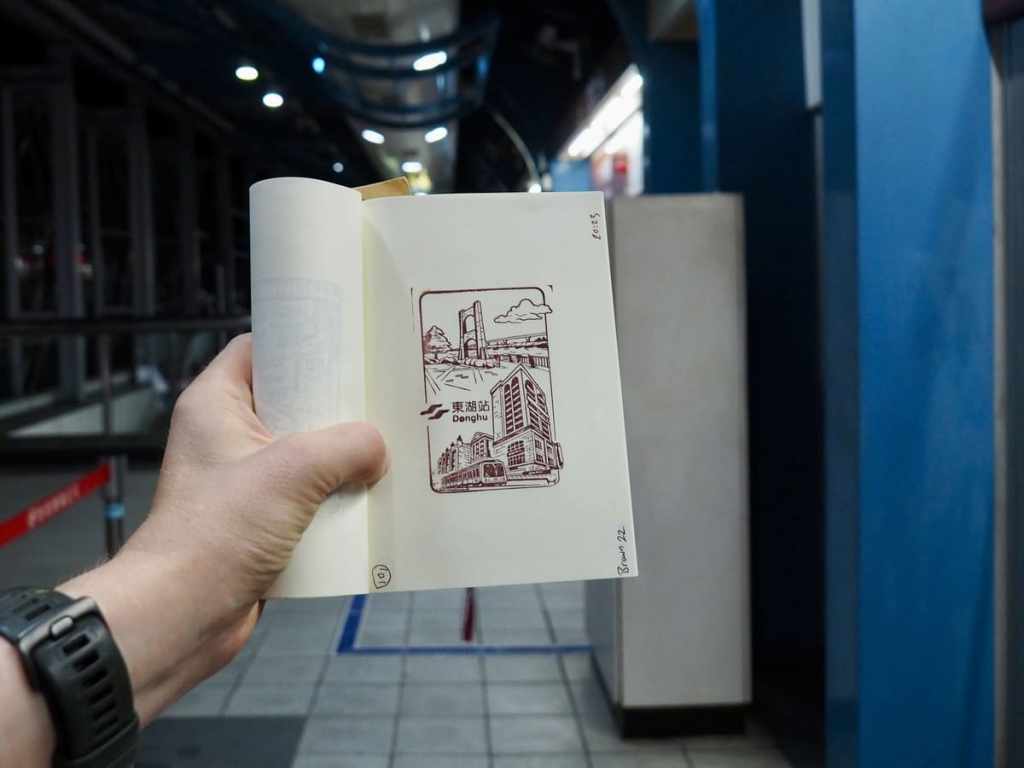
The stamp for Donghu shows what’s left of Wufen Suspension Bridge (it sits along the banks of Keelung River), as well as an MRT train trundling along in front of the neighbourhood’s castle-esque shopping mall and cinema complex.
BR23 – Nangang Software Park (南港軟體園區)
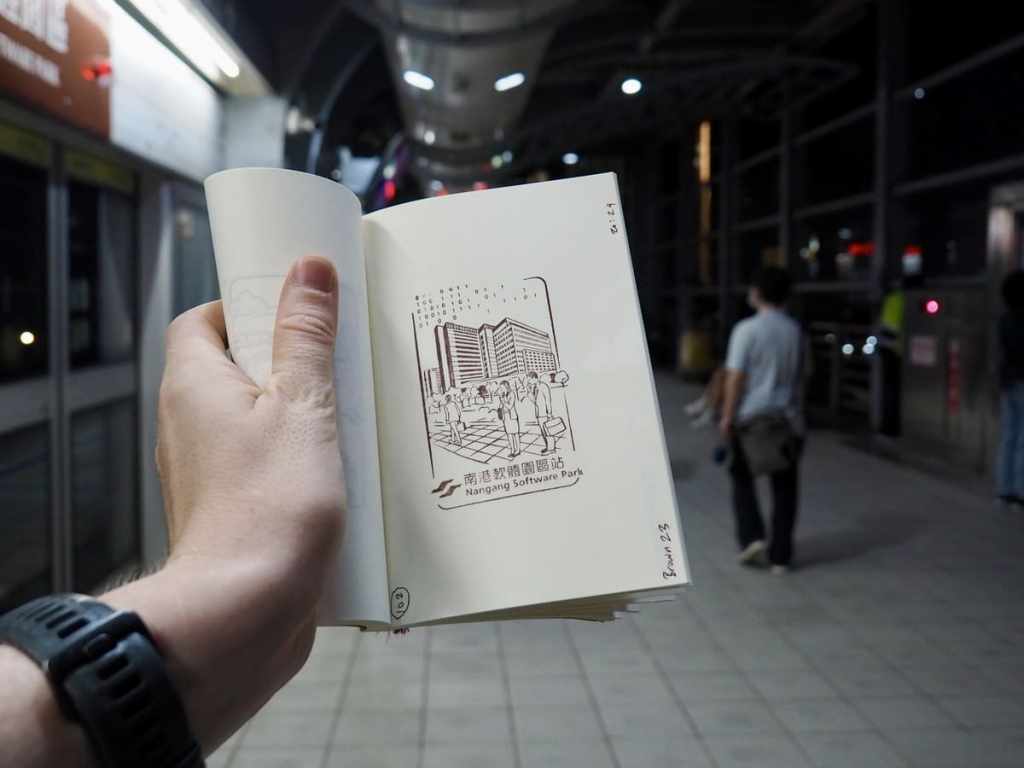
I love the binary code at the top of this stamp. The lower part of the image shows be-suited software park workers doing worky things on the pavement in front of some of the software park buildings.
BR24 – Taipei Nangang Exhibition Centre (台北南港展覽館)

This stamp shows people milling about in front of Taipei Exhibition Centre. According to the MRT company’s own materials, this station was designed to mimic the appearance of a giant clam cracked slightly open to reveal a pearl.
 Taiwan Trails and Tales