This page details all of the station memorial stamps for Taipei MRT’s Tamsui-Xinyi Line. I collected these (and all of the other Taipei Metro stamps) as part of a personal one-day challenge, but you could just as easily collect the stamps casually as and when you have reason to visit each station.
Basic information: Construction on the Tamsui-Xinyi Line (淡水信義線, also known as the Red Line) began in 1988 and it took almost nine years for the first section (Zhongshan to Tamsui) to enter service. Extra stops were added over the next couple of years, and for a brief period, trains ran from Tamsui in the north to Nanshijiao in the south (running on track that’s now part of the Zhonghe-Xinlu Line). When Dongmen Station opened, the Tamsui-Xinyi and Zhonghe-Xinlu Lines were separated completely, meaning these through services were no longer possible. For a while, there was also a similar arrangement with a section of the Songshan-Xindian which meant that a similar through service used to be available between Tamsui and Taipower Building.
The northern section of the Tamsui-Xinyi Line (from Yuanshan to Tamsui) is above ground, while the southern section (between Minsheng West Road and Xiangshan) is subterranean.
Number of stations: 28 at present (including Xin Beitou), a 29th should be opening soon(ish)
Length: 29.3km
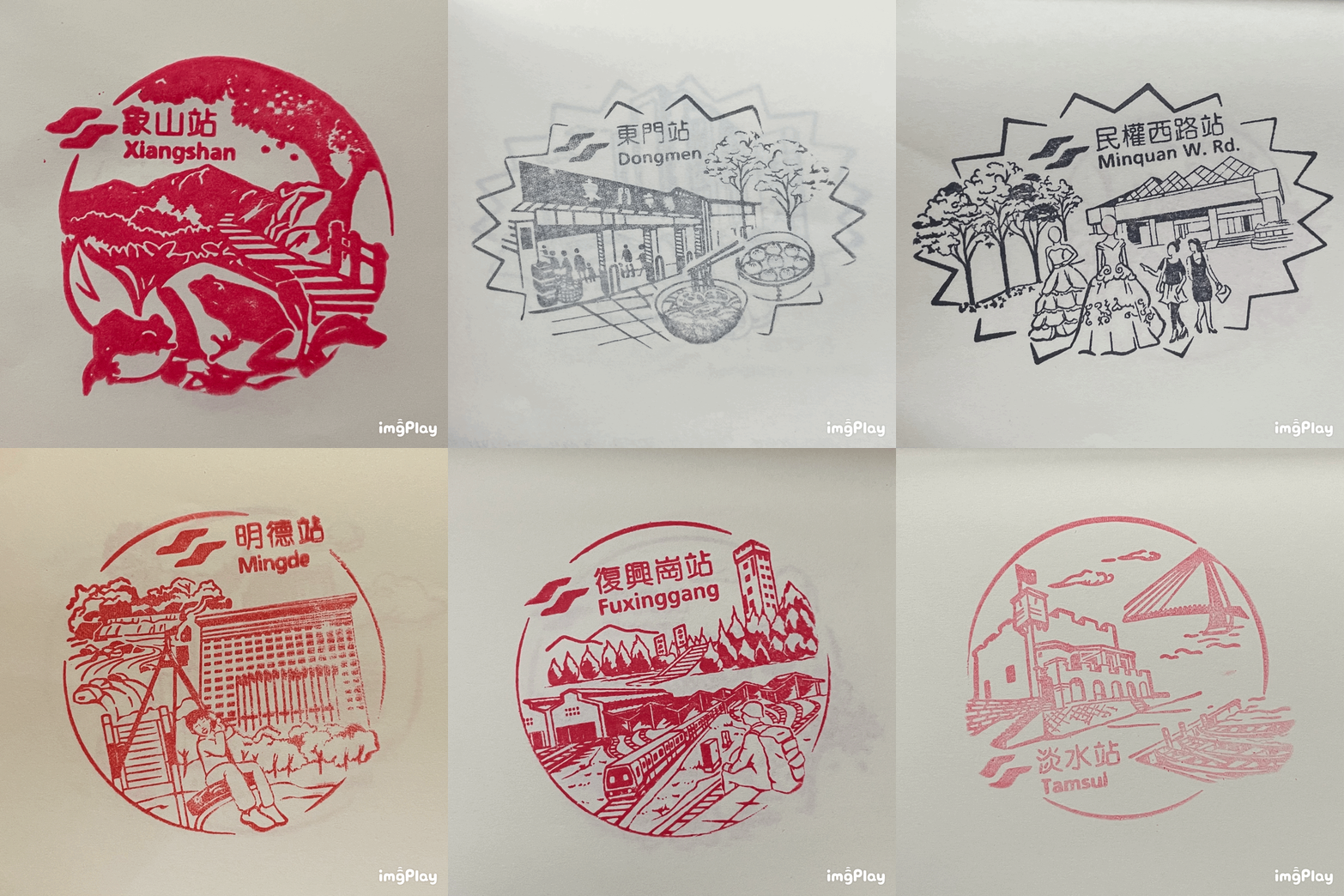
Stamp description: The Tamsui-Xinyi Line’s commemorative stamps are rendered in red ink and are circular in shape (except for transfer stations, which are black and shaped like a spiky text bubble).
Station music:
R02 – Xiangshan (象山)
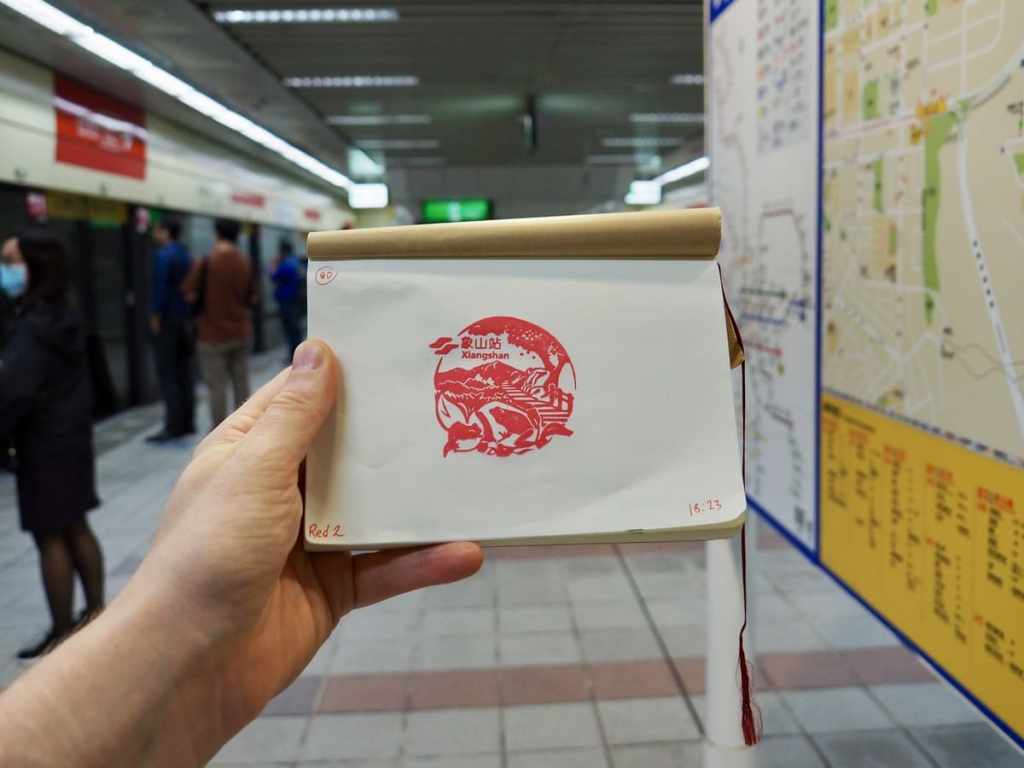
I never realised that the red line doesn’t have a station number 1 until today. The stamp for the red line’s (current) starting terminus shows Elephant Mountain hiking trail and the endangered Taipei tree frogs that can be found in the park beside the station.
R03 – Taipei 101/World Trade Centre (台北101/世貿)
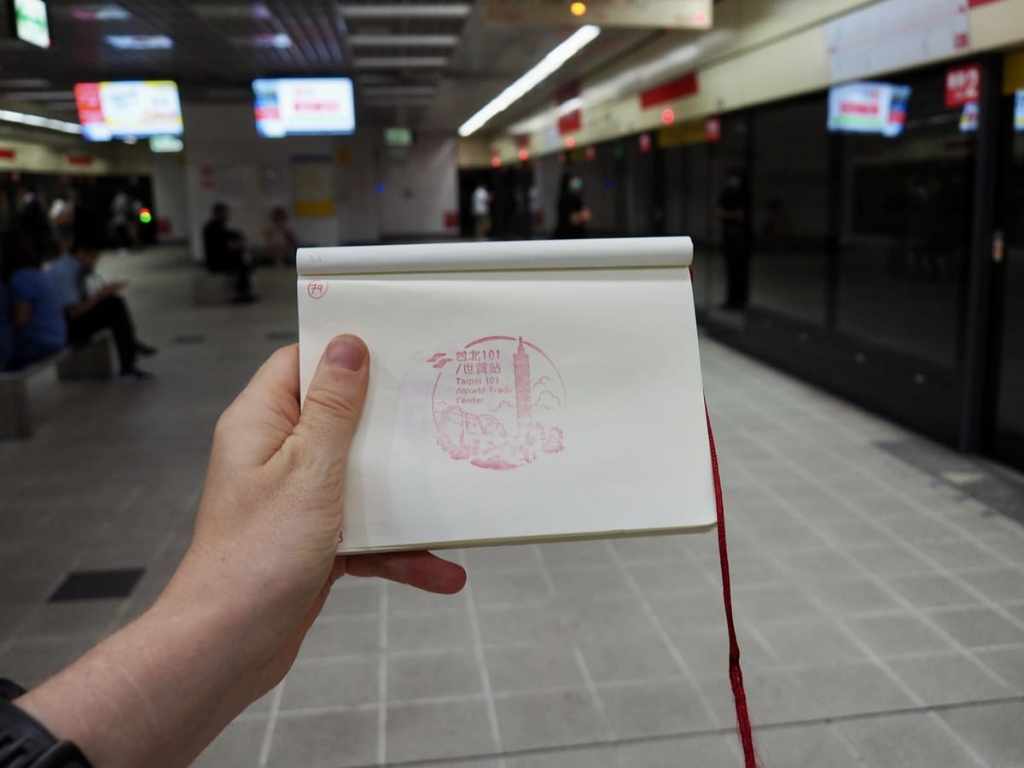
Both of this station’s eponymous landmarks can be seen on this stamp. The iconic form of 101 seems somehow far more worthy of memorialisation in this way than its squat neighbour.
R04 – Xinyi Anhe (信義安和)
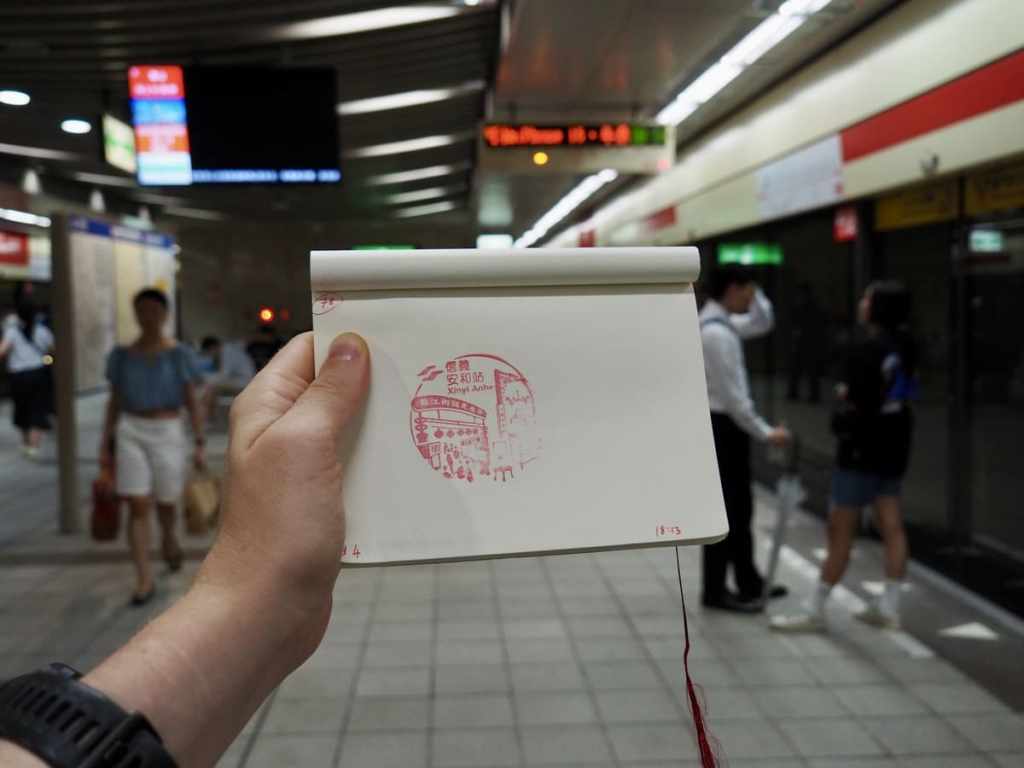
This stamp shows Linjiang Night Market on the left and items Wenchang Furniture Street on the right. Although it’s since been superseded by the likes of IKEA and Nitori, the furniture street is still a popular place to go shopping for home decor.
R05 – Da’an (大安)
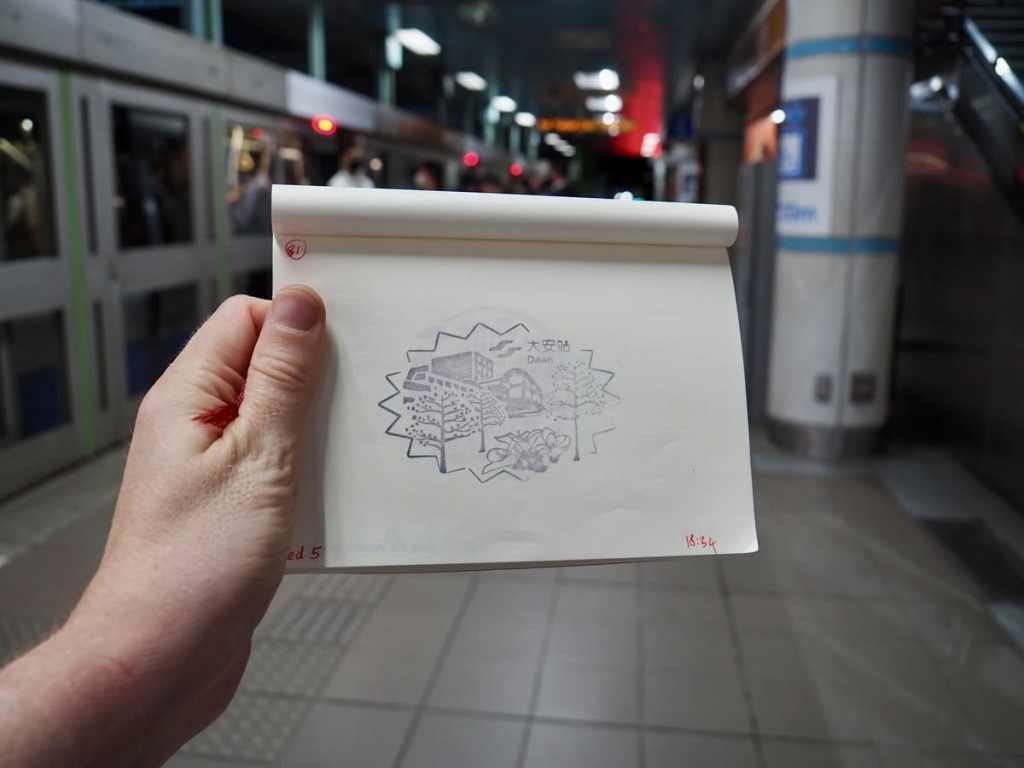
This stamp shows the raised Wenhu line portion of the station and some of the many cotton trees (also called kapok trees), lining Fuxing South Road.
R06 – Da’an Park (大安森林公園)
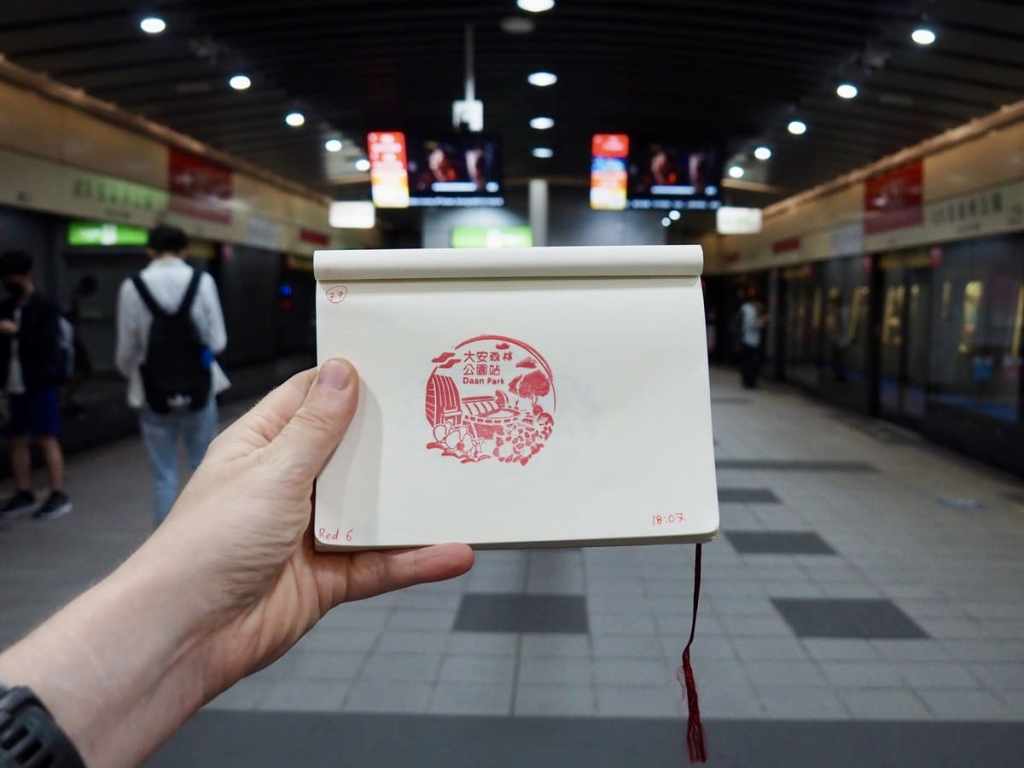
This is one of the prettier stamps on the red line. It shows the semi-circular sunken seating area just outside the station. The flowers in the foreground are there to represent nearby Jianguo flower market.
R07 – Dongmen (東門)
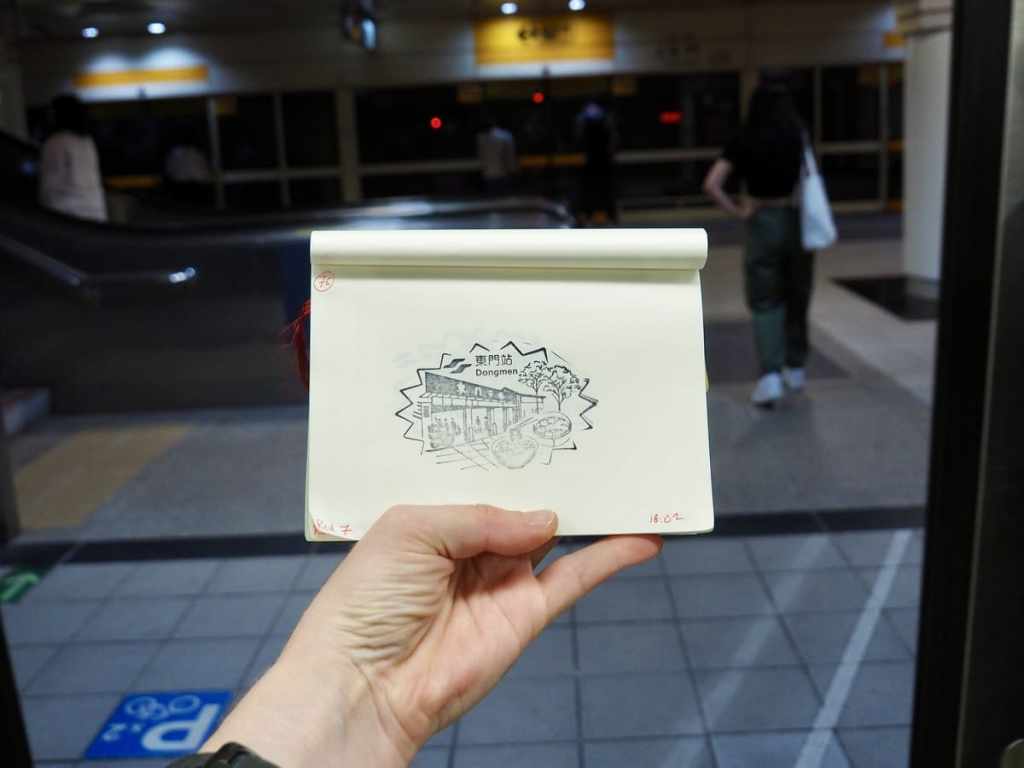
Dongmen’s stamp shows Dongmen Market. Apparently, nearby Yongkang Street is renowned for its beef noodles and xiao long bao, hence the bamboo steamer and bowl of noodles in the foreground.
R08 – Chiang Kai-Shek Memorial Hall (中正紀念堂)
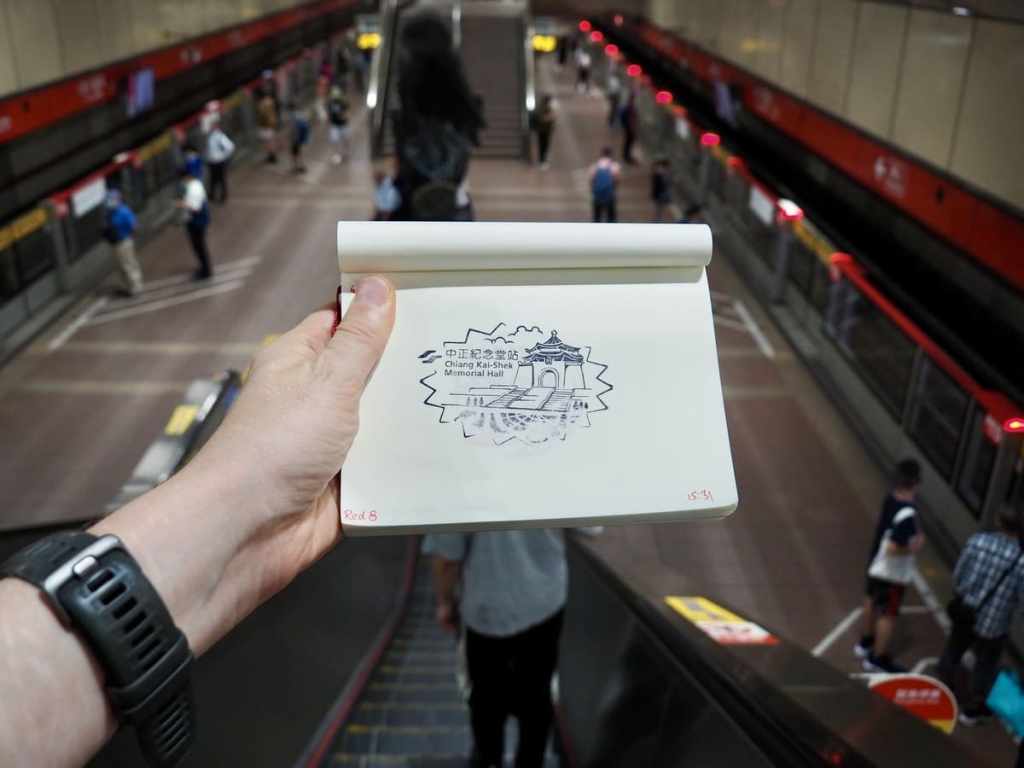
Pigeons flock in the open space in front of Chiang Kai-Shek Memorial Hall. The description for this particular stamp notes that the blue and white colours used in the design of Chiang Kai-Shek Memorial Hall represent freedom and equality. I am sure there is some snippy comment to be made about this, but I’ll leave that to people who are better qualified to comment on such matters.
R09 – NTU Hospital (台大醫院)
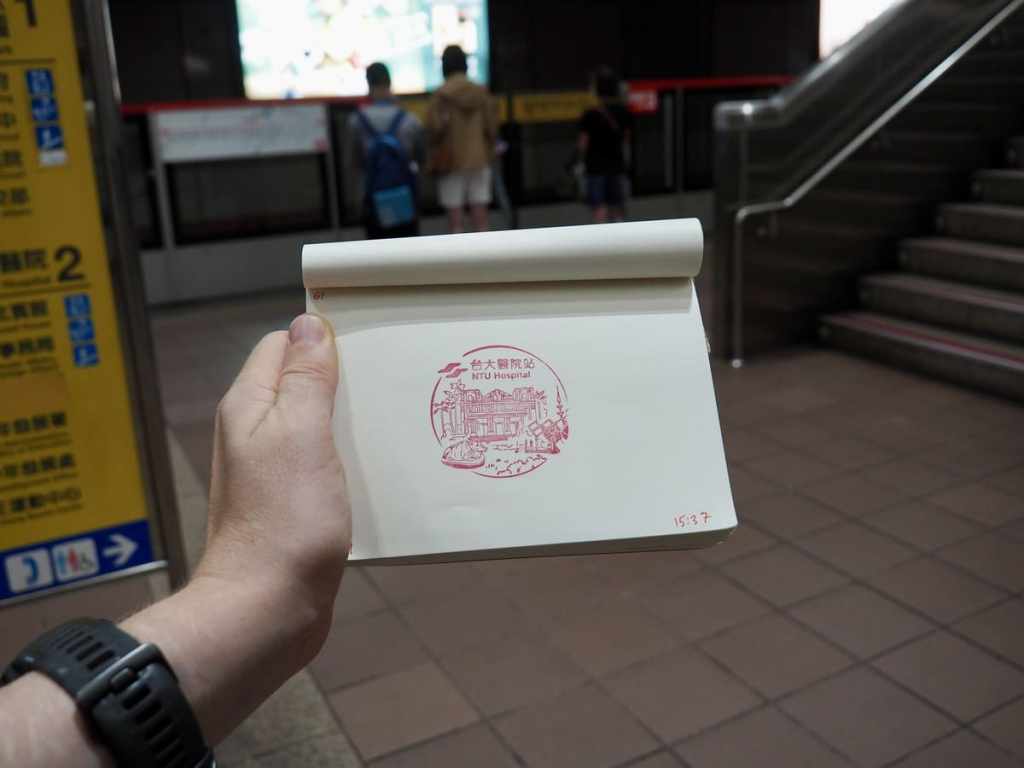
This stamp shows the beautiful (if a little in need of repair) NTU Hospital as well as a statue of a water buffalo and the 228 Peace Monument in 228 Peace Memorial Park. The hospital building dates back to the period of Japanese occupation, and weirdly, it’s probably the building which reminds me most of institutional architecture back home. Back home, I spent a portion of my youth in a psychiatric facility that had been built in the 1820s, and the interior space of NTU Hospital has a similar feeling.
R10 – Taipei Main Station (台北車站)
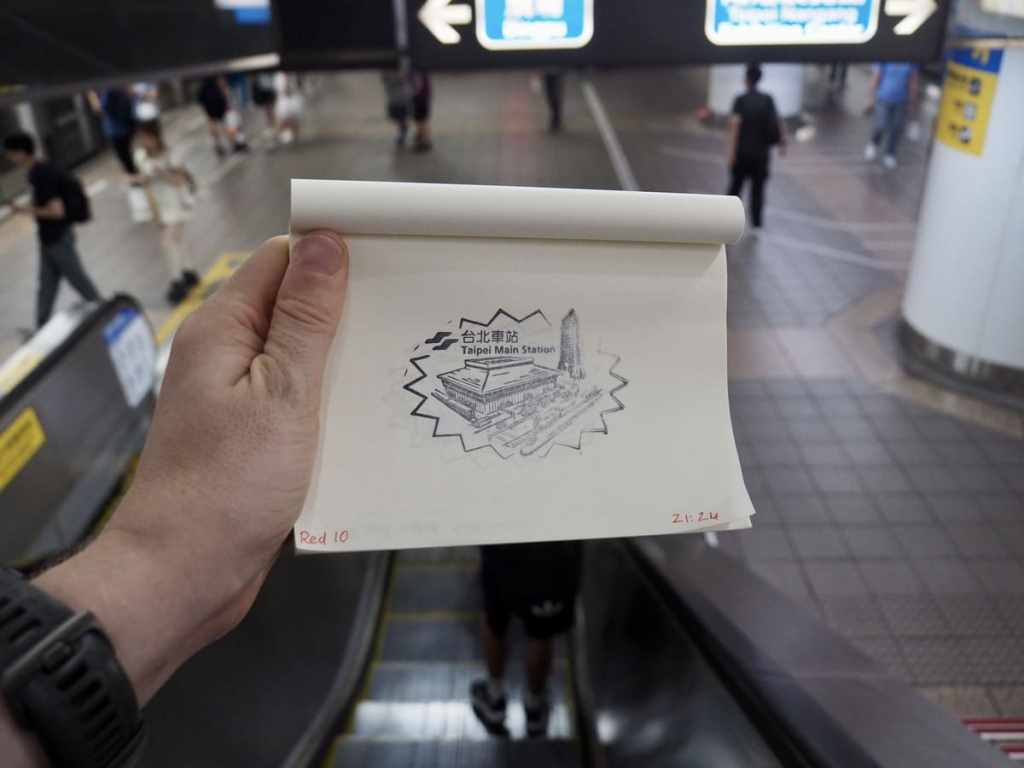
Unsurprisingly, the station is the main feature of this stamp. It includes depictions of pretty much all types of transportation services coming in and out of the station: the HSR, local trains, MRT, buses and taxis. In the background you can also see Shin Kong Mitsukoshi.
R11 – Zhongshan (中山)
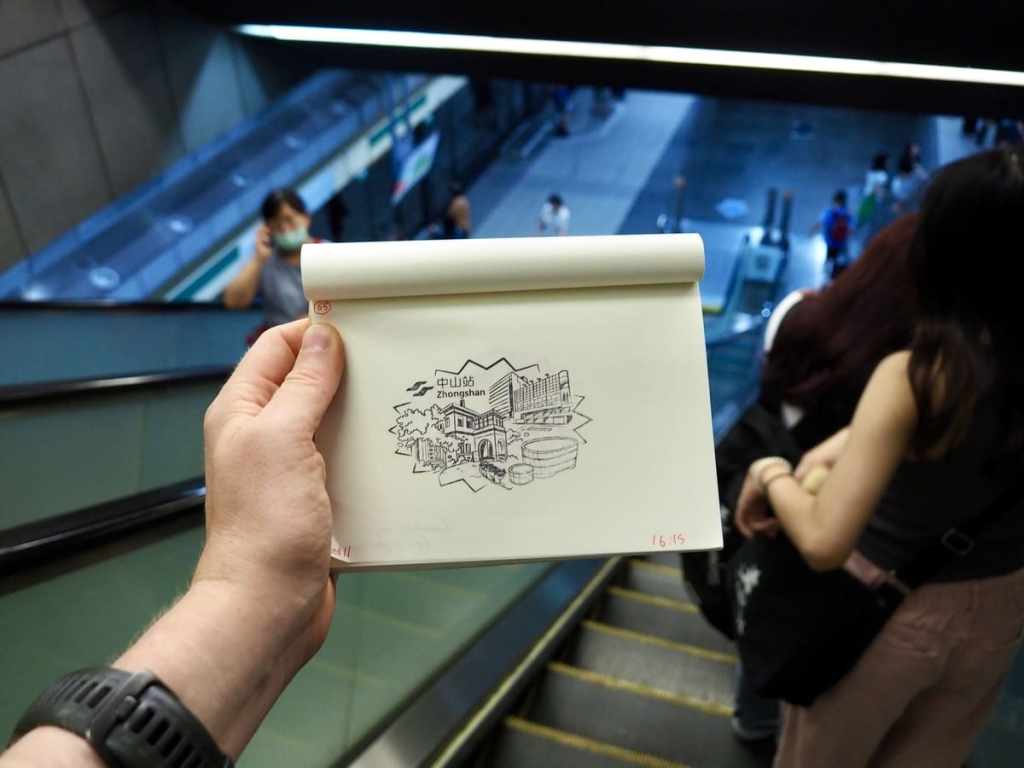
This stamp has a very busy picture, which is meant to capture the essence of this busy shopping district. On the left is the former UD consulate – now SPOT Taipei Film House (a great place to catch some less frequently screened films). And on the right are a couple of the traditional handmade barrels that the area was once known for.
R12 – Shuanglian (雙連)
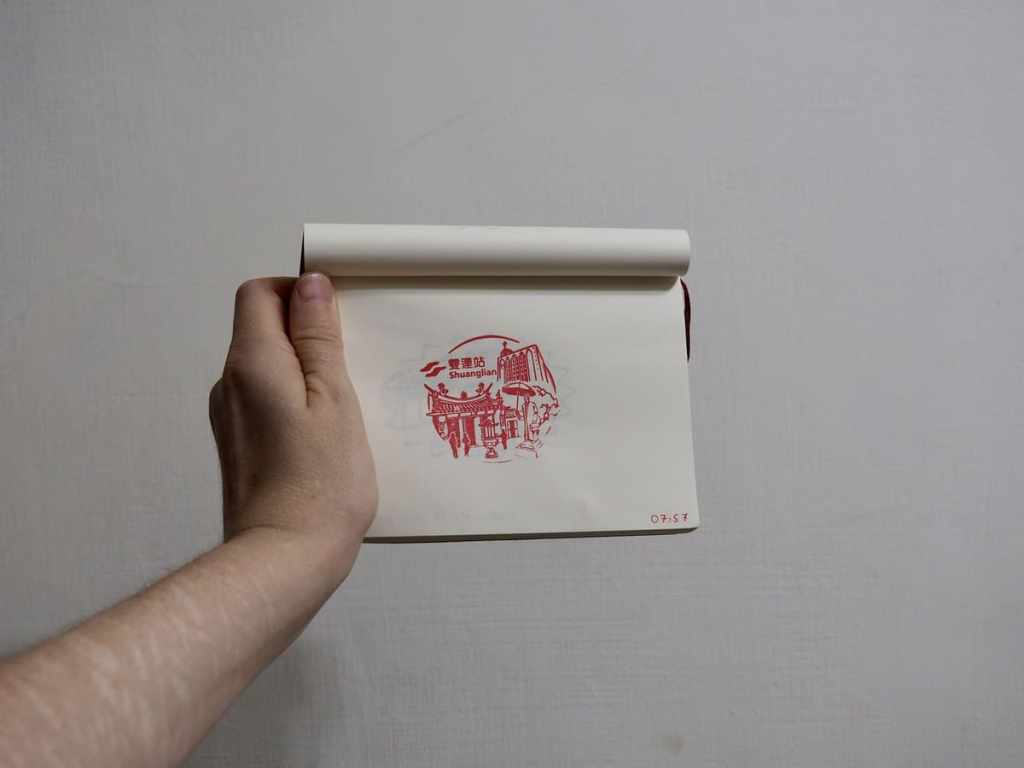
Shaunglian’s stamp shows two of the area’s religious spaces: Xiahai City God Temple and Shuanglian Presbyterian Church. There’s also a statue on the bottom right which depicts Dr Leslie Mackay (Mackay Memorial Hospital is close to this station).
R13 – Mingquan West Road (民權西路)
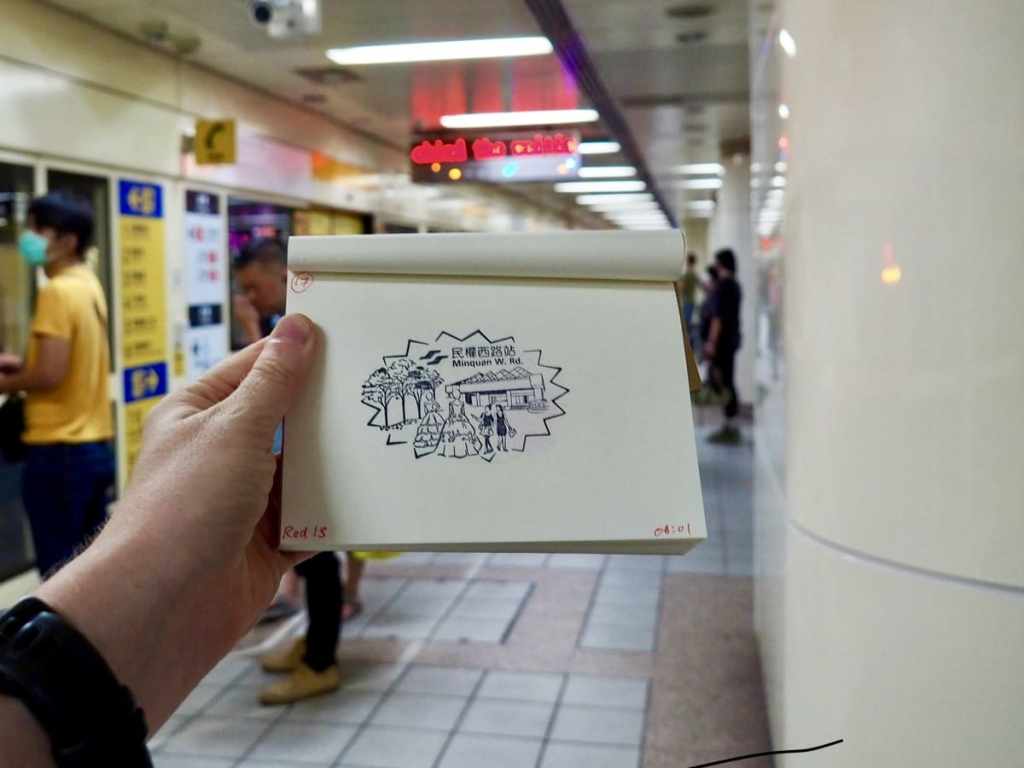
The stamp shows a pair of stylish shoppers looking at beautiful dresses on the area’s wedding dress street. Behind them are the pyramid peaks of the MRT station.
R14 – Yuanshan (圓山)
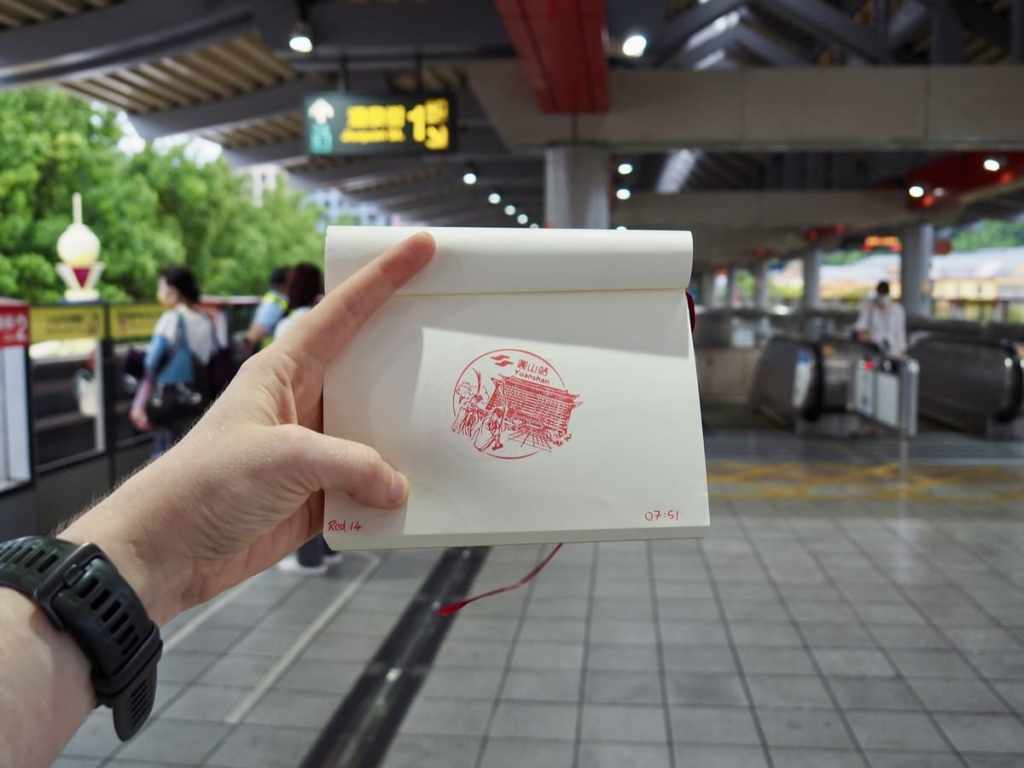
This stamp shows the impressive frontage of the Grand Hotel along with a pair of religious folk dancers from the nearby Confucius Temple performing dances from the temple’s annual celebrations.
R15 – Jiantan (劍潭)
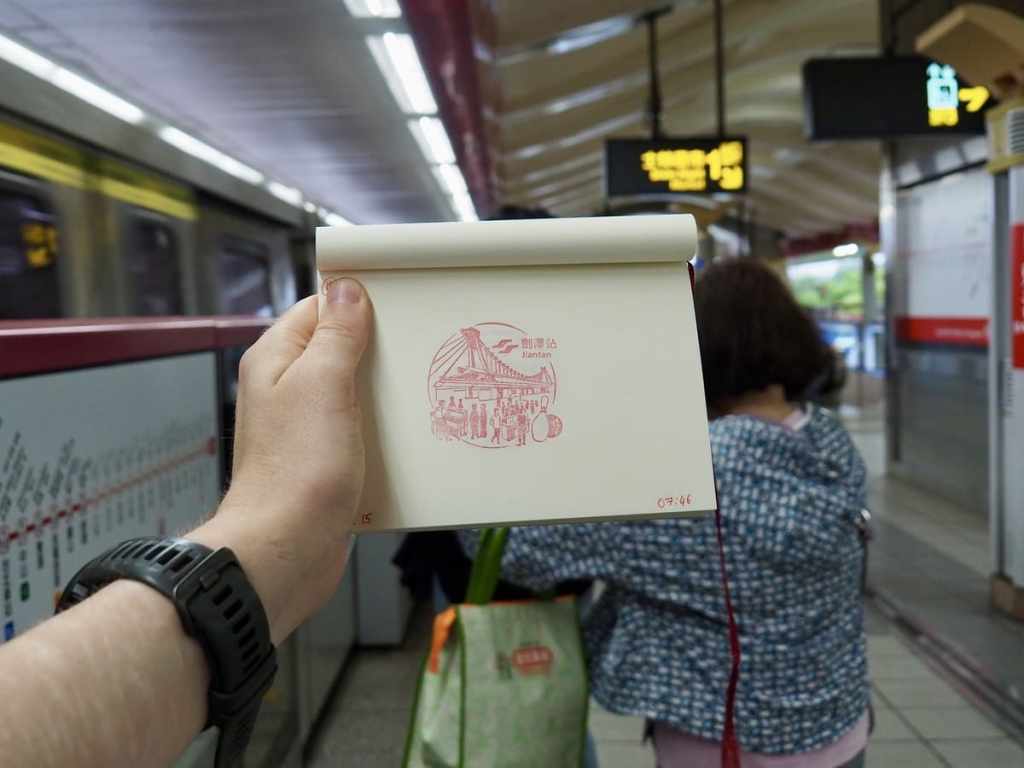
Like Beitou, the Jiantan stamp is dominated by a picture of the station. It also has a couple of bowling pins to represent the nearby bowling alley and a crowd of tourists milling around the vendors of Shilin Night Market.
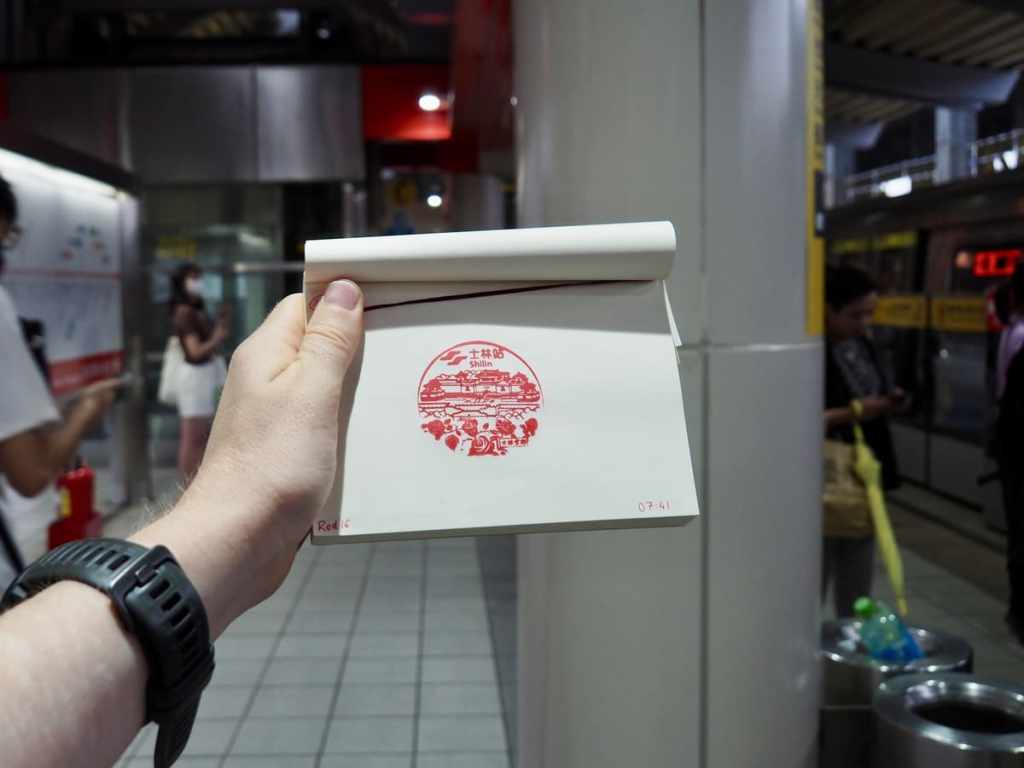
R16 – Shilin (士林)
Shilin’s pretty stamp shows a rose garden in front of the National Palace Museum and garden features from Chiang Kai-Shek’s Shilin residence.
R17 – Zhishanyan (芝山岩)
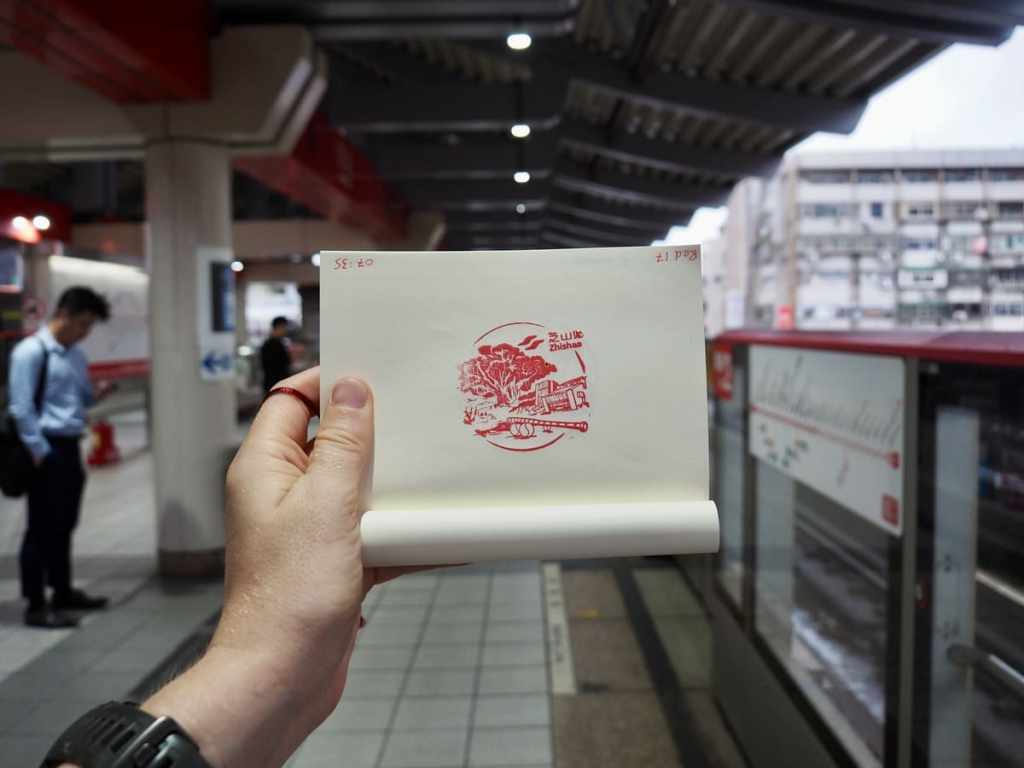
This is another pretty stamp. It is dominated by a sprawling banyan tree which represents Zhishanyan Cultural and Ecological Park. It also includes Taiwan Opera Centre and the giant baseball bat that can be seen outside Tienmu Stadium. And a duck.
R18 – Mingde (明德)
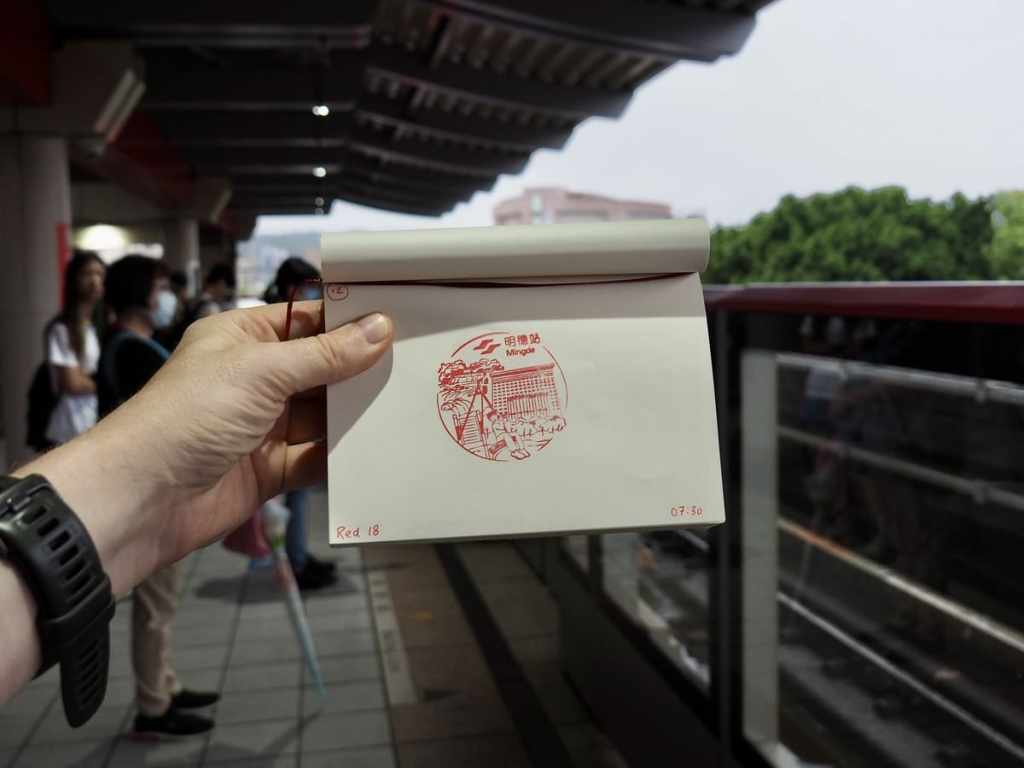
Mingde’s stamp depicts a child playing on a swing in Rongxuan Park and many countries’ flags displayed in front of the Diplomatic Quarter Building. Somewhat poignantly, the stamp was designed before Taiwan lost a whole bunch of diplomatic allies, so it shows a whole row full of flags.
R19 – Shipai (石牌)
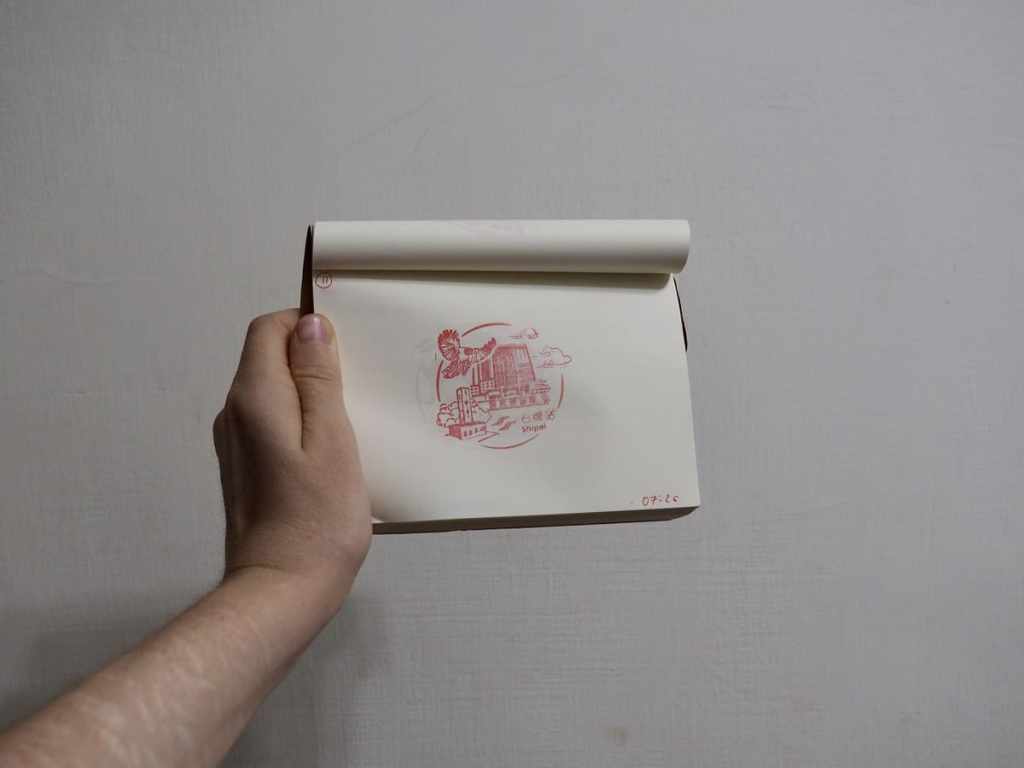
A Formosan blue magpie steals your attention in this stamp. It also features the veteran’s hospital where my partner’s dad passed away from cancer, and the old Qing boundary market between Han and Aboriginal communities.
R20 – Qilian (唭哩岸)
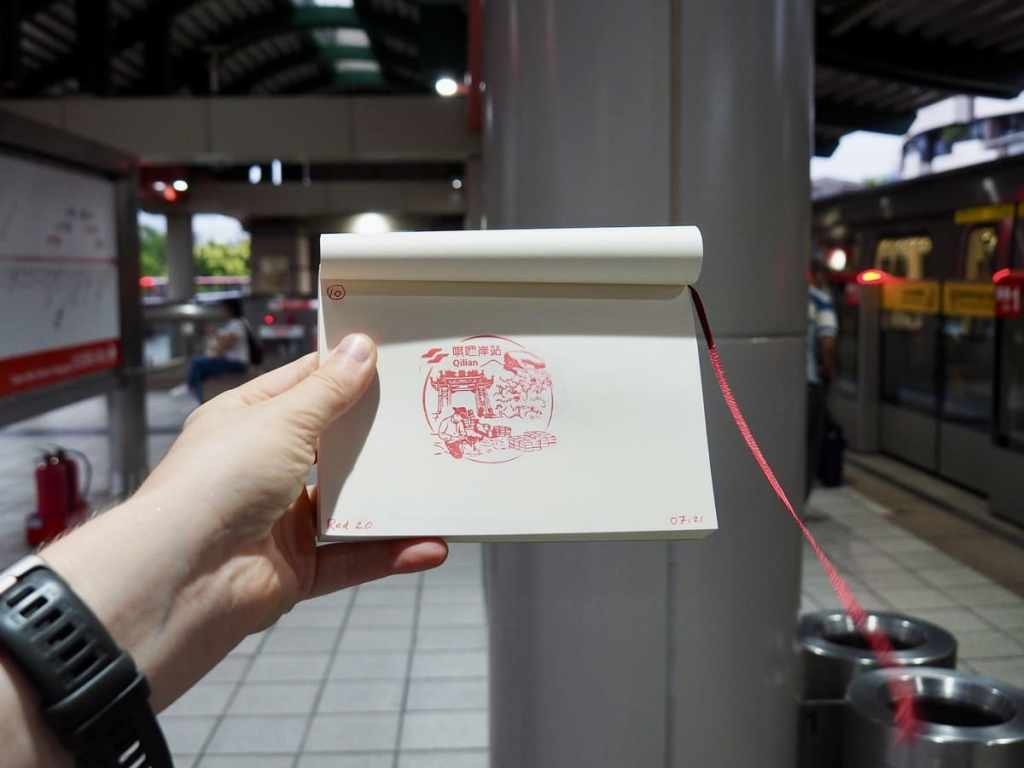
This stamp shows masons working chunks of locally mined rock into furnace bricks. Behind them, the archway of Beitou Cisheng Temple and the unmistakable form of Battleship Rock.
R21 – Qiyan (奇岩)
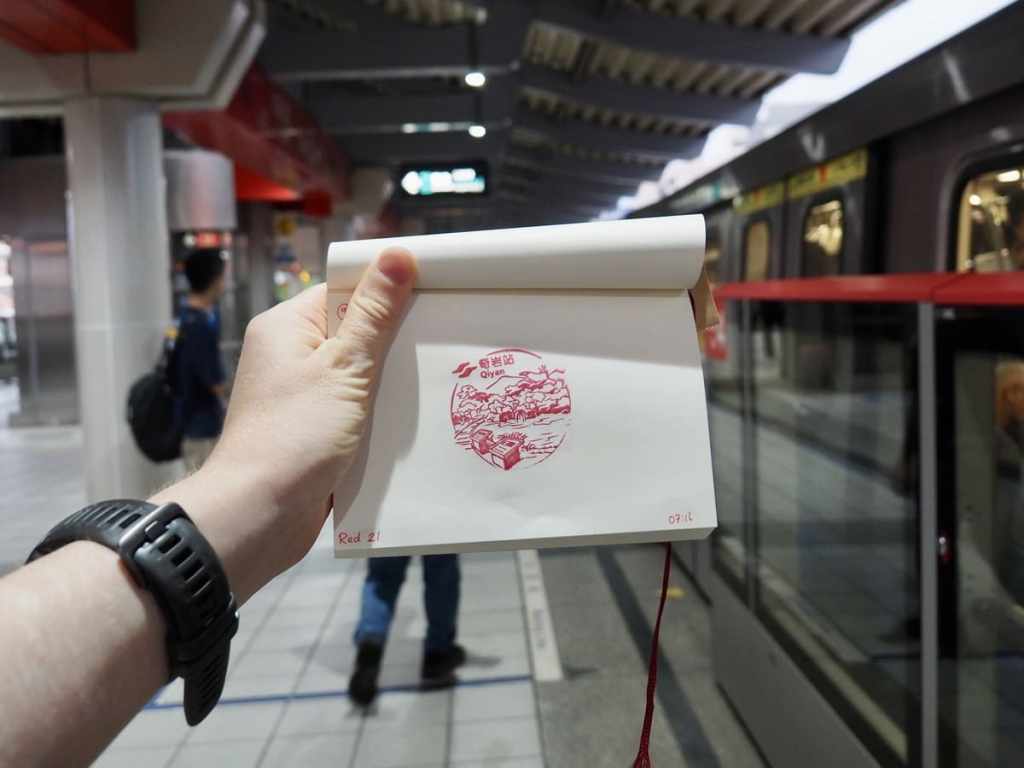
Qiyan’s stamp shows a trail leading through Dongyang Park with Mount Danfeng rising behind it.
R22 – Beitou (北投)
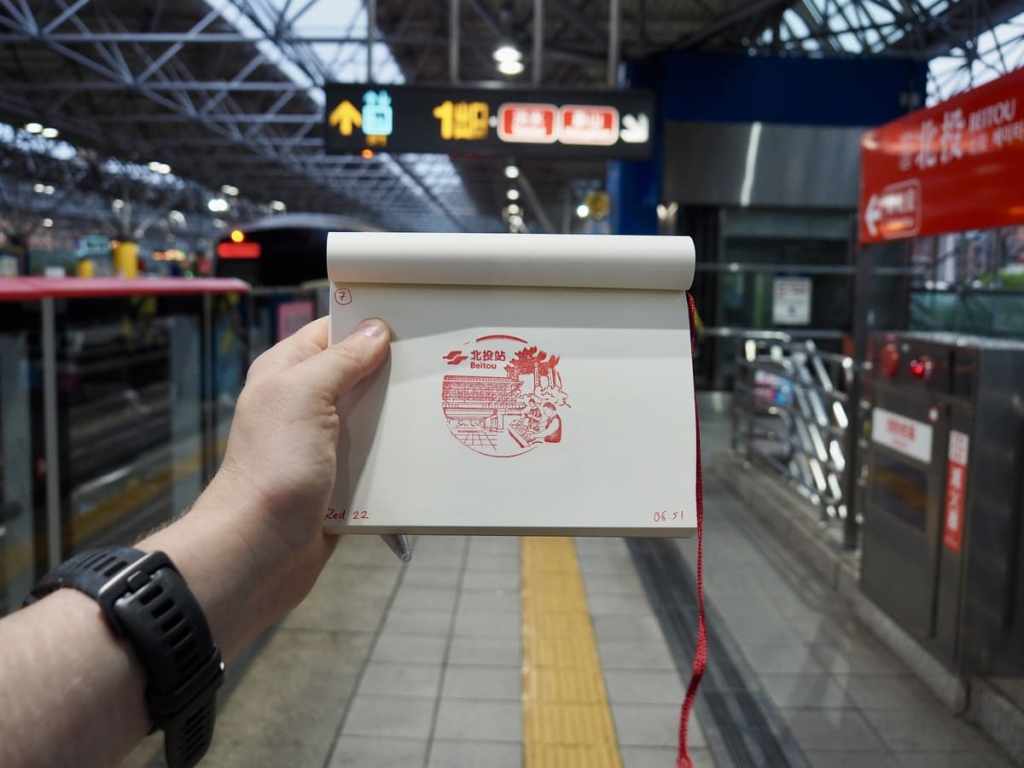
The largest part of Beitou’s stamp is given over to an image of the station itself. It also shows the temple-front archway of Cihou Temple and some tea vendors serving up cups of the area’s famed black tea. (I didn’t know that Beitou was known for black tea.)
R22A – Xinbeitou (新北投)
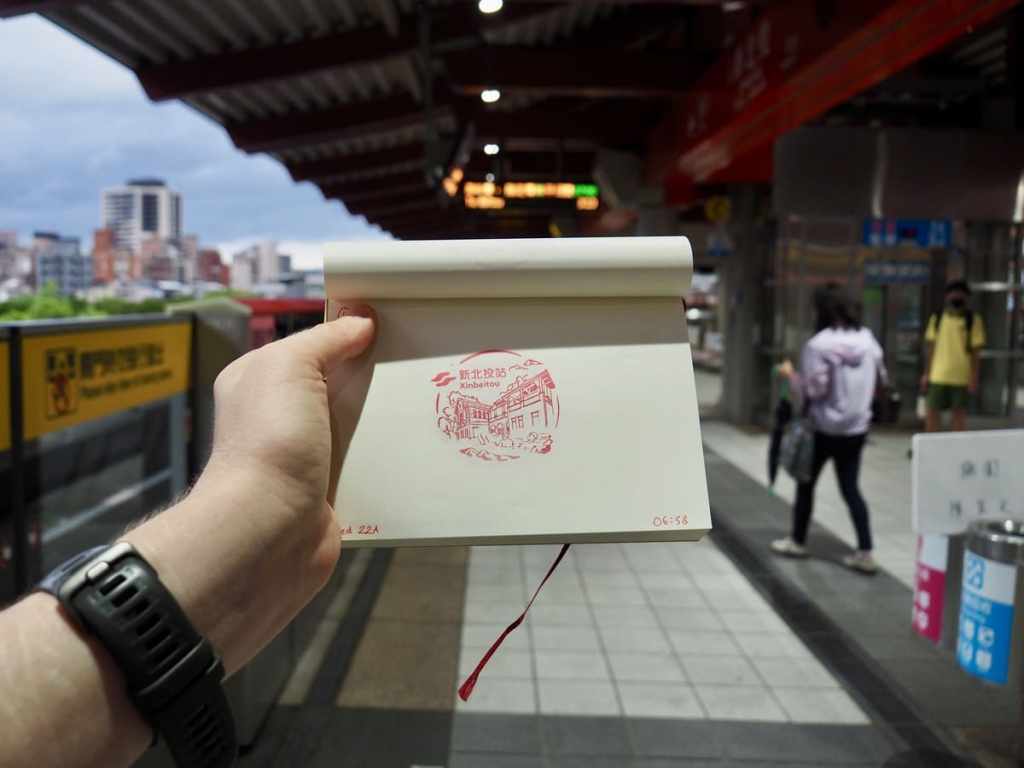
This stamp shows bathers indulging in the mineral-rich waters of Beitou’s hot springs. Behind them is the brick-and-wood-clad frontage of Beitou Hot Spring Museum (formerly the public hot spring bathhouse).
R23 – Fuxinggang (復興崗)
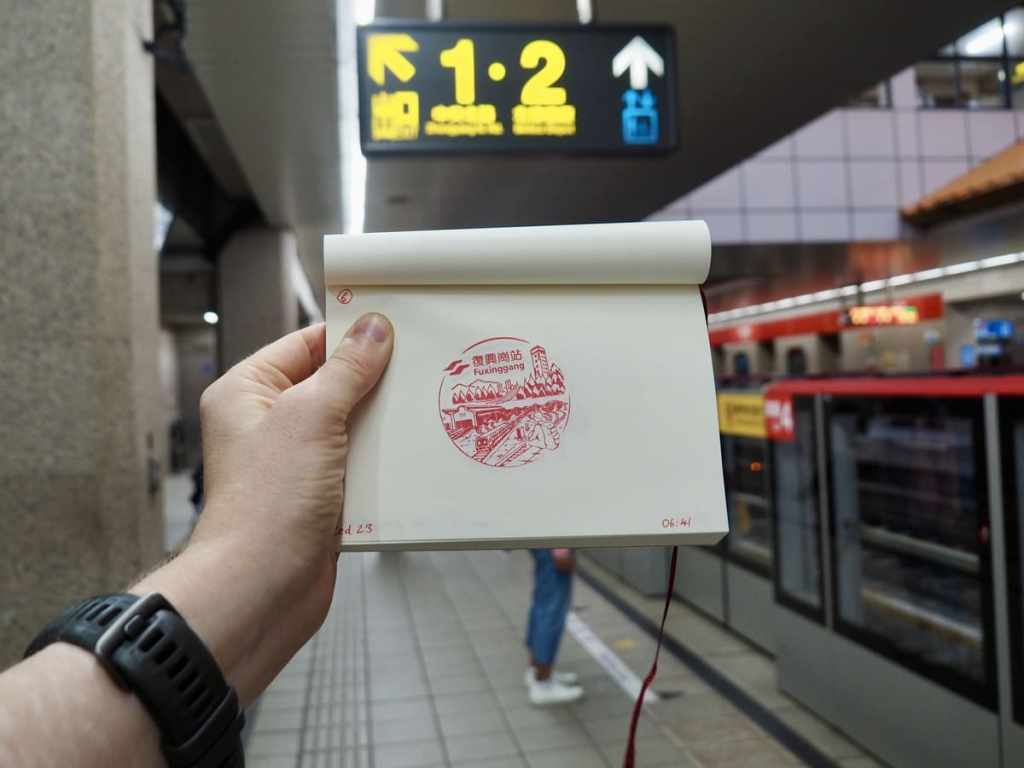
Fuxinggang’s stamp includes a soldier from the nearby National Defense University who is sat with a heavy pack, watching the comings and goings at the Taipei MRT maintenance facility. (Look out for diminutive soldier statues decorating the station.)
R24 – Zhongyi (忠義)
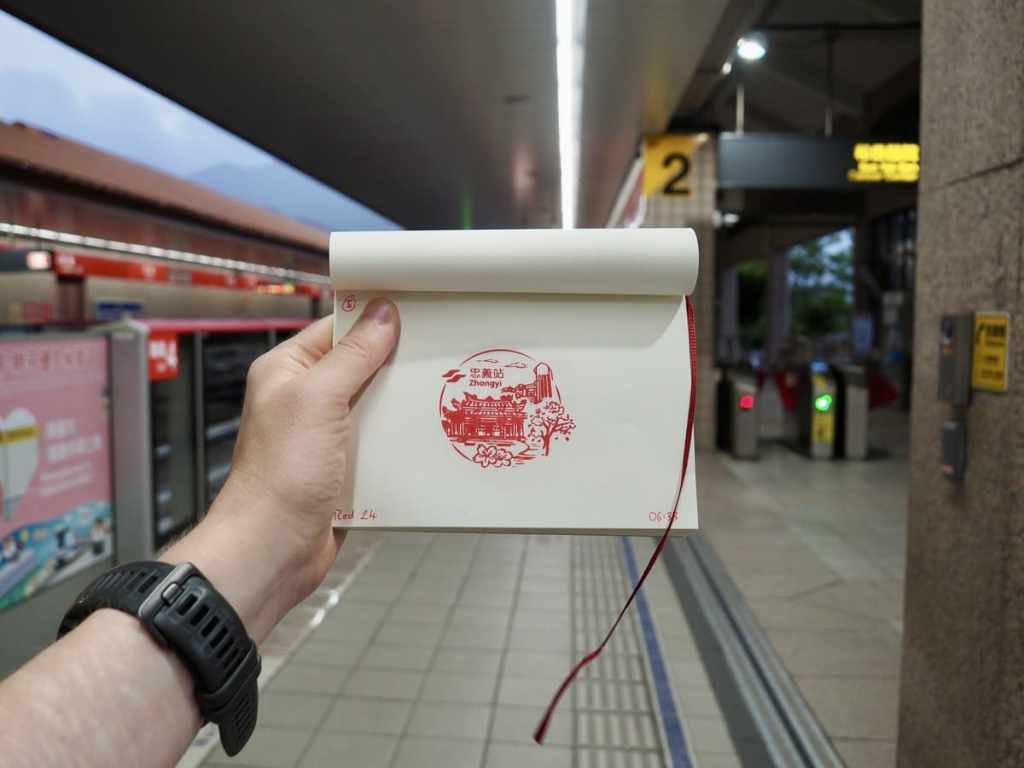
The three sights included in the stamp for Zhongyi are Zhongyi Hiking Trail (the first part of the Taipei Grand Trail), the National Taipei University of the Arts (the university’s sprawling hillside campus contains many curious sculptures and some water buffalo), and Zhongyi Temple.
R25 – Guandu (關渡)
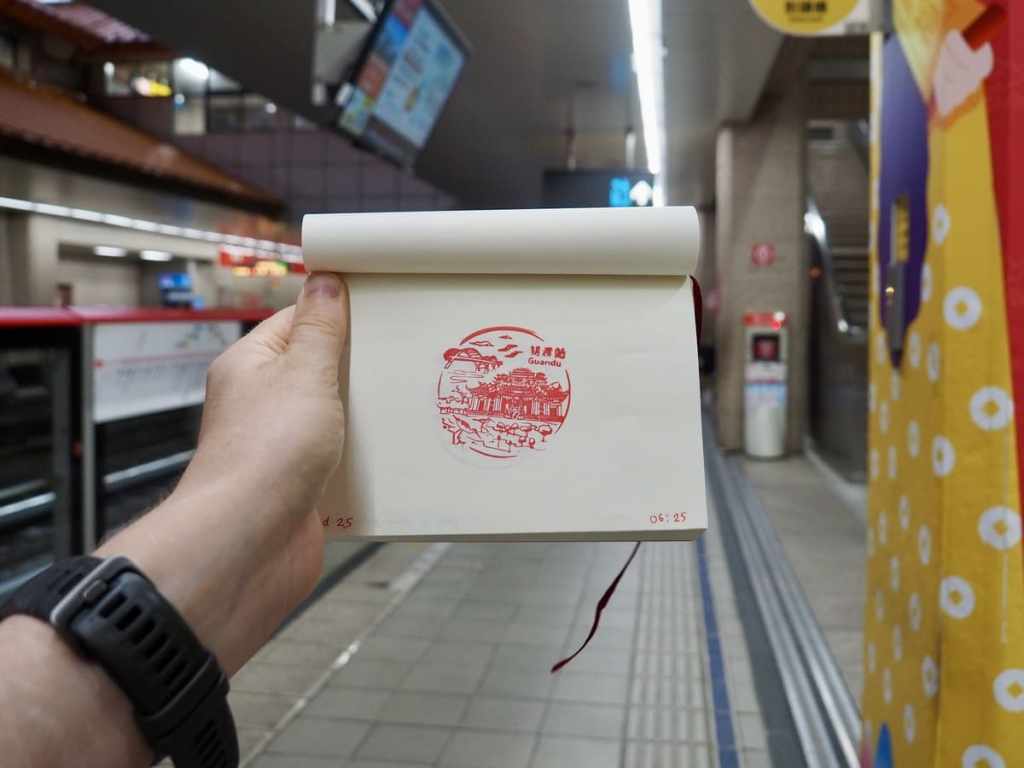
Guandu’s stamp is totally packed with scenes from the surrounding area. In the foreground, wading birds pick through the wetland habitats of Guandu Nature Park, the centre is taken up with the grand edifice of Guandu Temple, and in the back you can see the red arches of Guandu Bridge. The station itself is home to many cutely incorporated bird statues.
R26 – Zhuwei (竹圍)
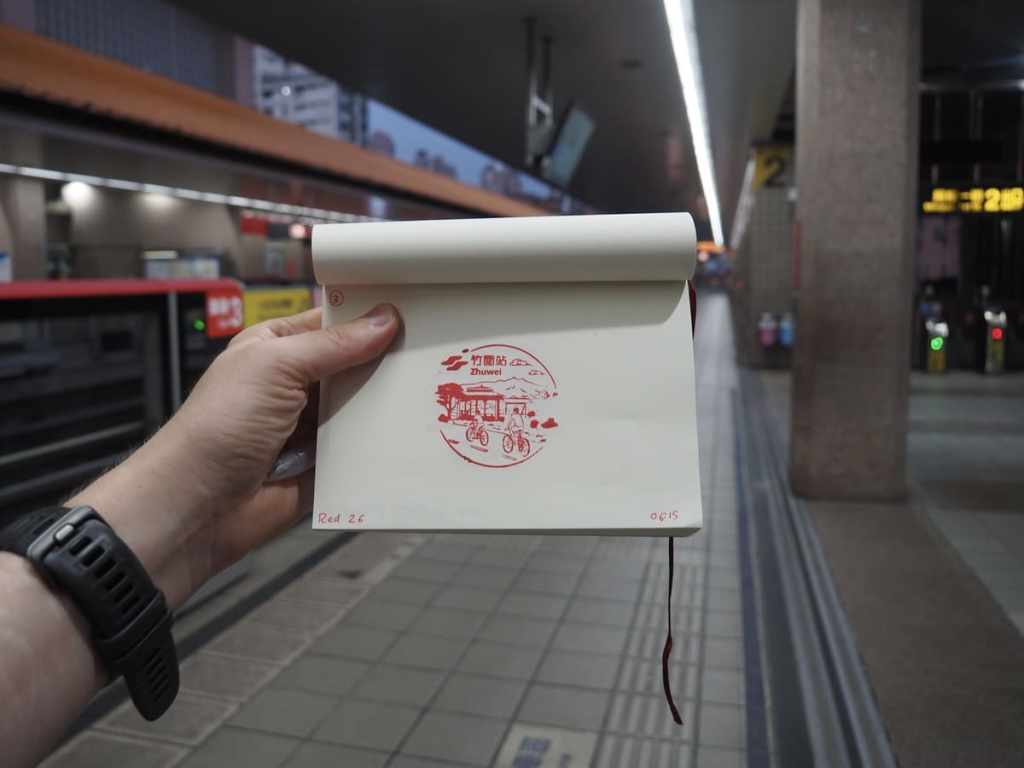
This stamp shows two cyclists riding on the bikeway in front of Zhuwei Wharf on Tamsui River with Mount Guanyin rising behind them.
R27 – Hongshulin (紅樹林)
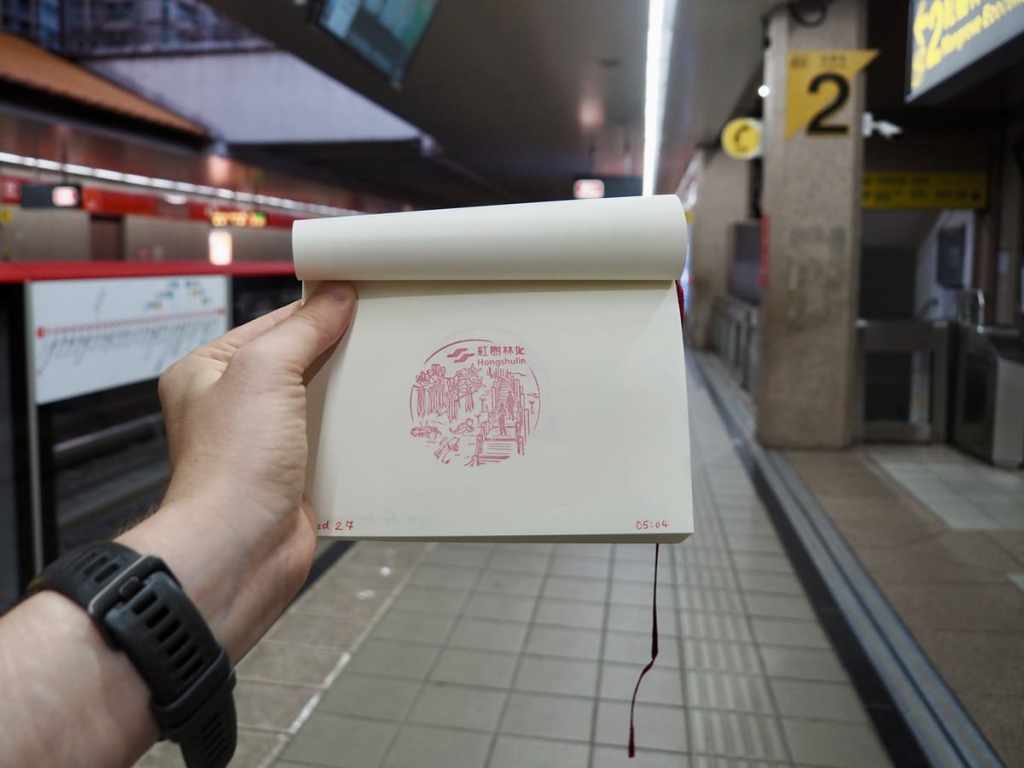
This stamp shows a trio of ugly-cute mudskippers frolicking in the intertidal zone while a couple walks along the raised paths of Hongshulin’s mangrove boardwalk.
R28 – Tamsui (淡水)
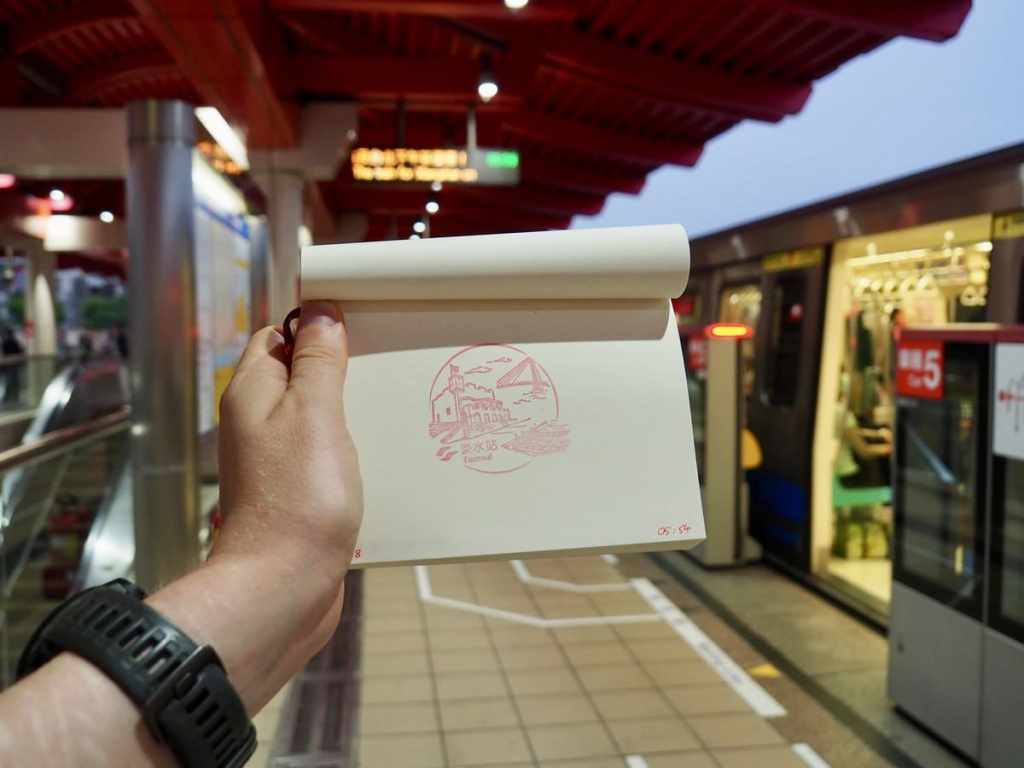
This stamp depicts sampans tied up at the water’s edge, the cable-span bridge of Lover’s Bridge up at Fisherman’s wharf, and the arches and turrets of Fort San Domingo.
 Taiwan Trails and Tales