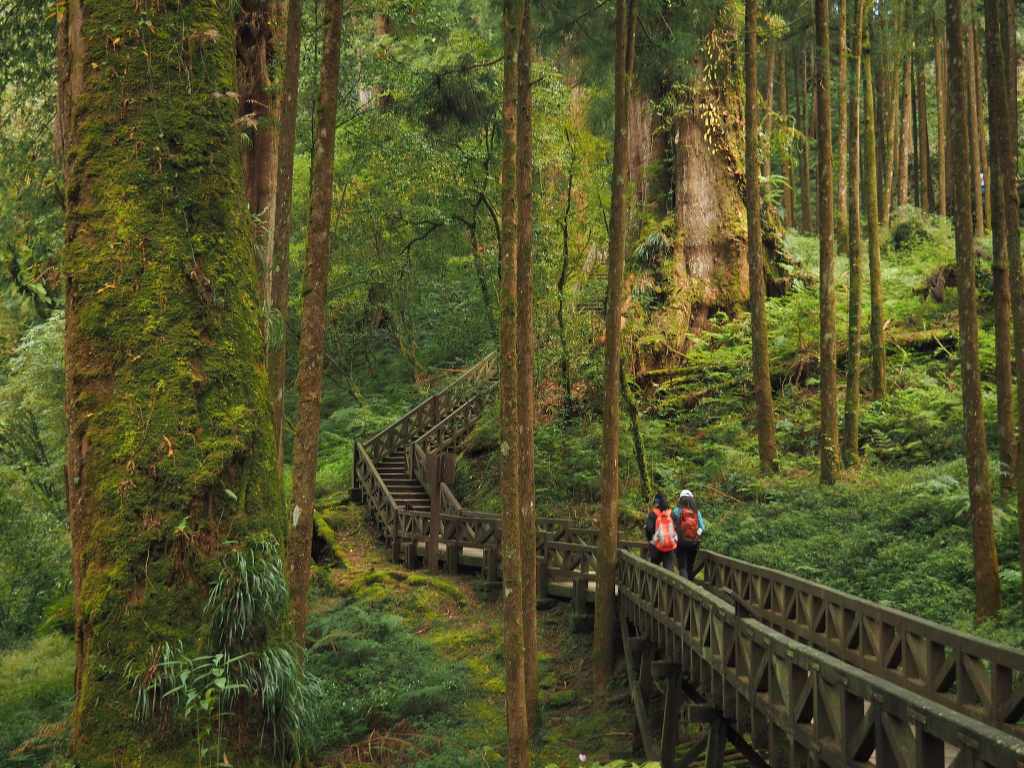
When someone tells you that you absolutely must visit Alishan, there is a little confusion as to what they mean. Alishan is the name of an elevated township within Chiayi County — known for tea plantations, railroad villages, and spectacular mountain scenery. It’s also shorthand for Alishan National Forest Recreation Area, one of nineteen Forest Recreation Areas managed by Taiwan’s Forestry and Nature Conservation Agency (FANCA, formerly the Forestry Bureau). Both are worthy of your hard-earned free time, but this page purely focuses on Alishan National Forest Recreation Area.
Alishan History
When the Japanese government took control of Taiwan, staking their claim on their new colony involved conducting an inventory of all the riches and resources it has to offer. As part of this, they sent a reconnaissance group up into the mountains with the aim of summiting Jade Mountain. The initial attempt was unsuccessful in conquering Taiwan’s highest peak, but that would turn out to be no bad thing because along the way, deep in Tsou tribelands, they found forests full of Chamaecyparis formosensis (more commonly known as Taiwan cypress, Taiwan red cypress or 紅檜). These giant trees produce timber that is fragrant, visually appealing, able to withstand humid conditions, and pest-resistant — perfect for construction purposes.
A lumber railway terminating at a logging yard in Chiayi was quickly established with branch lines fanning out to reach various ancient tree groves. As the trees were taken out, tourists began flooding in, and over time, the region’s tourism industry grew to first overtaken, then wholly supplant, the logging works. Lumber operations ended in the 1970s, but as you walk the trails today, the many stumps of fallen giants still tell the forest’s story.
Hiking in Alishan
There are a number of great walks within the park. I have walked and written about five of them, and of these, the Giant Tree Boardwalk, Sisters’ Pond Loop and Shuishan Giant Tree Trail are all pretty easy. For something a bit more adventurous, you could climb Mount Data or walk the Mianyue Line (this last one requires a permit). I’ve visited Alishan three times and there are still a couple of walks I haven’t had time to do.
When to visit Alishan
The park is open year-round and each season has its own beauty. In spring, many visitors head to the park to enjoy its cherry blossom season or to see the sacred butterflies that swarm near Shouzhen Temple. In summer, city dwellers flock here to escape the relentless lowland heat (temperatures up in the park tend to be 5-10°C lower than the temperatures in the cities). And in fall and winter, the park’s famed ‘Sea of Clouds’ phenomenon can reliably be seen each afternoon (it occurs in all seasons, but it’s more likely as the weather starts to cool).
Alishan Tickets
There’s no need to pre-book Alishan tickets. You pay when you enter the park. If you have an APRC, student ID, Mountains to Ocean Greenway Passport, or the yellow ticket issued by bus operators to prove you travelled on public transportation, you can get a discount. When I visited, the cost was NT$300 for a standard ticket for foreigners who live outside of Taiwan, NT$200 for residents of Taiwan (including anyone with an ARC or APRC), and NT$150 for a discount. You can check the park’s website for the current ticketing information.
Riding the Alishan Railway
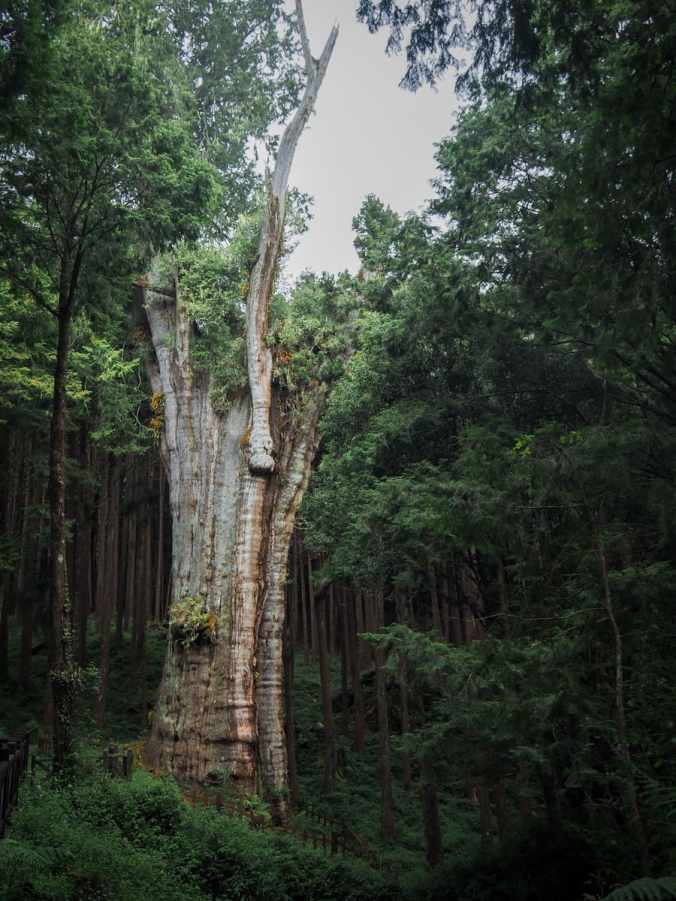
The iconic red train is perhaps the most enduring symbol of Alishan. This nostalgic journey follows the route of the old logging line as it twists and turns through farmland and small villages and pretty bamboo forests before arriving deep in the heart of Alishan National Forest Recreation Area, and for many, riding the train all the way up from Chiayi is part of the dream Alishan itinerary. However, as mentioned below, buying tickets for this journey is a bit of a lottery. Luckily, once you’re in the park, it’s easy to buy tickets to visit the Sacred Tree Station or Chaoping on the spot, so even if you don’t get to experience the whole journey, you don’t need to miss out entirely.
Staying in Alishan
There are a number of accommodation options within the park itself, although I’ve personally only stayed within the park on someone else’s dime.
On the cheaper end of the spectrum are the various hotels gathered around Alishan Visitor Centre. These range from around NT$2,500 per night for a double room that’s more basic than the price would suggest up to NT$6,000 or more for something marginally more impressive. Judging by the photos and reviews, most of these places haven’t been updated in a couple of decades and are just banking on the allure of the park to keep drawing in visitors.
Deeper in the park, there’s Alishan Gou Hotel, a 3-star establishment that’s right beside the start of a couple of trails. Prices here start at around NT$7,000, but at least the rooms look clean and modern. It provides guests a buffet breakfast and a shuttle service from the park entrance.
Alishan Hotel occupies the luxury end of the price range. With prices starting at around NT$19-20,000 a night, this four-star option won’t be within everyone’s budget and quite frankly, even if it is, I think your money would be better spent elsewhere. The resort has a certain kind of faded grandeur, but for the same price you could probably get something much more modern further down near Shizhuo.
As you might be able to tell from the tone of my comments, I am not too impressed with hotel options with Alishan National Forest Recreation Area. Should you stay in Alishan? Only if you’re planning to catch the sunrise viewing train and/or maximising the time spent in the park itself is your biggest priority. And quite frankly, even if you are planning to catch the sunrise, you might be better off staying elsewhere if you have your own set of wheels.
So, if staying in Alishan isn’t worth it, where should you stay when visiting the park?
Staying near Alishan
The most budget-friendly option nearby is Dongpu Lodge. Located 20 kilometres further up the road and inside Yushan National Park, this hikers’ hostel costs NT$400 a night and offers very basic bunk-style rooms. It’s ideal for anyone self-driving and on a budget, but transportation options are limited. If this sounds like the right fit for you, I’ve got a whole page dedicated to the process of booking spaces at this lodge.
Other options include staying at one of the towns or villages scattered along the road leading up to Alishan. Shizhuo is one reasonable-sized settlement that has hotels and homestays catering to a pretty wide range of budgets and it’s on the main Alishan Highway (aka Provincial Highway 18), meaning it’s on the main bus route between Chiayi and Alishan National Forest Recreation Area. Fenqihu is another nearby town that offers a good staging post for exploring the greater Alishan region. It is one of the main stops on the Alishan Forestry Railway, and since the upper end of the line reopened in 2024, it’s possible to shuttle between Fenqihu and Alishan National Forest Recreation Area using the iconic red trains (tickets for this section can be purchased on the day at Fenqihu Station, but you can expect to spend the journey standing).
How to get to Alishan
Google Maps address: Alishan is accessed by road (Provincial Highway 18) or train from Chiayi.
Public transport:
- Bus from Taipei — the 1835 Kuo-kuang bus departs Taipei Bus Station bound for Alishan once a week on Fridays at 9:45pm. The return service is also once a week and departs Alishan Transport Station bound for Taipei at 11:30am on Saturdays. Judging by the bizarre times, it’s clear that this service is purely intended for Taipei-based folks who hope to catch the sunrise in Alishan. If you want to spend longer in the park, you’ll have to find an alternative way home.
- Bus from Chiayi Train Station — the 7322 Chiayi County bus leaves Chiayi Station (not the Chiayi HSR Station) about ten times a day (there are 7322, 7322A, 7322C and 7322D services, all of which terminate at Alishan Transport Station).
- Bus from Chiayi HSR Station — the 7329 departs from the HSR Station (not the regular train station). You can buy tickets for both of these from Famiport or iBon machines.
- Train from Chiayi Train Station — If it’s your first (and maybe only) time in the area you might want to consider riding the Alishan Forest Railway. This railway is a truly spectacular feat of engineering, and (assuming you don’t get motion sickness), it’s a journey well worth taking at least once in your life. If possible, it is advisable to book the train in advance of your trip on the official website. Bookings open 15 days in advance of the date of the trip and can be made (in theory) up to a day before. However, tickets sell out rather fast, especially on weekends, so if you like certainly, you probably won’t want to leave this to last minute. In fact, you will need to be up bright and early exactly 15 days before your planned departure to fight with all the other online bookers since tickets tend to sell out immediately. That said, if you’re ok with a little more uncertainty in your schedule, you can sometimes snap up returned or unpaid-for tickets a day or two before departure, or even on the day of, but you have to have luck on your side.
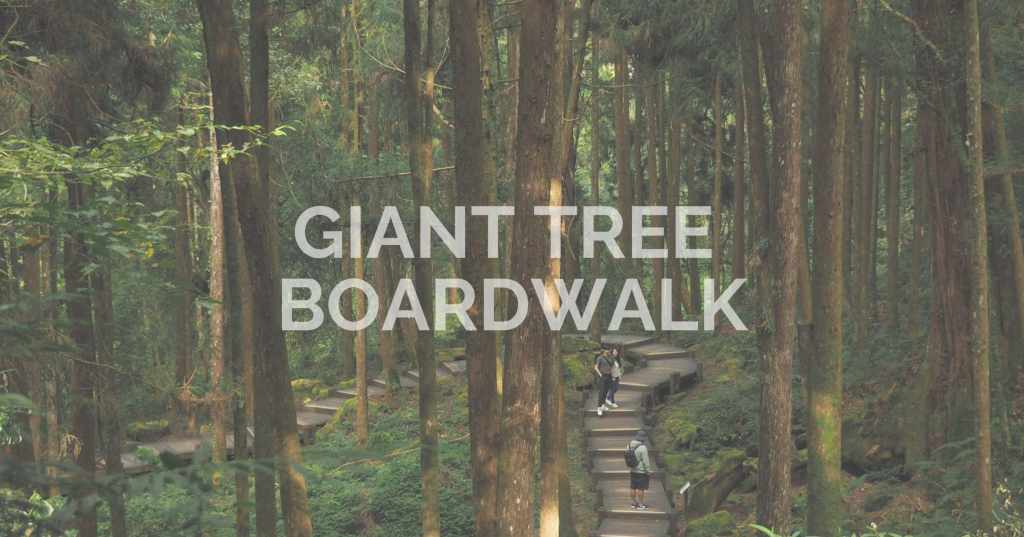
If you’re planning a trip to Alishan National Forest Recreation Area and only have time to do one walk, make sure it is this one. A photogenic raised boardwalk winds its way among a grove of ancient giants — the walk is both beautiful and easy.

The Mianyue Line hike has to be one of the most photographed hikes in Taiwan. Kilometre after kilometre of trestle bridges, mossy tracks, and abandoned tunnels stretch out through beautiful old forests, high up in the clear air of Chiayi. It is not hard to see why this hike has become popular.

Mount Data, also known as Ta Shan or Big Ta Mountain, is the highest of Taiwan’s 100 minor peaks, standing 2,663 meters above sea level. It offers a fun walk for both new and regular hikers with beautiful forest scenery and spectacular views of layered mountains from the summit.

Alishan has been a popular destination with tourists for decades, the lure of the mountain air and beautiful forest scenery drawing in the crowds. These days visitors still flock to the park to enjoy the forest, the sunrise and the picturesque little red trains that ply the narrow-gauge tracks through the trees. This trail will take you on a short and easy wander around some of the sights.
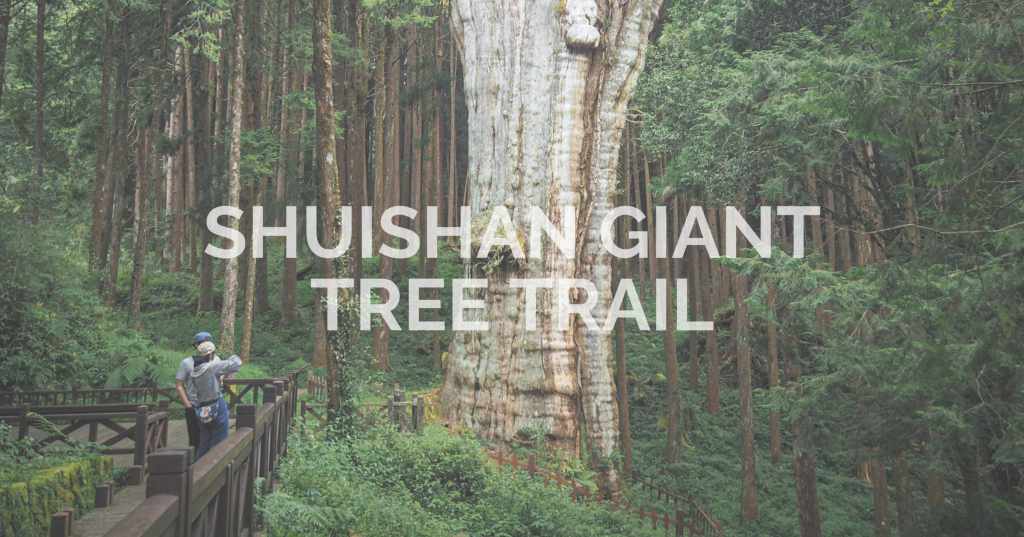
The Shuishan Giant Tree Trail is an easy walk in the Alishan National Forest Recreation Area that is suitable for hikers of all levels of experience. The trail takes you through old forests and along old railway tracks.
 Taiwan Trails and Tales